More Tragic than Magic Cup

More Tragic than Magic Cup

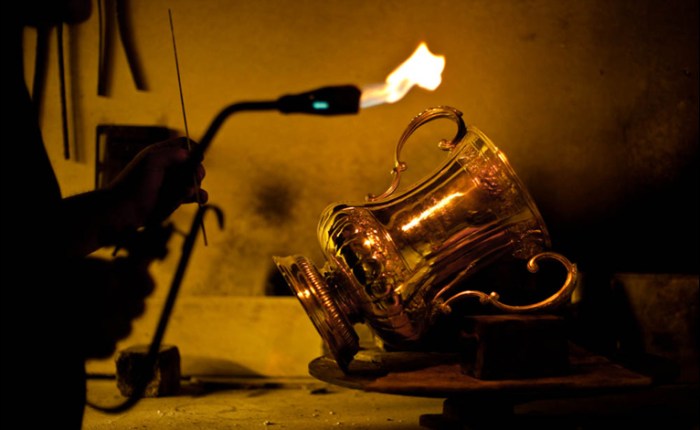
Heading into another FA Cup weekend the phrase: “Magic of the Cup” will be brandished about in an attempt to repackage nostalgia as relevancy. The sad truth is that the oldest domestic club competition is looking its age. Bold steps need to be taken to save the tournament becoming no different than the League Cup, or worse, a Premier League club’s equivalent of the Johnstone’s Paint Trophy.

The irony is, those two lesser cups have the answers that could help alleviate some of the pressure bearing down on the FA Cup. In How to Make the FA Cup Great Again the notion of making the fourth Champions League place available to the winners was put forward. That’s less likely to occur now than at any point previously.

The FA Cup now needs to accept its place on the priorities and level of importance list that clubs attach to it. Failure to do this will make it nothing more than an annoyance, that witnesses weakened sides take to the field as clubs rest key players for bigger games.

The quickest way to appease the larger teams is the removal of replays. Should Manchester City, a team still in all four competitions, draw with Chelsea on Sunday, they will have to find a week that has eight days to host the replay.

Manuel Pellegrini has already hinted that a weakened City side will face the Londoners, after being upset his team play so close to a long trip to play Dynamo Kiev. This is slightly cheeky considering last season the Citizens travelled to the UAE for a game only days before their FA Cup tie with Middlesbrough. When it suited the club, travelling was played down. Suddenly it’s important again.

What it does highlight is how the FA Cup is seen as a burden. It sits behind the league and European competition, and at this point in City’s season, less important than the League Cup final. The dread of a replay only further takes away any shine for the club’s management.

Making FA Cup ties one time affairs reduces the fixture congestion. It will also ensure each game is played with the true spirit of a knock-out cup game. At the moment smaller teams hang on for a lucrative payday back at a big ground rather than throw caution to the wind. This enables pampered teams to negotiate the tricky lower league pitches with a degree of danger removed.

But even teams in the lower leagues would prefer to avoid a replay rather than extend a “cup run” that, in all likelihood, won’t get them anywhere near Wembley. Survival is more pressing than chasing empty dreams.

Such is the fear of injuries and fatigue, clubs will consider dropping large numbers of the first team for FA Cup ties, the Johnstone’s Paint Trophy offers a great example of how to help clubs avoid both these problems. After 90 minutes the game should go straight to penalties.

Why give the home team the advantage of another 30 minutes on familiar soil? Save the legs and get straight to the shootout. It’s another way to increase the excitement levels and encourage maverick tactics in normal time.

Traditionalists will feel uncomfortable with the suggestion that FA Cup fixtures could be moved to midweek. At first glance, it does seem like a drastic measure. A further undermining of a flogged dead horse. However, there may be some credit to the idea.

Tuesday and Wednesday games haven’t harmed the Champions League. Perhaps the FA Cup could ride on the coattails of UEFA’s success with a competition and populate otherwise vacant midweeks with something meaningful. The only major concern – aside from losing a familiar (often bemoaned) weekend showcase – is how it will impact working class fans that have to travel on a work night.

The FA needs to consider changes like this. It’s sold its own cup down the river so many times in recent years (starting with the 1999 winners, Manchester United, withdrawing from the following season’s competition to compete in the World Club Cup) and devaluing it ever since. To carry on in the same format is consigning it to death.

No matter how many times the BBC say “The Magic of the Cup” this weekend, the truth is, this once great competition has become a footballing tragedy.
Make a Stand or Lose a place in Yours

Make a Stand or Lose a place in Yours

The stance taken by Liverpool fans against the incoming price hike at Anfield is justified and long overdue. Their decision to say “enough is enough” is a force for good that every football fan in the country should get behind. Loyalties may divide us for 90 minutes when teams face one another, but together we need to protect our mutual interests. Football is for the people and money is slowly taking it away from us.

For far too long, the cash in top flight football has been grotesque. More than ever before, supporters are aware how much money is flowing into the game from commercial avenues. At the same time, the cost of following a team has risen at a greater rate than these business success stories.

It’s as if the working class man has been under a spell. Dazzled by massive names from overseas gracing their town. Stadiums morphing into modern complexes that are among the best in the world. Commenting on their star striker’s new salary as if it’s a bonus section in Premier League Top Trumps.

Under the evil voodoo trick they have failed to notice the rich have been getting richer. Chairman haven’t been using the increased revenues to solely finance the players and new facilities. Everyone has been getting their slice and the common man has been asked to provide more. Agents and men sat in boardrooms are playing the part of the anti-Robin Hood.

The new stadia will remain a source of pride, until they are inaccessible on a working class wage and become filled with corporate fans. Sat there for multiple reasons – none of which are to cheer the team on. Next season they could be going to a different club; it all depends on where the best business is.

The working man instead settles in at home. He watches Sky Sports News fight his corner. They report the justified outrage at the increasing cost of the game for the guy struggling to afford a replica kit for his children. They are either experts in satire or fail to see the irony.

It is their outlandish £5.5bn bids that make this all possible. They balance the books by asking the struggling fan for over £30 a month to access their sports package. But that’s just a starter . . . how about HD, and broadband, and over 300 channels you’ll never watch?

It is greed fed by gluttony.

£77 for one game is the step too far every fan in this country has been made to shuffle toward for too long.

With the latest TV deal, every club in the Premier League could afford to make every single game free for fans at the match and still make more money than the current season. This is before we take into account the latest overseas TV deal, announced last week. That comes in at a cool £3bn.

That’s over £8bn to spread across the 20 clubs and no consideration has been given to the man at the turnstile. Instead, Premier League monsters chase the purple dragon of European success while their counterparts in the Champions League evolve without robbing those in the stands.

It’s time every fan started protests to enhance the impact of the Liverpool walkout. At the same time, everyone with a Sky Sports package should cancel it and show the TV companies their time running (ruining) our game is over.

The longer we sit in silence, the closer we get to suits sat in every last part of our beloved grounds.

And we’ll be left with a despot television empire telling us it’s still the best league in the world and worth every one of our hard-earned pounds to watch it, on their terms, stuck in our living rooms.

A Tale of Two Cities

A Tale of Two Cities

“It was the best of times, it was the worst of times.”

– Charles Dickens, A Tale of Two Cities

It is the strangest of times. This season has been one of the most unpredictable in Premier League history. It’s long been noted, especially by this writer, that the technical standard of England’s top flight has been on the decline. Any doubts surrounding this can be erased by noting the recent performances of Premier League sides in Europe. For several years the excitement levels have increased while tactical know-how has been reduced. It couldn’t go on forever and have the steady balance at the top of the league remain. This season the status quo was demolished.

When Manchester City gate-crashed the top four party, they took their place at the established table with the look of a team willing to fit the mould. They spent big to play catch-up, only asking for a place in the Champions League that usually went to a team like Liverpool.

Their presence didn’t threaten the see-saw of dominance, that hadn’t moved for so long one could assume it had rotten to a rigid state. It was coincidence that City’s arrival at the top coincided with a slow drop-off in domestic tactical astuteness. La Liga sides had evolved, with most of that thanks going to Pep Guardiola’s Barcelona team.

Gone were the days of expecting two English sides in the Champions League semi-finals; just getting to the knockout phase has become an achievement. In tandem with La Liga’s intelligence growing at a rate faster than the Premier League’s, so was the Bundesliga’s.

Bayern Munich became the dominant force in Germany and won Europe’s top competition. It’s often remarked, in a negative angle, that there isn’t the weekly competition for Bayern that English teams have to face. La Liga has similar accusations aimed at it. There’s an idea there’s only two good teams – Barcelona and Real Madrid – and the rest are just walkovers.

If this was the case, these three giant teams would struggle. A lack of big games would lead to head’s drifting off. But they remain focused in Europe and it’s battle-hardened Premier League sides that struggle midweek. This season the sentiment that anyone can beat anyone in England has never been truer.

Even in the face of such inconsistency patterns were emerging that pundits and fans failed to recognise or accept. And even with normality taking a break, people expect old ways to return. Leicester City were tipped to drop away before the hectic Christmas period. When that didn’t occur the prediction was it would happen during. That never materialised so the next prediction was it would happen after.

We’re now in February and they still top the league.

The latest effort to reduce their expectations meets reality with the failing perceptions halfway. Observers still can’t allow themselves to believe they are in a title race – even after 24 games – but concede they are likely to finish top four now.

It’s a tremendous accomplishment. The Foxes started the season as a relegation candidate. Claudio Ranieri has taken a set of players that weren’t in the spotlight and instilled belief and most importantly: a strong work ethic.
There may be more money spent on players in the Premier League, both in transfers and wages, and new TV deals eclipse those from more successful European leagues, but that doesn’t mean the best players are here.

Leicester have exploited the weakness in the league as a whole, not the shortcomings of separate teams that expected to be placed higher. Now that they have momentum, stopping them will be hard.

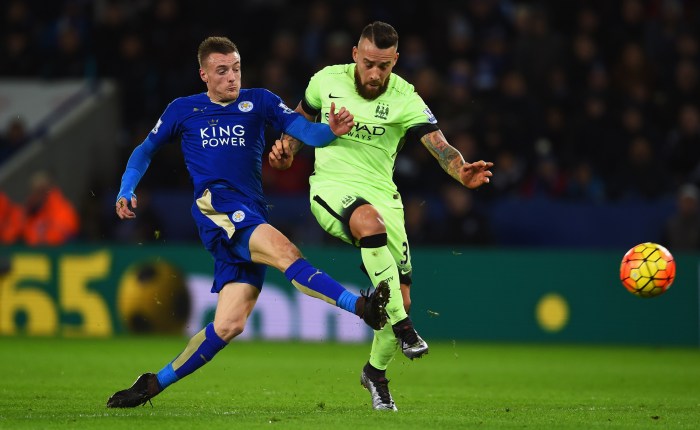
Against Manchester City they face a team that won’t begrudge the Foxes any lasting success at the top. Fans of Manchester’s club can easily recall a time before the Sheikh’s money, when winning one more League Cup would have been a heady dream and chances of a Premier League title were folly.

Financial Fair Play (FFP) was seen as a tool to maintain a status quo for the traditional big names. The assumption being, only a massive outlay of cash could enable a side to break the top four.

Multiple articles here, and Financial Fair Prejudice, never spoke out against FFP to keep Manchester City safe. They already made it in the castle before the drawbridge was up. The bordering on illegal and morally ambiguous FFP meant teams feared that if weren’t already a big fish, they never would be.

Leicester have changed all this.

Okay, they do have billionaire owners that have restructured the club. But their accelerated growth period pales in comparison to Man City’s.

Their stubbornness to accept everybody else’s predictions and perceptions has been aided by a stuttering league campaign from the title rivals they face next. The Citizens have been equally consistent in their form by being the antithesis of Leicester’s attitude.

Instead of non-stop application, Pellegrini’s men appear to fire in spits and spats. When their backs are against the wall then a world class City emerges and brushes sides away with ease. Far too often they spend the first twenty minutes of matches drifting, as if their talent alone will ensure success. The effort comes later, when the task has been made harder than it should have been.

After Saturday there should be a clearer idea on where the season’s heading. The neutral will warm to the idea of Leicester City taking victory and then securing a title win so improbable Hollywood movie execs wouldn’t dare use it in a script. If the Foxes win, the press will say it is remarkable achievement that they won the “best league in the world.”

If Manchester City remove Leicester’s point advantage it could be the start for the final push. Players are now fighting for their careers as they try and impress incoming manager, Pep Guardiola, from afar. With Arsenal commencing their annual fall away, only Tottenham lurk as the other potential dark horse.

If Man City win the title in Pellegrini’s final year, the press will comment on the lack of a legitimate challenger and make more news about the low number of points needed to win a weak league. The points spread is currently being used to rejoice at how competitive and tough it is.

But there’s nothing but truth in the statement: the league never lies after 38 games. Whoever that is will deserve it most, all other factors become irrelevant.

The City that takes three points Saturday lunch time will start to imagine their hands on the title.