Premature Pep Talks

Premature Pep Talks

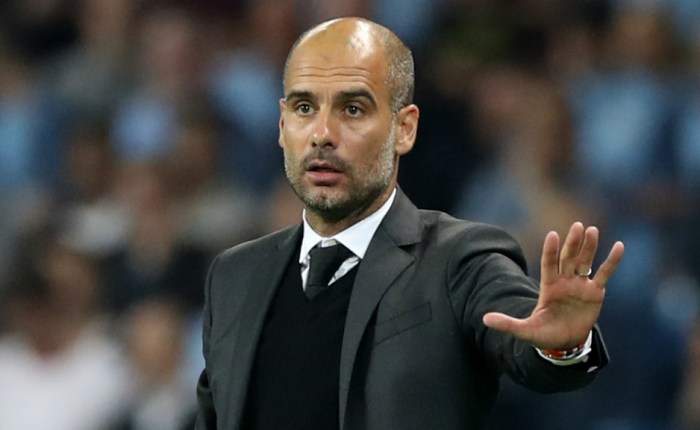
Ever since Pep Guardiola arrived at Manchester City he has been subjected to an unprecedented degree of inspection and expectation. Understanding the negative impact this could have, Pep has been the voice of reason. When City started the season with a run of ten wins, he spoke to closed ears when attempting to explain it wasn’t a true indication of the team’s current level. Now with a dip in form, he once again faces ignorance from a media determined to undermine Europe’s most successful manager.

Suddenly there is no shortage of experts offering advice to the Spaniard. Pundits that occupy seats in the safety of studios, or journalists who have to service the wants of fans from opposing clubs (the clickbait brigade), are suggesting that his proven methods will never work in the Premier League. That before we’ve even entered November, it’s time to admit the English way is unique and his crazy ideas have been shown up for what they are.

Not satisfied with telling a man – who was happy to point out in Friday’s press conference he’s won twenty-one titles with his ideals – his tactics are wrong, they are also attempting to forge wishful transfer rumours into facts. He was happy to point out where they are incorrect.

Beneath the obvious, are more subtle claims. These are just as easy to dispel. The most erroneous is that in principal he is no different to predecessor Manuel Pellegrini. For those that found that amusing (as any serious person should), take a second to let the giggles pass.

The notion comes from the half-baked view Pep and Pellers both shared a common denominator: They have one way and no Plan B.

This was clearly a case that could be mounted against Pellegrini. Like Roberto Martínez, it seemed they’d rather lose playing their way then adapt to opponents and unique situations. They refused to be proactive, instead soldiering on, expecting different outcomes with faltering systems.

Pep is different, and certainly not a one-plan man.

The ethos – his religious view on how the game should be played – will remain consistent, but within the framework changes are made. Whether it’s switching to three at the back or an extra man in midfield at the expense of a striker. There was always a rigidity with Pellegrini (even with formation changes) that isn’t evident with Pep. A tailored approach after examining the opposition has replaced blind optimism, or should that be: plain stubbornness.

When those able to acknowledge Pep has adaptability, they cover it by saying he should slowly implement his ideas and until then play to the strengths of the current squad. It can’t be argued that the best managers go in and work out where strengths are and chop the weaknesses. But isn’t that what he’s done already with the brutal treatment of players like Joe Hart and exclusion of Yaya Touré?

It’s only managers who are survival experts, like Sam Allardyce, that allow personnel to dictate shape and style. There’s a reason veterans of the managerial game have never featured in the Champions League while Pep has won it two times.

It is always a results based business – Roberto Martínez would have done well to remember this – but to take the silverware, become an all-time great, you need to have ideals that can be transposed across a spectrum of tactical problems.

He’ll accommodate players where possible but ultimately they bend to his will: his ethos can’t change for theirs.

Unlike Pellegrini, who it seemed sent players out with vague instruction, Pep makes it clear what he expects to see. When his system fails it’s obvious where individuals have been lacking. This accountability makes it easy to root out weaknesses and build the correct team. That process is now underway following the passing of the honeymoon period.

Players are beginning to show their true colours. Some are just unsuitable for the demands Pep is making. Others, through either poor work ethic, attitude, or time of life, cannot perform to the required standard. Pellegrini may have ignored their shortfalls, Pep will not.

Guardiola also knows football tactics are constantly evolving, it’s why he came to City. This opportunity is the continuation of his education. There’s no suggestion he’ll plough on with failing tactics but he’s confident the overriding ethos works.

People shouldn’t complain when José Mourinho parks the bus because it’s boring, they should question why he’s still rolling out tactics from yesteryear. Pep’s dynamic approach makes even the Portuguese United boss look like a tactical dinosaur.

But members of the “Red Press” would rather highlight Pep’s perceived failures, that are nothing more than growing pains, and ignore how the Special One has become the Stagnant One.

They also believe his tactics have been worked out. That Celtic somehow exposed the key to the conundrum when they only replicated what Swansea had attempted. Pep would rub his hands at the prospect of every team pressing City every game until the end of the season. If his system is implemented correctly, they’d be making the space for him in vital areas of the pitch.

But it’s easier to pretend after years of success, the brutal nature of the Premier League has cracked the Guardiola code. It’s as if he was the Illuminati and Brendan Rodgers formed some part of a Da Vinci Code, that the Tom Hanks looking Premier League managed to work out in time to prevent an embarrassing runaway success.

Thankfully people like Robbie Savage have sound advice. The man that only adorns the BBC because his dress sense brightens up the dreary looking Phil Neville, and his mindless enthusiasm on commentary offsets the drier tones of Mark Lawrenson, believes Pep isn’t a tactical genius after all. Robert Langdon – sorry, the Premier League – has seen to that.

Nor does Pep need to reinvent the wheel to conquer Europe with City, just fix its punctures.

And that’s the problem: Pellegrini didn’t leave Guardiola with a working wheel. It was a shiny cart with its components used for forward motion removed, instead sat upon shaky bricks and an instruction manual that had been left out in the rain. City didn’t need tweaking, they required revolutionary treatment.

There is no one better in the game to provide this than Pep Guardiola.

Like any revolution, it will take time. Those that have faith will be patient, those with hope it fails will fabricate stories and print insincere views to upset the steady progress.

Pep doesn’t need to change his ethos; he just needs to realise in the land of Premier League football, freedom of speech means the nonsensical have the loudest voices. But empty vessels do make the most noise…
The Selective Ethics of Team GB’s Fans

The Selective Ethics of Team GB’s Fans

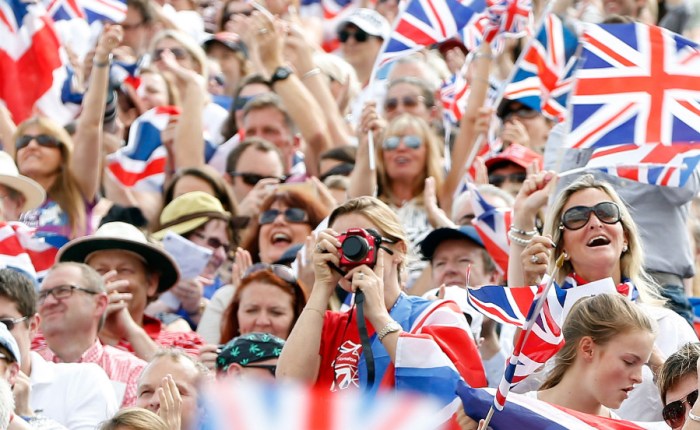
The excitement, euphoria and sense of patriotism which had subsided following Team GB’s success in Rio, will no doubt get a shot in the arm following today’s Olympic parade in Manchester. But enough time has passed since the final medal was placed over an athlete’s head to examine the cost of finishing second in the medal table. Not just the financial implications but the moral bill supporters must front.

The largest element of hypocrisy is the amount of funding Team GB received, yet their supporters have conveniently ignored this. The same people that bemoan the amount of cash in major sports, such as football, F1 and boxing.

When teams win the Premier League (Leicester aside) the usual implication is they bought the title. The winner of the F1 drivers’ championship is labelled as only doing so because he had the fastest car, and that comes from being at one of the richest teams. Normally every sporting achievement has a negative campaign about the finances involved.

Sometimes this is healthy. It highlights inequality surrounding the distribution of wealth within certain competitions. It makes governing bodies accountable and fights the corner of the paying public. Those at grass roots or lower tiers of sports are given a voice, helping raise cash for their survival.

But little has been made of Team Gb’s £275m funding.

Obviously it is important to invest in the future of sport, and the fruits of the cash injection have been clear for all to see during the last two Olympic games. But there is a forced ignorance taking place which means no one is questioning the level of spending or the moral implications.

The Olympics has moved away from the wholesome meet that sees raw athleticism take precedent over large commercial sport. The IOC can be thanked for this. They are the Olympics version of FIFA. Just another “non-profit” organisation that saw the marketing revenue for Rio exceed $9 billion. Television alone accounted for $4.1 billion of the IOC’s revenue.

Money is inextricably linked to top level sport. It is inescapable that if there’s a public interest, large companies will exploit the revenue potential. It would be foolish to believe the Olympics is any different than the NBA, NFL or the Premier League.

Like those global juggernauts, if you want to be successful, you need to spend big. And Team GB was bankrolled as if owned by oil made billionaires. Except the funding came from the tax payer and Lottery money. Most won’t complain about cash being siphoned away for sport but most won’t have examined where it’s gone.

£5.7m for a badminton bronze sounds excessive. If that doesn’t bother you, perhaps £6.9m for the modern pentathlon and its zero medal haul will have you pondering the cost of blind investment. Rowing did bring three gold medals but at a cost of £32m.

Of course, investment always enables better infrastructure but the sense Team GB bought their second place on the medal table permeates the mood when talking to rival nations. That could be sour grapes, but only the sort of comment people here make when discussing other sports. Sports that are self-sustaining and viewed consistently by millions. Despite the £14m investment, how many people will actually watch a gymnastics meet before the next Olympics?

This isn’t sporting legacy, it’s a fleeting fascination that comes around every four years. It was an expensive hit for a short high.

The moral high ground has many spots. As well as bemoaning the money in other sports, people are also quick to pass judgement on other nations when there’s a suspicion of wrong doing. The world revelled and condemned all Russian athletes when evidence of state-sponsored doping came to light.

Without a thorough investigation it was deemed appropriate to label all their athletes guilty until proven innocent. The calls for transparency were loud and clear.

Those calls have become barely audible whispers since Sir Bradley Wiggins’s use of TUEs has been leaked by Russian based hackers. There’s no suggestion he has done anything illegal, but how many people are genuinely comfortable with the notion the rules can be – and have been – bent to enhance the chances of success?

Those involved in the Russian witch-hunt should now be working tirelessly to clear the murky waters surrounding TUEs.

But the games come around every four years and as long as Team GB is successful the hunger to question the processes in place, whether it be funding or medical exemptions, will be virtually non-existent.

Safe Standing is Football’s Oxymoron

Safe Standing is Football’s Oxymoron

Until three o’clock yesterday afternoon, I would have described myself as a proponent of safe standing areas in football stadia. The arguments for have mounting evidence as teams in Germany, and now Celtic, demonstrate its effectiveness. Then a turnstile failure at Manchester City’s Etihad Stadium gave an example of why the risk with standing areas is greater than any benefit.

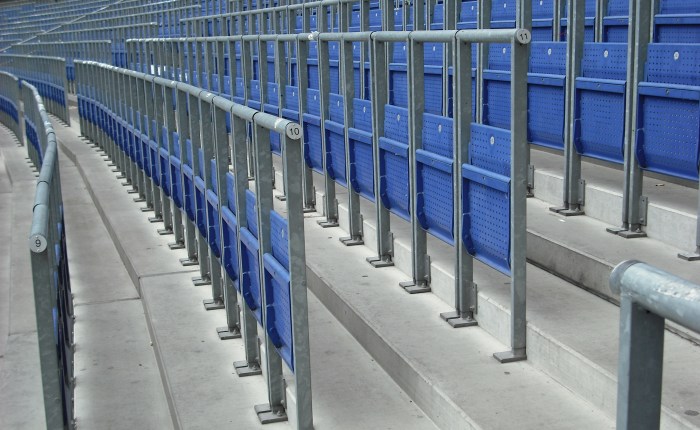
On the face of it, safe standing is sold as a modern take on an old fashioned way to view football matches. Those that want the system will explain how each person is allotted a seat number which relates to the folded away chair. This ensures order and crowd control. Within the standing areas barriers prevent surges, eliminating forced migration of fans into areas when things get a little raucous.

They rightly point out that in today’s top flight, many fans stand anyway. In doing so they are at greater risk than if they were inside a properly policed safe standing area.

In a perfect world, the arguments for safe standing cannot be denied. 70% of Premier League clubs would back its return, Tottenham Hotspur are even including the feature in the design of their new stadium. It’s also believed Manchester City would incorporate such a section within their North Stand when it’s remodelled to add an extra tier.

But this isn’t a perfect world. The supporters of safe standing never consider the potential pitfalls. At the Etihad on Saturday a power loss showed how errors can align to create potential nightmare scenarios.

It should be noted, there were no major problems at the ground but the blueprint for disaster was written.

As turnstiles became inoperative, queues quickly filled the concourse outside the back of the South Stand and the streets beyond. With some fans being delayed for up to fifteen minutes, there was clearly pressure on staff to appease the frustration.

So they opened the large exits walls beside the turnstiles and allowed fans to flock in, en masse. From a slightly elevated position on chairs, staff made the call for fans to have passes on display. But with such a determined flow, and at least several people wide, it would have been difficult to say with any degree of certainty that every ticket and seasoncard was seen. As with any system, it is the introduction of the human element that leads to problems.

Had Saturday not been against Everton but a Manchester Derby, and the fans were rushing into a safe standing area, the outcome could have been very different. There would have been more fans than available spaces. Unlike with a seat – where if you don’t have one, you can’t sit on someone’s knee – with safe standing the uncounted extras would have squeezed in next to their mates.

Human nature would have led many fans to share their space. But the fans would have kept coming, the available space decreasing. Unlike an all-seater stadium, where overcrowding is immediately apparent, the safe standing area would encourage a stealth swell.

All these elements to align like this would only happen once in a blue moon, but to have the potential for it to occur once is one time too many.

Tragedies like Hillsborough should have taught us to safe guard against a repeat. To ignore the Taylor Report and legislation in the 1989 Football Spectators Act demanding all-seater stadiums, would be a step back. A step in the direction of needless danger.

Events at Manchester City on Saturday display only one perfect storm template. There are countless others and it’s the ones that can’t be imagined that will slip through the net.

In hindsight, the safest thing City staff could have done was to deny access until each supporter could be counted through one at a time. It would have led to mass disappointment and thousands of refunds but wouldn’t have courted with danger.

Because the match day experience in England is now so sanitised, the staff working the grounds, many of them too young to recall the tight-packed days experienced in places like Maine Road’s Kippax, don’t appreciate how close they are to catastrophe.

Without better training and education, highlighting the unique hazards packed sporting events face, errors in judgement would prove fatal if the safeguards of the Taylor Report are removed.

Formula One isn’t looking at ways to make the cars more dangerous because the current safety measures are proving effective, so why is football looking at ways to drive without a seat belt and helmet?

The words “safe” and “standing” should never be placed together and spoken aloud in the Premier League. Failure to heed the warnings of the past will see the future tainted with further failings.