Is Alonso Cursed?

Is Alonso Cursed?

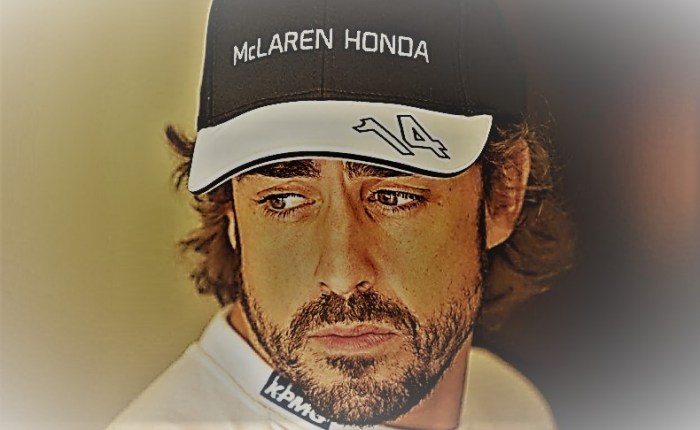
There are 724 other Formula 1 drivers who would have loved some of Fernando Alonso’s curse. He is one of only 33 world champions the sport has seen. But it’s fair to say, Fernando’s days with the crown feel like a lifetime away now, whereas bad luck seems to follow with permanent DRS enabled.

It was the recent attempt at IndyCar’s Indianapolis 500 that endeared him to a new legion of fans but once again showed the stars will not align for the Spaniard. It would have been the stuff of dreams had he won the big one in his rookie race. Ability wise, it wouldn’t have been shocking, but it is more Hollywood than reality.

This isn’t to say IndyCar is to be taken lightly.

It may appear a simplified sport to F1 aficionados but there is an art to oval racing. On many occasion fans of other motorsports laugh at the idea of going around in a circle. It’s as if they see the Indy 500 as a simple foot down and steer experience.

In contrast, an average of 16.7 turns are dealt with during each race weekend on the current F1 calendar. During the course of the season, 334 are taken, the highest for an individual track is 23, the lowest being 9 (which still dwarfs the Indy 500). This means each circuit becomes a compromise on setup.

No car can perfect each corner and the straights.

Oval endurance racing is about how to optimise the car for what appears to be a narrow choice between downforce and speed. But the changing conditions – both on track and in car – require gentle tweaks in weight distribution and balance. Rather than the optimisation of several sections, with a knowing sacrifice elsewhere (often offset with ERS or DRS), it is a tightrope walk that requires intelligence combined with a supernatural feel.

The two elements Alonso has above all F1 drivers, past and present.

Such a linear setup target, relying on the feel of the car, should sound like second heaven to someone like Jenson Button. Often described as unbeatable when the he feels the setup is perfect. But he dismissed IndyCar in the clearest terms when interviewed at Monaco. Perhaps the greatest acknowledgement: to get that perfect setup isn’t an easy task.

Alonso took to the Andretti based McLaren-Honda and the new formula as if he’d lived on oval circuits. He won hearts and minds in America and ensured his status as an all-time great. Transcending F1 and proving he doesn’t need an Indy 500 win and Le Mans 24 trophy to solidify his legacy.

But again, he does this through failure, not success.

If life is trying to send him subliminal messages, it’s getting bored with how slow he is to take the hint, so it sent a glaring one. The architect of his demise was once again a Honda badged engine. It forms a long line of conspirators against the Spaniard.

His personal choices can, of course, be questioned. But aside from conduct during his first McLaren stint, he’s appeared to be the loyal and dedicated professional teams pay $40m a season to secure.

With his unfortunate turn of luck stuck in a perpetual cycle, one has to consider a sinister form of fate is driving him to retirement without a third world title.

Time and a narrowing market of professional opportunity compound the issue.

McLaren will not be competitive this season and even the most optimistic Honda engineer cannot be expecting to produce an engine on par with the leading pack in 2018. Such a turnaround would be nothing short of miraculous but the talk of it sounds nothing short of folly.

There’s potential for movement in the top two teams of Ferrari and Mercedes. But the Prancing Horse always has a clear Alpha and Omega when enjoying periods of competitiveness and it’s hard to see Vettel losing his number one spot.

Mercedes sell the idea of equal footing but after the strain of the Hamilton/Rosberg dynamic, they’ve opted for the safe Bottas. He’s formally managed by Wolff and likely still influenced by the Austrian. He’s certainly more malleable than Alonso would be if it came down to an awkward in-house championship fight.

Which leaves Red Bull, probably the best driver balance at the front of the grid with years of longevity, should they wish to retain and are able to fend off third parties.

This leaves Alonso stuck in a seat he sought out after giving his prime years to a failing Ferrari. A Ferrari that came good not so long after he departed. Detractors could claim this is indicative of a negative effect he has teams.

Sportsmen are notorious for being superstitious. Whether it be always placing the left glove on before the right or a lucky meal that can never change on the day of the event. Alonso’s must be to break mirrors every seven years, or driving around for hours hoping to see magpies sat on their own. (I personally don’t have any superstitious tendencies and hope to keep it that way . . . touch wood.)

Since the Indy 500 experience, his return to F1 has continued to be tainted by poor luck. In Azerbaijan he collected a bittersweet two points. The not so subtle remark about how they could have won the race was aimed squarely at his engine supplier.

Austria witnessed a good Alonso start off the grid, only to be wiped out at turn one. An innocent party in a collision where the fates conspired against him.

The British Grand Prix at Silverstone underlined the woes of living with Honda. Starting from the back of the grid after a thirty place penalty, a mechanical failure added another DNF to this season’s tally.

It must be difficult to remain upbeat when faced with repeated setbacks.

Is it just bad luck? Poor judgement? Or does someone, somewhere, have a voodoo doll that looks like a little Spaniard in a racing suit? Is it a curse that means Fernando Alonso will never complete a hattrick of F1 world titles, let alone the triple crown of Formula 1 Champion, Indy 500 winner, and a 24 Hours of Le Mans victory?

Should he secure any of the above, his arduous journey since his last world title in 2006 will feel like it was worth all the ill-fortune in the world. However, all signs point to his misery continuing indefinitely.

 

We Are Daniel Blake

We Are Daniel Blake

Sometimes a film comes along that offers more than social commentary, or even with the intention of raising awareness. It becomes social responsibility. The voice of the voiceless and ignored masses. It presents a civic duty to us all. Its power doesn’t arrive by inflating issues to fill the big screen but allowing the uncomfortable truths – the government would have you ignore – stand front and centre.

Ken Loach’s film, penned by Paul Laverty, shows us what people can be reduced to in modern day Britain. A working-class man that genuinely wants to work but can’t receive assistance from the state despite medical professionals insisting he doesn’t resume activity.

A single mother that only wants the best for her children but is faced with impossible choices as she sees support slip away. Surely the net of despair is closing fast when trips to the food bank aren’t a turning point, just a brief interlude to delay starvation.

She collapses, eating in an aisle, ashamed but desperate. Apologetic to those who do care for her plight and don’t need her pleas for forgiveness. All the while, an unsympathetic state turns the screw. The starvation of her soul becomes more debilitating than malnutrition.

The cold faces of benefit officers symbolic of the callous government peddling senseless rules. These only exist to ostracise the most vulnerable, placing a buffer between real world issues and the comfy 1%.

The working-class man is the title featured Daniel Blake. A far from workshy joiner who suffers a cardiac arrest. Following this, his dignity is placed under lock and key by the benefits system.

His cardiologist flatly refuses a return to work but a work capability assessment – carried out by a person so devoid of humanity and common sense, they resemble a primitive android – declares him ineligible for support allowance.

It transpires his doctor was never consulted and he can’t challenge the judgement until contacted by the appeals officer. This racks up his phone bill and even when, in person, he explains at the benefits office he isn’t computer literate, the stock response is to consult the website.

There is one helpful face there but even she is reprimanded for offering assistance instead of letting people flounder and fail.

Katie is the single mother. A woman in Newcastle after leaving London due to a housing shortage. A long way from home and alone, her first taste of “assistance” comes in the form of a week without payment due to her late arrival.

It creates a volatile scene that begs the characters involved – along with the viewer – to realise it’s just a person that needs help. Shouldn’t the rules exist to aid, not obstruct?

The Daniel and Katie dynamic shows how people pull together when faced with insurmountable odds. If it weren’t for this, the country would collapse because the powers-that-be have stopped listening. And watching. And caring.

Daniel’s neighbour, a young man that offers help when asked, provides some light relief. And in spite of the main subject matter, the spirit of good-nature and humour somehow manages to find its way out of the few available cracks of light.

Ultimately it will be viewed by those with differing political views as either observation or incitement. A warning shot or a motivational video. Those that fail to take heed of the message, are ignoring the real problems the country faces. It’s easier to look the other way: the government encourage you to do just this.

Writing this on the eve of a General Election, it seems pertinent. Right now, Daniel Blake’s problems may seem far away and unconnected to your own. As perhaps the elderly care debate, student fees or NHS funding.

But excusing one wrongdoing because it doesn’t directly affect you, gives the government carte blanche to move onto other political agendas. If you continue to allow the Daniel Blakes to grow in number, one day you will find yourself among them.

By then it will be too late to call for help or expect change.

You are Daniel Blake. They are Daniel Blake. I am Daniel Blake.

What £100m meant in Manchester

What £100m meant in Manchester

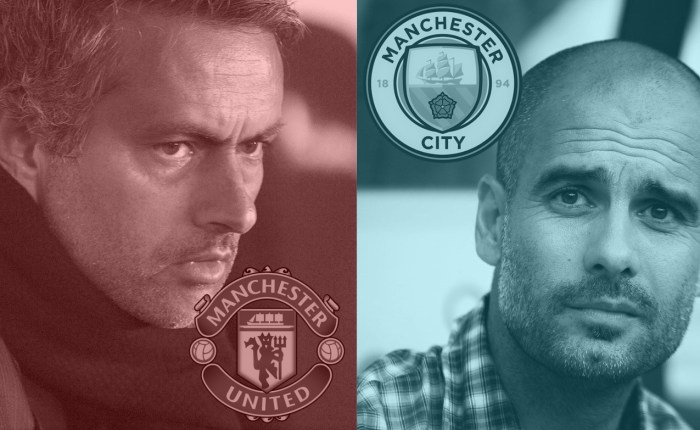
Back at the start of the season, What £100m means in Manchester looked at the two differing approaches Pep Guardiola and José Mourinho took to their respective rebuilds at Manchester City and Manchester United. The main crux of the issue was Mourinho’s seemingly small recruitment drive, with a large portion of his budget splashed on one man – Paul Pogba. Guardiola was applauded for a policy of planning for the future.

As ever, football is a results business. Both managers had the luxury of being able to impress upon the board the size of the task ahead. José could nod to the failing of two previous regimes, Pep had – and still has – the bonus of being so vaunted by his employers, he is virtually “unsackable.”

This doesn’t mean he, or his United counterpart, is beyond criticism and analysis. Each would have entered the season with personal objectives, presumably closely aligned with the board’s. Despite the early bookmakers’ odds, neither would have courted the idea of a Premier League title.

Even six straight wins to kick off the league campaign, with cup victories interspersed, Pep seemed reluctant to talk-up City’s title chances. He went as far to say a defeat would be a good thing. Was this the first sign he realised his squad couldn’t live up to the hype? Did he want to see how players would react under adversity?

He didn’t have to wait too long.

Many point to the 3-1 home defeat by Chelsea as the season’s turning point. It was a game City rightly feel hard done by, but it wasn’t the significant moment many point to. That came on 21st September, with the laborious League Cup victory away to Swansea City.

Brendan Rodgers was declared the architect of City’s new tactical demise when they faced off in the 3-3 Champions League group stage match a week later. All he did was apply the same approach Swansea had. It was simple: City don’t like the pressing game played back on them.

When teams are winning, every decision the manager makes is genius, his transfer policy justified. By the 10th December’s 4-2 defeat by an underperforming Leicester City, with three defeats, three draws and three wins in the league since the start of October, it was time to ask questions.

A transfer policy that planned for the future failed to deal with problems in the present. It was no secret City needed full backs before a ball was kicked, and yet the team had no reinforcements and was even converting one into a makeshift centre-half.

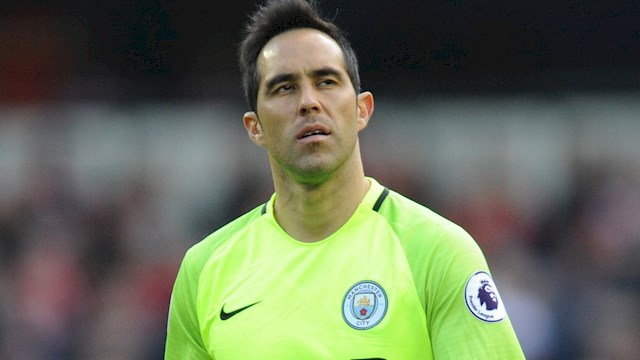
Managers live and die by signings; the Claudio Bravo move was never popular with a core base of fans due to the Joe Hart connotations. It didn’t take long for the rest of the crowd to turn on the mistake riddled Chilean. It’s ironic that for a squad with two players named Jesus, it’s the goalkeeper that appeared to have holes in his hands.

Bravo Transfer Man City

City began to look one dimensional – good at the front, weak at the back, no plan B (a remark Pellegrini would smirk at now) – but signs of life were to come.

Over at Old Trafford, Mourinho did was he does best. He made the team hard to beat after suffering two consecutive defeats early on in the league. Unlike the Van Gaal awkwardness, there were signs the Portuguese manager was making strides forward. The problem was those around him took bigger ones.

United became experts at finding draws.

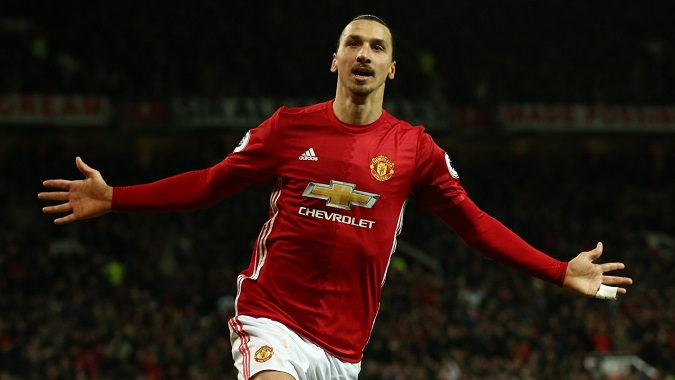
In hindsight, his more direct approach in the transfer market deserves plaudits. The four players brought in – Eric Bailly, Zlatan Ibrahimović, Henrikh Mkhitaryan and Paul Pogba – all had good seasons. Pogba was the only player to face negative remarks, but that’s the cost of a £89m transfer clouding judgement.

Zlatan Ibrahimović United

Ibrahimović, season ending injury aside, did maintain the same high level throughout, dispelling concerns about his age.

All this United based positivity does, is fail to acknowledge one small minor issue: this isn’t the season José planned or talked about.

Before a ball was kicked, he spoke of getting his four players. It’s all he wanted. He gave his requests list to Edward Woodward and stated the quartet mentioned above was all he needed to make Manchester United competitive again.

When he made this claim (or should that be promise?) he wasn’t alluding to a sixth-place finish, England’s secondary cup and the Europa League.

This isn’t to devalue United’s achievements. Every fan that travels to Wembley wants to win and holds the League Cup in high regard on the day. And even though Mourinho himself has denounced the Europa League in the past, it is now an important prize.

Added to the equation it was the only piece of silverware United had never won and it feels like a grand achievement.

MUFC UEL

And it is, if only for the return of Champions League football, the riches it brings, and the players it allows clubs to attract.

But it was a last-ditch gamble from Mourinho. He went into the casino and placed all his chips on one colour (we’ll assume red) and hoped for the best. When he made his transfer requests to Woodward, so publicly as to bend his arm on the Pogba chase, a top four spot was the least of his desires.

To dip out, and in some fashion, would never have been the plan.

So, who spent their £100m best?

It’s hard to say – which indicates failings on both sides – but it comes down to who is positioned best moving forward.

City and United have slipped straight into the Champions League group stage. This will aid with some transfers and Guardiola doesn’t need to juggle an awkward qualifier this year. But just being in Europe’s elite competition isn’t good enough on its own.

The year of grace for both men has passed. Gambler or not, Mourinho needs to identify fast which players will turn his solid unit into a team with a sharp bite. Regardless of European performance this year, it’s hard to see the Old Trafford hierarchy accepting a league campaign that doesn’t have them in the title race.

The same goes for Guardiola, there has to be a clear upward trend. His transfers were a mixed bag. When the original article was written at the start of the season, the £100m figure was neat and tidy regarding both clubs’ Net Total. In reality, City spent a further £56m (£4m deducted for a youth transfer signed for in 2013) following the closing of the books at the season’s end.

Where Mourinho added several and worked with the rest, Pep brought in three times this amount but only kept six of the faces at the club. His nose for a bargain in the form of Nolito petered out, as did the belief John Stones would transform into a world class player before our eyes. It may still happen, but it was a burden the young Yorkshire man struggled with.

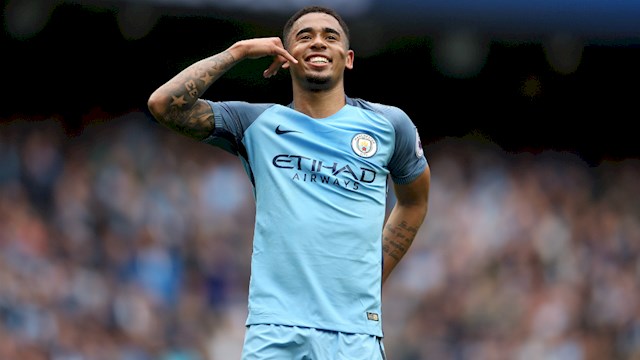
İlkay Gündoğan arrived injured and is so again. A gamble taken in a dressing room that often resembles a Bupa clinic. But eyes on the Leroy Sané’s second half of the season and Gabriel Jesus prove the Spaniard has a solid plan in place.

Gabriel Jesus

This was always a big undertaking. He isn’t trying to build upon the success of former managers, instead it’s a process of ripping out the footballing foundations at the club and starting again in his image.

Pep overvalued the talent at his disposal and underestimated the Premier League.

Unlike Mourinho, Pep – quite often to a fault – never criticises his players to the press. But one has to assume behind closed doors he’s been fuming. He must have expected more from them or that initial £100m would have been spent on emergency measures rather than youngsters – like Oleksandr Zinchenko and Marlos Moreno – who have yet to see a City shirt.

Mourinho’s experience and insight afforded him a more tailored approach. But the table never lies, and a year on from a change of managers, there has been clear – albeit, slow – progress at City. This will allow Pep more time to complete his vision.

He appears to appreciate the size of the task now, his early big money moves in the post-season prove this.

As for United, the Europa League success has given them a return to the perceived top table. If they fail to press those above in the coming season, a new type of pressure will come down on José. The safety net has been removed.

£100m meant both teams in Manchester breathed sighs of relief by the end of May. United had silverware for their endeavours but both clubs will look at the Premier League table and realise a monumental task still awaits.

Come August, we could be asking what £300m means in Manchester.