Everything that Remains

Everything that Remains

Season one of The Leftovers was highly regarded here at The Reflective. With the end of the trilogy upon us, it’s a good chance to look back at the second season and recall if it’s worthy of a proper, definitive conclusion.

A fear going into the follow-up season is whether or not the script writers will do the original work justice. The source material of Tom Perrotta’s novel had been exhausted in the first series. It meant those that turned their back on Lost were prepared for Damon Lindelof to undo all the solid foundation the world of Mapleton had been built upon.

They needn’t have worried (or abandoned Lost, actually), for a number of reasons. Lindelof understood the concept and his co-writers added to the mystique each episode, rather than detract from the core essence of the novel; Perrotta himself even penned a few scripts.

Also, the story is one that is moving relentlessly forward. After the Guilty Remnant has been beaten and burnt out of town, there was little need to labour that part of the story. Other shows may have rehashed the first series, spending another ten weeks exploring the after effects in the same bubble.

That isn’t how life works and The Leftovers is an examination of this in its most complex form: the human condition.

Instead they introduce a new fictional town: Jarden, Texas aka Miracle. The moniker exists because this is a unique place, not one single person vanished in the Departure. So, it is seen as a safe haven should a second incident ever occur. A pure place where people can be saved. But wherever there’s people, there’s sin and corruption.

Symbolism and metaphor are interwoven into the events. This is evident from the first scene, where a pregnant primitive woman is seen to avoid death from rockfall, enters labour, but ultimately dies defending the life of her child from a snake. The infant is rescued by a passing female at a watering hole.

That riverbed happens to be the same one in present day Jarden, and we’re away. The events and interpretations begin from that initial element.

The Leftovers e02s01

The story requires viewers to jump around and become reacquainted with the main players from the previous season. Kevin Garvey and Nora relocate to Jarden to escape memories. Carrie Coon’s character is especially hounded as her house is a favourite spot for investigators. After all, the dining room table did take three people all at once.

The scientists have already formed a theory behind what the rapture moment was but this is complicated by the sway toward something spiritual. Which is why Nora chooses Jarden. Not for the religious connotations, but because her brother, Christopher Eccleston’s Matt Jamison, is doing church work for its congregation.

He is one cornerstone of the probable human choices we see. Another is the Murphy family, they neighbour the new arrivals. The father, John, is an inadvertent mob ruler. They want to keep their little patch of paradise safe from the outside world. When his daughter and her friends go missing, at the aforementioned lake, he becomes a dog with a bone.

The daughter in question Evie, played by the screen-filling Jasmin Savoy Brown, propels the story along without requiring much mention. This is thanks to the screen presence of the actress and the lasting impression she leaves, to the unfortunate fact Kevin Garvey woke at the crime scene, unable to recall any sequence of events.

We do catch up with the Guilty Remnant cult. They are still actively recruiting and we see this alongside Tom Garvey infiltrate them in order to save members and get them to a support group. This is being headed by his mother – and Kevin’s estranged wife – Laurie Garvey. She is now free from its clutches and even attempting to sell a book about her time on the silent side.

The Guilty Remnant is a cornerstone element that represents mankind’s strive for power and control. Many belief systems co-exist in a show where people are struggling to make sense of a world without facts.

The viewer is never taken toward a right or wrong answer but is led down the garden path on occasion. And we also see behind the curtain. Season one was never about giving answers to the Departure, you won’t find a concrete solution here but it’s no longer about just accepting the unknown.

Through Kevin’s experiences, we literally head into the unknown. No spoilers will be given here (which makes this a difficult review to compose) but just as we had to accept the Departure, we have to accept other forces may be at play. Or not.

The highlights of the season will be how groups of people gravitate to differing ideas and then persecute opponents, a representation of humanity condensed into a TV show.
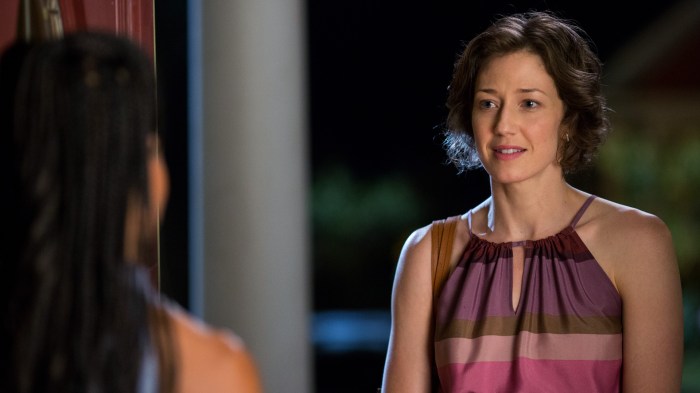
Carrie Coon The Leftovers

Carrie Coon – an amazing discovery from the first season – also shares a scene with Regina King (Erika Murphy) that is Frost/Nixon like. The tension palpable, the performances beyond anything you’d expect to see outside of a serious theatre play.

And the main mention has to go to Justin Theroux. His character has evolved from when we first saw him as the town’s cop. When he dons that outfit in a late episode in this season, the complexities and sides of his persona become startling obvious. He spends the season in his own personal purgatory, by the end, he is beaten down and you feel every struggle he’s endured.
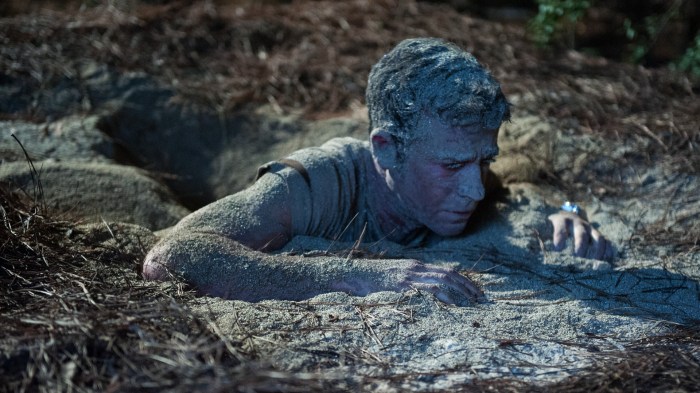
Justin Theroux The Leftovers Season 2

Even the Max Richter soundtrack – always a powerful and efficient tool – struggles to do Theroux’s turn and Kevin’s plight justice.

In the hands of others, the concept for The Leftovers to return would have been seen as jumping the shark. Instead we are treated to something even more profound than the original. A sign of its true excellence is how the mysteries that remain are less important to solve than the fate of the people involved.
Time for Arsène to Go

Time for Arsène to Go

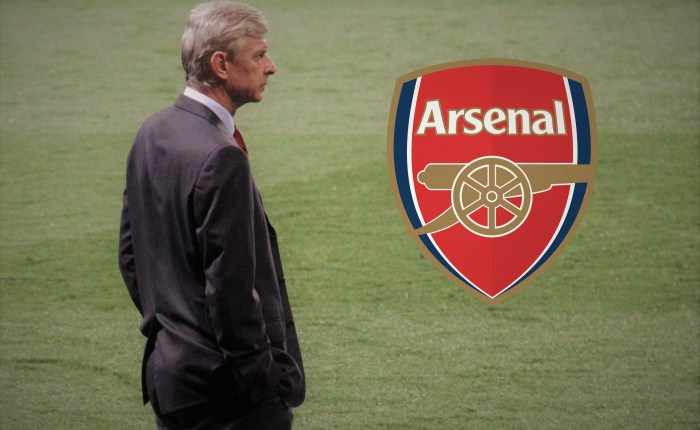
The indignity of an overhead plane calling for your removal is a moment no manager can survive. While it raises questions about the class of fan that arranges such a display, it is a clear watershed moment. Arsène Wenger wasn’t the first to befall this treatment, but he is the latest and it means bridges can never be rebuilt with a large section of the Gunners’ support. Before the situation declines further, he should do the most logical thing: announce this is his last season at The Emirates.

If only it was so clear cut. Wenger is an open book. His achievements during his time in North London are as obvious as his weaknesses. The main hindrance now being his stubborn nature. It’s that single purpose and drive that once made his Arsenal side become Invincibles. But that was a long time ago – a different era, even. His way is no longer the way. With each passing season when he digs in, Arsenal fall further behind.

His presumed principles should be applauded. On the surface he is against the modern way of buying success. He’d rather develop players. A by-product of this has been the club’s ability to quickly payoff the outstanding loans on their new stadium.

For a while, a new stadium – bought and paid for – was enough to satisfy the supporters. It was always accepted with the understanding once it was paid off, they’d once again compete in the transfer market. Well, the bricks and mortar no longer require financial nurturing but the team does. And Wenger refuses to budge.

What is baffling, is how the stance on transfers is broken now and again (Mesut Özil £42.5m; Alexis Sánchez £35m; Shkodran Mustafi £35m; Granit Xhaka £34m) without an air of caution or appreciation for market value. Still, a feeling persists they are two or three players short of a title winning team. The problem is, they’ve been short for years now.

ozil snachez

Not to take anything away from Leicester’s achievement last season, but that was Arsenal’s best chance to put a decade of being happy with top four, and title nearly rans, behind them. Chelsea were recovering from a Mourinho meltdown, Manchester City had a long, painful goodbye with Pellegrini, Manchester United and Liverpool were still missing in action.

Their local rivals, Tottenham Hotspur, showed they lack experience and maturity when it comes to leading the pack, eventually finishing below The Gunners. It was a case of “now or never.” Arsène’s players opted for the never.

And no matter how long he clings onto power, further success will continue to elude him at The Emirates.

FA Cup victories are not sufficient. Top four finishes – as lucrative as they are – are not satisfying. Success in Europe is, but that’s gone for another year. A Premier League title is, but even in the unlikely event Chelsea implode, other teams will be more likely to capitalise.

The truth is, players and fans alike no longer believe in the Frenchman. It is sad to see such a great record at Arsenal be bookended by disharmony and a lack of respect. But he has to realise his continued presence is having a negative effect as the club try to evolve.

Outsiders will never know if Wenger is carrying the can for the board. They say he has money, but behind closed doors the story could be much different, with his professionalism forcing him to tell the press a skewed version of events. There must have been pressure on Wenger from above because when they moved stadium in 2006, and up to 2013, they actually turned in a profit of £40m in the transfer market.

Had his ideology always been to spend less, develop more, why hadn’t Arsenal turned in a stadium-sized profit every season before this?

Historically, he was happy to bring in imports that required a final stage of development. The team that went unbeaten all season during the 2003/04 campaign added José Antonio Reyes in the second transfer window for £13m. That’s about £18m adjusted for inflation, which doesn’t take into account the new TV money and modern day premium on Premier League transfers.

Could you imagine Wenger sprinkling a player short of £20m on his squad in January nowadays? It’s less likely than when his team hadn’t lost a single league match.

Reyes was the final cog that had followed a series of highly priced acquisitions. The list reads something like this: Marc Overmars £7m; Patrick Vieira and Freddie Ljungberg £3m; Kanu £4.5m; Sylvinho £4m; Thierry Henry £10.5m; Lauren £7m; Robert Pires £6m; Sylvain Wiltord £13m; Francis Jeffers £8m; Edu £6m; Giovanni Van Bronckhorst £8.5m; Richard Wright £6m; Gilberto Silva £4.5m.

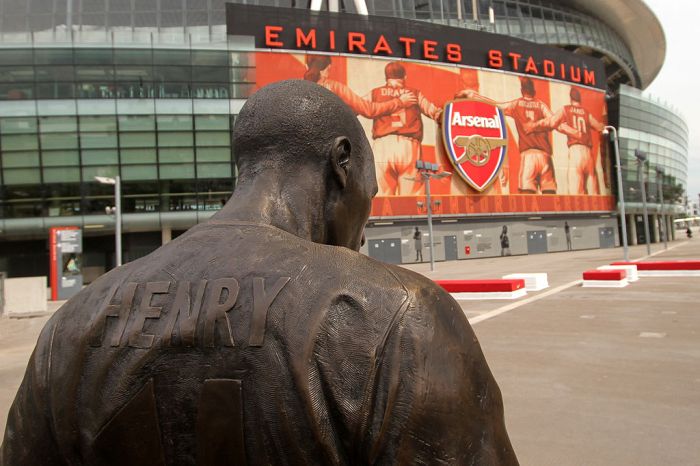
Thierry Henry

Those are just the most eye-catching (not adjusted for inflation) from the summer of 1997 to 2002, they are punctuated with many more that exceed millions and offer sparse evidence that Wenger has treated his time at Arsenal as a place to develop cheaper players.

When it suited, he spent big. It’s hard to believe he had a paradigm shift in attitude, unless he’s an all-out hypocrite. But even these big names moved on to pastures new, including golden boy Theirry Henry.

Since then the state of domestic leagues has changed. The Premier League has more cash but foreign top flights have the wealth of better players. The time to develop unproven talent is forever diminishing. To make matters worse, his record with young talent reads very poor.

Has Theo Walcott improved that much under Wenger? He’s one of many young players that have stagnated under him rather than reach full potential.

His methods are antiquated, his views romantic but out of date. One more season isn’t going to bring about the change he’s struggled to find in the last ten years.

The Arsenal fans should be eternally grateful to Wenger, likewise, he should acknowledge that those buying the most expensive seats in the Premier League deserve a fresh direction.

Bellew was Haye’s Achilles’ Heel

Bellew was Haye’s Achilles’ Heel

On Saturday night, Tony Bellew shocked the boxing world. If he’s honest, he shocked himself. David Haye’s recovery was an unknown quantity since returning from injury. Two “fights” against men not fit for sparring told us very little. And the fitness question mark will always hang over Haye’s head. That being said, his explosive punching power was never in doubt. What transpired was something straight from fiction but Haye didn’t lose to Bellew in the eleventh round – that had happened months before and was confirmed in the build-up.

Imagine the scenario: a cruiserweight hounds and pesterers the perceived best heavyweight on the planet. The attacks are verbal and public. The heavyweight struggles to go about his daily business because the yapping cruiserweight will not go away.

So the man in the weight division above finally gives in and agrees to a bout he’s sees as nothing more than an inconvenience – a money spinner, maybe – but still a major unnecessary distraction.

The fight goes ahead and the outcome is what the heavyweight expected: he wins.

That heavyweight was Wladimir Klitschko and David Haye was the annoying cruiserweight. It’s why he hated Bellew so much in the build-up to their fight. The Liverpudlian had out-Hayed Haye. He’d been backed into a corner through persistence, his planned plot back to the top delayed.

Now the question becomes: was that outpouring of anger something deeper rooted than a mere dislike for changing his plan? Was he worried Bellew – a fighter looking like he’s still on the way to finding his prime – could expose his newfound flaws? There was a reason Haye hadn’t taken a proper bout since his shoulder injury.

This doesn’t mean anything should be taken away from either fighter. Both Haye and Bellew gave good accounts of themselves on Saturday. After the first round, Haye took control. It was when he decided to trade blows in the centre of the ring in the middle of the fight that his night unravelled. It looked like something from a Rocky movie at the time and was described that way by Haye afterwards.

Then the extent of the injury to Haye became obvious. He dragged his foot around the ring like he was auditioning for a role in The Walking Dead. But he was a zombie that hung on and kept coming back for more.

The damaged heel isn’t an excuse for his loss, but a reason to consider retiring. He can’t keep going to the well when it’s nearly running dry.

Naturally there will be calls for Haye’s corner to be examined. The criticism being they should have thrown in the towel earlier. The Reflective takes the opposing view. He wasn’t taking dangerous head shots and they can’t pull a proud man early when he still wants to go toe-to-toe.

Haye played the role of bad guy beforehand but he showed heart and spirit when many others would have taken the easy way out.

Eventually that pride had to give way to the inevitable fall. It was a physical descent and a metaphorical one from grace. Not that he’d ever shown much of that, but his royal standing was removed, humility served. A career that remains in intensive care.

About the distasteful side of Haye in the promotion of the bout: he needs to be cut some slack. He remembers when the benchmark for heavyweight trash talking was set by Tyson, saying he’d eat Lewis’s children. It’s panto. Brutal panto, but panto all the same.

The PC brigade have no place in softening boxing’s bravado. And before they jump on that one line: I’m not saying comments that marginalise or discriminate race, colour or sexual preference are acceptable. But nasty words between two men absorbed in their roles is okay. It’s expected. They do have tickets to sell.

And it’s now Bellew that holds a wad of offers, all resulting in more life-changing paydays. Make no mistake, this was always about winning the payday lottery for the Scouser. It follows a trend of boxers seeking bouts beyond their ability, in weight divisions above, for one highly publicised contest.

Except the result was within Bellew’s grasp and he snatched it.

Eddie Hearn won’t want a rematch – that alone could retire Haye if he’s unable to avenge the defeat – he’ll be eyeing the suspect pair that have box office seats, Deontay Wilder and Joseph Parker.

Whatever Tony Bellew decides his legacy is already secure. As he continued to point out: he’s a current world champion. He’s also a legitimate heavyweight that deserves to, finally, be taken seriously.