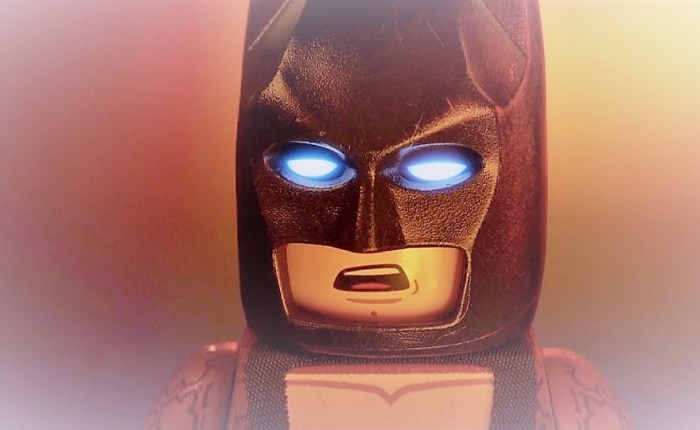
Lego Batman: A Dark Knight Parody

Lego Batman: A Dark Knight Parody

It’s been quite the turbulent time for Gotham’s finest on the big screen. Batman peak will be seen as the critical and financial success of The Dark Knight. Its sequel divided the new followers from an appreciative core audience. Then came the announcement Ben Affleck would fill the cape and cowl following the wrapping up of Christopher Nolan’s universe. The world groaned.

Movies Reflective joined the calls of dismay (The Dark Knight Relapses) and made its apologies (Batman v Superman: There is a Winner). Batfleck turned out to be a success. His anticipated solo film, directed by the man that made Argo an Oscar winner, promises to balance the dark side of the Bat with the commercial demands of the DC Extended Universe.

So where does that leave The Lego Batman Movie? Surely, it’s just an example of Warner Bros. lending one of their largest properties to a non-threat in order to make money? But with this approach must come a series of prerequisites. If this is the case, director Chris McKay and his eight writers either didn’t read the memo or stretched what was acceptable.

The Lego Batman Movie is a parody disguised as a standard children’s animation film.

It’s is so self-aware, it manages to deconstruct Batman at every level. Nothing is off limits. From Hans Zimmer’s tense action score from The Dark Knight Rises; Bruce Wayne’s backstory; Batman’s real world history; and the typical rules used in a superhero movie.

It pokes fun at all the failings of previous films. Too many villains over saturating the script: usually three bad guys will induce this effect. Lego Batman aims not for double figures, but triple. Bruce Wayne forever moping about and driven to dark places because he saw his parents killed. Lego Batman turns it into a comedy sketch.

Heath Ledger’s Joker summarising the unique relationship his character shared with The Caped Crusader (“I think you and I are destined to do this forever.”) becomes the drive for The Lego Batman Movie. Joker wants Batman to realise they are connected, that they need one another.

It’s great fun for the kids, Lego brick explosions everywhere, but the speed of the one liners indicate they have been written for the experienced Batman fan. And the embrace of the past, including the sixties TV version, goes beyond nostalgia or even paying homage.

If it weren’t for the child-friendly humour and tone, you could compare this to Team America: World Police. It knows what it is imitating so decides to have a good laugh with it.

In many ways, this means Will Arnett isn’t playing Bruce Wayne/Batman, because this isn’t really that character. It’s a shame for Joel Schumacher that the Lego Movie concept didn’t exist in 1997 when he gave the world Batman & Robin. It was his intention then to produce a Batman big screen outing for kids. He failed to impress children and adults alike, killing the franchise in the process.

The Lego Batman Movie shows how it can be done. When it’s clear from the off that all seriousness should be left in the cinema foyer, it doesn’t matter how colourful Gotham City is or how outlandish the story becomes. People can just sit back and enjoy.

With that freedom to do what they want with the property, Lego Batman manages to get a few more satirical scenes in under the radar. There’s a clear dig at Suicide Squad when Batman says getting bad guys to fight bad guys is stupid. And then, with a nod to that movie – and several other superhero flicks – the doomsday weapon of being invaded by another realm enters the fray.

It’s not here to comply with the structure of grown-up superhero films, it’s to point out how preposterous the notion is.

Even the happy ending is tongue-in-cheek. With it, The Dark Knight becomes a light comedy genius. Whether the DC Extended Universe is a success or not (and it hangs in the balance), Warner Bros. can always fall back on a Lego version of events and bring a bit of laughter, and a lot of revenue, into the boardroom.

Lego Batman isn’t the hero you deserve, but it’s the one you need right now.
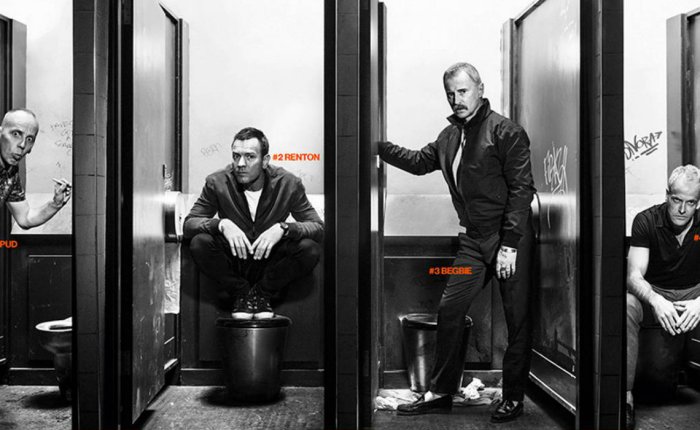
T2: Trainspotting Judgement Day

T2: Trainspotting Judgement Day

Let’s face it, Danny Boyle doesn’t make bad movies. Every single one that his name has been attached to has been worthy of your time and deserved any success that came its way. It was his second as director, Trainspotting, that sent him on a roll. Its momentum helped create a career in Hollywood most modern movie makers can’t begin to rival. 2017 is the year he returns to the setting of a timeless piece of cinema.

In a perfect world, my first novel will be adapted by Boyle and Manchester would have its iconic movie (we did grow up on the same streets, so it’s not that far-fetched). It’s the dream choice because Boyle understands the drive of a story, then delivers a visual experience that goes beyond the vision of its creator. Irvine Welsh is a talented author, no doubt, but Trainspotting elevated his novel to heights he couldn’t have envisioned.

That was aided by the John Hodge screenplay and determination of producer Andrew Macdonald. Back in the nineties it was Boyle that had to convince Welsh a movie was a good idea. Years later it is the director in the hot seat calling the shots but it’s warming to know he wanted to make a sequel. It is something he actively sought, waiting merely for the actors to age accordingly.

The stars have aligned (and reassembled) to bring back the core characters from the original. Ewan McGregor’s “Rent Boy” has been missing for twenty years, as expected after stealing £16,000 from madman Begbie. Robert Carlyle was a scene stealer back in the first film (remember that glass chucking moment?) and his new Begbie is just as intense. But back then it was mindless, after twenty years in prison, it’s pure focus.

He escapes, and the lack of police follow-up is something we will just have to accept, and attempts to resume life. It’s here we get some laughs. Trainspotting was a black comedy at times, the laughs here are lighter and directly played for.

Sick Boy, or Simon, is now putting more coke up his nose than Renton put heroin in his arms first time around. He’s trying to run scams and wants to open a brothel to keep his girlfriend happy. Yep, the Edinburgh they inhabit still has its murky sides.

Ewen Bremner’s Spud is the final member of the quartet and plays a larger role than last time. He is still a heroin addict, estranged from his partner and child and is suicidal. The unexpected arrival of Renton gives his life a new direction.

For a time, the movie’s direction, while new, isn’t ground-breaking. It openly reminisces over famous scenes from the original. This trip down memory lane would be pure nostalgia in the hands of any other movie maker, and would be crude self-awareness – not unlike the last series of This Is England – if it weren’t for Boyle’s ability to bottle a mood a make everything feel fresh.

This talent is aided by a cast better equipped to deliver the vision this time around. They have all grown as actors. What the script lacks in depth, they fill out with more meaningful performances.

There was no point trying to replicate Trainspotting, that time has passed, the characters inhabit different bodies. But it would be soulless not to have them look back at key events after being separated for two decades. The soundtrack aides this natural introspection with a hint of familiar themes with new vibes laid over.

There are times the suspension of disbelief is stretched as coincidences and situations appear to drive us to a forced conclusion. That’s a nod to the power of the first film, perhaps there was no real story to tell after that one? But that’s not to say it is poor, far from it. Certain Boyle hallmarks displayed in Trance, and novel use of lighting in the finale, give this film the contemporary nod that separates if from its grimy predecessor.

Easily a four-star film, maybe as it settles it’ll take its place alongside the first. And in a few decades’ time, there’ll be no complaints if Boyle wants to visit these characters again.

The Mayweather and McGregor Problem

The Mayweather and McGregor Problem

Floyd Mayweather, the greatest boxer of his generation, is heading toward a bout with brazen MMA star Conor McGregor. There’d be no reason to keep prodding public opinion if it wasn’t a strong possibility. Mayweather laying down financial terms during an ESPN interview brings it a step closer.

From the Mayweather camp, this has been a carefully plotted case study. The Berto fight aside – when it appears he just wanted an easy go-home party – Mayweather uses social media to determine where the best payday can be found.

He drops hooks in the trending waters and waits to see what catches a bite. For years, fights have been selected or pushed on this principle. The obvious one that didn’t need it – Pacquiao – was delayed for actual sporting reasons. And perhaps, a consideration of legacy but we’ll get to that in a moment.

What appear to be throwaway Tweets are in fact examples of Mayweather mining for information. The strongest hit since Pacquiao has been McGregor. The Irishman has transcended UFC. Even a defeat to Nate Diaz (which he avenged) did little to halt his emergence as a global superstar. Since then, he has gone on to become the UFC’s first double belt holder.

He can make demands on Dana White that few, if any, have been able to get away with in the past. From borrowing Tyron Woodley’s belt when he wanted to parade two titles, to demanding a cut, in the way of shares, following the sale of UFC for $4.2 billion.

McGregor is a money printing machine for MMA and Mayweather likes to be synonymous with his self-given nickname.

Floyd looks at Conor and sees one last, easy, payday. He has every right to believe if 49 trained boxers couldn’t effectively penetrate his defence (save the De La Hoya chat for another day) then a mixed martial artist, who has only recently acquired a boxing licence from the state of Nevada, stands no chance.

The talk of how “it only takes one punch” or “he might prove too unorthodox to handle” is conjecture for another day. Dealing in things we do know, it can be said such a bout will forever tarnish Mayweather’s impeccable record.

Perhaps retirement has proven to be boring for Mayweather because this is the first time he’s actively chased a fight. In the past, people vied for position to get a shot at Mayweather. It was a privilege to be considered. Boxers, like Amir Khan, planned their entire schedules around the hope Mayweather, sat like Caesar, would give a thumb up.

Now it is Mayweather in front of cameras calling someone out. His air of indifference replaced with desire. Floyd may be trying to gain some ground back by offering “only” $15m to his $100m but it is McGregor that has been pulling the strings and provoking the boxer.

Floyd now wants this fight. It reveals an ugly side to a man that deserves to be considered in greatest of all time discussions. The Money moniker is less caricature, more true reflection.

He claims it would be a business decision. This is bad for business. As a businessman, he should recognise retired boxers profit from their legacy. Decades from now, regardless of the outcome with McGregor, the existence of the fight would diminish the perfect record he’d set as an active boxer.

The Pacquiao fight, unfairly, left a bad taste in most people’s mouths. This will confirm all the claims against him as a competitor.

The idea a part of him was humble, respected Rocky Marciano’s record and didn’t want to be mentioned in the same breath, will disappear if he ties the achievement against a MMA fighter in a non-competitive, money spinning exhibition bout.

Mayweather has been in WWE, McGregor is routinely connected, this could turn into a Sports Entertainment type grapple. Picture Thunderlips and Balboa in Rocky III. Would McGregor, with his brash, colourful personality, really stand and be humiliated for several rounds. Or would he turn it into an even bigger spectacle, get disqualified, and commence a brawl.

In a gimmick fight, you wouldn’t bet against it.

Post-fight, the draw of chasing down victory 51 and surpassing Marciano will build until his business brain marries with his in-ring ambition. But where could the satisfying conclusion to his career come from? Gennady Golovkin is simply too large for them to compete at a catch-weight – Floyd has even encouraged the middleweight to go up a division – and the rest of his fight record answers every possible question.

Only Amir Khan offers a high payday, intriguing bout. For all the Bolton fighter’s inbuilt faults, he does offer a dangerous style that won’t appeal to a man coasting for easy cash.

Floyd Mayweather should take a step back from the precipice. A fight against Conor McGregor may earn him in excess of $100m but no money in the world could repair the long-term damage to his legacy. The only time the pair should trade blows is in one of Vince McMahon’s wrestling rings. Not in a sanctioned boxing match.

WrestleMania has no place in the sweet science.