EFL Short-sighted

EFL Short-sighted

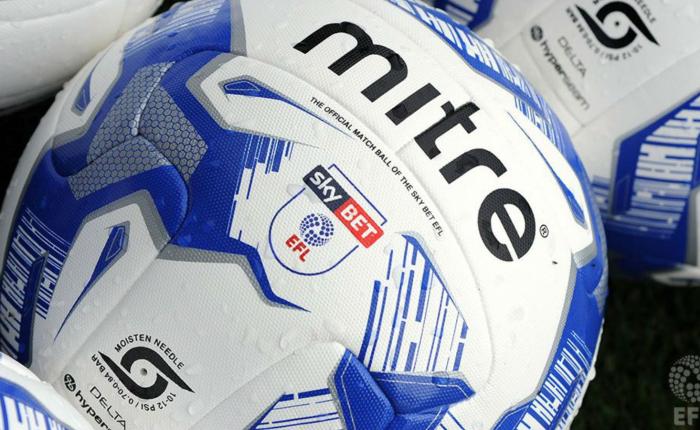
The English Football League (EFL) demonstrated ignorance and a lack of understanding with wider issues this week, in doing so it deepens a rift between its member clubs and the administration of the EFL. The much derided EFL Trophy, now renamed Checkatrade Trophy, was always a bone of contention. Now the fears of lower league clubs have been manifested in the form of ridiculous fines.

The concept of the revised EFL Trophy was after the lower tiered Football League clubs spoke out against the proposed League Three option, fearing the inclusion of Premier League B Teams would be a further example of looking after the big clubs at the expense of those without. Also, it would have damaged the accessibility of the current loan system.

The Football Reflective was a fan of the idea (Fair and Three) as it took a holistic view. The current loan system hasn’t proven to be beneficial for the donor clubs. Aside from Manchester City, who appear to frequently send their coaches to assess and assist those loaned out, once a player has left the nest they are under the guidance of lower grade coaches using lesser facilities.

The FA, after years of mounting evidence that suggests the national team has a bleak future, is desperate for a solution. When League Three was written off, they needed a halfway house. A trial to see if there would be the appetite for B Teams to mix in competitive ties with lower league clubs.

They took the essence of a good idea and managed to turn it against itself.

The EFL Trophy in its former guise was a good opportunity for the teams from the bottom two tiers to have a day out at Wembley. Not many cared for the competition until that chance was on the horizon, but when it appeared a play-off final vibe arose.

Adding select upper league clubs’ under-21s to the mix destroyed that slight fantasy. The idea of Stoke U21s v Wolverhampton U21s at Wembley doesn’t have any of the romance. All it would do is confirm to the smaller clubs that football in this country only cares about those higher up the league pyramid.

But the clubs that bemoaned the idea of League Three do need to take some responsibility. Their fears have turned into a self-fulfilling prophecy, acted out during the EFL Trophy.

Most blame has to go to the EFL itself. This week they fined twelve clubs, ranging from £3,000 to £15,000 each, for fielding weaker sides(five players must have appeared in the previous game, or contain the five most used players from the season as a whole). A format they didn’t trust has now hit their pockets.

Luton chairman Gary Sweet summed up the disparity best when he remarked he shouldn’t be paying fees to give his youth players experience. To make matters worse, his club’s youth defeated a side from the higher tier. So, is the Checkatrade Trophy only about developing youth players from big clubs?

The fear of the voiceless now realised with the opening of a cheque book.

The EFL Trophy fines come at the same time as talks to restructure the EFL to four leagues of twenty teams collapsed. Here the clubs and league are equally short-sighted. Chief Executive of Shrewsbury, Brian Caldwell, has been one of the most outspoken against. His concern, one mirrored up and down the country, was a reduction in fixtures would mean less money.

The EFL countered this by promising more Saturday fixtures, seen as a way to avoid the lesser attended midweek matches, claiming this would actually increase overall revenues. That plan was supposedly scuppered by the FA’s latest oversees TV deal for the FA Cup. The weekends they’d planned to use are now locked in for FA Cup ties.

By removing themselves from the negotiating table too soon, the EFL has failed to see its strong hand. Without the EFL clubs there is no FA Cup. The football league could have driven the demands for better distribution of wealth and proceeded with the reformation of its structure.

Not compromising for a few FA Cup weekends means its platform stays stuck in the past.

The Championship may be the fifth most watched league in the world but it has the weight of the entire lower tiers on its shoulders. It can’t thrive unabated like the Premier League, there is a glass ceiling imposed due to the EFL’s overall structure. It may carry the load but it is the EFL that should shoulder the burden.

Doing nothing will only see the gap between the haves and the have-nots grow.

By being overly defensive of the FA and Premier League’s intentions, the EFL and its members have only spited themselves. If the road to Hell is paved with good intentions, the road to obscurity and obsoletion is paved with paranoia.
FIFA Reveals its True Colours

FIFA Reveals its True Colours

It should come as no surprise that FIFA is back in the headlines for all the wrong reasons. The scandal hit organisation continues to display a lack of decency and awareness of public sensitivities. But poppies aren’t the peak of the problem.

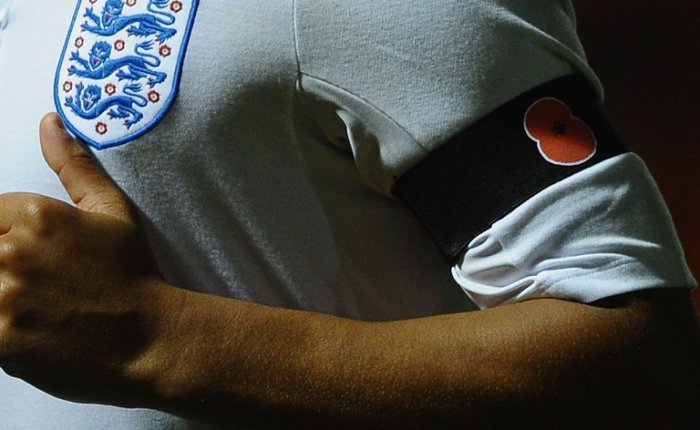
FIFA’s announcement that wearing the poppy to mark Armistice Day goes against their rules covering the use of political symbols, has attracted much scorn on these shores. Understandably this was always going to be an emotive subject. To be told by a proven corrupt organisation, that it is incorrect to remember those that gave the ultimate sacrifice to ensure the freedoms we all enjoy, is beyond the greatest insult that could be spoken.

To enforce it as law is criminal.

The poppy doesn’t care about the motives behind men’s wars, it only displays respect and remembrance for the people that gave their lives.

While Armistice Day is held on the day and hour marking the end of World War I on the Western front, it has since combined with Remembrance Day to honour the servicemen and women that perished in both World Wars and every conflict since 1945.

Even this doesn’t add a grey area to the matter. The sight of a poppy doesn’t carry undertones of a political system or make wearers support a certain way of life. Unlike the swastika. From innocent beginnings as a Hindu symbol to attract good force and discourage evil, it became synonymous with the Nazi regime. This means the swastika will always have political connections, regardless of intended use; the poppy is a perfect example of an apolitical banner.

But there has to be a measured argument against FIFA, and it’s displayed on numerous occasions how out-of-touch it has become with the real world. From Sepp Blatter’s defiance in the face of irrefutable evidence, the blind eye it turns to human rights’ atrocities, the amassing of wealth when it claims to be non-profit, and the announcement that the world no longer suffers from racism.

It’s hard to judge too harshly when FIFA clearly exists on a planet alien to the rest of us.

The poppy ban has gathered the most media coverage in this country. England and Scotland already declaring they will defy FIFA on this matter. Failure to do so would have further sanitised the human element of the game that is self-proclaimed “beautiful.” But its beauty is being deformed by the distasteful motives of its corrupt keepers.

But the poppy ban shouldn’t be seen as the breaking point and call to action. That should have come a little over a month ago when FIFA announced its anti-racism taskforce had completed its mission.

If we’d been without a racist incident in ten years we’d still need a task force. As it stands, we haven’t even managed ten months. Add to the fact the next World Cup is heading to a country riddled with the problem, and houses teams that have recently served punishments because of fans’ racist behaviour, the announcement is more maddening.

Racism will always exist, it’s a sad symptom of any society. The taskforce should always exist in order to repel it at the first sign of a re-emergence.

Like all self-serving fascist dictatorships, FIFA broadcasts propaganda as fact. The more feel-good spin it can produce, the better. Let’s all pretend FIFA have ended racism. Another great success story for football’s benevolent overlords.

Oh, and the poppy represents suggestive ideas we should oppose, but don’t worry: in FIFA-world the only politics are the ones we take care of; you can trust us, we even managed to end discrimination and disharmony.

In the real world: Another dark episode from a despicable regime.

FIFA should be guardians of the game but are failing. We should be guardians of morals and ethics in their absence. Failure to contest any incoming punishment for the poppy ban, and widespread demand to make FIFA fund an independent Racism Taskforce, would be an equal failure.

If FIFA is so worried about using the game to send political messages, it should stop and consider its own behaviour. At the moment, it’s reminiscent of those that proudly wore Hindu symbols while imposing deceitful legislation on the unassuming masses.

Don’t Brother Me

Don’t Brother Me

The release of Supersonic on Blu-ray allows fans of Oasis to once again marvel at the band’s high points and the tumultuous relationship between brothers Liam and Noel Gallagher. It’s hard not to crave a reunion when served such a nostalgia feast, accentuated by Liam’s own cries. But the film gives away enough in the way of clues as to why it won’t be anytime soon.

The insight provided is a unique peek behind the curtain of the greatest band of their generation, and potentially, the last truly organic super-band. It’s a privilege for the viewer to see Liam, Noel, Bonehead, Guigsy and Tony McCarroll filmed before the fame arrived, then follow them as they ride the wave.

What comes across is how, in essence, the zone they got into when playing sessions at the start of the documentary is the mental state they took on when inside the music at Knebworth. This isn’t a slight – quite the opposite – it’s a nod to the feel they had for the music. And the belief they had in themselves.

It wasn’t even driven by desperation. Noel is heard explaining how when he was a sound technician for the Inspiral Carpets, he thought: This’ll do for me.

Upon his return from that job (he was fired) he heard Liam play in the first version of Oasis. At first the band asked Noel to be their manager. He refused. Then he was offered a role as guitarist, aware he had song writing abilities. He duly accepted and the slow journey began.

By their own admission, they weren’t getting bad reviews, they weren’t getting spoken about at all. There’s flying under the radar before discovery, then there’s the sort of stealth that makes one wonder if they were flying at all.

Then came a chance gig in Glasgow, which they got by sharing a rehearsal room with all-girl band, Sister Lovers. Upon arrival at the King Tut’s Wah Wah Hut club the manager bluntly refused to add them to the night’s performances. It was only when the Sister Lovers said they wouldn’t play if Oasis were refused, and eventually cut the length of their set to accommodate, that Oasis took to the stage.

As if the fates had been in play the whole time, they were noticed by Creation Records’ Alan McGee, there for one of his own bands, and the path to destiny became clearer to see. They didn’t celebrate that night, they just believed it was meant to be.

This sort of feeling, that it’s just life falling into place, goes someway to explain why they appeared to flirt with implosion at every turn. They weren’t chasing a dream: they were living it.

What that meant did start to differ between Liam and Noel, and this is where the Oasis story becomes a tale between two brothers. Other members became collateral damage in the process. Tony McCarroll was removed as drummer after a final argument with Noel. The songwriter unconvinced he had the ability to perform the upcoming second album’s material.

He had a point. The recording sessions of Definitely Maybe were hindered by McCarroll’s struggle to play from one bar to the next. But the drummer had also become the whipping boy for the other members.

Guigsy also had a nervous meltdown, only to be recalled when his replacement seemed to dislike the pace of the band.

And what a pace.

It was there from the beginning. They never made their first overseas gig in Amsterdam because Liam joined the on-board chaos which result in immediate deportation and time in the ferry’s cells.

Noel wasn’t happy with this incident, Liam thrived on it. It attracted music hooligans; people started going to Oasis gigs for the rowdy atmosphere and the potential for a tussle. Liam became the ringleader, equating aggro and good music as the combination to greatness.

Perhaps that was something to do with his musical beginnings. He’d displayed no interest in music, even mocking his guitar playing brother, but after being hit on the head with a hammer a switch was activated. Afterwards he was all about buying records and dreaming of being a rock ‘n’ roll star. This meant never following rules.

As Liam explains himself: “I thought we were a rock band. Anything goes in Oasis. Some people have rules. Fuck the rules.”

Noel jokingly remarks that the lad who hammered the music into Liam has a lot to answer for.

It sets the polar opposites up for the definition of why today they have no relationship. Noel describes himself as the cat. Admitting he can also be another C word and a bastard. But he didn’t crave attention or need it. Liam was the playful dog whose wagging tail didn’t stop until he had gone too far.

Noel assumed the role of leader which created a power struggle that was always going to reduce the life of the band. But even this Liam trivialises with a story about how his brother’s still angry because he pissed on his stereo when they were younger.

Liam is the eternal jokester and master of the natural one-liner, everything about Noel is more calculated.

When recording songs at the rate of one a day for (What’s the Story) Morning Glory?, at times Noel would give Liam one run through on acoustic with vocals only just written, yet they’d be nailed first time, as if sharing some deeper telepathic link.

Some might say they should have stopped before the third album. That they’d peaked too early. The evidence provided in Supersonic: a failed American tour when they mistook crystal meth for cocaine, this off the back of an explosive Japanese experience, to still produce two generation defining albums amidst warring siblings, does seem warranted.

But as Liam says about stopping when you’ve reached the top: “Just cos you’ve kissed the sky, give it a love bite.”

That eagerness – the playful dog – will always want that buzz. Noel appears far removed from it nowadays. Post-cinema release of Supersonic it was Liam backing calls for a reunion, claiming in his mind, Oasis had never split-up.

His mantra in interviews was about his bags being packed and ready. But in each cry for reconciliation he reminded Noel why they no longer spoke. Each started with a plea, and ended in a dig.

But in the process, they reminded the fans why Liam was so engaging in the first place. In one to Sky News, he explained: “But there’ll be no cap in the hand and no banjo, you know what I mean? A little fucking skinny, stringy dog outside his house going ‘please sir, I need a fucking band, mate.’”

In another he said, “Our kid’s going around like I’ve stabbed his fucking cat.”

Amusing, and even Noel may raise a smile, but they also raise the unlikelihood of the reunion Liam himself once dismissed when he thought Beady Eye would fill the void. The grounds for angst are with the common perception of Noel.

Liam refers to him as “Man of the people” because Noel seems to have come out smelling of roses while Liam is seen as the bad guy. But many will vouch for the behind the scenes personalities. As disruptive as Liam may be (has been), there’s always been a frank honesty with him.

Noel is more guarded and plotting. It’s understandable the aggro lifestyle became tiresome but it wrangles his brother that the public image is a manufactured one, that the songwriter in Oasis became part of the machine they defied.

The bitterness can be seen in how he trolls Noel on Twitter.

With Beady Eye, he sang, “Don’t Brother Me.” Surely a message to Noel but that past forms a narrative with tweets like this from earlier in the year (before Supersonic was doing the media rounds):

It’s Liam’s contradictions and quick-to-fire attitude that will drive the wedge between the pair even deeper.

Noel explains it best: “Oasis’ greatest strength was me and Liam. It’s also what drove the band into the ground in the end.”

If the final chapter really has been written, what a great story it turned out to be, Supersonic a special snapshot so the band can “Live Forever.”