Greatest Achievement in League Football

Greatest Achievement in League Football

Leicester City winning the English Premier League completes a dream season for a club that battled to survival only twelve months previous. This unexpected success still belies belief, for months so-called experts have struggled to give reason for their insurmountable lead. A common denominator is that other teams have failed. This denies The Foxes the full credit they deserve.

The obvious comparison people have gone for is between the current Leicester side and Brian Clough’s Nottingham Forest. Clough’s side gained promotion from the old First Division and went on to win the title as the new boys. Throughout that season they had many doubters. It was deemed unlikely they could maintain the pace and stay at the top.

Sound familiar?

Of course, Forest went onto greater success but this initial title win has been the watermark for all underdogs in English football. Until now. Football was a different game back then. The gap between the haves and the have nots has never been greater than it currently stands. Massive clubs like Liverpool – who are the third highest spenders in Premier League history – have still yet to win their first Premier League title.

Clubs of Leicester’s stature are supposed to be happy with Premier League survival – nothing more. But they haven’t read the script this season, even after a bad start at Arsenal. It’s imperfect beginnings that laid the way for this journey.

Unlike Forest in 1978, who came up in good form and were full of confidence, they should have been riddled with doubts. A great escape didn’t mask their deficiencies. Sacking their manager, Nigel Pearson, after a series of explosive moments could have upset a fragile dressing room. Then they brought in The Tinker Man.

Claudio Ranieri, a man that had never won a top flight championship, was hired to ensure they reached 40 points. Many pundits claimed his arrival would send Leicester down, whenever anyone questioned this they were reminded his Greece side lost to San Marino.

As a polar opposite to Brian Clough, he remained a man happy to be in the shadows. Humble rather than full of Clough’s bravado. He was living the dream along with his fans. His humility sowed the squad together. He protected them from pressure, maintained expectation.

It was a case of all the pieces coming together at the right time. A manager with years of experience, a bunch of players with a point to prove, and the bigger boys struggling for one reason or another. That latter point shouldn’t be used against The Foxes. If teams failed to meet their personal targets for the season it doesn’t take away from Leicester’s success.

The league table never, ever, lies. Only three defeats speak volumes in a season where so many teams have struggled for form and stability. Some of the big guns may have been shy, but somebody had to take the chance. It was Leicester that came out head and shoulders above the rest.

A man that once tinkered stuck with familiar players. Unlike so many current managers, that claim to have an “ideology” or “project” as a cover for stubbornly sticking to rigid tactics, Ranieri evolved along with his players. They started the season almost playing like a Sunday league side, fast on the counter, looking like grinding out results was above them and it was only a matter of time before they became unstuck. Rather than become stale, they morphed into a side capable of chalking up one-nils.

It proves that cash doesn’t guarantee victory. The football goliaths should hang their heads in shame. Extensive scouting networks and the best facilities in the land have continued to show snobbery and fail to give talent within the lower leagues a chance. How many more Jamie Vardys are hidden, waiting for someone to take a gamble?

Naysayers have pointed to Leicester’s summer transfer spend but it is small fry compared to the likes of clubs expected to finish in the top four. With the new TV money coming into the game next season they now have the ability to spend. The sad fact is they will probably have to with the extra European games filling up their schedule.

Even if they do now splash the cash, it will be brought about because of success, not the pursuit of it.

The fear with Financial Fair Play was that football would be plunged into a status quo. That the dreams of fans up and down the land, clubs big and small, would be extinguished unless a rich benefactor spent billions. Leicester may have the new rich owner but it is good old-fashioned on the pitch ethics that have brought about the fairy-tale title.

The gap between the top and bottom has never been so high, the scope for daring to dream the impossible so low, but Leicester have changed this. Winning the Premier League is an achievement unlikely to ever be matched. Unless they go onto further success in Europe next season. But that can’t happen . . . can it?

It’d be a brave person that placed any restriction on hope following this triumph.
How to Sweep up the Premier League Tactical Problem

How to Sweep up the Premier League Tactical Problem

It may be regarded as the most competitive top flight European league, but the Premier League has been going backwards tactically for some time now. This is evident by the declining performances, year after year, by English sides in the Champions League. It seems top sides here have suffered from acquiescence regarding their place in the pecking order. But there could be a way to stop them from faltering further.

On a weekly basis we see goals conceded that, while making the Premier League exciting and unpredictable, are a tactician’s nightmare. Some of the errors border on the schoolboy variety; others highlight how the pace of the English game makes defending a thankless task.

The solution could come from – quite ironically – an old European favourite: the sweeper system.

Before we go on, it needs to be pointed out, my personal level of football coaching begins on Championship Manager (the version before CM’93) and ends with Football Manager 2016. As a player, my greatest contribution was the post-match karaoke for the Sunday team I represented.

However, I did take England to two World Cup final victories and scored a screamer when hungover once (and just once, making me the least prolific striker in history). But you don’t have to be an all-time great to have valid observations. Indeed, the majority of top managers were, at best, average players.

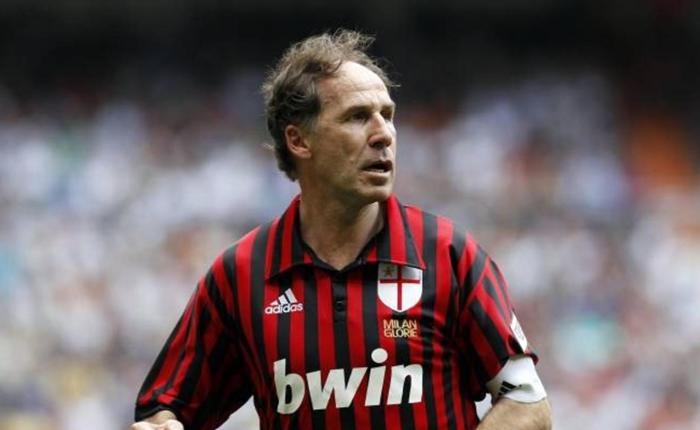
The call for Premier League teams to adopt a sweeper system isn’t borne from some romantic notion. I’m not expecting John Stones to be the next Franco Baresi, although, it’s not too difficult to imagine. It comes from common sense.

The reasons that made European teams evolve away from the sweeper system are no longer valid in this country. Some factors apply across the board, including the Champions League.

Take the inability to apply a successful offside trap when employing a sweeper. When was the last time you saw an English side lockout Bayern Munich or Real Madrid because of their quick-thinking high defensive line?

Moreover, the offside trap requires linesman to never make a mistake. Okay, perhaps they can be afforded a few. And in days gone by the odd error would have been taken on the chin. But nowadays we have an overcomplicated offside rule. A defender can play a perfect “trap” and be caught out by the second or third phase of play. He can lose to the official’s interpretation.

A sweeper removes this area of potential ambiguity. He just clears up and prevents shock counters and breakaways.

Another argument against could be the modern defensive midfielder already does the role of sweeper but in a more advantageous position on the field.

To a certain degree, this is clearly true in some cases. The current Barcelona team never look like they need a sweeper. And Pep Guardiola’s conversion of Philipp Lahm to the defensive midfield role shows how versatile and effective it can be.

Under Guardiola, Lahm performed a similar role to the one Busquets had in Pep’s Barça side. Sometimes they slotted back, making a line of three centre backs, with the option for one to sweep. But it wasn’t an in-game reversion. The role of sweeper is too complex for players to cameo in the position. These instances were an example of a team responding to pressure and adapting for short bursts.

But aside from the very top sides, the role elsewhere is either performed by charlatans or capable players stuck in teams that don’t know how to support it. Take Manchester City, it can’t be argued they have the talent to play the modern defensive midfield role. They also have demonstrated how deadly it can be at times. But sides from Bournemouth to Middlesbrough to Juventus, have all shown how easy it is to bypass their midfield.

When that happens, you don’t have a sweeper sat in front of the defence – you have nothing but empty space protecting two centre backs.

This lack of cover combined with today’s blistering pace means even the best defenders will be made to look stupid. Eliaquim Mangala would have had an entirely different season if he’d have been given better protection in front of him. With a sweeper behind, he’d have excelled.

A sweeper would make teams more solid in the Premier League, the question then becomes: How would they fare in Europe.

This is harder to answer, mainly because it reduces some of the advantages English sides take into a game. The play goes slower still, the intelligence of the midfield to receive passes from a ball-playing sweeper needs to increase, and the best forwards in the world can try and camp out on your defensive line.

But the current weak imitation of how to play their style is sending Premier League teams backwards.

Perhaps a perceived disadvantage of the system would help English sides in Europe. The sweeper is seen as a waste of a defensive player when so many modern sides play with only one striker. This is an illusion at best.

A 4-3-2-1 soon becomes an out-and-out 4-3-3 when a good side is in possession.

The extra insurance at the back can deal with the morphing forward line.

Many will believe it’s outdated or impossible to try the system now. They’ll say defensive midfielders shore up a team. But ask yourself: when was the last time you saw a player properly anchor a side during a Premier League match?

Marcel Desailly? Nigel de Jong, at a stretch.

The sweeper system is a solution that keeps getting ignored. Someone needs to try it. Failure to do so ensures the European dominance stays with the German/Spanish power share and the domestic game will continue to suffer tactical devolution.

Loyalty Pays

Loyalty Pays

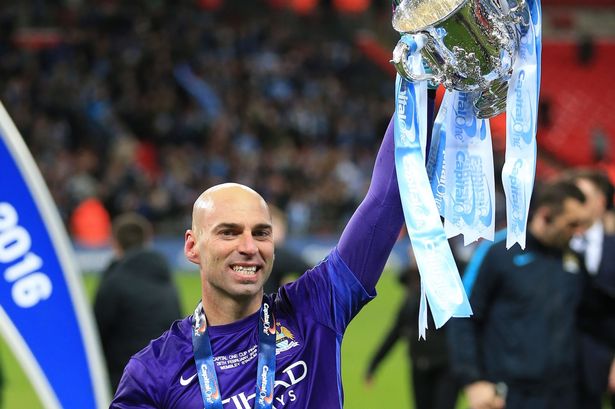
Sunday saw Manchester City lift the Capital One Cup after a penalty shoot-out with Liverpool. It adds a second League Cup to Manuel Pellegrini’s CV but he won much more than silverware. He silenced critics and demonstrated that being a gentleman often pays dividends.

After Willy Caballero’s FA Cup performance against Chelsea, the only two men in the world that wanted to see him play in Sunday’s final were himself and Pellegrini. His showing a week before was so poor, he had made himself very droppable. The idea he is the domestic cup ‘keeper goes out of the window if form is so terrible.

Unless it’s Pellegrini’s window. He decided to take – what he presumably saw as a little – gamble. He explained that his word was more important than football. Keeping his promises surpassed any significance winning a trophy holds.

It is the sort of bold and open statement only a manager relieved of his duties can publically declare. As stated in Capital Gains, winning the League Cup offers a fresh surge of momentum.

Willy turning into a hero demonstrates how the cliché, a week’s a long time in football, couldn’t be more true. Such is the soap opera nature of the sport, when it went to penalties, it was almost inevitable Caballero was going to find redemption. From hero to villain, enabling him to sign off his City career in style (if it’s to be believed he will form part of a summer exodus).

His teary eyed interview on the field showed that top pros do care about the clubs they turn out for. It was touching to see a good guy get a reward for persevering.

Which brings us to Manuel Pellegrini. He placed himself in the firing line with his selection of Caballero. Victory – and its manor – justifies yet another decision is a week where his every action has been scrutinised.

It also brings a greater bonus. Any dissident voices in the dressing room will now be silenced for the remainder of the season. The players can look at City’s Charming Man and know they have a manager on their side. A gaffer that will stand by them and keep his word.

Honesty is an underrated trait and Pellegrini has it in abundance. Any wavering respect some players may have had, will be stamped out. Instead of working hard to impress Pep Guardiola, everyone has been given a reminder they still have work to do for the current boss.

With renewed unity they could be heading toward another domestic double. Even if they fall short, Pellegrini has given them a greater prize – proof that loyalty pays.