Now or Never for Kelechi

Now or Never for Kelechi

With Sergio Agüero suspended for four games, the duty to lead the frontline once again falls to his deputy Kelechi Iheanacho. The Nigerian was given words of encouragement from the senior striker and Pep Guardiola gave him a runout in the dead-rubber Celtic match to shake off any ring-rust. The manager knows what many are in denial about: this is Kelechi’s last, best chance to stake a claim for a role in his long-term plan.

At first glance, that will appear to be an overly dramatic statement, well-suited to the silly season of newspaper headlines currently doing the rounds. Add to it how he’s universally loved by City fans – perhaps since he solidified his fan-favourite status in last season’s FA Cup tie with Aston Villa – and any constructive criticism is dismissed with anger.

Based on pure stats, the adoration and unwavering support seems justified. Three goals and three assists in nine Premier League appearances and two strikes from two Champions League games doesn’t tell the whole story. His contributions have made impacts – a goal and an assist in the league at Old Trafford the most eye-catching – but his overall play has left much to be desired.

It may seem snide to pick holes when a youngster is in the formative years of his career, transitioning from youth player to first teamer. But we know from recent activity at the club – the ruthless ejection of Joe Hart, for example – that Pep Guardiola takes emotion out of all decision-making processes. Kelechi was retained as the back-up striker when Wilfried Bony was sent out on loan.

Admittedly, a back up to Sergio Agüero does mean fleeting appearances but it comes with the proviso that when required, the Argentine’s boots can be adequately filled. This hasn’t happened, he’s offered little hint he’s improving as a footballer, becoming a specialist impact man instead.

Agüero himself has been made to up his game, offer more overall play. Pep’s public comments about this earlier in the season were a clear marker to all his players. For his strikers, it meant even they couldn’t avoid full immersion into the new system. Goals are not enough to ensure a place in Pep’s masterplan.

Arguably, Iheanacho’s most complete performance was in the 4-0 win against Bournemouth. But his goal aside, he barely got a mention as all eyes were on a magnificent Kevin De Bruyne performance and the confirmation Raheem Sterling was a player reborn.

Kelechi does have a bit of grace. In many ways, his age affords him time, he is a pet-project of Pep’s. However, progress needs to be visible. Months have passed under Guardiola’s tutelage and while all City fans still happily sing the Nigerian’s name, the nagging feeling he might not make the grade increases.

This suggestion will anger many but those offended should take a minute to consider how the fans have inadvertently acknowledged Kelechi hasn’t taken the bull by the horns.

It’s the time of year millions celebrate the birth of Baby Jesus and the growing excitement about our own junior of the same name tells its own story. A great weight of hope and expectation have been placed on the shoulders of a young man very few had heard of a year ago. Even when he was scouted in the Olympics by City fans, his performance whetted the appetite as “one for the future.”

The team’s dip in form, coinciding with Kelechi Iheanacho’s failure to emerge as a better-formed player, means suddenly, he is being talked about as our saviour.

Had things panned out with Kelechi’s development in the manner Pep hoped, Gabriel Jesus would be expected to recuperate after an extra-long season. The fact he’s needed shows the current contingency plan has failed.

Of course, it may be that Guardiola has already braced himself for a shortfall in quality so has other plans on standby. Nolito was signed with the tagline of being able to double-up as a striker. The reality of this has been somewhat different. A tablespoon can stir a cup of tea but it’s not a teaspoon. He’s proven to be clinical but his inclusions always come with an eye on midfield duties.

It’s plausible the next four games will see a conversion to Kun’s role but unlikely it would be before Kelechi has a crack at asserting his suitability for the job.

Should Nolito find himself playing as a stand in for both strikers, it opens up another possibility: we don’t play with any recognised strikers. It’s a formation Pep’s applied before and there’s certainly enough midfield talent that can rotate and open teams up, allowing players with an eye for goal to get forward.

Which brings us to the option that would have looked like fairy-tale stuff less than a month ago: Yaya leading the line. He’s looking lean and motivated. Already he’s reopened his scoring account and could quite easily run into the gaps players like De Bruyne and Silva create.

It’s also conceivable that four games from now Kelechi Iheanacho will have more than doubled his tally for the season and talk of his development will be conveniently shelved. But unless his osmosis into a Pep type player becomes apparent, nobody will be able to confidently say he’s coming along well, and this season’s back-up man will be next year’s fringe player.
EFL Short-sighted

EFL Short-sighted

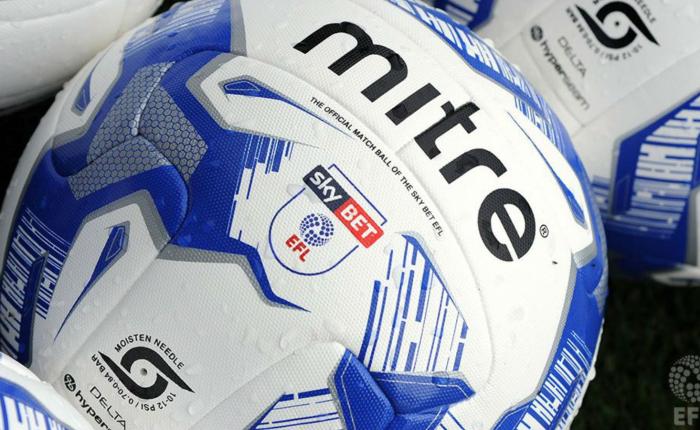
The English Football League (EFL) demonstrated ignorance and a lack of understanding with wider issues this week, in doing so it deepens a rift between its member clubs and the administration of the EFL. The much derided EFL Trophy, now renamed Checkatrade Trophy, was always a bone of contention. Now the fears of lower league clubs have been manifested in the form of ridiculous fines.

The concept of the revised EFL Trophy was after the lower tiered Football League clubs spoke out against the proposed League Three option, fearing the inclusion of Premier League B Teams would be a further example of looking after the big clubs at the expense of those without. Also, it would have damaged the accessibility of the current loan system.

The Football Reflective was a fan of the idea (Fair and Three) as it took a holistic view. The current loan system hasn’t proven to be beneficial for the donor clubs. Aside from Manchester City, who appear to frequently send their coaches to assess and assist those loaned out, once a player has left the nest they are under the guidance of lower grade coaches using lesser facilities.

The FA, after years of mounting evidence that suggests the national team has a bleak future, is desperate for a solution. When League Three was written off, they needed a halfway house. A trial to see if there would be the appetite for B Teams to mix in competitive ties with lower league clubs.

They took the essence of a good idea and managed to turn it against itself.

The EFL Trophy in its former guise was a good opportunity for the teams from the bottom two tiers to have a day out at Wembley. Not many cared for the competition until that chance was on the horizon, but when it appeared a play-off final vibe arose.

Adding select upper league clubs’ under-21s to the mix destroyed that slight fantasy. The idea of Stoke U21s v Wolverhampton U21s at Wembley doesn’t have any of the romance. All it would do is confirm to the smaller clubs that football in this country only cares about those higher up the league pyramid.

But the clubs that bemoaned the idea of League Three do need to take some responsibility. Their fears have turned into a self-fulfilling prophecy, acted out during the EFL Trophy.

Most blame has to go to the EFL itself. This week they fined twelve clubs, ranging from £3,000 to £15,000 each, for fielding weaker sides(five players must have appeared in the previous game, or contain the five most used players from the season as a whole). A format they didn’t trust has now hit their pockets.

Luton chairman Gary Sweet summed up the disparity best when he remarked he shouldn’t be paying fees to give his youth players experience. To make matters worse, his club’s youth defeated a side from the higher tier. So, is the Checkatrade Trophy only about developing youth players from big clubs?

The fear of the voiceless now realised with the opening of a cheque book.

The EFL Trophy fines come at the same time as talks to restructure the EFL to four leagues of twenty teams collapsed. Here the clubs and league are equally short-sighted. Chief Executive of Shrewsbury, Brian Caldwell, has been one of the most outspoken against. His concern, one mirrored up and down the country, was a reduction in fixtures would mean less money.

The EFL countered this by promising more Saturday fixtures, seen as a way to avoid the lesser attended midweek matches, claiming this would actually increase overall revenues. That plan was supposedly scuppered by the FA’s latest oversees TV deal for the FA Cup. The weekends they’d planned to use are now locked in for FA Cup ties.

By removing themselves from the negotiating table too soon, the EFL has failed to see its strong hand. Without the EFL clubs there is no FA Cup. The football league could have driven the demands for better distribution of wealth and proceeded with the reformation of its structure.

Not compromising for a few FA Cup weekends means its platform stays stuck in the past.

The Championship may be the fifth most watched league in the world but it has the weight of the entire lower tiers on its shoulders. It can’t thrive unabated like the Premier League, there is a glass ceiling imposed due to the EFL’s overall structure. It may carry the load but it is the EFL that should shoulder the burden.

Doing nothing will only see the gap between the haves and the have-nots grow.

By being overly defensive of the FA and Premier League’s intentions, the EFL and its members have only spited themselves. If the road to Hell is paved with good intentions, the road to obscurity and obsoletion is paved with paranoia.

FIFA Reveals its True Colours

FIFA Reveals its True Colours

It should come as no surprise that FIFA is back in the headlines for all the wrong reasons. The scandal hit organisation continues to display a lack of decency and awareness of public sensitivities. But poppies aren’t the peak of the problem.

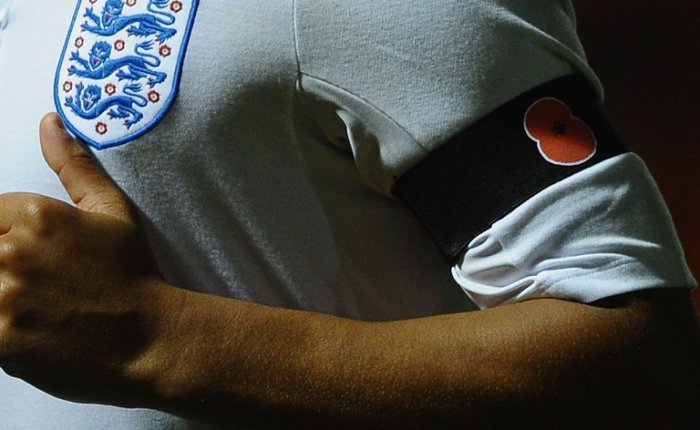
FIFA’s announcement that wearing the poppy to mark Armistice Day goes against their rules covering the use of political symbols, has attracted much scorn on these shores. Understandably this was always going to be an emotive subject. To be told by a proven corrupt organisation, that it is incorrect to remember those that gave the ultimate sacrifice to ensure the freedoms we all enjoy, is beyond the greatest insult that could be spoken.

To enforce it as law is criminal.

The poppy doesn’t care about the motives behind men’s wars, it only displays respect and remembrance for the people that gave their lives.

While Armistice Day is held on the day and hour marking the end of World War I on the Western front, it has since combined with Remembrance Day to honour the servicemen and women that perished in both World Wars and every conflict since 1945.

Even this doesn’t add a grey area to the matter. The sight of a poppy doesn’t carry undertones of a political system or make wearers support a certain way of life. Unlike the swastika. From innocent beginnings as a Hindu symbol to attract good force and discourage evil, it became synonymous with the Nazi regime. This means the swastika will always have political connections, regardless of intended use; the poppy is a perfect example of an apolitical banner.

But there has to be a measured argument against FIFA, and it’s displayed on numerous occasions how out-of-touch it has become with the real world. From Sepp Blatter’s defiance in the face of irrefutable evidence, the blind eye it turns to human rights’ atrocities, the amassing of wealth when it claims to be non-profit, and the announcement that the world no longer suffers from racism.

It’s hard to judge too harshly when FIFA clearly exists on a planet alien to the rest of us.

The poppy ban has gathered the most media coverage in this country. England and Scotland already declaring they will defy FIFA on this matter. Failure to do so would have further sanitised the human element of the game that is self-proclaimed “beautiful.” But its beauty is being deformed by the distasteful motives of its corrupt keepers.

But the poppy ban shouldn’t be seen as the breaking point and call to action. That should have come a little over a month ago when FIFA announced its anti-racism taskforce had completed its mission.

If we’d been without a racist incident in ten years we’d still need a task force. As it stands, we haven’t even managed ten months. Add to the fact the next World Cup is heading to a country riddled with the problem, and houses teams that have recently served punishments because of fans’ racist behaviour, the announcement is more maddening.

Racism will always exist, it’s a sad symptom of any society. The taskforce should always exist in order to repel it at the first sign of a re-emergence.

Like all self-serving fascist dictatorships, FIFA broadcasts propaganda as fact. The more feel-good spin it can produce, the better. Let’s all pretend FIFA have ended racism. Another great success story for football’s benevolent overlords.

Oh, and the poppy represents suggestive ideas we should oppose, but don’t worry: in FIFA-world the only politics are the ones we take care of; you can trust us, we even managed to end discrimination and disharmony.

In the real world: Another dark episode from a despicable regime.

FIFA should be guardians of the game but are failing. We should be guardians of morals and ethics in their absence. Failure to contest any incoming punishment for the poppy ban, and widespread demand to make FIFA fund an independent Racism Taskforce, would be an equal failure.

If FIFA is so worried about using the game to send political messages, it should stop and consider its own behaviour. At the moment, it’s reminiscent of those that proudly wore Hindu symbols while imposing deceitful legislation on the unassuming masses.