Groves vs Eubank Jr: Boxer versus Bravado

Groves vs Eubank Jr: Boxer versus Bravado

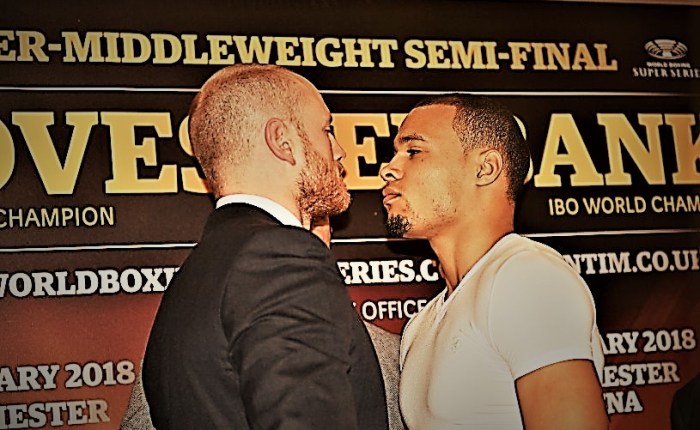
The bookies have installed Chris Eubank Jr as favourite in the semi-final of their World Boxing Super Series clash, proving hype catches the attention of casual fans. The Eubanks have made two careers out of furore. Eubank Senior was no doubt one of the best during a competitive generation. A true boxer who ran out of answers when faced with hardman Steve Collins.

The three losses that closed out his career were the exclamation point highlighting his long decline. They shouldn’t overshadow his boxing prowess. His personal, and carefully crafted, style outside the ring was a distraction that often counted against him, especially as historians focus on the performer.

So it’s with some irony that his son enters his biggest bout to date and isn’t seen as the natural boxer out of the two competitors. His best chance is to make Groves deviate from the plan to box. As we saw against Billy Joe Saunders, Eubank Jr can be put in his shell when the other guy remains disciplined.

Those bookies odds have been shaped by the Eubank Jr gimmick convincing people he’s better than the man holding two belts, as much as Groves’ historical bouts, namely the Carl Froch fights, have swayed opinion.

Cliché alert: some boxers are never the same after a big defeat. Until Groves wins the next big one, there will be a question mark over him. Has the Froch experience scarred him forever? The Eubank Jr fight is the next big one. A win here deletes the years of carrying around inner turmoil.

History doesn’t tell the story of how he out-boxed Froch for two fights, or how the Nottingham fighter needed to pull out the best punch of his career to stop him. It just says he lost. Twice.

To drive home that fact, Carl Froch works tirelessly at working a reminder into every appearance he makes on Sky Sports. If you didn’t know already, Carl Froch once filled Wembley and beat George Groves.

The time to kill the bogeyman has arrived.

He’s endured the painful memory of what happens when he allows adrenaline to dictate his approach. If he remains mindful of his goal – and how to achieve – Chris Eubank Jr will be in for a long night of boxing. One where he becomes a frustrated and beaten opponent.

The fight could come alive in the second half when Eubank Jr realises the points are against him and he needs to do something to remove the judges from the equation. At that point, all eyes will be looking for the knockout win.

The wise man would still fancy Groves. If he can endure the onslaught, he can also deliver more telling power punches to a chin that has never been tested.

Groves famously once said: “Everything for a reason.” All those setbacks have been for tonight, the reason: to take back the respect he should never have lost, to make this his time. In doing so, he will expose the Eubank brand for what it really is.

Is Alonso Cursed?

Is Alonso Cursed?

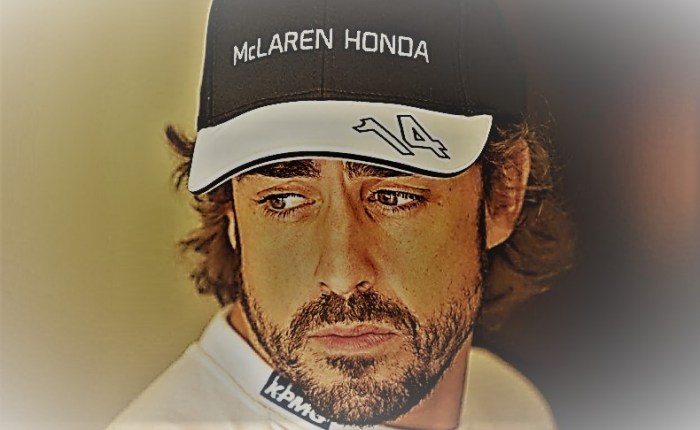
There are 724 other Formula 1 drivers who would have loved some of Fernando Alonso’s curse. He is one of only 33 world champions the sport has seen. But it’s fair to say, Fernando’s days with the crown feel like a lifetime away now, whereas bad luck seems to follow with permanent DRS enabled.

It was the recent attempt at IndyCar’s Indianapolis 500 that endeared him to a new legion of fans but once again showed the stars will not align for the Spaniard. It would have been the stuff of dreams had he won the big one in his rookie race. Ability wise, it wouldn’t have been shocking, but it is more Hollywood than reality.

This isn’t to say IndyCar is to be taken lightly.

It may appear a simplified sport to F1 aficionados but there is an art to oval racing. On many occasion fans of other motorsports laugh at the idea of going around in a circle. It’s as if they see the Indy 500 as a simple foot down and steer experience.

In contrast, an average of 16.7 turns are dealt with during each race weekend on the current F1 calendar. During the course of the season, 334 are taken, the highest for an individual track is 23, the lowest being 9 (which still dwarfs the Indy 500). This means each circuit becomes a compromise on setup.

No car can perfect each corner and the straights.

Oval endurance racing is about how to optimise the car for what appears to be a narrow choice between downforce and speed. But the changing conditions – both on track and in car – require gentle tweaks in weight distribution and balance. Rather than the optimisation of several sections, with a knowing sacrifice elsewhere (often offset with ERS or DRS), it is a tightrope walk that requires intelligence combined with a supernatural feel.

The two elements Alonso has above all F1 drivers, past and present.

Such a linear setup target, relying on the feel of the car, should sound like second heaven to someone like Jenson Button. Often described as unbeatable when the he feels the setup is perfect. But he dismissed IndyCar in the clearest terms when interviewed at Monaco. Perhaps the greatest acknowledgement: to get that perfect setup isn’t an easy task.

Alonso took to the Andretti based McLaren-Honda and the new formula as if he’d lived on oval circuits. He won hearts and minds in America and ensured his status as an all-time great. Transcending F1 and proving he doesn’t need an Indy 500 win and Le Mans 24 trophy to solidify his legacy.

But again, he does this through failure, not success.

If life is trying to send him subliminal messages, it’s getting bored with how slow he is to take the hint, so it sent a glaring one. The architect of his demise was once again a Honda badged engine. It forms a long line of conspirators against the Spaniard.

His personal choices can, of course, be questioned. But aside from conduct during his first McLaren stint, he’s appeared to be the loyal and dedicated professional teams pay $40m a season to secure.

With his unfortunate turn of luck stuck in a perpetual cycle, one has to consider a sinister form of fate is driving him to retirement without a third world title.

Time and a narrowing market of professional opportunity compound the issue.

McLaren will not be competitive this season and even the most optimistic Honda engineer cannot be expecting to produce an engine on par with the leading pack in 2018. Such a turnaround would be nothing short of miraculous but the talk of it sounds nothing short of folly.

There’s potential for movement in the top two teams of Ferrari and Mercedes. But the Prancing Horse always has a clear Alpha and Omega when enjoying periods of competitiveness and it’s hard to see Vettel losing his number one spot.

Mercedes sell the idea of equal footing but after the strain of the Hamilton/Rosberg dynamic, they’ve opted for the safe Bottas. He’s formally managed by Wolff and likely still influenced by the Austrian. He’s certainly more malleable than Alonso would be if it came down to an awkward in-house championship fight.

Which leaves Red Bull, probably the best driver balance at the front of the grid with years of longevity, should they wish to retain and are able to fend off third parties.

This leaves Alonso stuck in a seat he sought out after giving his prime years to a failing Ferrari. A Ferrari that came good not so long after he departed. Detractors could claim this is indicative of a negative effect he has teams.

Sportsmen are notorious for being superstitious. Whether it be always placing the left glove on before the right or a lucky meal that can never change on the day of the event. Alonso’s must be to break mirrors every seven years, or driving around for hours hoping to see magpies sat on their own. (I personally don’t have any superstitious tendencies and hope to keep it that way . . . touch wood.)

Since the Indy 500 experience, his return to F1 has continued to be tainted by poor luck. In Azerbaijan he collected a bittersweet two points. The not so subtle remark about how they could have won the race was aimed squarely at his engine supplier.

Austria witnessed a good Alonso start off the grid, only to be wiped out at turn one. An innocent party in a collision where the fates conspired against him.

The British Grand Prix at Silverstone underlined the woes of living with Honda. Starting from the back of the grid after a thirty place penalty, a mechanical failure added another DNF to this season’s tally.

It must be difficult to remain upbeat when faced with repeated setbacks.

Is it just bad luck? Poor judgement? Or does someone, somewhere, have a voodoo doll that looks like a little Spaniard in a racing suit? Is it a curse that means Fernando Alonso will never complete a hattrick of F1 world titles, let alone the triple crown of Formula 1 Champion, Indy 500 winner, and a 24 Hours of Le Mans victory?

Should he secure any of the above, his arduous journey since his last world title in 2006 will feel like it was worth all the ill-fortune in the world. However, all signs point to his misery continuing indefinitely.
 

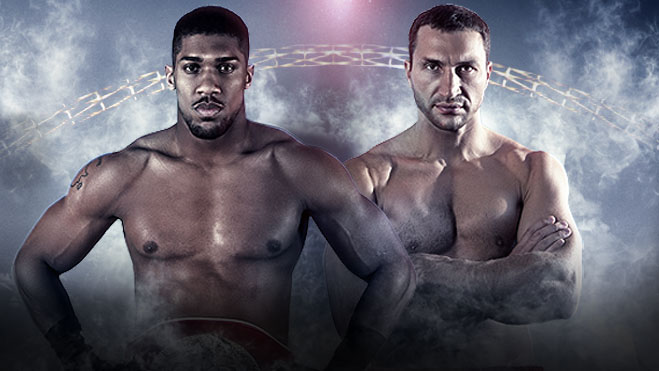
Klitschko and Joshua: Legacy and Legitimacy

Klitschko and Joshua: Legacy and Legitimacy

The King is dead; long live the King.

Saturday night, Wembley saw a record attendance for a boxing match and a bout that will become the thing of legend. It was more than a passing of the torch: it was a fight for the ages. A reminder why the heavyweight division is the pinnacle of the sport, and a moment in time where long burning questions were finally answered.

Previous perfunctory performances, like the Haye fight, had done little to endear Wladimir to fair-weather boxing fans. They want excitement and edge of the seat action. He played his part in providing this against AJ.

It’s a shame Haye couldn’t bring this side of Klitschko to life. Imagine a world where a slicker, more focused Wladimir stomped on the heavyweight division instead of politely keeping it at arm’s length with a jab.

This writer has always been a fan of boxers that box smart instead of taking risks for the sake of show. Mayweather is a genius that bores the untrained eye. Wladimir to many, was dull and a fallacy.

Of course, these claims are untrue. He was a master technician that painfully learnt his weaknesses in his early fights and adapted style accordingly. Paradoxically, it was his years of methodical experience that went against him on Saturday.

After he put Joshua down, the younger man looked spent. He was there for the taking. Even as AJ launched the final, deadly attack, it was from rocky ground.

But Klitschko was too use to seeing fights out, meticulously choosing punches at the optimum time. Had he ignored this well-tread instinct, the British Gold Medallist would have been surrendering to his Ukrainian counterpart.

Instead it was down to the man without any experience at world level to change the course of the fight: The course of heavyweight history.

Both men left everything in the ring. In defeat, Wladimir Klitschko is humanised. The mechanical, robotic sounding, professor of the punch became a dynamic warrior, ready to go out on his shield with his sword still swinging.

AJ will continue to improve, this was invaluable experience. It means should Klitschko face him again, he’ll have to raise his game even further. At forty-one, that may be too much of an ask. But at least we now know there was something left in the tank. More than a little, as it happens.

Anthony Joshua took a large step to fulfilling the prophecy that he can become one of the all-time greats, should he maximise his potential. The chinks in his armour – ones that had been hinted at – were fully exposed. But he stood tall and kept his relentless hunter mode active.

It may have been Joshua’s first proper fight at world level but he proved he belonged there. For all the hype surrounding him, real calibre shone through when it mattered most. He may still be “vulnerable” in the way Klitschko said, and demonstrated, but the balance of talent versus deficiencies sways in his favour.

Joshua getting better with time must strike fear into every future opponent. The best heavyweight boxer of the last decade, in the finest shape of his life, couldn’t halt his ascension. The legitimacy of Anthony Joshua can no longer be questioned.

Neither can the legacy that Wladimir Klitschko leaves behind. Often overlooked because of the entertainment factor, people miss the point: he made boxers look ordinary and always got the job done.

The Fury defeat can now be placed into context. There was a question as to why Klitschko tried to add extra padding to the canvas. It was a move that a man recovering from injury would take. He didn’t look 100% that night but took the fight anyway.

This isn’t to diminish the Fury achievement, he went with a game plan and executed it perfectly. It was the thing needed to light the fire in Wlad’s belly.

Once burning again, we saw a glimpse of the great man that’s always been there.

His boxing record already ensures Wladimir Klitschko is a Hall of Fame addition. The character and professionalism he’s displayed in every situation signifies what being a champion is all about.

He hands over his crown to Joshua in a fitting coronation. The British boxer has displayed he also has a positive demeanour. In the coming years, it will be tested as fighters try to drag him to the dark side of the sport.

In those moments, he’d be well advised to take a pause and wonder what Wladimir would do.