The Real Fan Problem at Manchester City

The Real Fan Problem at Manchester City

After watching City overcome Monaco in one of the most exciting European nights imaginable, it’d be easy to think the next article will be wax lyrical about Pep Guardiola’s side. Or, perhaps to fit in with the mainstream media, it will take away from the spirit shown and focus on the many faux pas we saw and bemoan two poor defences. It will do none of these things but it will attack a certain element of Manchester City, while defending its most important aspect: The fans.

When Willy Caballero saved from Falcao’s penalty, this writer celebrated like City had won the Champions League, such was the level of tension and passion in the stadium. It was a night where the Etihad took it up a notch. The fans feeding off the team’s fight, the buzz energising the players. The perfect example of the symbiotic relationship that should exist between those in the blue shirts and those in the stands.

If the people that have the direct say in City’s success – the men on the pitch – can see the importance of the fan base, why can’t the people that organise the club’s affairs do the same?

The official line from Manchester City will be that the fans are the number one priority: #Together. It’s great marketing, and on some level, there’ll be people that work for the club who believe it. But constant oversight and a lack of corrective action makes one doubt how genuine the words are at corporate level.

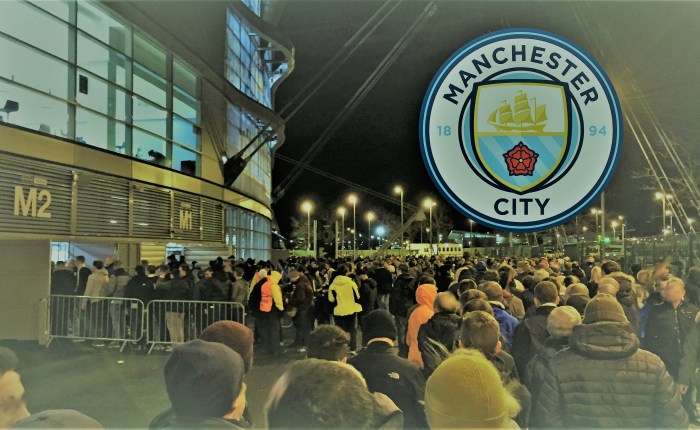
Of course, the example last night, and reason for this article, is the continued problem of gaining entry to Etihad Stadium on match day – especially European nights.

To have it happen once is forgivable, twice is disconcerting but no major issue, for it to happen constantly with no cure in sight is sacrilege.

Just like the Celtic game at home, queues zigzagged around the concourse, patiently waiting in lines that needn’t be there but the club refuse to address. Thousands of fans – that have paid full price for their ticket – are expected to miss up to twenty minutes of the first half. All because of City’s arrogance.

Before we go any further, let’s nip the two favourite retorts in the bud once and for all.

Get to the ground with plenty of time to spare.

Fans shouldn’t have to arrive one hour prior to kick-off to ensure access to their seat.

Increased security measures will cause delays.

The extra searches do not slow down or hinder access to turnstiles. They mean the person(s) being searched are delayed by thirty seconds. The queue moves past them, the turnstile never stops turning.

Another, weakly spoken, response, is fans arriving at the wrong gate cause delays. This does happen, and cup games mean new guests or people in different seats, but it does not equate to thirty minute delays. If there is any argument for ticket issues, it’s staff not directing supporters quick enough when their card or ticket is repeatedly jammed into a turnstile that’s displaying a red light. Patience, in this moment, actually saves time.

No, none of the diatribe aimed back at the fans adds up. A main contributory factor is clear: unnecessary redesigns have purposely limited the volume of traffic at preferred gates.

Take the M2 to M1 situation. Once upon a time – before the club started their final corporate solution of hospitality clubs and glass tunnels – allowed fans in the third tier of the South Stand to use both turnstiles. And the traffic flowed, not a queue in sight.

Fast forward to the present day, a wall has been built meaning those gaining entry via M2 can’t walk across to the stairwell for the upper tier. The preferred upper class customer no longer need worry about the upper tier riff raff sharing their turnstile. They can watch them queue instead.

If there’s one thing we’ve learned from Donald Trump’s comments, it’s that people don’t like walls being built.

The annoying thing about this wall is that it has a lovely set of double doors. The same doors that are opened post-match to speed-up everyone’s exit from the stadium. But, for reasons known only to City – those doors must remain closed until the ref blows his whistle for the last time.

etihad-stadium-the-problem-doorIt’d make no sense to allow the queue to dissipate and direct people once inside. Best to keep lots of people disgruntled, right? And it means staff manning the M2 side get to stand around and avoid work based stress. Excellent for all involved…

etihad-m2-empty-gate

Maybe United fans not being in the Champions League have gotten the last laugh: it gives them a free night to take jobs at the Etihad and help run City’s European nights.

It’s not as if City don’t know how many people to expect or can’t call upon vast experience of running match days. No fan should have to wait thirty minutes to gain entry to a ground. And it keeps happening. Against Everton, as reported here, the staff at the turnstile broke procedure and opened the exit gates to allow fans in. That, obviously, can never be the solution, but by now there should have been one.

Instead City show signs of madness, repeating mistakes, expecting a different outcome, and continue to neglect the working class fan. You can put your mortgage on the fact that if ten corporate visitors were made to queue outside in the cold for twenty minutes into the first half, there’d never be anything that resembles a line of people within a mile radius of Eastlands ever again.

Traditional fans, worried about becoming marginalised, continue to see basic consideration diminish. There’s no suggestion here it comes right from the top – Sheikh Mansour has gone to great pains to maintain inclusion for all City fans, all over the world – it’s the daily heads of office that are guilty of mismanagement, oversight, and a lack of care.

The current entry system (not security checks, the poor use of all turnstile resources) is not fit for purpose. If the people responsible for direction and management of City match days do not use some common sense to remove the current façade, they make themselves as effective as the crippled system they stand by.

Before the decision makers in Abu Dhabi consider further expansion, player acquisitions or ground improvements, they should look at the basic running of Etihad Stadium. There’s a lot of deadwood that needs removing.

Lego Batman: A Dark Knight Parody

Lego Batman: A Dark Knight Parody

It’s been quite the turbulent time for Gotham’s finest on the big screen. Batman peak will be seen as the critical and financial success of The Dark Knight. Its sequel divided the new followers from an appreciative core audience. Then came the announcement Ben Affleck would fill the cape and cowl following the wrapping up of Christopher Nolan’s universe. The world groaned.

Movies Reflective joined the calls of dismay (The Dark Knight Relapses) and made its apologies (Batman v Superman: There is a Winner). Batfleck turned out to be a success. His anticipated solo film, directed by the man that made Argo an Oscar winner, promises to balance the dark side of the Bat with the commercial demands of the DC Extended Universe.

So where does that leave The Lego Batman Movie? Surely, it’s just an example of Warner Bros. lending one of their largest properties to a non-threat in order to make money? But with this approach must come a series of prerequisites. If this is the case, director Chris McKay and his eight writers either didn’t read the memo or stretched what was acceptable.

The Lego Batman Movie is a parody disguised as a standard children’s animation film.

It’s is so self-aware, it manages to deconstruct Batman at every level. Nothing is off limits. From Hans Zimmer’s tense action score from The Dark Knight Rises; Bruce Wayne’s backstory; Batman’s real world history; and the typical rules used in a superhero movie.

It pokes fun at all the failings of previous films. Too many villains over saturating the script: usually three bad guys will induce this effect. Lego Batman aims not for double figures, but triple. Bruce Wayne forever moping about and driven to dark places because he saw his parents killed. Lego Batman turns it into a comedy sketch.

Heath Ledger’s Joker summarising the unique relationship his character shared with The Caped Crusader (“I think you and I are destined to do this forever.”) becomes the drive for The Lego Batman Movie. Joker wants Batman to realise they are connected, that they need one another.

It’s great fun for the kids, Lego brick explosions everywhere, but the speed of the one liners indicate they have been written for the experienced Batman fan. And the embrace of the past, including the sixties TV version, goes beyond nostalgia or even paying homage.

If it weren’t for the child-friendly humour and tone, you could compare this to Team America: World Police. It knows what it is imitating so decides to have a good laugh with it.

In many ways, this means Will Arnett isn’t playing Bruce Wayne/Batman, because this isn’t really that character. It’s a shame for Joel Schumacher that the Lego Movie concept didn’t exist in 1997 when he gave the world Batman & Robin. It was his intention then to produce a Batman big screen outing for kids. He failed to impress children and adults alike, killing the franchise in the process.

The Lego Batman Movie shows how it can be done. When it’s clear from the off that all seriousness should be left in the cinema foyer, it doesn’t matter how colourful Gotham City is or how outlandish the story becomes. People can just sit back and enjoy.

With that freedom to do what they want with the property, Lego Batman manages to get a few more satirical scenes in under the radar. There’s a clear dig at Suicide Squad when Batman says getting bad guys to fight bad guys is stupid. And then, with a nod to that movie – and several other superhero flicks – the doomsday weapon of being invaded by another realm enters the fray.

It’s not here to comply with the structure of grown-up superhero films, it’s to point out how preposterous the notion is.

Even the happy ending is tongue-in-cheek. With it, The Dark Knight becomes a light comedy genius. Whether the DC Extended Universe is a success or not (and it hangs in the balance), Warner Bros. can always fall back on a Lego version of events and bring a bit of laughter, and a lot of revenue, into the boardroom.

Lego Batman isn’t the hero you deserve, but it’s the one you need right now.

T2: Trainspotting Judgement Day

T2: Trainspotting Judgement Day

Let’s face it, Danny Boyle doesn’t make bad movies. Every single one that his name has been attached to has been worthy of your time and deserved any success that came its way. It was his second as director, Trainspotting, that sent him on a roll. Its momentum helped create a career in Hollywood most modern movie makers can’t begin to rival. 2017 is the year he returns to the setting of a timeless piece of cinema.

In a perfect world, my first novel will be adapted by Boyle and Manchester would have its iconic movie (we did grow up on the same streets, so it’s not that far-fetched). It’s the dream choice because Boyle understands the drive of a story, then delivers a visual experience that goes beyond the vision of its creator. Irvine Welsh is a talented author, no doubt, but Trainspotting elevated his novel to heights he couldn’t have envisioned.

That was aided by the John Hodge screenplay and determination of producer Andrew Macdonald. Back in the nineties it was Boyle that had to convince Welsh a movie was a good idea. Years later it is the director in the hot seat calling the shots but it’s warming to know he wanted to make a sequel. It is something he actively sought, waiting merely for the actors to age accordingly.

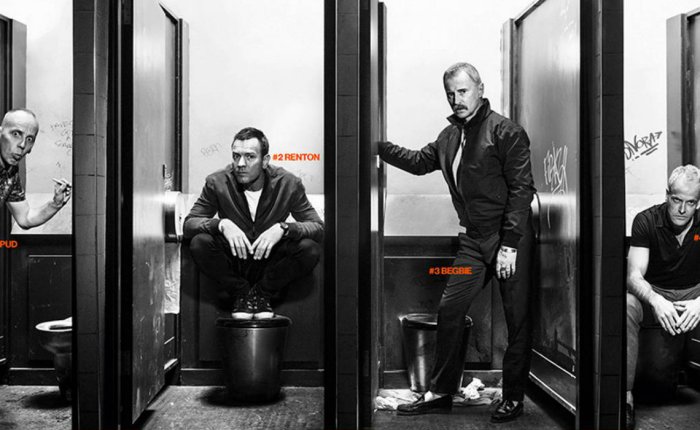
The stars have aligned (and reassembled) to bring back the core characters from the original. Ewan McGregor’s “Rent Boy” has been missing for twenty years, as expected after stealing £16,000 from madman Begbie. Robert Carlyle was a scene stealer back in the first film (remember that glass chucking moment?) and his new Begbie is just as intense. But back then it was mindless, after twenty years in prison, it’s pure focus.

He escapes, and the lack of police follow-up is something we will just have to accept, and attempts to resume life. It’s here we get some laughs. Trainspotting was a black comedy at times, the laughs here are lighter and directly played for.

Sick Boy, or Simon, is now putting more coke up his nose than Renton put heroin in his arms first time around. He’s trying to run scams and wants to open a brothel to keep his girlfriend happy. Yep, the Edinburgh they inhabit still has its murky sides.

Ewen Bremner’s Spud is the final member of the quartet and plays a larger role than last time. He is still a heroin addict, estranged from his partner and child and is suicidal. The unexpected arrival of Renton gives his life a new direction.

For a time, the movie’s direction, while new, isn’t ground-breaking. It openly reminisces over famous scenes from the original. This trip down memory lane would be pure nostalgia in the hands of any other movie maker, and would be crude self-awareness – not unlike the last series of This Is England – if it weren’t for Boyle’s ability to bottle a mood a make everything feel fresh.

This talent is aided by a cast better equipped to deliver the vision this time around. They have all grown as actors. What the script lacks in depth, they fill out with more meaningful performances.

There was no point trying to replicate Trainspotting, that time has passed, the characters inhabit different bodies. But it would be soulless not to have them look back at key events after being separated for two decades. The soundtrack aides this natural introspection with a hint of familiar themes with new vibes laid over.

There are times the suspension of disbelief is stretched as coincidences and situations appear to drive us to a forced conclusion. That’s a nod to the power of the first film, perhaps there was no real story to tell after that one? But that’s not to say it is poor, far from it. Certain Boyle hallmarks displayed in Trance, and novel use of lighting in the finale, give this film the contemporary nod that separates if from its grimy predecessor.

Easily a four-star film, maybe as it settles it’ll take its place alongside the first. And in a few decades’ time, there’ll be no complaints if Boyle wants to visit these characters again.