Homage to Revolution

Homage to Revolution

An unstable Europe, led by an unelected totalitarianism regime, is divided, facing an uncertain future with opposing fundamental ideologies, without a clear roadmap for moving forward. A fitting post-Brexit statement, proving the essence of history repeats itself, but one that sums up the 1930s world that George Orwell found himself.

Animal Farm is the best political allegory ever written. Nineteen Eighty-Four, his final novel, is almost prophetic. So what were the real life experiences that motivated him? Homage to Catalonia offers some insight into this, serving as a tool for him to recount his time in the Spanish Civil War.

If one is tempted to read this book for an exploration into intense battlefield activities, then it will not sate that appetite. There are rare occasions Orwell describes running the enemy line and taking ground, but as he explains early on, from his first-hand experience, war is mainly boring.

That’s not to say the young Orwell was eager to avoid conflict; his apparent bloodlust to kill a fascist may shock some. But that particular title for the enemy has taken on different ramifications over the years. Say “Nazi” and “Fascist” today, and two different responses will be evoked. To the Orwell of 1938, the evil was equal, the ideology just as dangerous.

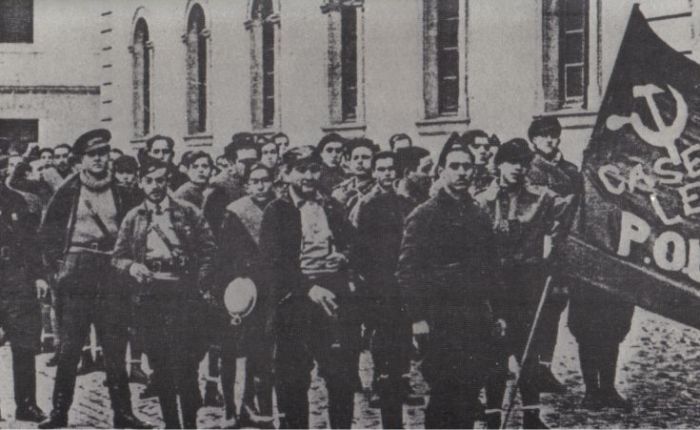
It is this fear that means the option to not intervene was unthinkable. He joins the POUM and goes to the frontline with them. His original intention to write as a journalist passing immediately. What becomes apparent from the start is how ill-equipped the revolutionists are. After days of drill, he notes there is no weapons class because they lack any firearms to train with.

None of the disarray deters Orwell. Indeed, in the early chapters the rag-tag outfits parade the streets as a symbol for hope and change. Those that would oppose chose to wear working class garments to go undetected.

The accounts reflect, how after 115 days on the frontline, the class divisions have returned to the streets and the revolution isn’t as strong. During his leave from the front, he is involved in a stand-off, with opposing forces occupying neighbouring buildings, all with gentlemen’s agreements in place. Agreements he sees as fickle as the unity between parties.

Upon returning to action, a gunshot wound to his throat sees him leave conflict for good. He decides to depart Spain but the POUM are declared illegal and a suppression against their members means he has to evade detection. This further underlines the falsehoods and lies such wars bring about. He worries that those still fighting are being turned into scapegoats despite having honourable intentions.

Homage to Catalonia isn’t a perfect body of work, the language can become repetitive, proving, no matter the talent, there is a vast difference between journalism and storytelling. And his accounts here do not fill in the complete picture, he warns as much, but it’s an important snippet.

What is clear is the admiration he has for the Spanish people. Their generosity is highlighted on multiple occasions and he describes them as too noble (and albeit, too ill efficient) to serve a successful totalitarian regime.

His wider opinions aren’t explored in great depth. The arrival in Spain speaks volumes enough, and description included for democracy as the centralised swindling machine, shows he wasn’t fighting against communism, as he later would with words, but fighting with people to bring about change.

In time an extensive American propaganda machine would colour our perception of what communism was to the point it holds no value. In this raw, 1938 release, we see Orwell’s disillusionment with all methods to control the masses through misdirection.

That’s not to say he didn’t criticise the communist control of press but even papers back home in London failed to deliver true accounts, and on many occasion out-right lied about events in the Civil War. His views during this time have been labelled as Trotskyism but it’s fair to say Orwell had a democratic socialist heart that stood to fight totalitarianism.

Those efforts must have felt wasted in the immediate aftermath of his journey but sometimes making a stand is enough to ensure evil never wins. Franco may have retained power, but the damage inflicted from the resistance saved Spain in the long run.

By the time World War II arrived, Spain was crippled. Despite being in Germany’s pocket for over $215m of aid during the Spanish Civil War, they couldn’t align with a natural allied force. Even though Franco was receptive, he eventually submitted demands to Hitler he knew would be refused, sparing Spain further decline.

Without the anarchist’s intervention in the 1930s, Spain would easily have become an extension of Nazi Germany, possibly sending the whole world into a fascist state.

The fight for principles bared fruit in the passage of time.

Orwell couldn’t have foreseen how future decades would be shaped following his contribution to the Spanish Civil War but he strongly believed in standing against the opposing ideology. His future works would perfectly surmise complex political systems and falsities in simple terms. Homage to Catalonia lays bare the human cost of these deceptions and the lengths men will go to when protecting ideas.

Orwell demonstrates why revolution in the face of certain paradigm shifts is not only brave – it’s necessary.
What £100m means in Manchester

What £100m means in Manchester

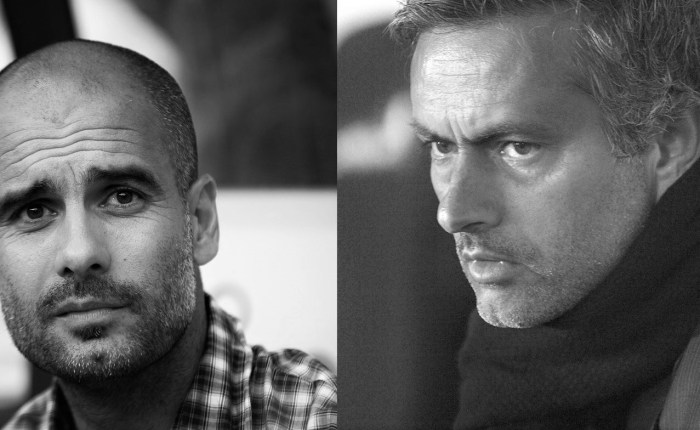
The two clubs baring Manchester in their name have both spent big this summer. But that is where the similarity ends. In the centre of Manchester, Pep Guardiola has spread his cash as he rebuilds and reimagines The Citizens style of play. Over in Trafford, their new man at the helm José Mourinho, also faces a reshaping job. But he has decided to take a big, singular gamble. There is a reason for these two differing approaches.

The irony of United being the club to break the world transfer record, when it was “City ruining football” with their accelerated growth period, won’t go unnoticed with football fans around the country. But the protracted Paul Pogba transfer is the peak of a continued period of United high-spending.

Moyes, Van Gaal, and now Mourinho, have all been supported by the Glazers in the transfer market.

The ethics of a £100m move have been widely discussed. Regardless of opinion, the truth is football’s finance has been heading this way for a long time. The new TV money should have found its way back to the pockets of fans but this was always going to be difficult when chairman saw it as a way to increase the ransoms on their top players.

Juventus have only done what Everton have been trying for the last two summers, and this despite the Goodson Park outfit benefitting from the increased TV revenue and a new, presumably richer, owner. The Italian club have a tighter budget, if they hadn’t broken the world record fee with United’s money, Real Madrid would have stepped in and come close.

What makes the move murkier for United, are the reports the Frenchman preferred a move to the Spanish giants. A few eyebrows must have been raised from Sir Alex Ferguson to Sir Bobby Charlton, when the realisation hit home that a player who left for a tribunal fee, looked to be returning, somewhat underwhelmed, for a world record fee.

The debate about whether he is worth the fee is null and void. The moment a club are willing to pay a price, that is the market value.

What the Pogba debacle does, is detract attention from United’s net summer spend. The positive press campaign focuses on four acquisitions, one of them Zlatan Ibrahimovic for absolutely nothing. A player of such quality on a free transfer is more than a bargain, the only doubts surround his ability to step up from the tamer French league to the tough English season at the age of 34.

The other half of Mourinho’s summer quartet are Henrikh Mkhitaryan and Eric Bailly. At a combined fee of £68m they are hardly cheap supplements to the lofty pursuit of Pogba.

This is where the Manchester divide became a chasm over the summer.

As it stands City, who admittedly are still seeking reinforcements, have spent £114m and recouped £10m. Both of those figures are set to rise, with the imbalance increasing on the expenditure side of the equation.

For the price of one Pogba, City have brought in six new faces and still have over £60m to go before equalling United’s outgoings. This is without acknowledging the offloading process City are going through which is trickling some cash back into the coffers.

The reason the alternative approaches are so glaring is because both clubs had the same problem: they need complete overhauls.

José Mourinho even commented lately that he needed twenty players to undo the damage inflicted from the Louis Van Gaal era, and that his approach differed so wildly, it would take many new faces to adjust the style.

So why place all his faith in one big summer signing?

Because he lacks a luxury only Pep Guardiola can boast in the modern world of football: time.

The Spaniard holds a major advantage over José and it isn’t a bigger cheque book or even a better youth system. It’s the lack of urgency for immediate results. The Etihad board didn’t allow the Pellegrini era end with a canter to then make a kneejerk reaction with their long-term managerial target.

Guardiola knows he can take his time developing new signings like Marlos Moreno without fearing the need for instant success. That’s not to say he can fail to achieve minimum targets. Champions League qualification is a must to the big clubs. But even failure to meet that wouldn’t necessarily cost Pep his job.

Mourinho is breathing the air of a different planet. He is a proven manager that suddenly has everything to prove. After the Chelsea sacking, he can’t afford a slow start, let alone a disappointing season. He didn’t have the support of the entire United board but he was seen as a necessary evil.

That conjoined dilemma of club and man brought them together. Now they face a future where development gives way to desperation in the transfer market.

Mourinho is in the casino, play for high stakes risks, and Pogba is one big throw of the dice.

His inner-city rival can smile and take cab journeys with fans instead. He has the time to send players like Zinchenko and Gabriel Jesus on loan, not worry about Ilkay Gündogan’s lengthy injury, or bend to transfer fee demands he feels excessive. And all the time he works the current crop – whom many now seek redemption – into his mould.

Leicester proved last year that money doesn’t guarantee success, this season Manchester will see if patience pays dividends.

Vardy right to remain but Kante Seen Chelsea Move Coming

Vardy right to remain but Kante Seen Chelsea Move Coming

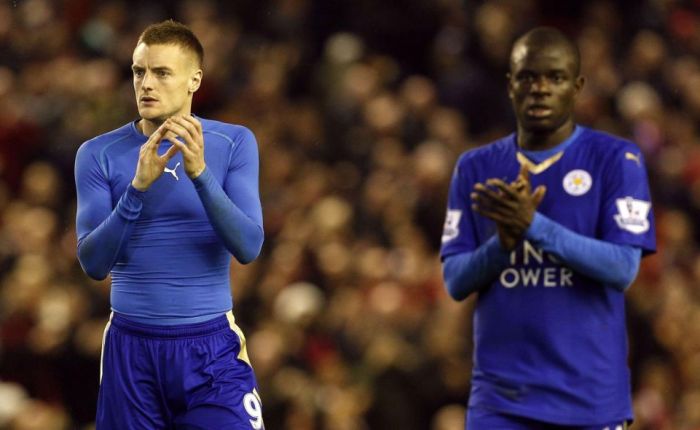
N’Golo Kante has made a £30m switch to London club Chelsea, threatening the start of a break-up of Leicester’s title winning team. At first glance, it makes Jamie Vardy’s choice to reject an approach from Arsenal all the more puzzling. At the time it was believed this was made after consulting key members of The Foxes squad about their future plans. So what does it all really mean?

Firstly, it means Vardy’s seemingly difficult decision, takes on a whole new dynamic. Let’s say during the pause he took from making an immediate choice, he did ask the likes of Kante and Mahrez what their next career choices were going to be. When he turned The Gunners down, it was a sign the squad was about to adhere to the wishes of Claudio Ranieri, and give Leicester one more year before moving on.

Perhaps Vardy was never given that reassurance from the key players. It’s unlikely they would outright lie to him if asked, so at best, he would have gotten an unsure response.

This does mean Jamie Vardy analysed his choices and made what he felt was the best decision for him. And he made the correct one.

He’s at the Premier League champions. Arsenal may be a bigger club, and with a new manager could have offered a fresh alternative, but the reality is they haven’t got a better chance of taking the title than Leicester.

Size and stature mean little if stunted by stubborn ideas.

That lack of desire to change approach is of course driven by Arsène Wenger. Other than teasing Vardy with the grandiose setting and a chance to take his place in the history books along former players like Thierry Henry, there’s very little that made logical sense.

Jamie Vardy is already 29 years of age, everything that is occurring now already supersedes what he would of dared dream a few years ago. From a professional standpoint, other than Arsenal mythology, there is no tangible evidence he would further develop under Wenger’s watch.

The Arsenal boss has a history of taking promising young players from other clubs and freezing their potential in the same room as he keeps his title aspirations.

Alex Oxlade-Chamberlain must fear he will become another Theo Walcott. The latter now looking for a move to another club to reignite a career the Frenchman killed. One of those clubs is West Ham, where another former Southampton youth talent, Carl Jenkinson, went on loan for the same reason. Calum Chambers will be hoping he isn’t the Oxlade-Chamberlain to Jenkinson’s Walcott.

During this time, Vardy’s talent has risen exponentially.

These must have been considerations the striker took, along with a major one: Wenger was disrespectful trying it on before the Euros.

For Kante things look decidedly different. He’s only 25, and is looking beyond a glory year with underdogs in the Champions League. His new manager, Antonio Conte, was equally absorbed with the Euros and approached at a more appropriate time.

With age on his side, the move should be (using historical data) a wise one. With Roman Abramovich’s desire and resources, Chelsea will get back to the top of the English game. It remains to be seen if Leicester can remain in the top four after coming from nowhere and against all expectation.

Conte is also a close confidante of Ranieri’s, so one has to assume the move was sanctioned, even if somewhat begrudgingly, without any negativity.

With it now looking like Riyad Mahrez will follow N’Golo Konte out of the King Power Stadium, a positive atmosphere is something Ranieri will need to maintain at the club. Losing two-thirds of the important title winning trinity will test his minerals as a manager. Who would have thought, after taking 5000/1 outsiders to championship glory, his biggest test was yet to come?

But it was a title success built on togetherness and shared belief. Whoever comes in must have passed a character suitability test and can converge into the psyche that shook the Premier League.

Leading that line is Jamie Vardy. He’s already living the dream. A move now doesn’t give a Hollywood ending to this story; it would show a betrayal to an ethos that allowed hard work and desire to overcome the odds and those with greater financial clout.

Kante moving on can be understood, but Vardy staying is to be applauded and admired.