Wonder of Wimbledon

Wonder of Wimbledon

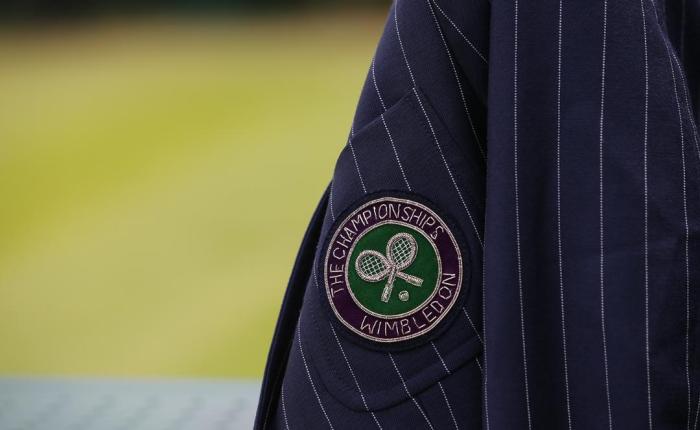
Wimbledon strikes its penultimate day. For the women, a legend takes her seventh singles title at the famous venue. The men play tomorrow, with Andy Murray still representing Britain, being recognised as Scottish only in defeat by the masses.

Young children will have watched on during the last few weeks, picking up on peculiarities unique to tennis. Their enquiries ranging from why the man in charge keeps asking for a drink. The reason why those dressed in armed forces’ uniform stand with ball boys and girls. Why do players ask for three balls and always send one back?

These new fans help fill courts up and down the country, along with adults dusting off their rackets for the yearly outing. Promising that they really will carry on playing this time; the delayed New Year’s resolution that meets the same fate as all the rest.

The cross generational experience resumes when watching the telly. They see those that can’t afford Wimbledon strawberries and cream, let alone a premium ticket, wave from Murray Mound. This coming together, just for a glimpse, helps give a taste of the atmosphere to viewers at home. Those too young to remember are informed the grass verge used to be named Henman Hill.

They screw up their faces and ask, “Who?”

The explanation about some Tiger Tim character sums up a deeply seated fear regarding English sport: heroes are made of nearly men that are never quite up to it.

England has spent the summer singing and talking about Three Lions only to be let down by cubs and rich fat cats. But it is at Wimbledon they get to see a true lioness, banishing the focus of sporting failure, replacing it with greatness.

Serena Williams, prowling centre court with beauty and power in equal measure. Delivering feline ferocity while maintaining untouchable grace. This victory makes Wimbledon the spiritual home for a tennis legend. England has been lucky to witness it; tennis is lucky to have her.

The nation waits for tomorrow. The long winter of years without a British Wimbledon winner passed thanks to Murray. Mentions of ’77 and Virginia Wade were only a paracetamol to mask the headache that Fred Perry’s name brought on. The three-time winner is celebrated with deserved adoration, but his last title in 1936, revealed a chasm in domestic sporting achievement.

The youngsters of today think he is just a guy that makes clothes, they see no tennis connection. Nor do they realise the gulf of those vacant decades. They only see a British man entering a Wimbledon final as a clear favourite. As such, Murray now faces a new pressure: expectation.

Such is the fickle nature of sport, the belief a curse was placed on a home winner is overtaken by the conspiracy fate is working to ensure another title for the world’s number two.

Nadal watches on, side-lined and reducing the elite field. Federer was beaten by Father Time and Djokovic left under a mysterious cloud. The path to victory cleared for a presumptive British favourite to take centre court.

He has tasted Olympic gold here, a singles victory, now he looks to assert his place among the upper classes of the game.

If he does, perhaps the British will use an old sentiment and claim Wimbledon victories are like buses. They’ll make this joke as they drag out tennis practice for an extra week while still drinking Robinsons orange juice…the children wondering if the umpire ever got his.

Brexit and the Premier League

Brexit and the Premier League

Britain has been gripped with post-EU Referendum fall-out. Markets have panicked, the pound has fallen, and the Prime Minister has resigned. All this seems secondary when you consider the real burning issue: How will Brexit affect the Premier League.

One certainty surrounding Brexit is everything is uncertain. There’s no clear front-runner for the Tory leadership, when the fragmented state of British politics is taken into account. While many mention Boris Johnson as a likely candidate, there are those that seem to think he has too many agents working against him. Theresa May is emerging as a front-runner and she was a member of the Remain campaign.

Depending on who takes the hot-seat will shape the nature of EU negotiations. A hard line Brexiter will be less likely to concede allowances, like continued freedom of movement for access to the common market (albeit with higher tariffs and penalties). But that option is still, at this moment in time, on the table. If that was to be the outcome, all the potential scenarios about to be mentioned, are null and void.

The alternative is a phased exit from the single market, in tandem with workers’ rights from EU countries. This is where the Premier League braces itself for a paradigm shift.

The most obvious change, and one that would be immediately recognisable, is how EU players would no longer be allowed to ply their trade in the Premier League without obtaining a work permit, like players, say, from South American countries currently apply for.

Players with a work permit are viewed as exceptional and are able to enhance the league based on their international experience. The better the ranking of the nation, the less games the player needs to have featured in for the national side. For example, countries ranked in the top ten, require the player to have featured in 30% of matches or more in the last two years. Moving in blocks of ten, the appearances required rise from 45% to 60% and finally 75% respectively.

If a player is refused, they can appeal. The Home Office then take into account the size of the transfer fee. An outstanding player may come from a country blessed with world class talent, so has rarely featured on the international stage, while still being of the highest calibre. This point is backed up with the size of his contract and the weekly wage.

Also, if the player has featured in many Champions League games, it sheds favourable light on his case.

However, the Premier League cannot gain special treatment compared to other industries, inevitably the number of European-based imports would decrease if EU players became no different from nationalities based outside of this continent. Maybe there’d be several years of easing in new rules but eventually the law would be the same across the board.

At this point the star foreign players would be more expensive to acquire. That strikes fear into club owners and fans will feel their team is being ripped off. But perhaps it will be better to avoid the current Average Player Tax the league endures, bringing in filler to gain access to the rare outstanding performer. Instead clubs will pay a premium for a premium player, minus the non-descript faces.

When the Premier League was new, it managed to pull in star names. Back then they felt special as they were, to start with, one-offs. Since then it has been easier to lure the best in the world over en masse. In doing so, the league’s reputation has risen to such a degree that nothing will prevent players feeling its lure.

It isn’t about to turn into the Scottish Premier League from yesteryear, with a few massive names in a field of averageness. The money alone that the Premier League generates means it can endure any rule change to the eligibility of its workers.

The FA will see it as a blessing in disguise. The lazy scouting of top clubs, that see them take a risk on an average foreign player with an EU passport rather than look in the domestic lower leagues, will slowly draw to a halt. And current champions Leicester have demonstrated, there is talent to be found further down the leagues.

Any extra premium clubs pay for the stand-out performers will also be offset by an unexpected easing of financial burdens. Currently too many top teams are reluctant to use their youth academies. Part of this problem comes from the condition that too much choice is a bad thing. When pruned to a more manageable number, the human mind finds it easier to make correct choices.

The pruning that will take place in the academies will be the process of no longer filling them with youngsters from around the globe that either have EU citizenship or want to attain it. Instead, British players will fill the ranks. Those that are clearly the best won’t have to fight with high numbers of imports or pointless loan moves across the continent. They will be used or released.

Eventually the domestic youth talent will become good enough, and trusted, for the first team. This will save clubs millions each year on players that act as squad players.

The English national team will have greater choice of top flight players. The figure is currently less than 30% in Premier League first teams. This advantage means the FA won’t fight the Premier League’s case for special treatment.

Like much of the Brexit debate, there has been a lot of scaremongering.

Just like Britain won’t return to the dark ages following exit from the EU, the Premier League won’t lose its place as one of the top destinations in Europe for players to perform. The best in the world will still come here, and any increase in price needs to be placed into context.

The finances in the Premier League are currently grotesque, a recalibration and reconsideration of where every pound goes isn’t a bad thing. In fact, it’s long overdue. Instead of being flippant with cash, maybe owners will be mindful of bringing in only the best, remembering it’s the working man in the stands that make it possible.

The Premier League will still thrive after Brexit, don’t let big business and the establishment tell you otherwise.

Made of Stone

Made of Stone

The Stone Roses are once again back in Manchester. After the 2012 Heaton Park reunion the unknown has been replaced with a new question: Will they fill four nights of gigs with unheard material?

Leading up to the Heaton Park performances the fear was the band would no longer have the magic. That history had made The Stone Roses the thing of legend. That a reunited band, most likely driven purely by money, would desecrate the memory of something that was fleeting yet special.

The causes of a collapse were made before any evidence surfaced. Ian Brown was a prime target. Bootleg copies of old gigs revealed a voice that was left wanting. Even the most ardent fans braced themselves for a disappointment.

They needn’t have worried. The Stone Roses moved into the modern day effortlessly. The fears over performance immediately subsided. Even if Ian Brown had struggled to sing in 2012, it wouldn’t have mattered – the crowd did it for him. So timeless are the tracks from their two albums, age hadn’t harmed them at all.

Without the concerns they could no longer do it, one can rightly ask what makes this new Manchester experience a must see. Why did extra nights need to be put on? New track “All for One” indicated it was perhaps an old fashioned tour to promote new material. That reasonable assumption would be incorrect.

If the 2012 events were a heavy nostalgia trip, this one buckles under a weight of reminiscence surpassed only by a demand for tickets.

Out of twenty songs performed on the night, only two were new. The aforementioned “All for One” clearly designed for a quick feel-good stadium sing-a-long, that unlike the back catalogue, won’t survive the test of time.

This isn’t to say it was a bad night – far from it. But it was another live performance of their greatest hits album which is really just an album and a half worth of music. That’s all they have ever produced. And there lies the initial fear from four years previous: what if they have nothing left in the creative tank?

Perhaps they don’t? But it doesn’t matter when what remains is so enduring.

Other bands can go under the radar with greatest hits tours, they pull their material from sources spanning decades. The Stone Roses lack that luxury, thus, are bound to face criticism.

Like a stone, they are hard to reshape now. Creatively they have become rigid, captured in time like a fossil. Pure nostalgia rather than pioneering or fresh. However, the audience seems to connect with this condition.

There were more bucket hats on the night than particles of confetti Chris Martin had spread on the Etihad weeks earlier. The fans no longer blown away by a return to form, just soothed into rose-tinted memories of an earlier time.

The Stone Roses have always been a snapshot of a band in their prime, a music scene at its peak. Maybe it is with careful plotting they have decided not to tarnish that with a modern take, allowing their followers to immerse themselves into a myopic musical memory.