Rock not Bust: Axl/DC Manchester

Rock not Bust: Axl/DC Manchester

Photo by Sakura – rockphotographer.net

With something more like trepidation than excitement, more intrigue than expectation, fans waited for Axl Rose to fill the void left by Brian Johnson’s departure from AC/DC. Many fans had been rumoured to have returned their tickets when news the Guns N’ Roses frontman would be part of the tour. This was confirmed by notable gaps around the Etihad Stadium in what was originally a sell-out.

In the article Hire Your Guns, even this writer poured cold water on the idea of an Axl led AC/DC tour. Thankfully those fears were ill-founded and every doubter in attendance will happily eat humble pie. That’s if there’s any left after Axl Rose himself has finished filling himself up.

The key to the Rock or Bust Tour‘s success appears to be how humbled the singer is. The self-serving aura, once as familiar as his bandana and screechy voice, has been replaced with focus and composure. This isn’t to say he’s lost his edge, he just isn’t over it anymore.

The show begins with the large video screens blasting us from outer space down to Earth. The first song is “Rock or Bust.” Axl walks into it (quite literally now, even with a leg brace) with a natural demeanour and perfect voice. But it’s the classics people are waiting to hear, worried they are minutes away from watching a band destroy its legacy.

It never happens.

“Shoot to Thrill” follows and then “Hell Ain’t a Bad Place to Be.” The latter providing a glimpse that would be later confirmed – Axl is more at home with the Bon Scott songs. That doesn’t stop the band diving straight into “Back in Black.”

Their bestselling song and most iconic Johnson number could have been an awkward moment but it passes as a thing of beauty. Again, Axl appears aware of the delicate position he is in. Rather than mimic the guy he replaced or try and reinvent the sound, he does what he was hired to do: give it the justice it deserves on the main stage.

Once the show starts, neither the band or audience look back. This is AC/DC at their best. Renditions of “Sin City” and “Riff Raff” breathe life into classics that have been underserved in modern times. This doesn’t feel like a substitute line-up anymore, rather a refreshed one with the ability to continue after this loan period. This isn’t elaborate karaoke but a viable alternative for an aging band.

Even with all the plaudits going to Axl Rose, some should be saved for Angus Young. For a guy in his sixties he shows no sign of age, in both his physical exertions or playing ability. He has always been the focus of live shows, now more than ever he is the face and force of the band. The unit only has the chance to shine because of his abilities.

Where the future lies for AC/DC only Angus truly knows. Axl has spoken of a desire to carry on, even record with the band, while Johnson believes he has found a hearing cure.

If the Australian rocker decides to stick with the Guns N’ Roses frontman, he won’t be short-changing the fans but breathing life into the line-up.
A Head Full of Dreams in Manchester

A Head Full of Dreams in Manchester

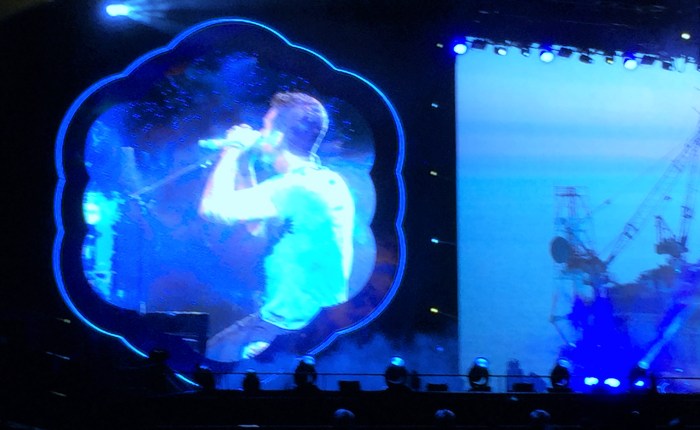
The Coldplay juggernaut returned to Manchester with A Head Full of Dreams Tour on Saturday 4th June. Last time the band came to this part of Britain it was to promote the successful Mylo Xyloto album. Within seconds of the first song, fireworks blast into the Manchester sky, signalling the bands ambition to continue as the world’s leading stadium band.

The scope of the spectacle should be applauded. From the Viva La Vida tour, where they filled Manchester’s Old Trafford Cricket Ground, to the peak of Mylo Xyloto, they have morphed into global heavyweights. It was at Old Trafford they proved a Coldplay gig could be upbeat and had the ability to appeal to a wider audience. Mylo Xyloto gave them the tools to do just that.

The current tour solidifies the position made from two albums ago but it also makes certain truths startling obvious.

Just as A Head Full of Dreams in album form fails to break new ground and live up to Mylo Xyloto (and maybe even Ghost Stories) this current tour is a rehashing of what has worked before. That’s not to say it’s a failure – far from it. Any Coldplay fan, extreme or casual, will have one of the best nights of their life. “If it ain’t broke, don’t fix it.” With this in mind, the formulaic nature makes sense.

The Xylobands have returned and watching the Etihad Stadium light up and flash in time with the songs is a sight to behold. All the recent hits you’d expect are in there and early on blended with classics. Switching from “A Head Full of Dreams” to “Yellow” before touching on “Every Teardrop is a Waterfall” then “The Scientist.” With such a rich back catalogue Coldplay could double their concert time and still have no fillers. As such, at just two hours, many favourites were omitted.

A “Paradise” dance mix led the band into a touching Muhammad Ali tribute before playing “Everglow.” It was a rare moment in a gig where band and audience unite as one. David Bowie was also paid respects on the night. The band covered “Heroes” after playing “Fix You,” ensuring they had everyone’s attention before giving a nod to a legend.

In another special moment they played “See You Soon” (found on 1999’s The Blue Room), explaining how they’d played it in front of three people when performing as a closing act at a Manchester festival back in 1998. Lots has changed for the band since then but the ability to tap into that earlier sound is still present.

Overall, Coldplay’s visit to Manchester was a great success and keeps them at the top when it comes to modern stadium bands. To stay there, they’ll need to add more substance to the gluttony of style currently being utilised.

The Wrongs of Roy’s England Squad

The Wrongs of Roy’s England Squad

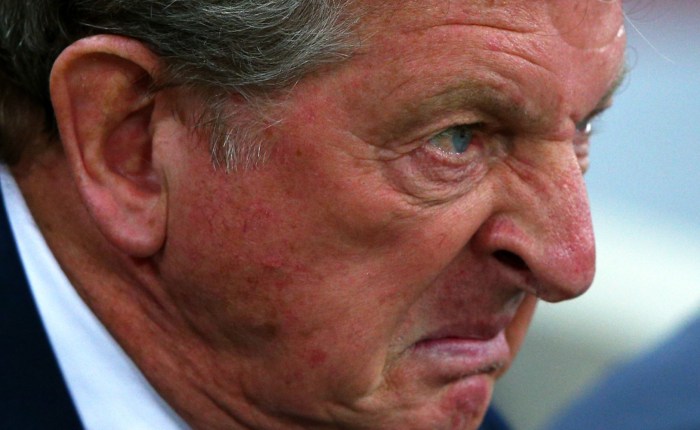
Roy Hodgson was never going to please all the people with his England selection heading into this summer’s Euros. The first to be displeased would have been the omitted fringe players, followed by fans who have their own varying opinions. Before dissecting his choices, it should be noted that the England manager has an embarrassment of riches in certain areas and scant choice in others.

The area where England has plenty of choice is in attacking roles. The most notable inclusion is Marcus Rashford. After suffering injury in the FA Cup final, the debate may have been shelved, Roy’s final choice unknown forever. That aside, his selection does need examination.

There is no doubt Rashford looks like the real deal and has more to his game than just explosive pace and an eye for goal. Whether by fluke or invention, Louis Van Gaal has unearthed a gem. The question has to be if 18 appearances for United warrants a place in the final squad that heads to France.

The national team has a history of young stars bursting onto the scene at major tournaments, the best example of such an impact is perhaps Michael Owen at France ’98. Could France in 2016 be Rashford’s time. It’s this sort of thinking that has made Roy choose him over experienced poacher Jermain Defoe.

The accusation of favouring big clubs has inevitably reared its head again. Defoe bagged 15 goals feeding off scraps but his two-and-a-half-year absence from the England scene means Roy doesn’t see him as a potential shoe-in now. Andy Carroll would have been another that could have offered something different but like Defoe, was never in the running.

There has been a suggestion Rashford’s selection is about acclimatising to the England set-up but he won’t make the final cut. Managers have done this before. Bobby Robson took players in his Italia ’90 provisional squad that weren’t in the running to be selected but he wanted to help blend-in the next generation of players.

If this is Roy’s thinking, then why waste a space on a player that couldn’t even make the first friendly? He could have let Defoe prove his worth.

The midfield debate has largely centred on who missed out. Theo Walcott will spend the summer reviewing his career choices. He needed to nail down a place in this season’s Arsenal side. He didn’t. After declaring his intention at the start of the season to be a centre forward, Walcott failed to convince Arsene Wenger he could be entrusted with the role.

That failure led to him floating in and out of the side. The Gunners had a disappointing campaign overall. Finishing runners-up masks a missed opportunity to challenge and take the Premier League title. If Walcott can’t become a mainstay in an Arsenal side requiring extra spark, he can’t expect to head to France.

Some have argued Jack Wilshere shouldn’t be there based on lack of game time. Roy hasn’t helped himself with the excuses he used for dropping Walcott (a lack of starts) when Wilshere has been absent so long with injury. Hodgson is effectively allowing club managers to dictate who is a good player, rather than compare those in his squad based on his own experiences with them. But Wilshere’s lay-off could be a blessing; it’s not often a player goes into a tournament fresh.

Wilshere has been on the radar because many believe, including here at The Reflective, that Mark Noble should have been included. If Roy was worried too many new faces in midfield roles (Drinkwater, for example) would upset his squad harmony, he should have used one of the extra three places to test the theory with Noble.

Wilshere shouldn’t be the man people look to axe for Noble, the midfield is full of charlatans waiting to be found out. Picking Andros Townsend should be applauded, but by the same measure, placing him in the squad should have been the axe for Raheem Sterling.

If Walcott was dropped for lack of games, how can a player that has only started once for Manchester City in their last 11 games is baffling. During that period, if not before, his form and confidence faded. There has never been a better example of a player needing the summer off to reset their batteries.

The attention on Sterling allows Barkley to slip without inspection after indifferent form, Fabien Delph to snake in, and Jordan Henderson to take his place alongside the industrious, if not always effective, James Milner.

When you closely examine several players, Mark Noble has every right to feel annoyed he missed out.

Defence is an area where Roy did have his work cut out. But that doesn’t mean we’ll go easy on him. Only taking three centre backs is understandable considering the riches elsewhere, and if injuries or suspensions played a part, Eric Dier could slot in as a makeshift replacement. It’s his choice in the trio that should have people worried.

Question marks will hang over Smalling and Cahill’s ability at the top level, this being the case the best course of action is to include an experienced – if underwhelming – alternative. That player exists at Everton but Hodgson opted for the understudy instead.

John Stones appears to be there thanks to the early season hype, his recent performances cannot be the reason he makes the squad over Phil Jagielka.

Like all elephants in the room, he has been left until last: Wayne Rooney. For experience and influence, he has to be on the plane. That was never in doubt. The problem is, as pointed out by Alan Shearer and voiced around the country for months, he isn’t England’s first choice striker anymore. He isn’t even second or third in line. His performances in deeper roles haven’t convinced he should start there either.

So Roy is left with two awkward choices: start a player based on his assumed psychological benefit to those around him, or have a disgruntled captain taking a seat on the bench.

We all know Hodgson will go with the former and play Rooney from the start. Whether this resides England to their usual fate or if the captain has one last moment of magic he’s been saving, only time will tell.