Formula None

Formula None

Formula One is a sport that thrives in controversy. Thankfully, the element that could have undermined an entire Drivers’ Championship – Double Points – played no part in the end. That was a small rest bite during a time when F1 is under the microscope for different reasons.

With two teams in administration, and others close to the wall, its finances and wealth distribution require a review. Bernie and the large teams need to realise the product as a whole is only worth something if there is diversity across the grid. The current model almost ensures the big teams will remain near the top of the field but if this continues there’ll be no one else left to compete against. Three car teams would eventually become a three team championship.

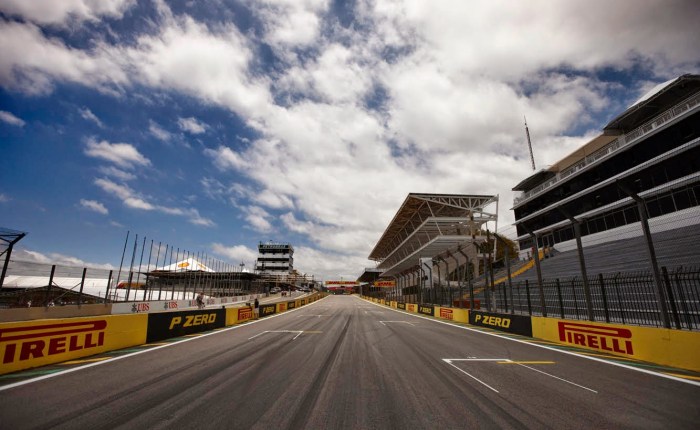
Love or hate Bernie Ecclestone, the improvements made to the sport under his leadership can be clearly seen. It still is the pinnacle of motorsport and rather than keeping up with the times, it has defined them. New circuits, however bland some may be, come with state of the art facilities. The product generates more money than ever. Luxury companies pay a premium to be associated with each event. All this should bode well for the sport. But it somehow hasn’t helped abate the current situation.

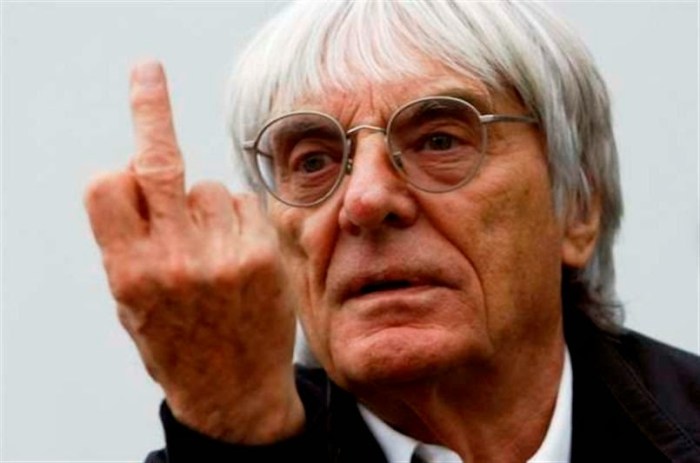
It’s easy to see Bernie as a cantankerous old man. He’s holding all the cards, the ultimate power broker. He dismisses the pleas from the smaller teams out of hand. His remarks appear ill-informed and uneducated. With Caterham and Marussia heading to collapse he made numerous remarks, none of support, just disdain. Bernie doesn’t want to see begging jars in the paddock and claims the teams are mismanaged and haven’t ran their businesses correctly.
Berne F1

By doing this Bernie has quickly washed his hands of a problem he helped facilitate. These teams didn’t throw caution to the wind and spend big bucks to buy a title. They were scraping together the budget each season just to survive. When the now defunct HRT, Caterham and Marussia (badged as Virgin) came into the sport as the three fresh teams, they did so under the impression F1 would implement cost-cutting measures. Of course teams like Ferrari, with their seemingly bottomless pot of cash, felt uneasy levelling the playing field like this. A compromise of sorts was reached: the teams would slowly reduce running costs without a hard cap being installed. To this day it has never happened.

So the new teams haven’t been mismanaged as such, they’ve just been the victim of being told one thing then living another. To make matters worse the gulf in affluence is exacerbated by the distribution of wealth. Ferrari receives an extra cut of the cash, before any prize money is distributed, for just being in the sport. This is similar to the way Real Madrid and Barcelona negotiate their own TV deals in Spain. A fairer system is the English Premier League that splits its deal twenty ways. Obviously prize money will, and should, go to the most successful teams. But all teams need the same starting point. It’s ludicrous to give handouts to those that need them less.

It’s also clear that the teams can’t be trusted to introduce fair cost-cutting measures. The time has come for a fixed budget cap which excludes driver wages. When I have discussed Financial Fair Play in football, my tone has always been against the system. In that sport it handcuffs safe wealthy owners, maintaining a status quo for the elite teams across Europe. In any business a company should be able to make a loss in order to catch its competitors. However, the current system in F1 has created and facilitates a continuing status quo of its own. Smaller teams are losing money, but not to catch-up, just to stay in business.
USA F1 Empty Grid

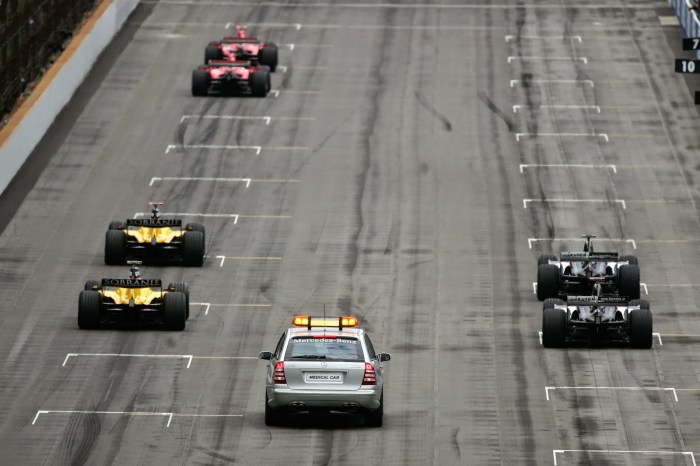
The largest spenders, like Red Bull, McLaren and Ferrari, may resist a cap because it removes their advantage. But long term they may be racing amongst themselves, at which point, they’d also be at the back of the grid . . . and the middle and the front. Fans need variety. Imagine a future where every F1 race resembled the grid from the infamous 2005 United States Grand Prix. That’s where we’re heading. And Bernie doesn’t mind because the cash cow still has plenty of milk. Some circuits are paying around $70M just to host an event, and all the race revenues combined only equate to 30% of F1’s income.

Another 30% is from the television deals. This would be the first victim of a decline in the sport. If the ratings fell so would the sale price. It’s this fear that gives us the ever changing rules to make the sport more competitive. Tighter regulations to create a narrower band of creative manoeuvre. The best designer in the modern era, Adrian Newey, decided he’d had enough of these restrictions so took on a different role within the Red Bull group. It’s a shame that the pinnacle of motorsport is hindered by its own self-inflicted parameters. Rules to increase excitement that will never work as long as a gulf in spending exists.

All the teams need to realise they need one another. An independent body needs to be set up to implement the cost-cutting measures and to clarify what goes on in the murky waters of F1 management. At the moment Bernie and the big teams feels more corrupt than a FIFA World Cup bidding process.

It’s ironic F1 spends so much time and energy tweaking itself to make racing closer without making the money in the sport fairer. A much better model would be one that has a hard budget cap, and at the same time has wider design windows. Cars would be cheaper to run, so the small teams wouldn’t be facing extinction, but a relaxation of the rules would add greater variety across the design process. The more creative or forward thinking would have the ability to flourish. They could even return to multiple tyre manufacturers with a set price for the season support. The entire onus would then be on those tyre providers to produce the best rubber at an affordable price. The difference in compounds would create exciting races as different teams on different rubber face unique race strategies. There’d be less tyre management and more non-stop pushing.

Whether you agree with the idea of a fixed budget or not, Bernie’s ignorance is something that is fact not opinion. He recently remarked he doesn’t care for social media or the younger generation of F1 fans. That his product is aimed at wealthy men in old age. That no young man on Twitter is going to buy a Rolex, a product his sport is paid to advertise. This is sheer arrogance and short-sightedness. Sponsorship accounts for 15% of F1 income, another 15% from merchandise and corporate hospitality, but that 30% from TV deals should have greater importance to Bernie.

To ignore the poorer young fans is to care little for the viewing figures that account for a third of his income. The same people whom the regulations are forever tweaked to create closer racing. The people that could be watching the sport for decades to come. But Bernie isn’t a man of the people. He isn’t even a man that cares for teams within his own sport. Unless you’re a big red Italian car company, or a 70 year old man wearing a Rolex sat in a corporate box, he won’t give you a second thought.
Backs to UEFA

Backs to UEFA

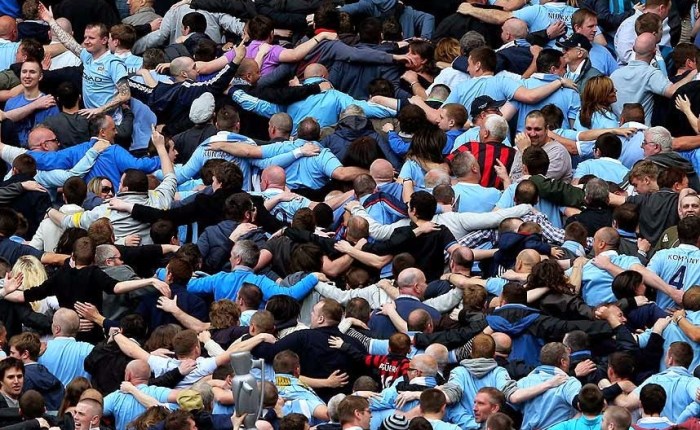
After another round of Champions League fixtures we once again find criticism directed toward UEFA. My own contempt for the corrupt and hypocritical organisation is well noted. Now some Manchester City fans are canvassing for supporters to turn their backs during the Champions League anthem at the next three European games. Whilst I support any movement against UEFA and their ideology, City fans have to be clear on the reasons why they are turning their backs, and why they are choosing to do it now.

Every time I have written about Financial Fair Play the strong undercurrent has been a dislike toward UEFA. That particular system is anything but fair, they weren’t acting as caring overseers, the system wouldn’t even have prevented a Leeds or Portsmouth situation. It reeked of corruption, ensuring the status quo in football for the European “Big Boys.” They traversed the boundaries of sport and business, failing to ensure clarity or complete legality with either.

When they issued fines, this captured cash wasn’t distributed into grass root schemes, struggling lower league clubs, or even charities. It was fed back to the compliant clubs playing at the top European level. They should have already been filtering money from their vast profits, across all of Europe, to the smaller clubs that facilitate emerging players within the lower leagues. Instead of being a benevolent group they have edged ever closer to a Fascist regime bordering on evil Totalitarianism. They dangle high prize money for their premier competition whilst threatening handcuffs for those that can compete with healthy cash.

It’s only now, after the event and sanctions imposed on Manchester City and PSG, that UEFA have even considered clubs, such as Manchester United, facing questions over loans that form part of their finances. These help highlight that UEFA doesn’t care about fairness. In a democracy, argument and counter-argument are heard equally, then an agreed system is formed. UEFA rule with an iron-fist. Bully and ignore as they please. If they cared about the health of the sport, of the people within the game, they wouldn’t have allowed Poland and Ukraine to spend billions to host the European championships, then face ruin. There should be a moral obligation to protect clubs or national associations from such grotesque overspend. But as long as UEFA are dangling the carrot they’re hardly likely to tire of the tease.

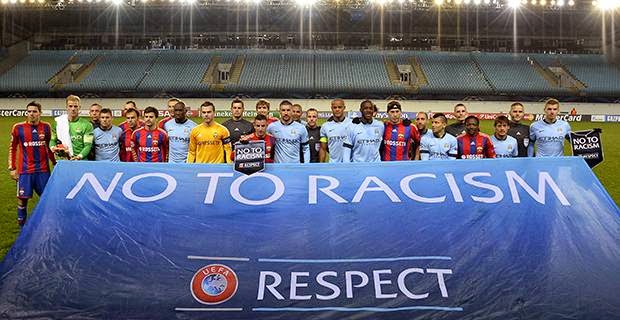
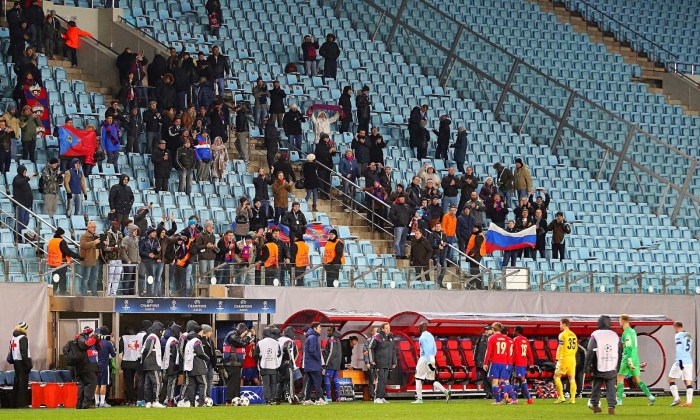
It’s ruling with such an iron-fist which makes remarks made after the “behind closed doors” CSKA Moscow v Manchester City Champions League tie, all the more ridiculous. CSKA were the ones facing a punishment for racist behaviour. Yet, on the night, they somehow had around 600 fans in the stadium. As City captain Vincent Kompany asked: “You say no fans, all of a sudden you turn up and the team that has no fans is Man City. So who’s getting punished? Who’s being done for racism, Man City or Moscow?”

MCFC Mos

It’s almost a rhetorical question. Clearly the punishment also affected Manchester City, perhaps to a greater degree. I am not suggesting, nor is anyone associated with the club even as they launch a complaint, that the Moscow fans swayed the match. But the principle of the matter is what makes it note worthy. It’s almost a sick joke when UEFA claim there was no breach. That club delegations, media, security staff, UEFA and guests of sponsorship partners are allowed into behind closed door matches. It’s that last one on the list that tells the story: Sponsorship Partners. Greedy UEFA. Always money over morals.

They claim they can’t dictate who those guests are. They make the rules and shirk the responsibility all too often. If UEFA stated only people in pink shirts could enter, guess what, we’d all be wearing pink shirts or face being ejected from our seats. They obviously need clubs, media and security there. But they could have prevented guests of sponsors. They may have lost some cash, but is money from one game’s set of guests more important than a solid stance against racism?

UEFA No racism

To UEFA it probably is. This is an organisation that threatened action against players if they walked from the field of play during racist chants, then applauded that action when the world supported AC Milan for doing just that. They are so out of touch with public opinion and common decency that their judgement can no longer be trusted. City shouldn’t have been playing that came in Moscow in front of 600 CSKA fans. It should have been in a neutral country’s stadium filled to the rafters with Blues.  But they don’t really care about racism, half the time they come across as if the subject is an awkward annoyance to them; and they don’t care about Manchester City, we’re like the one-legged ginger step-child that needs glasses.

So as a City fan (I also happen to have been a step-child, ginger, and a wearer of spectacles) we face the decision to turn our backs when UEFA play their anthem. I agree with the sentiment. The debacle in Russia is the straw that has broken the camel’s back for many a Blue. However, I’m worried it puts City fans on dangerous ground. Surely the time for a stance against UEFA was at the first Champions League game. The droplets of faeces we’ve had on us this week are just spray from a larger, on-going, shower.

To make a stand now we risk looking bitter. That our disappointing result is more to do with the turning of backs than UEFA’s actions. Too much focus is placed on the Champions League. For me the measure of a team’s greatness is domestic success. When both Liverpool and Chelsea last claimed UEFA’s top prize they failed to secure a top four finish at home. However, the world sees it different. City’s owners see it different. Had City already secured a Champions League trophy, a stand against UEFA would hold much more weight. Instead there’s a risk our positive defiance will be pushed away with nonchalance.

MCFC Backs UEFA

Over the coming weeks we need to articulate all our grievances regarding UEFA to prevent our protest appearing two-faced. At the moment UEFA stand unopposed, everyone is bending to their rules, the rules bending further to support the evil regime. If people do take notice we need to have a clear message: That UEFA needs to change or be replaced entirely.

The Trouble with Touré

The Trouble with Touré

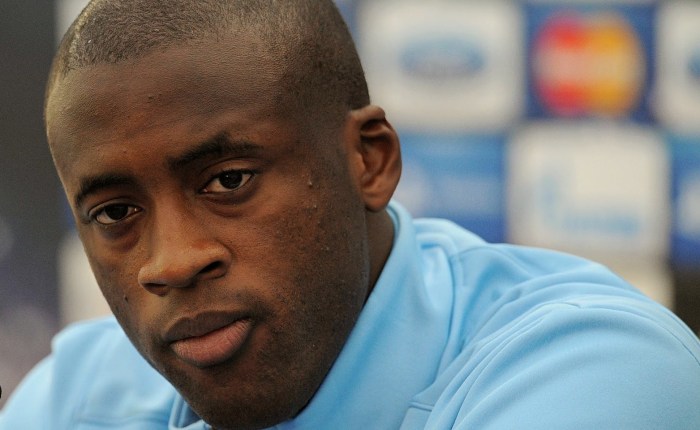
Certain things can’t be denied when it come to Yaya Touré. His talent is unquestionable. Last season he drove Manchester City to a league and cup double, scoring 24 goals in all competitions from midfield. He is also controversial and divides the opinion of loyal supporters. From missed birthday cakes to protracted transfers, he appears in the media for the wrong reasons, when it’d be more fitting if he was revered in the same way players like Messi and Ronaldo are. Or is this a stretch too far?

Before we go any further, I should make my personal thoughts regarding a few things Yaya clear. In spite of his performance last season, I would have happily seen him sold in the summer. A number of factors played into this. The obvious one was the way he allowed his agent to act unprofessionally and disrespectfully toward the club. It seems obvious they were either haggling for an improved contract or were seeing if they could manufacture a move away. He’d just had the season of his life so they assumed Yaya’s stocks were high, that they should cash in.

Of course, they didn’t get a move, and City held firm. These initial actions undid all of Yaya’s work gaining loyalty from the fans. I have no problem with players wanting to move on. As Sami Nasri noted when he left Arsenal, he wasn’t a fan, it’s just his career. I get that. I don’t expect everyone that pulls on the blue shirt to be a City fan. This doesn’t mean they can act in manner that wouldn’t be acceptable in another line of work. Yaya was unprofessional. This combined with the high wage, the fact he’s already 31, meant it wouldn’t have been a terrible move to balance the books the same summer we faced FFP fines and restrictions, by offloading a player that had stepped out of line.

The standard response here is to argue he is irreplaceable. Well, no man on the planet is irreplaceable. I’m not suggesting there is a like-for-like player out there. City would have needed to change the way the team plays. Formed a Plan B and C. Given the one dimensional tactics we adopt in the Champions League, this wouldn’t have been such a bad thing. Mentioning the Champions League, it is worth noting that Frank Lampard, the 36-year-old, warming-up for his American vacation, looked a level above regular City midfielders the night we played Roma. The only one comfortable at that level. So perhaps we shouldn’t place Yaya on that pedestal just yet.

Which brings us to the main niggle I hear at the ground, in the pub afterwards, and in groups and forums: The idea Yaya can’t be dropped/should be dropped. Some argue his moments of magic, which appear from nowhere and clinch big games, allow him to drift rather than put a shift in. That he looks laboured when he’s not. Others argue that no player should be guaranteed a place if their form continues to dip. I sit more on the fence with this one. At some point any player, regardless of stature or former contributions, should face the axe if they fail to deliver. For me, at this moment in time, Yaya is still one of the first names on the team sheet. The recent Aston Villa game is a good example of why he’s a worthwhile passenger to have along for the ride.

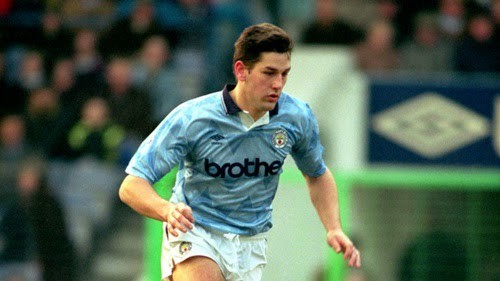
The idea of who your favourite player is should lend an idea to the damage Yaya has inflicted on his own legacy with the club. David White is my personal favourite. I know he’s not the best footballer I’ve seen play for the Citizens. But watching him burst off at pace, smash shots on goal, was like watching a superhero when I was younger. I know nostalgia plays its part there. It still breaks my heart, that Niall Quinn made the club’s Hall of Fame, and White didn’t.

MCFC White

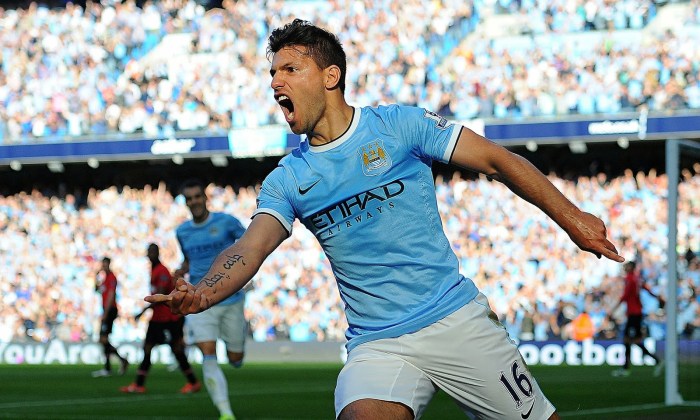
As for the best player I’ve seen, the most talented, it has to be from the current crop. I think Sergio is a true world class talent, belonging in the upper echelons of the world elite. David Silva also rates highly; if he added more goals to his game it’d be hard to dismiss him. Yaya Touré should be above both of these though, in terms of contribution and evident talent. Yet, how many City fans would have him as their number one now?

There’s still time for the fans that criticise him to warm once again. The tarnished summer can be painted over with the gloss of further success. I don’t subscribe to the idea any dip in form is a loss of interest. Reneging on the agreement he wouldn’t attend the 2015 African Cup of Nations could be seen as a further effort to appear inflammatory, I suspect it’s just a change of heart. Also, the loss of his brother will be weighing heavy on him and affecting his actions. Such an experience often requires years of recovery.

Yaya hasn’t been given the recognition by external awarding bodies. Last season he was cruelly overlooked. It’s easy to see why that could breed a feeling of being unloved. It doesn’t excuse his actions over the summer, but as fans we should wipe the slate clean. If the professional critics fail to give him his dues, the best we can do is start sending back positive vibes from the stands.