We Need Our Christmas Crackers

We Need Our Christmas Crackers

A common remark made after England fail at a major tournament is that the Premier League should adopt the European approach of having a festive break. There have been, and will continue to be, lots of innovations and alterations to the modern game but this is one I’ll never take to. As a fan I love the crowded festive fixture list. I’d hate to see it removed for invalid reasons – let’s face it, one year off wouldn’t prepare the England players any better for a World Cup. Festive football is as seasonal as A Christmas Carol and the Queen’s Speech.

From previous blogs (“The Magic of the Cup”) it’s no secret I’m a bit of a traditionalist. But I’m also a realist, so not living an entirely romanticised version of football events. If lessening the fixture congestion served a purpose that enhanced the overall product then I’d be a fan. The truth is that it won’t, nor will it serve the national team in its efforts. The foreign players that compete in the Premier League seem to cope okay in major tournaments. Those partaking in the African Cup of Nations always appear fresh, or certainly no worse off for the endeavour.

Even if I was to accept – hypothetically speaking now – that the winter period drains players come the end of the season, I’d still rather we kept the set-up as it is. If it’s tiring for the players – apparently a modern professional requires 78 hours between games to make a complete recovery, I’m wondering if these figures have been mixed up with common Christmas hangover periods – it’s more tiring for the fan. I spend Christmas Eve tossing and turning in the hope Santa is bringing me presents. That means I’m up early to check if I have been a good boy (only once in living memory was I deemed bad, that was the year I didn’t get a PlayStation 1 but all my mates did) and in bed late that evening (hopefully) celebrating.

It doesn’t stop there. I rarely sleep due to excitement on Christmas night, too. The prospect of a full Premier League fixture list on Boxing Day is enough to keep me awake. I barely get over that before we head to the normal fixtures that week. All the time the New Year’s games are waiting. If new to football the Christmas period would provide the perfect crash course; for veterans it’s the season to be jolly, for sure.

In what has been a great season for the unpredictable, the games squeezed together at the end of December and the start of January will provide us with a marker of how things are likely to go as the league moves into its second half. Eventually form will be established – good or bad – and determine the fate of the teams. December is the start of that new phase.

The December 21st to 23rd games provide the first examination of how the top could go. Arsenal face Chelsea on Monday the 23rd at the Emirates. The Gunners need a win to prove they are genuine contenders and that they can turnover a top side after two defeats in Manchester, albeit one of those Manchester sides is now a mid-table team. Before that we’ll discover if Manchester City’s away form has steadied when they face a Fulham side starting to show signs of life. At the lower end a nervous Sam Allardyce takes his Hammers to Old Trafford. He’ll tell his players a win is possible, and point to United’s home form as proof, but it’s unthinkable that Moyes will face defeat there again so soon.

The Boxing Day games provide further examination of how genuine each team’s league position is. Everton face a stern test at home to a Sunderland side that has just beaten Chelsea in the League Cup. These are the sort of games a team needs to collect three points from if they are serious about securing European football. The aforementioned West Ham face Arsenal at home, by Boxing Day their predicament could have been worsened, Mr Wenger may well have a belated gift Big Sam doesn’t really want.

The tie of the day sees Liverpool travel to the Etihad. City is scoring for fun there at the moment. During the mauling of Arsenal, one fan in earshot jokingly remarked he was upset if they didn’t score five nowadays. At the time City had “only” managed four but his pains were rewarded with a couple more before the final whistle. Liverpool themselves handed Spurs a defeat that demonstrated they were far from being pretenders this year. It’s a shame we’ve been robbed of watching Aguero and Suarez on the same pitch but there’s enough talent to make this a mouth-watering game. If Liverpool take a point in Manchester it’d show they need to be taken seriously; failing that conceding less than five will do.

December 28th/29th matches will see Man City at home against a Crystal Palace side that, with all due respect, they will feel safe rotating players against. Liverpool face another tough away test at Chelsea. West Ham/West Brom; Hull/Fulham; Cardiff/Sunderland are a trio of ties that pit teams in six pointers in the relegation battle. Everton hosting Southampton gives us insight into two teams fighting it out for a top six spot.

The first game of 2014 sees Man City travel to Swansea and in the last game of the day Man United host Tottenham. In between these games clubs in close proximity to one another face-off – Palace/Norwich and Fulham/West Ham – whilst Arsenal and Liverpool will be expected to win their respective home games against Cardiff and Hull Tigers. The biggest factor may well be the strength in the squads rather than the preferred starting eleven.

At the end of this cycle big teams and strugglers alike will have dropped points. The crazy season may finally have started to settle. The teams then don’t play a league game for ten days. By my calculations that’s a big enough gap to squeeze a 78 hour rest in, especially if you want to skip some cup football.

And they say they need a winter break?
Qatar! What about Brazil?

Qatar! What about Brazil?

Ask football fans the biggest problem facing future FIFA World Cups and they’ll more often than not mention the heat issue in Qatar, more specifically, the calls from some quarters to make it a winter World Cup. What most of these fans, with their legitimate fears over Qatar’s ability to host and the nature of their acquisition, overlook, are the shortfalls facing next year’s tournament. It’s as if the world is turning the other cheek because of Brazil’s glamorous sporting history. But for the day-to-day folks on streets across Brazil they care less for football than they do for an improved quality of life.

The problem at the heart of the situation arose back in March 2003, when FIFA announced that South America would hold the tournament. It sounded reasonable, the continent had been travelling to World Cups across the globe since it last acted as hosts during Argentina ’78. Without a challenged bidding process from the other confederations it was left to the countries within South America to create candidates. Much muted alliances never materialised; hence, Brazil was chosen without a rival bid. Less choice is bad. That lack of competition was unhealthy. We’ll get back to that process – of bidding and attempting to sell your bid – in a minute. The cause has resulted in a Brazil unprepared and a tournament, which by all accounts, should be in jeopardy.

The cancellation of Soccerex, a football industry conference scheduled to take place in Rio de Janeiro, should have raised alarm bells. Instead it was reported with a murmur before being buried amongst far more entertaining football stories or snippets from Alex Ferguson’s autobiography (or character recollections). The organisers claimed the ongoing civil unrest was to blame. The State of Rio says it was due to Soccerex lacking private funding and they wouldn’t spend any public money to hold the event.

The truth may well be both, just played off against one another for political gains. There have been well documented violent protests across Brazil; Soccerex probably would have liked to have been helped out with a donation from the Brazilians. For the State of Rio to claim they wouldn’t waste public money in this manner is quite cheeky, though. As if to appease the protesters that claim public services should be funded over the World Cup, the Brazilian figure heads are ignoring – or failing to mention – that their World Cup has already cost them three and a half times that of the South African one, and more than double Germany 2006.

Where has all that money gone? Stadiums alone amount to £550M, another £2 billion on airports, £1.1 billion for works attached to the “Growth Acceleration Programme”; this doesn’t include spending on things like the buses, they come in at £375M for a better fleet. Facts and figures can be generated all day, to put it in the best perspective a recent protester was quoted saying: “We love the World Cup, we love sports – what we don’t accept is a government which wants to look good by investing millions in the World Cup but forgets about health and public education.” Sounds reasonable to me.

The truth in that statement highlights the hypocrisy and self-serving attitude that football’s governing body lives by. They care little for the effects on the supporters of the beautiful game as long as their bank accounts increase exponentially. Brazil didn’t even have to bid against other nations and prove they could host an effective games, let alone afford one. And FIFA doesn’t care if a country runs itself into the ground as long as they make money in the process. A football club may be banned from competition if it exceeds Financial Fair Play guidelines but it’s perfectly acceptable for a nation’s health service and education system to crumble if FIFA make a tidy sum of cash.

These are the people of the world they claim to care so much about. The people they wish to bring football to. The people that are all equal and should come together under the banner of football. But, for the people that come together, some are more equal than others. They fail to take strong action against clubs when their fans use racist chants. They suggest openly through President Sepp Blatter that homosexuals should refrain from activity during the Qatar World Cup. So certain groups are willingly ostracised if it serves their greater good (which in FIFA’s case is always money).

This brings us neatly back to the topic of bidding for a World Cup, and selling your bid as an attractive option. Well Qatar went about it in a slightly different fashion. To cut a long-ish story short, they bought the World Cup. Why waste time having the best bid when you can just purchase the thing instead. Allegations have since been retracted but it’s plain to see how the process really works. If it was just about new areas hosting and the strongest bid winning then Australia would be 2022 hosts. As it stands they are poised to strike FIFA with a legal serving. If the 2022 does indeed become a winter games they will seek compensation for expenditure incurred for their failed bid. They entered a process for a fixed tournament with stringent parameters, to then shift it to a different time of year voids that process. Sounds reasonable.

The time of year appears to be the big debate with Qatar. The English say it will affect three years of Premier League fixtures if it’s moved to winter. Michel Platini, very maturely, pointed out football’s fixture list had suited the English for one hundred and fifty years so we could change just once (albeit three years running). These squabbles take away from the most important point: we should spare a thought for the migrant workers building the 2022 World Cup. Often denied food and water it’s estimated that up to four thousand will perish. It’s not slavery if it serves FIFA; it must be acceptable. Because the World Cup is all about bringing people together.

Qatar

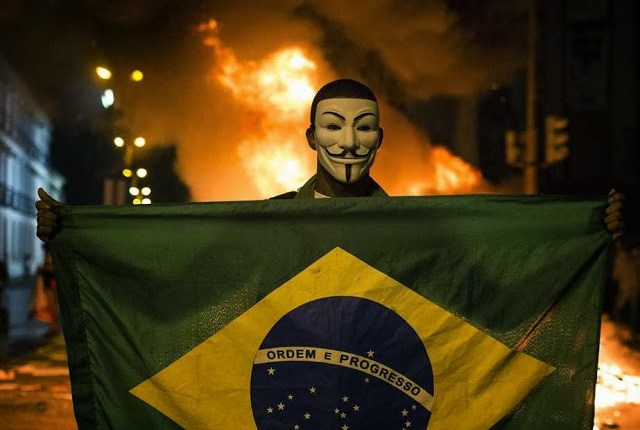
And the next World Cup, that’s getting ever closer, is bringing the people together. The real people on the streets. Mass protests hampered the Confederations Cup, this served as a warning that was ignored. Since then the outrage has become more violent with police vehicles torched. Yet, people power alone might not be what brings Brazil 2014 to its knees, ironically it could be the same greed and bureaucracy that drives its Big Daddy, FIFA, on.

Most major tournaments face that scare mongering close to the curtain call. Whether it be an Olympic games in Greece or a World Cup in Russia (they’ve come out of this article unscathed and unmentioned), they’ll always be panic that the place won’t be ready. But they always are and always will be. The chances are, civil unrest included, Brazilians will take to the World Cup, embrace it and put on a great show. There’s also a high chance they won’t be ready in time. No really, this isn’t me scare mongering now. For several months I have been back and forth to Brazil. What I have found is a county unable to function in a modern and professional manner. It ties itself up in red tape at every corner and there’s always a tax be applied at an extortionate rate. They lack the impetus to move forward because too many are looking for short term pots of gold. All those billions spent – from public money – will have lined the pockets of the rich while structures remain half built with no sign of progress.

For the fans that do come to Brazil they’ll be met with aged modes of transport, crowded roads alongside semi-built ones, legitimate ATM machines that still magically clone cards, and locals that will enjoy the games then return to under-funded lives and a country with less cash than ever to spare for its working class. Perhaps a last minute switch to the USA won’t be such a bad thing, as long as we keep Diana Ross away from the opening ceremony.

Qatar and Brazil, two very different World Cups. One bought, then a further £138 billion ploughed in to build it; the other taken as the only choice and built with money that should be supporting future generations. Both will continue to face criticisms along the way, before collectively we all will watch as fans, taking the immoral choice to ignore human rights issues for short-lived sporting entertainment, embracing ignorance, thusly legitimising wrong doings. Two World Cup bidding processes without genuine competition, and what are we left with . . . .perhaps no competition at all.

Cannibalizing the remake

Cannibalizing the remake

It seems that we’re in the age of the remake, or more correctly, the reimagining era. This goes hand-in-hand with a time where television is the new silver screen. The ‘80s idea of the movie star is all but dead (someone please tell Tom Cruise). The safe bet for financial returns lies in the small screen. So inevitably characters that experienced former glories with cinema goers are finding new places to breathe once again. We’ll look at two that are best known for stopping breath.

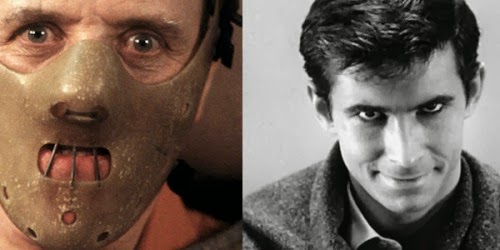
Two characters that transcend their appearances on film and permeate into popular culture are Norman Bates and Hannibal Lector. Hitchcock’s original Psycho is still as effective today as it ever was. There are no scenes of graphic violence or gore, but it chills and scares better than most horrors ever placed on celluloid. Anthony Perkins was engaging and complex and key moments that could have descended into a parody were perfectly disturbing.

The Silence of the Lambs played for shocks at times whilst allowing us to engage with the fascinating Lector. Another Anthony, this time Hopkins, played the role with a malevolent menace. Beneath the intelligence in his eyes was a primitive warning. Before the Hopkins version Brian Cox played him deliberately void of outward evil, itself proving effective. But it is the Hopkins version that became the public’s Lector, and the benchmark subsequent versions are faced against.

This brings us to the newest incarnations of these two popular icons, and the very different paths they have taken. Lector’s small screen reboot came first, in the form of Hannibal. We find him in a pre-Red Dragon era. He’s still a practising psychiatrist working alongside the man from the novel that we know eventually catches him. However, the original timeline of events won’t unfold on this show as they have elsewhere. This will help with its longevity and prevents it becoming too predictable.

And it does defy predictions and assumptions. It would have been easier to cheapen the source material and exploit the obvious areas that lean to excess. There are moments that make you want to turn away from the screen, but even they have a fitting place in a show that is shot in a contemporary fashion. Mads Mikkelsen doesn’t redo Hannibal Lector with his portrayal – he makes him feel alive for the first time. We know the evil that lurks beneath, we never know when we’ll see it, but it’s brooding and bubbling whilst he plays people like pawns. He’s understated with the horror, delivering it with a fear of anticipation. Going back to Psycho, remember that shower scene, remember that you don’t actually see that much, but it works better than anything plainly laid out before you. The Mikkelsen Lector is just like that.

So the reboot of Norman Bates surely follows a similar path, right? Played and shot with subtle expertise? Well, it did have this particular line: “You’re like a beautiful, deep, still lake in the middle of a concrete world,” delivered to Norman Bates from a love interest, and that’s where its excursion into anything remotely poetic ends.

Where Hannibal had subtle suggestion that blurred lines (I got peckish watching Lector’s dinner parties), Bates Motel has no such restraint. It unashamedly over does the Oedipus complex; if there’s a gun going off there’s oodles of blood to view; if there’s a bad guy we need to meet we almost get some pantomime booing.

At times, with certain camera angles and colours, it feels like it’s paying homage to horror’s successful era. Then it plays out like an average thriller. If the success of Hannibal was down to its strong lead and excellent supporting cast then Bates Motel could be in trouble. It’d be unfair to say any principal players are poor but it would be a lie to say they engage in the manner they should. Freddie Highmore, the new Norman Bates, obviously believes imitation is the best form of plagiarism. At times he is Anthony Perkins, and with it we lose any sense of fear. We’ve seen the shock of Bates in this form before. The makers should have taken note of the 1998 film version of Psycho, it was pretty much shot-for-shot a replica of the original, and it was panned.

If it’s new it has to be different, otherwise the original will always be best.

Another poignant line from Bates Motel was delivered by Norma, she asked, “Who is gonna book a room in the rape-slash-murder motel?” For now we’ll keep returning in the hope it’ll meet its potential, but as soon as Hannibal is cooking again our attentions will return to a much classier killer.