The Brexit General Election: A Blueprint for Dystopia

The Brexit General Election: A Blueprint for Dystopia

A lifelong Labour voter, a left-wing liberalist and a hardline Remainer all go to a Polling Station. They each take a ballot paper and place a cross next to the Conservative candidate. As they leave, they all pull faces of distaste at the right-wing nationalist entering the booth. The latter votes for the Brexit Party. They all knew their choices would lead to a Tory government.

It sounds like a bad joke. It is a bad joke. It is also the reality of Britain’s 2019 winter General Election. Boris Johnson kept it simple with “Get Brexit Done”. In these divisive times, it became a unifying message. People couldn’t face another period of an ineffective government. Those who voted Leave and Remain started to wonder why they voted in the first place and lost the passion for either argument. Not all the people, but we’ll get to them in a moment.

Another hung parliament would have been a disaster so some decided to take the lesser of two evils. It shouldn’t be surprising that the same MPs who spoke down to the public, were condescending and ignored their wishes for three years, would suddenly be able to reconnect during campaigning. They had made their beds, the British public were prepared to sleep uneasy by making a painful choice.

For many, like those that propped up The Red Wall, the acceptance of a Tory government was something painful to stomach. Actively seeking it would, under normal circumstances, seem impossible. Labour has placed the entire blame on Brexit. Corbyn detractors blame his extreme socialist manifesto. There is some merit to this idea. No one quite believed the sums behind the promises. The Diane Abbott factor didn’t help.

As grim as some try and paint this Tory victory (others, of course, have rejoiced) how does it link to the blueprint for dystopia this article’s title suggests?

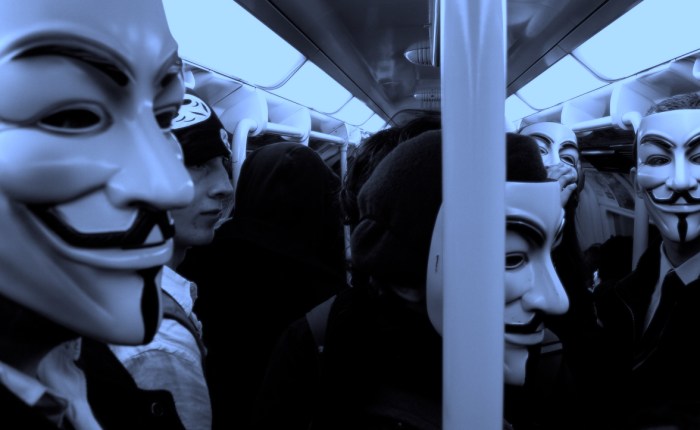
Literature and film is full of not-too-distant futures where recognisable countries have fallen to facist regimes. The most obvious, due to its London setting and strong political undertones, is V for Vendetta. Like all such set-ups, the viewer accepts the basic premise. They get fed a bit of backstory setting up the proposition and the rest of the film sees the heroes try and fight for freedom and justice.

Every time I’ve seen V for Vendetta, there’s always a moment where the suspension of disbelief is removed and the chances of it occurring are analysed. (If that doesn’t make me sound like the most exciting cinema date, nothing ever will.) Could Britain ever really fall foul to a facist regime, especially with its inherent pride of defeating the Nazis in World War Two?

It always seemed highly improbable. Then Brexit happened. Then the post-Brexit divide created the sort of environment to nurture extremism. It’s clear now that for a country to turn bad at the top, it doesn’t need a majority of its citizens to make ignorant, evil, or poor choices. You don’t even need to mislead them too much. The bad eggs will always exist but their numbers will never grow to the size required to swing a General Election.

Nor will the do-gooders ever multiply in vast quantities to fend off a facist uprising. The battle is won and lost in the centre ground. To be more precise, those that sit to the left and right of it. Ask Tony Blair. His 1997 landslide was all about making that massive part of the population believe in him. The far-left in his own party didn’t, they just accepted it was preferable to further Tory rule.

Now Boris has secured the vote of the same people. But there’s a difference: they don’t believe in Boris like they did Blair, they voted with fatigue and fear. Fear of more uncertainty. Fear that the opposition was inept. Fear that they were out of time and choices.

In dystopia, the keys of power are always legitimately handed over. Once in power, the rights and freedoms slowly retract. The Emperor in Star Wars didn’t take the galaxy by force (no pun intended). A council voted in his explicit rule during a time of uncertainty.

An evil chancer getting the hot seat isn’t enough in itself for dystopia to take hold. The centre left and right need to be subdued further but that can only come once they see no other choice. Enter the disenfranchised left-wingers. They are the unwitting secret weapon of the far-right. During the election campaign, and the anti-Brexit movement that preceded it, they recruited more people for the Conservatives than any Tory MP or the Prime Minister, any fraudulent advert or piece of misleading information.

It was the self-righteous left-wing movement that insisted they knew better than the people. This made the people defy their message. Even after election day, papers like The Guardian and The Independent ran articles that continued the notion people didn’t understand what they had chosen. So yeah, after telling them for three years they weren’t educated enough to understand their Leave vote, they decided to patronise them over the General Election too.

The ignorance wasn’t from the people, it was the self-proclaimed “Good Guys”.

During the campaign, it’s clear the “Good Guys” believe the ends now justify the means. Morality can be shelved until later because for now, it’s more important to stop the “Bad Guys”. The “Bad Guys” in their eyes being the Tories, who should have been easy to make the villains no-one from a Northern working-class background could vote for. 

But people are willing to risk further austerity, policies like Universal Credit and the mistrust of Boris over the floundering, patronising tones of the absent opposition.

In a time where we invite devices into our home that are always listening (Alexa, ask Siri if the government care what I’m making for tea), how we all become guilty of Orwellian doublethink and accept that Diane Abbott really does make 2+2=5 when she’s penning budgets, the malevolent threat of the Tories became safer than the mutually assured destruction born from further indecision. 

And the protests continue. There’ll be no People’s Vote so instead a minority takes to the streets attacking the notion of Boris as PM. They will now fight hard for Proportional Representation even though such a system virtually guarantees endless cycles of hung parliaments, something the British public will never want again.

Their continued and slowly more aggressive attacks will see sympathy from the voters in the centre dwindle further. The police are required to man more marches, using appropriate force. V for Vendetta’s police state then appears on the horizon. Scotland get their independence or get back under Westminster’s unquestionable rule, either way, unchallenged isolation takes hold.

And the remaining “Good Guys” keep recruiting for the regime they oppose through nothing more than their own ignorance. Dystopia creeps in just like this, V for Vendetta goes from fiction to fact, Boris from buffoon to Emperor Palpatine.

Of course, it doesn’t have to go this way.

The Conservative Party may well reinvent itself as something not too dissimilar to New Labour. Boris said he would try and earn the votes he knows are being “lent”. The left may re-emerge with more progressive ideals, a clearer message, and an apology for the air of superiority it has expressed during a time it fell lower down the political standing.

For the time being, Britain doesn’t get the government it deserves but the one it needs right now.
We Need to Talk About Brexit

We Need to Talk About Brexit

It’s been hard to avoid the B word in Britain over the last few years. The sound of “Brexit” has taught me where the exits are in many a room frequented during this period. It’s not that Brexit isn’t important – it is – it’s because both sides are so entrenched in their beliefs there is no “Brexit Debate” nowadays. It’s either a well-rehearsed rhetoric on the virtues of either Leave or Remain.

For this reason, it’s a subject I’ve avoided on social media and never thought would grace these pages. Then a Twitter friend asked for my take. He wanted a genuine insight, not a rehash.

What followed was a measured debate on both sides. Something that hasn’t occurred during polite conversation in this country since the referendum result. For that, we can thank the politicians and news reporters. The take on Brexit has been skewed from the start and has continued ever since. Dazzler on Twitter had found the key to the problem: All I hear is negativity, and I am concerned.

The term Project Fear exists for a reason. This isn’t a cheap trick to throw scorn on Remain from the start. Fear politics is en vogue at the moment. It’s the one fashion accessory every budding politician wants to be seen with. Leave loved Fear in its campaign during the referendum and Remain ensured it didn’t go a day without work since.

All Fear does is give politicians a big out card. There’s no need to solve problems when you can let Fear into the room. There’s no need to present strong, undeniable evidence when Fear’s around. Hell, you can sell feelings and predictions as economic certainties once everyone’s familiar with good ol’ Fear.

But it wasn’t fear that got the Brexit ball rolling with momentum. It wasn’t even Nigel Farage (though his diary probably disagrees). It was the disenchanted and the disenfranchised. For too long, people could see the 1% were swallowing the world’s riches while the majority struggled on. From financial crash to years of austerity, with no end in sight to clear a national debt that meant nothing to them.

Perhaps the EU became a symbol of this structure. Sat pulling the strings of governments to keep its own agenda ticking over. This, of course, doesn’t paint an entirely fair picture but when people feel they’re losing control they turn against those with power. Staying in the EU kept everything the same, with the coffers of the 1% swelling each year.

The status quo needed to be broken. It isn’t working wherever you sit on the socio-economic spectrum. The rise of far right, and now far left extremists are a product of a broken model.

The status quo has become a breeding ground for hatred.

This ignorance has been perpetuated on both sides. Remainers assume those that voted Leave must be racist, Leave think Remainers have rose-tinted glasses and can’t see a country in decline. And every excuse or assumption in between. The truth is: the majority of Leave aren’t xenophobic and Remainers can see failings at home and in the EU but still believe it’s the best model we have to fix things.

The problem is, it’s been a model in play long enough to tackle many of the issues facing the world today and instead has become part of the problem. Leaving the EU removes the government of the day’s first go-to excuse: we have to because of Brussels. It gives the public a greater degree of transparency over decision making, implementation of laws, the management of change. By turning Brexit into a doomsday device, it gives the next three or four governments a new excuse: we’re suffering the consequences of Brexit. This one can run and run, “We’d love to do what you suggest, but we can’t . . . because of Brexit.”

At this point, it’s no longer about the pros and cons of the EU. That was the debate before the referendum. Talk of a second undermines democracy and the viewpoint of those who felt alienated in the first place. If Remainers are hellbent on discussing the virtues of the EU, they should read And the Weak Suffer What They Must? first. When you see why the EU was formed, how it needs to maintain key surplus to deficit nation strategies, the requirement to recycle debt for its single currency, and the propensity to break its own rules for preferred nations, you’ll begin to wonder if leaving isn’t such a bad idea after all.

Remain claim Leave voters didn’t understand what they were voting for. They did: change. It’s Remain that seems to miss their own point. They are voting to stay in a system that supports a single currency the majority of them would vote against joining. It’s like taking out a gym membership but flatly refusing to use the equipment then becoming incensed with changes at the club.

While we’re doing analogies, there’s another doing the rounds about a man ordering fish in a restaurant. I won’t bore you with the entire play, the brief version is after several arguments involving different chefs and a long delay, the man would like to be asked if he still wants the fish. That’s a fine analogy for a service. But the British public didn’t buy anything; they took part in a democratic vote.

To agree with the analogy, you’re saying to those in power around the globe it’s okay to ignore mandates if you argue long enough and make more noise than the initial majority.

Any argument stating that people have changed their mind as more information comes to light is flawed. The argument against Brexit has been a relentless multi-year campaign. The Leave side became largely inactive following the referendum result. The questions Remainers have been asking now, should have formed their narrative before the vote. Much of the evidence that’s followed is subjective – much like the Leave campaign was.

It’s proven that if you tell a human something enough times, it begins to believe it. The Remain campaign has banged the same tune for over two years, people have listened and logged the Fear. Doubt has crept in and pushed democracy aside, for nothing more than feelings.

There is no hard evidence for what follows Brexit. Economists are making predictions. The same type of voices that failed to predict the 2008 financial crisis. The same people that have idly sat by while personal debts are now higher than 2008. The same experts that bandaged up a fatal axe wound to the global monetary system with a plaster and pushed it out of the door for one last go around.

The UK’s imminent departure from the EU upsets this apple cart. They were prepared for the party to end at some point – and God only knows what they have concocted next – but they wanted to milk the current system a little longer. When the cards come crashing down a second time, they want it to be a controlled explosion.

The truth is, there’ll be no catastrophic event when the UK leaves the Union, any recession – home or abroad – will be down to laziness from those in power. Germany has enough deficit nations it can leach from; Britain isn’t short of countries with free trade deals to explore. Yes, some industries will struggle and others will collapse. This isn’t the sign a bad Brexit scenario, it is a sign of the times that’s always been a factor. Workers have to reskill or look for employment in new areas.

When coal mines shut down in Wales, no one can expect Silicon Valley to relocate. Just as the country needs to envisage fresh scenarios, the individual has to recalibrate their position in the changing landscape.

Brexit isn’t bad, it’s something that requires change. How the country’s ruling party and the people within it adapt will determine whether it’s good. The responsibility is with humans, not abstract terms. The time for mudslinging and Fear has long since passed, there’s only room for positive contributions now to a situation you may personally dislike or favour.

Brexit needs to happen to restore faith in democracy. To force politicians to work for a result and sack Agent Fear. Brexit needs to happen so we can abandon excuses and look for reasons to make it work. And if it doesn’t, learn from the experience and explore the reasons why. Brexit needs to happen so we can prove we’re not xenophobic and wish to invite the entire world to our shores, not just the select members of the EU.

Brexit needs to happen so we can move forward from a messy breakup and learn to think positive again.

A Game Too VAR

A Game Too VAR

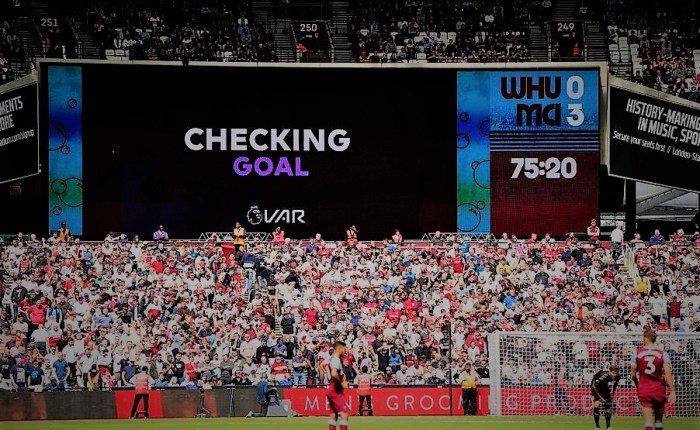
It was supposed to remove controversy. Establish clear rights from wrongs that the human eye can’t ascertain in real time. The theory of using technology to assist referees was a sound idea, it’s the inception that has been questionable. Even as the authorities iron out teething issues and officials acclimatise to the new era, Saturday’s game between West Ham and Manchester City revealed some fatal flaws.

VAR has been responsible for some controversial decisions before this weekend. We’ve seen a World Cup final swayed by a handball that the ref initially declared wasn’t deliberate. Upon being asked to review the incident it’s only natural the alarm bells begin to ring in his head. It’s not like there was a boxing-style judging panel at work behind the scenes. It’s reasonable to assume the ref felt VAR officials disagreed with the call and were giving him a second chance.

Watching back any handball in slow motion will change the colour of the argument and lead the referee to rule against the player. Unless the incident occurs at the Etihad in a Champions League tie. Fernando Llorente’s arm made contact with the ball and gave Spurs a vital goal that saw them progress to the next round.

The problem on that night was the referee didn’t have the full range of angles to make a measured decision. Viewers at home saw the ball hit the striker’s arm while the man making the important call was set up to fail. A rule with the pitch-side monitors should be that unless all available feeds can be presented to the ref, no VAR can be used.

The Llorente incident also highlights how a change of angle can make the same incident appear entirely different. No football ground comes with console game style replays, where any moment in time can be paused and viewed from any position imaginable. The rule makers will have you believe VAR is an objective device but depending what evidence is produced, it becomes a subjective experience.

On Saturday lunchtime, Manchester City once again saw VAR do its best OJ Simpson impression and failed to wear the gloves.

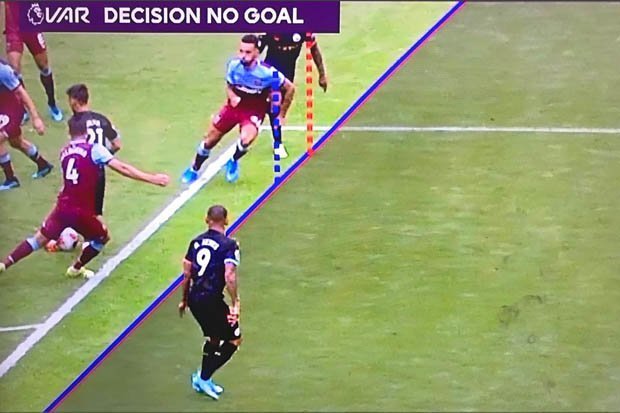
This time, the snug fit was even tighter than the infamous bloody hand garments. The VAR replay showed that Raheem Sterling had been deemed to have drifted offside by a couple of millimetres by virtue of his creeping shoulder. Despite how close it was, the law now emphasises that offside is offside, regardless of how small the gap. Something that Steve McManaman was quick to accept and drive home on BT Sport’s live commentary.

This law requires the acceptance that offside is treated like a ball going out of play, as David Walker from Read But Never Red explained in a Twitter post: “the ball going out of play…it is objective and will never be judged on being ‘a clear an obvious error.’” It’s worth noting David Walker sees the law as pedantic and agrees with the objections to its interpretation.

The technology can cope with fixed lines and known objects, such as balls. That’s why tennis and snooker have seamlessly incorporated Hawk-Eye technologies for years. Football is more complicated. It’s fine for Goal Line Technology and has been a success because it can apply the same principles. Calling an offside has too many moving parts. It becomes a subjective decision.

Firstly, a VAR official has to decide when the ball is played. At what nanosecond in time does that foot move the ball forward. Unlike snooker, where it can be deemed when the cue nudges a solid ball, we’re talking about a foot – seen from a camera in the gantry – that presses into a ball which changes shape slightly upon impact. At the same moment in time, the official needs to determine the movement and exact position of the last defender and attacking player.

Here’s the next – and for the Raheem Sterling incident – most subjective call of them all. The reference point of the player is the first part of his body he can legally score with, in this case it is deemed to be the shoulder. Some online have opened the debate that a defender can score an own goal with his arm, but to avoid adding another pedantic in an issue filled with them, we’ll stick to shoulders for now.

From that same far away, grainy camera shot, an official now needs to draw a downward line starting at the player’s shoulder. The best motion capture artists in Hollywood can’t determine exact body shapes with such restrictions. Even if the players were naked, it would be difficult to draw precisely from the shoulder. With a baggy football shirt, it’s impossible.

The millimetres that called Sterling offside could easily have been redrawn – without anyone raising an eyebrow – from a slightly different point on the alleged shoulder and declared him onside. The reference angle of anything is exaggerated the further away from the source. Think of a triangle. What starts as a millimetre travels to metres apart at opposing corners.

VAR isn’t going to disappear now but it can’t stay the same when it’s ruining games with long delays, killing celebrations, and making decisions based on subjective application of reference points. Until better technology exists, goals like Sterling’s should stand if both the attacking and defending lines are so merged. The margin of error is larger than the distances involved between the two lines.

VAR should be seen as a work in progress that was poorly implemented in the first instance and still looks shaky. Until everyone is more familiar with its restrictions, it should be pegged back and relied on less. Otherwise the most exciting league in the world will become the home of disbelief and frustration.