Four Horses, Final Furlong

Four Horses, Final Furlong

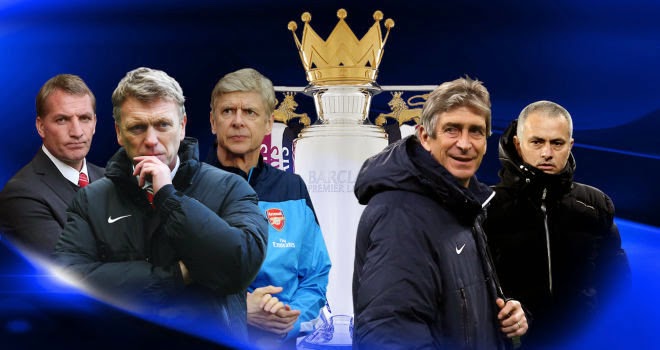
The Premier League has seen an open and exciting title race this season. Made all the better by the absence of Manchester United. That’s not just a dislike for the Red Devils speaking, but with them out of the picture it’s opened up another slot at the top. That gap has been filled emphatically by Liverpool, the rulers of old. This weekend sees the two North West teams involved in the hunt for the title face North London opposition, both of whom appear to have a salvage operation underway.

It has been refreshing to see Liverpool back on the prowl for league honours again. The neutral in me recalls a childhood watching them rule over England in dominant fashion. Back then my City were also rans. I didn’t love them any less but people weren’t queuing up to jump on that particular bandwagon. Elvis, Led Zeppelin and Black Sabbath were my favourite bands but they weren’t on Top of the Pops so, with much regret in hindsight, I donned a Bros t-shirt and accepted popular culture. Children are fickle. That young side of me did admire the Liverpool teams of old. The football Top of the Pops – Match of the Day – would play goals from the Red Men like hits from the charts. They were hard not to notice. That same neutral head would find some comfort in Liverpool winning this year, if it’s not to be City, because it’d mean Steven Gerrard getting a Premier League medal. He’s been a world class player for England (about the only one of his generation) and loyal to his club.

This season Liverpool are being noticed once again. And with good reason. Manchester City started the season in explosive fashion. After a few shaky weeks when playing away they started to overturn teams at will. It seemed conceivable they’d score at least four every week, and if you scored four they might score six. But at the business end of the season it’s the red half of Merseyside that has come on strong. After an anxious finish to Sunderland they face a Spurs side spluttering through uncertainty. A win here will more than likely end Tottenham’s hope for a top four finish – Everton are looking a better bet right now – and could spell the end of Tim Sherwood’s reign. I’m not suggesting he’d be sacked now, but the war kitty won’t be his by the time pre-season comes around.

It’s amusing Brendan Rodgers mentioned the pressure on Spurs after spending heavily when in fact Liverpool have a higher net loss than Tottenham in regard to transfer fees, not just this season, but around £70M since 2010. It appears the Northern Irishman learnt how to play mind games – by talking tripe – from his former mentor Mourinho, who has spent the year doing a good impression of the village idiot. Make no mistake: There is an immense pressure on Liverpool now. History weighs heavy with expectation. So far they are coping. If they defeat Spurs, Chelsea and Manchester City at home they’ll stand an excellent chance of bringing the first Premier League title to Anfield.

Attempting to prevent a Merseyside title win are the two sides that meet Saturday tea time: Arsenal and Manchester City. The Gunners are now the outsiders for the crown. I admire the way Wenger has maintained top four finishes on a tight budget while they paid for the new stadium but they continue to fall short. All his trophies came during the first five hundred games of his tenure. How many more hundreds will he get before the fans demand a different approach? He claims the race is still on – and with his side only six points from Chelsea he has every right – but he’ll have one eye over his shoulder now. It’s almost inconceivable that in a season where they were title race pace setters they could finish in a Europa League spot.

They’d have good company there as the reigning champions, Manchester United, look to the high ground, baffled. The most exciting part of their weekend will be a plane flying over The Theatre of Dreams trailing a banner that will read: The Wrong One – Moyes Out, highlighting just how bad the nightmare has become.

Pellegrini’s men have maths on their side, as every rival manager is happy to point out, but the games in hand are a buffer for mistakes more than certainty for points. It’s likely all the teams in the chase will drop silly points in the remaining games, City just have a way to lessen the impact if they do. Taking the three points at Old Trafford in such an easy fashion will give them a welcome boost, a repeat at Arsenal will set them up nicely. You’d fancy them in home games to Southampton and Sunderland in the coming weeks but they mustn’t overlook anyone now. The early season dazzle has dimmed a little but a new steelier centre is evident. This City team has the backbone to grind out a title.

As for Chelsea: well, I won’t say too much because their manager does that for them. But don’t be fooled by his claims the extra games in Europe will play a factor. Winning becomes habit forming and boosts confidence. A good showing against a tricky PSG side will push them on, not drain them. They currently sit top of the pile and must wear a favourites tag without trying to pretend otherwise.

Wherever this year’s trophy goes it will be a season we can look back on with fond memories, a four horse race to the end. That’s four horses, no little dogs. I’m not sure where the dogs are, I’ll ask a United fan, they seem to have gone there.

We Need Our Christmas Crackers

We Need Our Christmas Crackers

A common remark made after England fail at a major tournament is that the Premier League should adopt the European approach of having a festive break. There have been, and will continue to be, lots of innovations and alterations to the modern game but this is one I’ll never take to. As a fan I love the crowded festive fixture list. I’d hate to see it removed for invalid reasons – let’s face it, one year off wouldn’t prepare the England players any better for a World Cup. Festive football is as seasonal as A Christmas Carol and the Queen’s Speech.

From previous blogs (“The Magic of the Cup”) it’s no secret I’m a bit of a traditionalist. But I’m also a realist, so not living an entirely romanticised version of football events. If lessening the fixture congestion served a purpose that enhanced the overall product then I’d be a fan. The truth is that it won’t, nor will it serve the national team in its efforts. The foreign players that compete in the Premier League seem to cope okay in major tournaments. Those partaking in the African Cup of Nations always appear fresh, or certainly no worse off for the endeavour.

Even if I was to accept – hypothetically speaking now – that the winter period drains players come the end of the season, I’d still rather we kept the set-up as it is. If it’s tiring for the players – apparently a modern professional requires 78 hours between games to make a complete recovery, I’m wondering if these figures have been mixed up with common Christmas hangover periods – it’s more tiring for the fan. I spend Christmas Eve tossing and turning in the hope Santa is bringing me presents. That means I’m up early to check if I have been a good boy (only once in living memory was I deemed bad, that was the year I didn’t get a PlayStation 1 but all my mates did) and in bed late that evening (hopefully) celebrating.

It doesn’t stop there. I rarely sleep due to excitement on Christmas night, too. The prospect of a full Premier League fixture list on Boxing Day is enough to keep me awake. I barely get over that before we head to the normal fixtures that week. All the time the New Year’s games are waiting. If new to football the Christmas period would provide the perfect crash course; for veterans it’s the season to be jolly, for sure.

In what has been a great season for the unpredictable, the games squeezed together at the end of December and the start of January will provide us with a marker of how things are likely to go as the league moves into its second half. Eventually form will be established – good or bad – and determine the fate of the teams. December is the start of that new phase.

The December 21st to 23rd games provide the first examination of how the top could go. Arsenal face Chelsea on Monday the 23rd at the Emirates. The Gunners need a win to prove they are genuine contenders and that they can turnover a top side after two defeats in Manchester, albeit one of those Manchester sides is now a mid-table team. Before that we’ll discover if Manchester City’s away form has steadied when they face a Fulham side starting to show signs of life. At the lower end a nervous Sam Allardyce takes his Hammers to Old Trafford. He’ll tell his players a win is possible, and point to United’s home form as proof, but it’s unthinkable that Moyes will face defeat there again so soon.

The Boxing Day games provide further examination of how genuine each team’s league position is. Everton face a stern test at home to a Sunderland side that has just beaten Chelsea in the League Cup. These are the sort of games a team needs to collect three points from if they are serious about securing European football. The aforementioned West Ham face Arsenal at home, by Boxing Day their predicament could have been worsened, Mr Wenger may well have a belated gift Big Sam doesn’t really want.

The tie of the day sees Liverpool travel to the Etihad. City is scoring for fun there at the moment. During the mauling of Arsenal, one fan in earshot jokingly remarked he was upset if they didn’t score five nowadays. At the time City had “only” managed four but his pains were rewarded with a couple more before the final whistle. Liverpool themselves handed Spurs a defeat that demonstrated they were far from being pretenders this year. It’s a shame we’ve been robbed of watching Aguero and Suarez on the same pitch but there’s enough talent to make this a mouth-watering game. If Liverpool take a point in Manchester it’d show they need to be taken seriously; failing that conceding less than five will do.

December 28th/29th matches will see Man City at home against a Crystal Palace side that, with all due respect, they will feel safe rotating players against. Liverpool face another tough away test at Chelsea. West Ham/West Brom; Hull/Fulham; Cardiff/Sunderland are a trio of ties that pit teams in six pointers in the relegation battle. Everton hosting Southampton gives us insight into two teams fighting it out for a top six spot.

The first game of 2014 sees Man City travel to Swansea and in the last game of the day Man United host Tottenham. In between these games clubs in close proximity to one another face-off – Palace/Norwich and Fulham/West Ham – whilst Arsenal and Liverpool will be expected to win their respective home games against Cardiff and Hull Tigers. The biggest factor may well be the strength in the squads rather than the preferred starting eleven.

At the end of this cycle big teams and strugglers alike will have dropped points. The crazy season may finally have started to settle. The teams then don’t play a league game for ten days. By my calculations that’s a big enough gap to squeeze a 78 hour rest in, especially if you want to skip some cup football.

And they say they need a winter break?

Summer Transfer Market and FFP

Summer Transfer Market and FFP

The summer transfer window has come to a close and with it an end to months of speculation. This year it wasn’t just the destination of our favourite stars that was widely discussed, it was if Financial Fair Play (FFP) would alter spending habits. Now that the dust has settled we can see if FFP had any effect on the window.

On the face of it one would be forgiven for believing that FFP has had little effect on clubs. Before we jump to that conclusion we need to look at factors that affect the net spend of individual leagues. The English Premier League managed to spend a combined total of £630M on new players. To offset this outlay clubs are dipping into their newly topped-up television deal fund, believed to be worth around £500M for the clubs this year. In the past I have been critical of FFP and believe the rewards on offer in the game negate sensible business approaches from clubs. This has been highlighted once again at the close of the transfer window.

Manchester City spent £102M in the transfer window in the hope to regain the Premier League title and have a decent Champions League campaign. They have the wealthy owner to bankroll such an outlay but it is optimistic to assume they will comply with FFP at their current rate of losses. Their sponsorship deal with Etihad is still under review, if that is deemed unfit they would find themselves in a difficult position. It must be said that despite the seemingly high spend they do have an eye on FFP. Clever deals to sell Tevez – a high wage earner, close to the end of his contract – and loaning out Gareth Barry to reduce the wage bill further, along with ten other players leaving, displays an awareness they must comply. More on compliance later.

Staying with England for now, Tottenham Hotspur top the spending charts with a sizable spend of £107M. This is covered by the world record fee received for Gareth Bale, so when you consider they have approximately £25M extra with the new TV money, they’ve refreshed their squad free-of-charge. Newcomers Southampton and Cardiff both spent £34M, placing them sixth place in the spending table. This is an example that clubs will spend – perhaps more than they should be comfortable with when you consider their previous season income – in order to stay in the rich land of the Premier League. Avoiding relegation brings riches comparable to a top four finish for the “big” clubs.

A club hoping to rejoin the top four is Liverpool. They have outlaid a not-to-be-sniffed-at £49M. However, this has been a club spreading their money wisely. Whilst they lack the traditional marquee signing, they have successfully strengthened their squad and kept FFP in mind. Where needed faces have been released or loaned but they’re taking a prudent approach that is showing signs it will improve them. Arsenal did make a marquee signing, a whooping £42.4M for Mesut Ozil. All summer they threatened to spend big and did so in style. They have managed the repayments of their new stadium in recent years to the detriment of their transfer policy. It seems those lean days are over. Expect them to go hunting for a striker again in January, knowing they can spend and comply with FFP.

Manchester United have been the focus of much ridicule and criticism following a transfer window that saw them fail to capture their major targets and ending up with Marouane Fellaini at a price higher than his former buy-out clause. David Moyes would have had insider knowledge of this clause, having just come from Everton himself, but Manchester United’s slow manoeuvres in the market meant their first choice targets weren’t acquired and Fellaini was signed out of desperation to do some business. Had they really wanted him it stands to reason they’d have met his buy-out clause earlier in the summer.

What is most shocking about Manchester United’s activity is how they appear most aware of FFP and thus most reluctant to spend. This is shocking because out of all the clubs in the Premier League we’re led to believe they most easily meet the requirements. But they refused to increase their offer for Ander Herrera by a mere €6M to trigger his release clause. They twice submitted the same bid for Leighton Baines, believed to be £12M. It’s quite ironic that a concern people have with FFP is that it’ll create a status quo, that the big clubs remain big as others can’t compete financially, yet at the end of the summer window the team believed to be biggest of them all spent so little in comparison to its rivals.

Earlier I mentioned FFP compliance and when considering the spending involved with Paris St Germain and Monaco it seems they have, and will, be taking a different approach to the new rules. PSG have a tie-in with the Qatari Tourist Board. Whilst not described as an outright sponsorship, but partnership, that earns the club €125M a year. It’s difficult to see UEFA approving such a deal as income when they’ve spent so much time investigating legitimate sponsorship deals. But PSG must be confident as they spent €84.4M in the last window alone. If that sounds high, and based on dodgy ground, then spare a thought for AS Monaco. Last season they were in the second tier with an average attendance over just over 4,000. This year they have a net transfer spend of €160M. They must be banking on FFP being successfully challenged on the basis it restricts competition. It’d be a sweet moment if Platini’s initiative to haul in English Premier League spending is undone by the two French clubs.

The English Premier League and the aforementioned French clubs aside, there is evidence that FFP is starting to dictate the transfer market. The top flight in both Spain and Italy saw revenue from transfers exceed expenditure. The same is true for their second tiers, along with the English Championship, and a host of other European leagues like the Dutch and Portuguese. In fact, it’s only the French top tier (thanks to PSG and Monaco) and the German Bundesliga that finished the transfer window in the red. And considering that the essence of FFP is based around the German model it’s safe to assume they are spending within their means. Everyone else across Europe is spending with greater caution.

Everyone except the English Premier League, but it goes to show that if there’s money available clubs will spend it. They have to if their rivals do. The transfer system as we know it won’t be dramatically altered in light of FFP, the big transfers will still occur. But overall a more level-headed business approach is coming into play. And even with the EPL’s massive expenditure this summer it could be argued that the major signings took place elsewhere. The English Premier League is becoming the most expensive league without having the highest level of talent. But it is still the most exciting, so it seems fitting it’s the one that has the most summer transfer activity, because watching clubs throw cash around can be fun.


Christopher William Kinsey’s essay Financial Fair Prejudice is still available via the Kindle Store from Amazon.