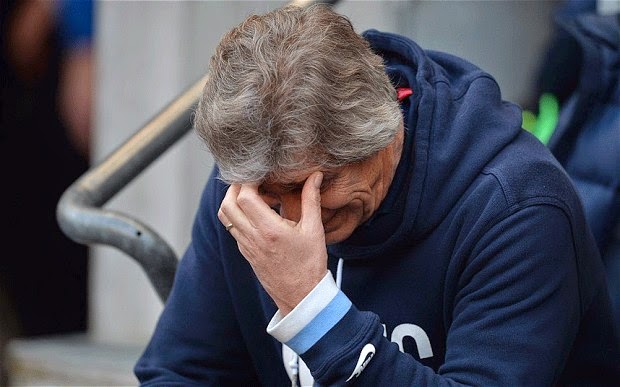
Make FFP Morally Fair

Make FFP Morally Fair

There’s no point arguing against Financial Fair Play anymore. With Manchester City accepting the punishment offered by UEFA, a court battle that could have shuck the system will never be realised. I can’t blame the club for this, they require stability for the team and the third party sponsors attached to them. A quick resolution prevents it becoming an unhealthy distraction. Even though I disagree with FFP it looks like it’s here to stay. This being the case, all I ask now is: why don’t we have a morally fair FFP in place? People have been very vocal about Manchester City “just buying the league” and having an unfair advantage but these sorts don’t mind the established big clubs having an unassailable monetary advantage already. Today I ask them why they never offered an alternative that made it the same for everyone, instead of a closed shop for the big boys at the top.

These supporters of Financial Fair Play are so hung up on the rules being broken, that there is no other outcome than a punishment for clubs like City. Presumably these sorts never exceed 70mph on the motorway, never cross the road when the Red man is showing even if it’s clear, and have never littered – because rules are rules. To these law abiding citizens, that have such a strong sense of morality, I simply ask: Why have you never suggested a version of Financial Fair Play where wealth is completely negated?

Playing Devil’s advocate, and ignoring the legal and business implications (you’ll allow me this as it seems these are ignored anyway where FFP is concerned), why don’t we create a simplified, truly fair, level playing field version of FFP? Financial Fair Play fans feel so aggrieved by Manchester City’s wealth, it stands to reason they must be equally angered by other clubs that can naturally afford high wages and dominate the transfer market, because I’d hate to think for a minute they are hypocrites.

Instead of complicated interpretations regarding FFP’s guidelines that stretch the credibility and constructs designed to enforce soft wage caps and arrest transfer spending, let’s just set a clearly defined a wage limit and net transfer spend per season. All the top leagues in Europe could be reviewed and a mean average of safe expenditure determined. It’d mean the smaller clubs may still be a little off being able to afford the wage cap, but not by much, and the top clubs would no longer be able to throw excessive cash at every player; every marquee signing would mean less to spend elsewhere.

Players would be attracted by facilities, which healthy owners already care about. The mean average spend could be worked out for each tier of league across Europe, creating a unified cash ecosystem. The limit on spend would mean the clubs with high incomes from worldwide support could of course be greedy, they’d still have a high ticket and merchandise turnover but, thanks to a morally fair set of rules, be able to spend less to accrue them. Hopefully this would have another positive knock-on effect: a more affordable product for the fans as clubs are pressured into lowering ticket prices. We’d be left with every club playing with the same set of parameters and every fan not dipping as deep into his pocket.

This idea was probably hushed away as soon as it was first formed during the genesis of Financial Fair Play. The big clubs would never agree to handing back their cash advantage, they just don’t want new clubs appearing with oil cash. And many got on board with FFP for the right reasons but then followed blindly. Like Nazi soldiers believing the evil regime’s propaganda machine, they’ve lacked the ability to step back and see the bigger picture. They’ve been so firm in their belief, they have never stopped to ask if what they are suggesting is a fair system. From a business point of view they never cared if it was fair to introduce a system that would retard the growth of new-money clubs, they just snapped their heels together and shouted “Rules!” The demand for order and adherence to Financial Fair Play meant they never stopped to ask if the idea was correct. Not the business side of it, but the moral issue of ensuring small clubs will be forever alienated. The lack of fervour there means we goose step forward, away from the football as we know it.

FFPDystopia

We’ll find ourselves living a future we should never have visited. Finances may even start to look better on spreadsheets, but a Doncaster or a Rotherham may have been denied their Champions League run, clubs will have stopped investing on infrastructure. It’ll appear healthier but in truth it’ll have been stunted. The big clubs will be unreachable, and as a Manchester City fan I expect to be sat in that elite grouping – but I am far from comfortable with such a scenario.

Perhaps football’s saving grace lies within. I am always wary when a person has a second team (“Oh, they are my Premier League team,” or “That’s my London club.”) but a second team that is an extension of your own would be fine. The B Teams playing in a League Three could generate a wealth of young talent to equalise the money at the top. But that’s a chat for another day.

Less Means More


Before I start, let me make it clear: this article isn’t trying to take any shine off what has been a great season for Liverpool FC. I am only writing it due to an online debate turning, what I see as a fairly simple matter, into a divisive subject. I claimed – no, wait, I pointed it out because it’s factual – that playing less games has helped Liverpool in their title challenge this year. Suddenly people are making stats out of isolated moments and missing the point entirely. So let me explain.

First off, I’ll reiterate, this is a good Liverpool side, and their challenge is no fluke. I’m not saying fringe teams lacking the extra European commitment will break the top four every year. Usually the established teams have the extra funds from playing Champions League football so they can fortify their squads accordingly, thus, keeping a stronghold at the top. But Liverpool has been an emerging force aided by the opening up of spaces above them. When was the last time the reigning champions fell so far away from a title race? That was all the way back when Blackburn defended their crown in the 95/96 season, they finished seventh. Normally the top four alone is a tough nut to crack. Let’s not forget though, that Liverpool are the third highest spenders in Premier League history so they should be there-or-thereabouts every year.

In an earlier blog I mentioned – as it’s been pointed out to try and unravel my own argument – a Chelsea win over PSG would give them a boost in the title run. I stand by that claim, winning is habit forming. To use it against me is an example of people using singular instances to dismiss the whole. At this stage of the season teams are fragile psychologically, one defeat can destroy a run. Indeed, Manuel Pellegrini claimed the Sunderland draw at home was down to the players still thinking about the Liverpool loss. I’m sure if City had turned over Liverpool at Anfield, Sunderland would have faced a side that didn’t feel the fatigue so much, and would have been out for more blood. So yes, in the case of winning helping, either in Europe or a few days earlier in the Premier League, it provides a mental boost. However, over the course of a long season it gets harder to maintain those runs if the squad has played extra matches along the way.

I was also asked to provide evidence showing that when teams playing more games have suffered an impact on their season, and why has a team never challenged for the title before when free of European commitment. That’s pretty simple to answer. Spurs were looking strong 09/10 but failed to make an impact the following year when they were juggling Champions League football. When Liverpool last won the Champions League they were unable to finish in the top four. And pretty much every small squad that gets Europa League football struggles in the following campaign. This year we’ve seen Arsenal start strong, hold top spot for longer than anyone expected, but still fall away when injuries and extra games caught up with them.

To put it in a crude way, if playing extra games had no effect, then a team facing seven matches a week would be at no disadvantage over a team in the title race facing just one. Of course they would. Liverpool have benefitted from having less miles on the clock. If they don’t add significant numbers to the squad over the summer they won’t be challenging for the league next May after playing the extra European games. José Mourinho has even sought permission this week to field a weaker side on Sunday because he’s prioritised the Champions League over the Liverpool clash. There we have explicit proof that playing no games in Europe makes the league easier. It’s a shame that such an exciting, close season, is undermined at the final showdown by José’s stance but it could be a mind-game. Considering how ineffective he’s been with those all season it’d be a long overdue one if it proves to be successful at Anfield.

None of this is designed to undermine Liverpool’s efforts, they have been worthy contenders this year, but there seems to be such a sensitivity toward them at the moment that you can’t even point out valid observations. Every media outlet is in love with them and plastic football fans have been transported back to the Eighties. To say less games hasn’t helped is the same as disputing how great Suarez has been this year. Facts are facts. I look forward to watching them adapt next season with the extra games coming their way.

How to Make The FA Cup Great Again

How to Make The FA Cup Great Again

Paul Lambert claimed this week that if asked, and they answered honestly, most managers would rather like to do away with The FA Cup. What a grim view of the oldest domestic cup competition in the world. The greatest domestic cup, in fact. I understand the sentiment he was trying to make but he is wrong.

As I have discussed in blogs here, and extensively in Financial Fair Prejudice, football today is a business. Lambert was highlighting how Premier League survival is more important than a good cup run, or even cup success, it seems. The implication that he’d trade places in The FA Cup for three points is disrespectful to the great competition. Whilst I understand the money on offer by competing in the Premier League overshadows the domestic cup competition in the modern game, I fail to believe proper fans want mid-table mediocrity for their entire existence over an FA Cup being added to an otherwise sparse history with regard to successes.

Of course the chairmen will take mid-table – hell, even a relegation battle every year – as long as the Premier League money keeps rolling in. Surely it’s better to go down, survive on the parachute payments, then return and be able to say you’d won the domestic big one. If Wigan do return to the Premier League in the next few years they’ll be no worse off than they were previous but their history is richer. The taste of one glorious day at Wembley makes an inevitable relegation easier to bear. And from disappointment tinged with success great things can grow. What Lambert suggests is we should all be happy with a bleak existence.

For those – like the Villa manager – that will never agree to this, that dream of one day flirting with a six place finish so they can qualify for the Europa League, which they can do if they win The FA Cup, I can offer one alternative. Wouldn’t it be great if The FA Cup winners gained entry to the Champions League? Suddenly the dismissive comments made about competing in The FA Cup disappear. Suddenly it’s one lotto every chairman in the land wants to buy a ticket for.

Thusly the problem emerges: UEFA would never want to allow the risk of a Wigan entering the top European competition whilst potentially battling in the Championship. I see the conundrum but it is a shame. Ignoring the fact the Champions League itself turns into a knockout tournament, so is a little lottery when all said and done, the fear a team too weak to qualify would prove unfounded. The prize of Champions League qualification would mean the top sides would try even harder to win it. To the point any team – even one from outside the established top six in the Premier League – would have to be deemed worthy as they’d need to defeat a usual Champions League opponent at some point. An opponent firing on all cylinders, focused on the ultimate prize.

If Champions League qualification was attached to The FA Cup imagine how electric the Wembley final would become once again. For children of my generation cup final day was the highlight of the year. The Superbowl of Soccer, if you will. By making victory equate to what only the top three teams in England gained after a long thirty-eight game season it’d have fans around the globe on the edge of their seats.

I mention the top three because clearly that qualification spot would be grabbed from the fourth placed team. This year’s Premier League has been the most open and engaging for a long time, imagine how much more fascinating it would be with less league qualification spots and the cup wildcard thrown in. And how’s this for a kicker – if a team outside the top three happened to win the Champions League that year it’d only be the top two and The FA Cup victors that would qualify alongside them. Those chairman in the usual top six would be the most reluctant to slim their league chances further. They’d be the minority. The majority would crave FA Cup football. At the moment everyone is lukewarm to The FA Cup and a minority placed in Premier League relegation fights seem to actively dislike it.

Let’s do what’s good for the many – not the few. The many clubs that would love a cup competition with such a rich prize, not to mention history. And the many, many fans. It’s always the fans that should matter first. Not chairmen blinded by money, or managers lacking imagination and desire.