Is DC committing Suicide?

Is DC committing Suicide?

Suicide Squad befell the same fate as Batman v Superman: Dawn of Justice. It started strong at the box office before second week drop-offs compounded negative reviews. In an age where everyone is a critic and the professional critics are ignored, it appears the dissenting voices are the loudest. With further doubts raised about the DC Extended Universe (DCEU), is the Warner Bros. led property starting to implode?

Before the cameras even started to roll on Batman v Superman, DC and Warner Bros. had their work cut out. They faced the unenviable task of chasing down rivals Marvel. The Avengers led superhero cinematic universe is a magnet for two things: cash and compliments.

Both of these can be attributed to the accessibility of the Marvel movies. From the opening feature in the Marvel Cinematic Universe (MCU), Iron Man, they have made no attempt to hide the comic book roots from which they grew. They have been easy going action films, driven by simplicity.

The peak was arguably The Avengers (or Avengers Assemble). It would have been easy to crowd the film with too many main players but Joss Whedon pulled it off using a blend of humour and a clear plot.

This love has allowed Marvel fanboys to escape the negative points within the MCU. Those that were quick to pounce on Suicide Squad are not so quick to discuss Iron Man 2.

Therein lies a fundamental problem: DC haven’t been afforded the time to find their footing or been allowed to develop their own style. They are judged harshly for not being Marvel, but equally derided if any element of the DCEU mimics the MCU.

Historically, DC films have carried a darker tone (we’ll ignore Catwoman) or more recently with Christopher Nolan’s Dark Knight Trilogy, been grounded in something closer to reality.

Man of Steel and Batman v Superman approached the arrival of superheroes in a more realistic manner than Marvel ever will. When given the chance to explore these themes in Captain America: Civil War, Marvel shied away. Unfortunately for DC, being a superhero flick in a time the market is over saturated, means they aren’t judged on their own merits but compared to the market leader.

And this is where DC seem to be turning the gun on themselves.

A dark tone can be well received, Nolan’s trilogy was hardly a mainstream cartoon like The Avengers, so DC were right to start their movies with a more serious undertone. The problem is, dark for dark’s sake is draining on viewers. Without substance it has a depleting effect rather than become tone setting.

That objectively observed lack of substance isn’t down to DC characters having an inability to explore larger themes, it’s because parent company Warner Bros. are being swayed to the Marvel mainstream.

This leaves them in no man’s land.

DC wants the popular Marvel share while retaining a more meaningful scope. It can’t do both and the cracks are beginning to show.

Suicide Squad was another film that some critics went after in a big way. Most of those observations were unfounded or unfair. It wasn’t a muddled mess nor depressing. It was a simple action flick that ran from start to finish without a hiccup. There were enough laughs, decent action scenes and enough character introduction to allow DC to now use the villains ad hoc.

But average isn’t DC’s aim and Suicide Squad took a big step to selling out.

It was a further step away from a gothic palette and real world influences on fantasy elements. Those things were still there, but delivered with less certainty. Unless it comes across forceful and confident, DC’s vision will be swallowed up by internet trolls and critics that are judging DC based on a rival’s blueprint.

Warner Bros. will point to critics often getting it wrong. Transformers has always reviewed poorly and taken home massive returns. Same with Pirates of the Caribbean. But these films are cash cows that don’t care about artistic acclaim. DC on film should be about satisfying the comic book fans and pioneering new visions for the big screen.

Long after the current superhero phase, Tim Burton’s Batman entries will still stand out as a turning point and The Dark Knight will forever be the benchmark. If DC decides to forgo long standing values to chase down Marvel for their share of cinema revenue, it will fail on all accounts.

Unless it stops worrying about box office returns and market share compared to Marvel, it will march toward a self-induced, slow creative death, in which it may never find resurrection.
Batman v Superman: There is a Winner

Batman v Superman: There is a Winner

Note: While care has been taken to not divulge the entirety of the plot or giveaway exciting twists and reveals, the regular tone of The Kinswah Reflective applies, which includes examining certain aspects of the movie. If you haven’t seen Batman v Superman: Dawn of Justice yet, then it’s recommended you skip this review for now.

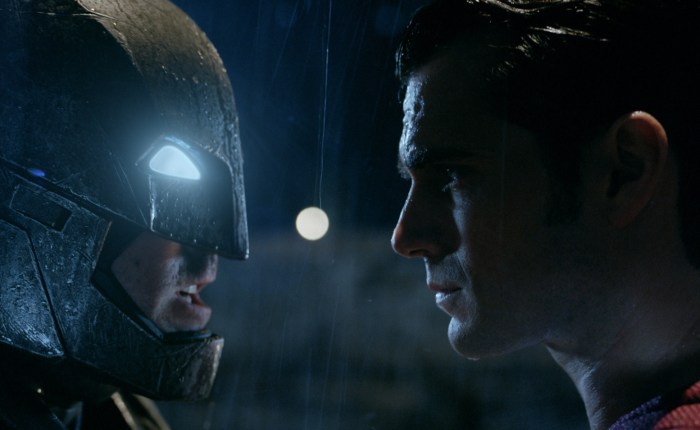
The results are in following “the greatest gladiator battle of all time” and there is a clear winner. But Zack Snyder will also have to acknowledge some have suffered unexpected heavy losses. The reviews so far have been a mixed bag. It isn’t the best superhero movie of all time, as some Twitter users have claimed, nor is it as poor as some critics have stated in early reviews. It’s where it sits between these two poles that will lead to extended debate.

It’s hard to assess the film without listening to all the disenchanted voices. Some have claimed it feels too much like a Man of Steel sequel. This is something that can be categorically wiped out. It is not a Superman film with Batman added. If anything, Snyder has taken the two characters and placed them in a vehicle for the Dark Knight’s benefit.

This is where some of his problems in the storytelling chair start to come to fruition.

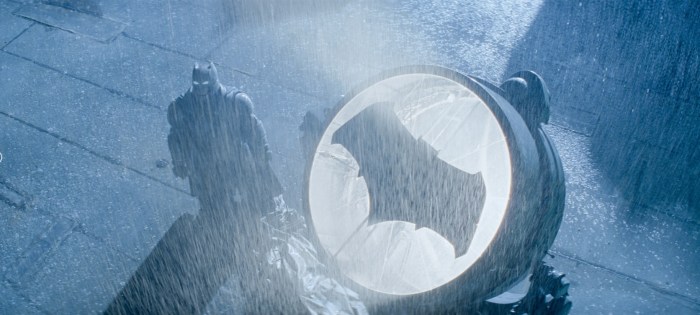
Despite starting out in the DC Extended Universe with Superman, Snyder seems more at home with Bruce Wayne and his alter ego. The movie starts with another glimpse at Martha and Thomas Wayne being gunned down in an alleyway. Making this feel fresh is a challenge for any director, he pulls it off with an interesting take during the young Master Bruce’s fall into the bat cave.

Having Bruce narrate the opening sequence, a flashback to Superman’s battle with Zod, enables the viewer to quickly take on Batman’s perspective. Because Ben Affleck is so convincing in the role, it’s hard to balance it out when Superman’s story appears so one dimensional.

And before moving on, if should be noted some idiot on this website (me), had written off Affleck in The Dark Knight Relapses, before he’d even been measured for a cape. Happily, it can be said, these misgivings were wide of the mark. This is a version of Batman comic book fans have been longing for.

This isn’t a Batman still mourning his mother and father with every action; it’s one battle hardened after twenty years of fighting crime. The death of his parents isn’t the sole drive anymore, in this iteration it is merely the building blocks for his anger to sit on.

We see him in close-quarter combat, a merciless devil that appears from the shadows, a high-tech gadget wiz – and best of all – the world’s greatest detective actually does some detective work again.

Affleck will be immediately compared to Michael Keaton and Christian Bale, the two previous standout performers in the role. It’s subjective to say which element of Bat or Bruce each does better but Affleck holds one clear advantage. His predecessors were always portrayed as new to the vigilante game.

It wasn’t until Batman Returns that we are lead to believe Keaton’s Bat has done more than a few hours on the beat. And Bale’s is barely around before going into a lengthy exile following the events of The Dark Knight.

Affleck’s Batman is sold as one that has been in the field for decades, as such, he is grittier and meaner than any seen before on the big screen.

It should be this type of Batman who struggles to fit into a movie universe shared with metahumans, it isn’t, it’s Superman. The brooding Dark Knight somehow stands alongside other costumed heroes far better than the one in the red cape that can fly. It’d be like having Captain America appear in Silence of the Lambs and remark that he’s a better fit than Clarice Starling.

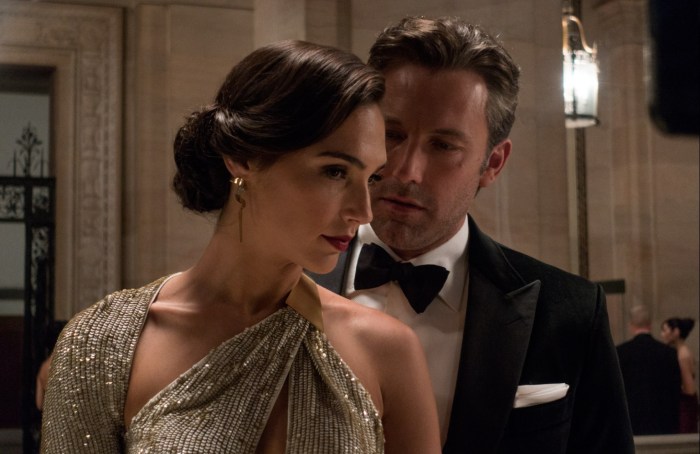
As Snyder flicks from Batman to Superman to Lex and to any blanks we need filling in, it is the Bat that feels more at home. He interacts well with Gal Gadot’s Diana Prince and follows leads for what is revealed to be part of his bigger masterplan.

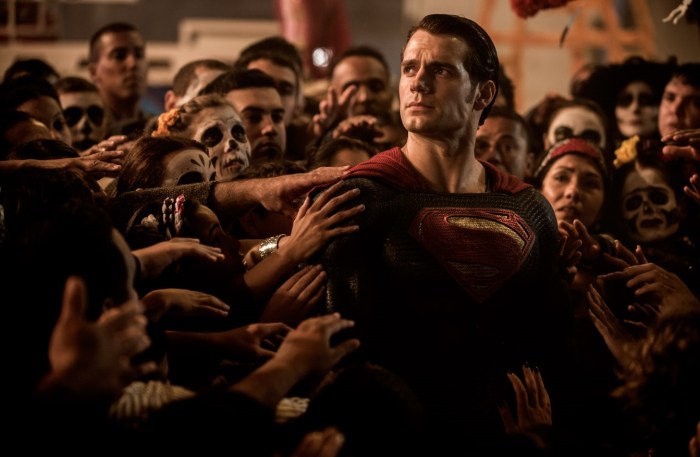
Taking out hoods and tracking items should feel too ordinary when Superman is making last minute saves in the desert to ensure Lois Lane is safe. This subplot, where people are gunned down because of Superman’s arrival, tries to drive the point home that humans don’t know what to do with Superman.

Sadly, it is just one human – Zack Snyder – that struggles to do anything of worth with him. Cut scenes where he has conversations with Lois, Martha Kent and a dreamy one with Jonathan Kent, prove why storytellers should always show and not tell.

It’s easy to understand Bruce’s rage, even some of Lex Luthor’s monologues have merit (when seen from his point of view), but one struggles to have empathy with a god-like man that is supposed to be a wholesome farmer’s son, who just happens to have extraordinary powers, when he acts like he is God.

Superman or God?

Another issue for some is the pace of the first half of the film. Again, it will divide opinion. It was never an issue from my seat, but the much applauded closing battle (we all know it’s Doomsday from the trailer) doesn’t deserve so much love. It was average at best.

It should be noted, that horrendous trailer, that tried to give away the entirety of the movie in a three-minute period, did keep a few surprises back. Knowing this was a device to set up a Justice League movie meant there had to be a resolution between the two leading men before joining forces.

This is where one should feel sorry for Zack Snyder. He has had his hands tied-up before shooting commenced. He’s been hindered by the studio’s desire to go big from the very inception of its shared universe. Feeling like Marvel has stretched too far into the distance has made Warner Bros. throw everything, including the kitchen sink, at the project rather than carefully nurturing the storytelling.

It is too crammed and it does buckle under this weight.

They will argue the first attempt to start combined movies, Green Lantern, adopted the gentle approach and failed. But to flip from one extreme to the other is equally damaging. Even with the reveals of further metahumans being delivered from secret files, presumably to avoid inexplicable appearances in person, fails dreadfully. They are located in stolen files from LexCorp and for a few minutes you’d be forgiven for thinking it was an episode of Smallville.

It will be under review if Snyder should get a third chance to make people believe in his version of Superman. There are strong arguments for and against. Taking into account the amount of balls he was juggling here, and some surprises that will either make comic book fans love him or serve to antagonise them further, may be his saving grace.

For all his shortfalls, it’s clear he is playing the long game here. The Flash appearance, in a supposed Bruce Wayne dream, reveals a massive storyline further down the road. If Snyder is still part of it, only time will tell.

The decision makers need to stand fast, regardless of any negative reviews, and take a leaf out of the X-Men approach to movie making. They’ve had some duffers along the way but resisted the temptation for a full reboot. Dawn of Justice has too much going for it to be sent to the scrap heap.

Suicide Squad looks like it will add colour to a bleak palette and Wonder Woman has already won fans and critics over before her first solo outing. There is a clear winner in the battle between Superman and Batman on the screen, and from a critical point of view, Batman wins that particular point.

Jesse Eisenberg is good as Lex, another victory for the franchise. His jittery madness is a layer of clothing over evil genius. The only losers are Superman’s representation and the plot points toward to the end (Bruce goes from total distrust to admiration for Superman without much reasoning).

The rest is four star or above.

The DC Extended Universe should chalk this up as experience, learn, and move on.

Watch and Learn

Watch and Learn

Zack Snyder has the daunting task of carrying the weight of the DC Extended Universe on his shoulders. He’s no stranger to mammoth tasks. Previously he took on the burden of making the “un-filmable” Watchmen.

Nothing is un-filmable. It’s snobbery on the part of the graphic novel’s creator, Alan Moore, to suggest so. And pretentiousness from his fans that purport the myth. Far more complex and esoteric pieces of literature have been successfully adapted for the big screen.

It’s understandable that Moore would be precious over something he had poured his heart and soul into, but it doesn’t mean he is right. Stephen King hates Stanley Kubrick’s version of The Shining. It doesn’t mean it’s a bad film; it’s just not King’s.

Alan Moore has gone on to explain he wanted the comic book media to express the advantages it holds over other forms. That some elements were designed to be untranslatable. This has truth, but equally, film can engage in unique ways too.

The challenge was to remain faithful to the source material without allowing it to be a hindrance. Zack Snyder passed this test.

Many of the criticisms are how it is too mindful of Moore’s graphic novel and works too hard to appease its fans. Many of these disenchanted voices will then draw up lists of glaring differences between movie and book.

While it’s true some back story is simplified, it’s never to the detriment of the plot or flow of the film. If anything, it aids the story in this format. It can’t be a graphic novel so it has to be the best movie it can. We still see a world on the brink of a cold war nuclear attack.

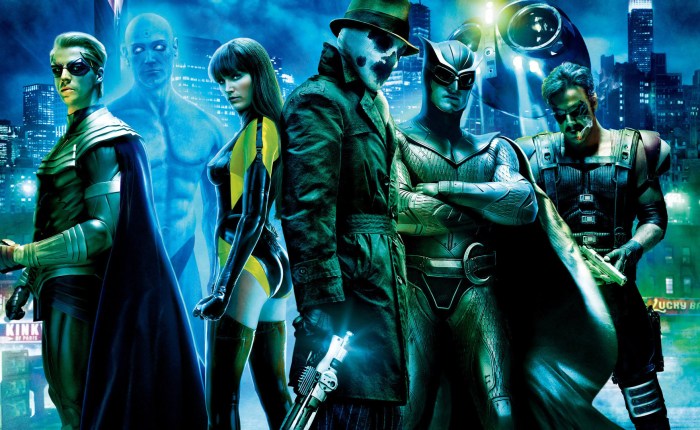
The outlawed superheroes still reveal personal connections and the flashback sequences never clog up the plot. They allow the viewer to form strong opinions before having them challenged. The Watchmen – the last team of superheroes – was an offshoot from the golden age of hero, represented then by the Minutemen.

Characters, such as The Comedian, crossover these two time periods. It is his murder at the start of the movie, by an unknown assailant, that starts a series of events that brings the old team out of the shadows.

The early drive for this is the complicated Rorschach, played by the excellent Jackie Earle Haley. His ink blotted mask, that alters throughout scenes (hence his name) goes looking for answers to a mystery that has bad ramifications for his old partners. Someone is taking out old superheroes. And he’s getting close to the facts.

The mix within the team aides Snyder in creating a good dynamic between the characters. The second Nite Owl, played by Patrick Wilson, is a guy that hasn’t acclimatised to the everyday life. In the movie they don’t quite show him as deficient as in the graphic novel but it’s clear he feels out of sorts with his existence.

His routine enables him to drink with the original Nite Owl and reminisce about the old days. He was Rorschach’s partner but sees this oddness different to his own isolation. No longer Nite Owl, Daniel Dreiberg is the opposite of Adrian Veidt, the former hero: Ozymandias.

He is the only retired superhero to declare his former role and has marketed himself based on this fact. In a satirical story, he is the most obvious jab at the standard comic book genre.

What brings Nite Owl/Dreiberg out of retirement is his connection with the second Silk Spectre/Laurie Jupiter. Malin Åkerman brings the greatest degree of humanity to the film with her portrayal. She is in a relationship with the omnipotent Doctor Manhattan – the only character that has true superpowers.

If Superman makes men look like ants, Doctor Manhattan makes the Last Son of Krypton look like an amoeba. Living with a godlike creation, has Laurie as lonely as Dreiberg. They team up to roll back the years and hunt for facts.

To say more would be to give away twists and turns, all of which, Snyder handles with ease. A thing that shouldn’t be shrugged at when considering Alan Moore’s claims.

Certain plot points are altered, but only for the better. The finale is more intelligent in both looks and delivery, and has greater human repercussions over the way it played out in the graphic novel. Snyder also provides memorable scenes. Would Doctor Manhattan’s speech on Mars to Laurie have had such an impact if Snyder was so far wide of mark? Absolutely not.

Long before Deadpool made adult superhero movies cool, and the thing studios wanted to aim for, Zack Snyder achieved the feat with an underrated and overlooked classic. Long after the Marvel Cinematic Universe and the DC Extended Universe have been rebooted until they’re burnt out and dead, Watchmen will still stand as a testament on how to approach the genre on the big screen.