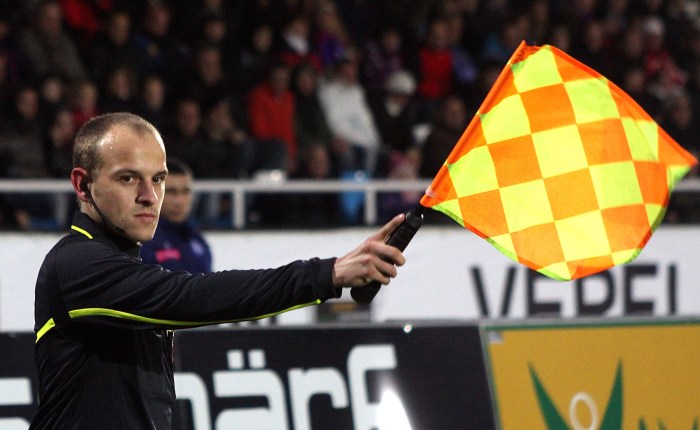
Interfering with Play

Interfering with Play

The offside rule used to be a tool used for misogynist jokes about a woman’s inability to understand a law that “real” men saw as child’s play. Nowadays, it is the rule itself that has become a bad joke.

The constant tweaking of the rule (Law 11 in association football’s, Laws of the Game) started with a desire to make football more exciting. As far back as 1925, it has been altered for this very purpose. In that year they modified the last defenders from three to two, this led to 1,673 more league goals being scored that the previous season.

There is clearly a precedent for the rule to slow the game down, with constant free kicks and breaks in play, or goals being ruled out. The modern variants of the law have centred around if players in offside positions are active. Or interfering with play. The problem is, the open to interpretation approach is what’s now interfering with play.

The rule is written as such:

It is not an offence in itself to be in an offside position.

 A player is in an offside position if:

  • he is nearer to his opponents’ goal line than both the ball and the second-last opponent

A player is not in an offside position if:

  • he is in his own half of the field of play or
  • he is level with the second-last opponent or
  • he is level with the last two opponents

Offence

A player in an offside position is only penalised if, at the moment the ball touches or is played by one of his team, he is, in the opinion of the referee, involved in active play by:

  • interfering with play or
  • interfering with an opponent or
  • gaining an advantage by being in that position

No offence

There is no offside offence if a player receives the ball directly from:

  • a goal kick
  • a throw-in
  • a corner kick

Most people that watch a game of football understand the basic principles of the offside law. The flaw with it lies in the opening line: It is not an offence in itself to be in an offside position.

This ambiguous statement evolved from former amendments that stated: obstructing the opponent’s line of movements or making a gesture or movement which, in the opinion of the referee, deceives or distracts an opponent, before changing to: challenging an opponent for the ball.

Now we have first and second phases of play, being stood in front of goalkeepers on free kicks but officials making on-the-spot assumptions about where the ‘keeper should be looking, as if they are robots that ignore their peripheral vision.

As Brian Clough famously said: “If you’re not interfering with play, what are you doing on the pitch?”

We all want to see flowing football, but not to the detriment of the laws that govern the game. FIFA will never implement a rule change allowing dangerous tackles to be ignored if a goal comes from the subsequent attack.

So why are we being asked to ignore dubious application of an age old law to assist illegal goals?

The attitude to ignore the rule is becoming quite pandemic. Everton scored their first goal against Manchester City in the opening leg of the League Cup semi-final with Romelu Lukaku stood in front of the goalkeeper. The hazy understanding of the rule means it stands with little debate.

Juan Mata scored a beautiful free kick against Shrewsbury Town in their FA Cup clash. Unfortunately, a three-man wall, placed in front of the goalkeeper, never made it back onside before the ball was struck. However, the officials believed they weren’t interfering with play. If you’re not interfering with play when stood in front of the goalkeeper, you never will be.

This attitude to ignore now stretches to even simple decisions. Wayne Rooney scored against Derby County in the previous round, after being marginally offside before receiving the ball. BBC commentator Danny Murphy declared he’d rather enjoy such a good strike than focus on whether or not Rooney was offside. So the message is clear: It doesn’t matter about the rules if it looks good.

This ambiguity needs to end. It’s making the referee and linesmen’s jobs almost impossible. Sooner, rather than later, a major tournament will be decided by a dubious call that sits in the offside grey area.

Nobody wants to see the Champions League or World Cup decided with a goal that leads to an inconclusive debate about if a player was interfering with play.

It’s time to go back to basics. If a player is stood in an offside position when the ball is played, then he’s offside. Leaving it open to interpretation places an unnecessary spotlight on a sport already riddled with mistrust and bad calls.
 

Four Horses, Final Furlong

Four Horses, Final Furlong

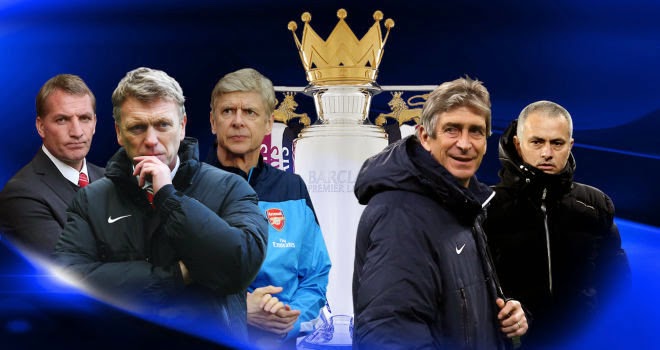
The Premier League has seen an open and exciting title race this season. Made all the better by the absence of Manchester United. That’s not just a dislike for the Red Devils speaking, but with them out of the picture it’s opened up another slot at the top. That gap has been filled emphatically by Liverpool, the rulers of old. This weekend sees the two North West teams involved in the hunt for the title face North London opposition, both of whom appear to have a salvage operation underway.

It has been refreshing to see Liverpool back on the prowl for league honours again. The neutral in me recalls a childhood watching them rule over England in dominant fashion. Back then my City were also rans. I didn’t love them any less but people weren’t queuing up to jump on that particular bandwagon. Elvis, Led Zeppelin and Black Sabbath were my favourite bands but they weren’t on Top of the Pops so, with much regret in hindsight, I donned a Bros t-shirt and accepted popular culture. Children are fickle. That young side of me did admire the Liverpool teams of old. The football Top of the Pops – Match of the Day – would play goals from the Red Men like hits from the charts. They were hard not to notice. That same neutral head would find some comfort in Liverpool winning this year, if it’s not to be City, because it’d mean Steven Gerrard getting a Premier League medal. He’s been a world class player for England (about the only one of his generation) and loyal to his club.

This season Liverpool are being noticed once again. And with good reason. Manchester City started the season in explosive fashion. After a few shaky weeks when playing away they started to overturn teams at will. It seemed conceivable they’d score at least four every week, and if you scored four they might score six. But at the business end of the season it’s the red half of Merseyside that has come on strong. After an anxious finish to Sunderland they face a Spurs side spluttering through uncertainty. A win here will more than likely end Tottenham’s hope for a top four finish – Everton are looking a better bet right now – and could spell the end of Tim Sherwood’s reign. I’m not suggesting he’d be sacked now, but the war kitty won’t be his by the time pre-season comes around.

It’s amusing Brendan Rodgers mentioned the pressure on Spurs after spending heavily when in fact Liverpool have a higher net loss than Tottenham in regard to transfer fees, not just this season, but around £70M since 2010. It appears the Northern Irishman learnt how to play mind games – by talking tripe – from his former mentor Mourinho, who has spent the year doing a good impression of the village idiot. Make no mistake: There is an immense pressure on Liverpool now. History weighs heavy with expectation. So far they are coping. If they defeat Spurs, Chelsea and Manchester City at home they’ll stand an excellent chance of bringing the first Premier League title to Anfield.

Attempting to prevent a Merseyside title win are the two sides that meet Saturday tea time: Arsenal and Manchester City. The Gunners are now the outsiders for the crown. I admire the way Wenger has maintained top four finishes on a tight budget while they paid for the new stadium but they continue to fall short. All his trophies came during the first five hundred games of his tenure. How many more hundreds will he get before the fans demand a different approach? He claims the race is still on – and with his side only six points from Chelsea he has every right – but he’ll have one eye over his shoulder now. It’s almost inconceivable that in a season where they were title race pace setters they could finish in a Europa League spot.

They’d have good company there as the reigning champions, Manchester United, look to the high ground, baffled. The most exciting part of their weekend will be a plane flying over The Theatre of Dreams trailing a banner that will read: The Wrong One – Moyes Out, highlighting just how bad the nightmare has become.

Pellegrini’s men have maths on their side, as every rival manager is happy to point out, but the games in hand are a buffer for mistakes more than certainty for points. It’s likely all the teams in the chase will drop silly points in the remaining games, City just have a way to lessen the impact if they do. Taking the three points at Old Trafford in such an easy fashion will give them a welcome boost, a repeat at Arsenal will set them up nicely. You’d fancy them in home games to Southampton and Sunderland in the coming weeks but they mustn’t overlook anyone now. The early season dazzle has dimmed a little but a new steelier centre is evident. This City team has the backbone to grind out a title.

As for Chelsea: well, I won’t say too much because their manager does that for them. But don’t be fooled by his claims the extra games in Europe will play a factor. Winning becomes habit forming and boosts confidence. A good showing against a tricky PSG side will push them on, not drain them. They currently sit top of the pile and must wear a favourites tag without trying to pretend otherwise.

Wherever this year’s trophy goes it will be a season we can look back on with fond memories, a four horse race to the end. That’s four horses, no little dogs. I’m not sure where the dogs are, I’ll ask a United fan, they seem to have gone there.

We Need Our Christmas Crackers

We Need Our Christmas Crackers

A common remark made after England fail at a major tournament is that the Premier League should adopt the European approach of having a festive break. There have been, and will continue to be, lots of innovations and alterations to the modern game but this is one I’ll never take to. As a fan I love the crowded festive fixture list. I’d hate to see it removed for invalid reasons – let’s face it, one year off wouldn’t prepare the England players any better for a World Cup. Festive football is as seasonal as A Christmas Carol and the Queen’s Speech.

From previous blogs (“The Magic of the Cup”) it’s no secret I’m a bit of a traditionalist. But I’m also a realist, so not living an entirely romanticised version of football events. If lessening the fixture congestion served a purpose that enhanced the overall product then I’d be a fan. The truth is that it won’t, nor will it serve the national team in its efforts. The foreign players that compete in the Premier League seem to cope okay in major tournaments. Those partaking in the African Cup of Nations always appear fresh, or certainly no worse off for the endeavour.

Even if I was to accept – hypothetically speaking now – that the winter period drains players come the end of the season, I’d still rather we kept the set-up as it is. If it’s tiring for the players – apparently a modern professional requires 78 hours between games to make a complete recovery, I’m wondering if these figures have been mixed up with common Christmas hangover periods – it’s more tiring for the fan. I spend Christmas Eve tossing and turning in the hope Santa is bringing me presents. That means I’m up early to check if I have been a good boy (only once in living memory was I deemed bad, that was the year I didn’t get a PlayStation 1 but all my mates did) and in bed late that evening (hopefully) celebrating.

It doesn’t stop there. I rarely sleep due to excitement on Christmas night, too. The prospect of a full Premier League fixture list on Boxing Day is enough to keep me awake. I barely get over that before we head to the normal fixtures that week. All the time the New Year’s games are waiting. If new to football the Christmas period would provide the perfect crash course; for veterans it’s the season to be jolly, for sure.

In what has been a great season for the unpredictable, the games squeezed together at the end of December and the start of January will provide us with a marker of how things are likely to go as the league moves into its second half. Eventually form will be established – good or bad – and determine the fate of the teams. December is the start of that new phase.

The December 21st to 23rd games provide the first examination of how the top could go. Arsenal face Chelsea on Monday the 23rd at the Emirates. The Gunners need a win to prove they are genuine contenders and that they can turnover a top side after two defeats in Manchester, albeit one of those Manchester sides is now a mid-table team. Before that we’ll discover if Manchester City’s away form has steadied when they face a Fulham side starting to show signs of life. At the lower end a nervous Sam Allardyce takes his Hammers to Old Trafford. He’ll tell his players a win is possible, and point to United’s home form as proof, but it’s unthinkable that Moyes will face defeat there again so soon.

The Boxing Day games provide further examination of how genuine each team’s league position is. Everton face a stern test at home to a Sunderland side that has just beaten Chelsea in the League Cup. These are the sort of games a team needs to collect three points from if they are serious about securing European football. The aforementioned West Ham face Arsenal at home, by Boxing Day their predicament could have been worsened, Mr Wenger may well have a belated gift Big Sam doesn’t really want.

The tie of the day sees Liverpool travel to the Etihad. City is scoring for fun there at the moment. During the mauling of Arsenal, one fan in earshot jokingly remarked he was upset if they didn’t score five nowadays. At the time City had “only” managed four but his pains were rewarded with a couple more before the final whistle. Liverpool themselves handed Spurs a defeat that demonstrated they were far from being pretenders this year. It’s a shame we’ve been robbed of watching Aguero and Suarez on the same pitch but there’s enough talent to make this a mouth-watering game. If Liverpool take a point in Manchester it’d show they need to be taken seriously; failing that conceding less than five will do.

December 28th/29th matches will see Man City at home against a Crystal Palace side that, with all due respect, they will feel safe rotating players against. Liverpool face another tough away test at Chelsea. West Ham/West Brom; Hull/Fulham; Cardiff/Sunderland are a trio of ties that pit teams in six pointers in the relegation battle. Everton hosting Southampton gives us insight into two teams fighting it out for a top six spot.

The first game of 2014 sees Man City travel to Swansea and in the last game of the day Man United host Tottenham. In between these games clubs in close proximity to one another face-off – Palace/Norwich and Fulham/West Ham – whilst Arsenal and Liverpool will be expected to win their respective home games against Cardiff and Hull Tigers. The biggest factor may well be the strength in the squads rather than the preferred starting eleven.

At the end of this cycle big teams and strugglers alike will have dropped points. The crazy season may finally have started to settle. The teams then don’t play a league game for ten days. By my calculations that’s a big enough gap to squeeze a 78 hour rest in, especially if you want to skip some cup football.

And they say they need a winter break?