Pep’s Pantomime Period (and the theory of absence)

Pep’s Pantomime Period (and the theory of absence)

It’s been the time of year where fixtures came thick and fast and the media got giddy over things that don’t really exist. Oh! No they didn’t! Oh, yes they did. Pantomime season didn’t just play out in theatres around the country with former soap stars and forgotten reality TV faces, it’s been happening in the Premier League. A big win at West Ham should draw a line under it (for now). But the big closing night won’t make all parts of the act disappear.

He’s Behind You

The week leading into the FA Cup tie with West Ham saw intense focus fall upon manager Pep Guardiola. This began with an animated gesture to the Etihad crowd during the Burnley game, followed by frosty post-match interviews, then a series of snippets across various platforms. Some will say it stemmed from the Liverpool result. The gap to Antonio Conte’s Chelsea increasing and Jürgen Klopp himself moving ahead.

But Pep isn’t the sort of manager they will want sneaking up behind them.

There have been many interpretations about the interviews and subsequent comments. The optimistic rival had Pep unhappy and close to retirement. He didn’t think much of the fans and doesn’t even see City as a top four club. The idea City isn’t a member of the “traditional top four” was expanded upon with the opinion of a writer that worked with Pep, harvesting his views, back in a season that saw a Joe Royal led side relegated back to the second tier.

It’s safe to say, even the most passionate Blue wouldn’t have considered City a big gun that year. From an outsider in a faraway land, a side that had recently come up from the third tier probably weren’t on the radar.

But the press isn’t going to let things like, facts or the passage of time, get in the way of servicing the majority of clickbait readers that made their allegiance to United or Liverpool years ago, and find City’s emergence a great inconvenience.

Nor will these readers observe the rules they formerly followed. If Sir Alex Ferguson or José Mourinho took aim at the press and absorbed the flack, it was genius. An example of them playing mind games, deflecting pressure from the players. When Klopp displays an outburst, it is pure passion. When Pep does these things, it signals he is disheartened, that there are underlying troubles, he’s been found out and is losing the plot.

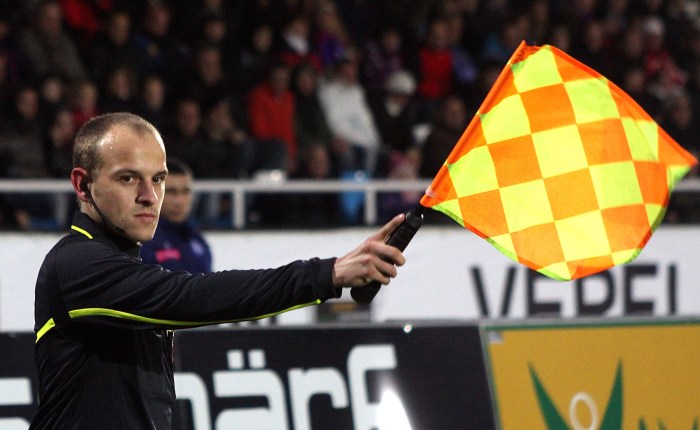
Could it just be he had genuine gripes? Lee Mason delivered a refereeing performance in the Burnley match that was so poor, Guardiola got a taste of what officiating was like in the third tier for City when he made his original remarks about the club’s stature. Far from him not caring, as recently implied, he showed his great frustration. Patience with the players adapting to his methods is one thing, fighting a twelfth man that should be impartial is the final straw.
sagna

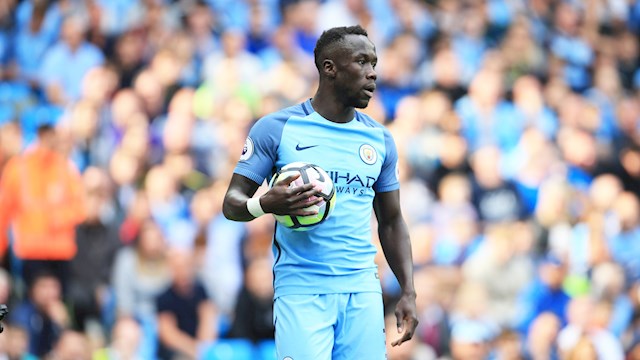
Bacary Sagna has been asked to explain his Instagram post to the FA that read: “10 against 12…but still fighting and winning as a team. #together #mancity”

It appears to be a succinct but comprehensive summary of the game. Perhaps the Football Association should just watch the video of the tie back, they’ll be hard pressed not to agree.

What is also worth noting, is how he emphasised the team’s togetherness. Down to ten men, they celebrated huddled at the corner flag in a true show of team spirit. The men on the pitch, at times, look disjointed but it isn’t a signal that they’re divided.

Areas of Absence
kompany

It begs the question, if the commitment is there, what is missing? The easiest answer that fits most problems, is the correct personnel for the roles Pep requires. Ask any City fan what positions need reinforcing, and they’ll mention two full-backs, a centre back, a new holding midfielder, a striker, and worst of all for Pep: a goalkeeper.

These gaping areas of weakness raise a valid problem with the Guardiola approach. If he is the best coach in the world, as City fans were led to believe, why isn’t he able to train the players into these roles? And more importantly, when Pantomime season turns into a continual comedy of errors on the pitch, why doesn’t he instead play to the strengths that are available?

When Pellegrini refused to change, he was labelled (by yours truly) as stubborn and cantankerous. Is Pep any less difficult with his immovable approach? You can imagine him buying a cat and persevering with it until it barked. Or telling Kolarov he is a centre back, or Bravo he is an upgrade on Joe Hart.

Absence Makes the Hart Grow Fonder
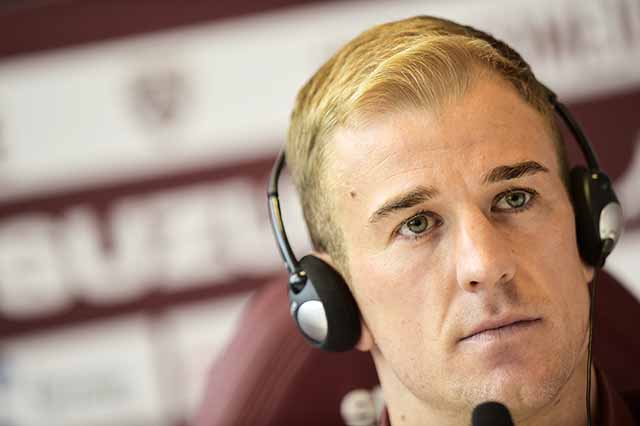
And there it is, the elephant in the dressing room. Guardiola’s first major statement was to jettison Joe Hart. He’d seen enough videos to believe he couldn’t coach him into the player he required. Presumably all the current players that can’t follow his methods slipped detection. He brought in Bravo, who is having a shocker of a season.

The Ghost of Hart is cast over every failed save, misplaced pass, and poor positioning. There’s no suggestion Hart will be brought back, the player himself recently poured cold water on the idea. Pep is too proud to admit he made a mistake with Hart. But he will quietly move Bravo on in the summer if he doesn’t improve between now and May. Until then, each ironic cheer when he makes an easy save will increase in volume as people become evermore passionate for their exiled hero.

When Absence is Good (but bad)

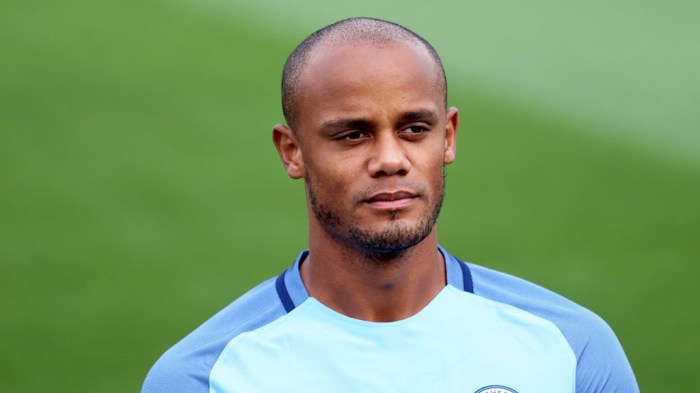
The absence of a solid defence requires no explanation. A myriad of factors will mean it continues for the foreseeable future: the continued absence of Vincent Kompany, aged full-backs, a lack of protection from midfield, Claudio Bravo being Claudio Bravo, and the John Stones training school.

That last one doesn’t mean there’s any doubt about his potential ability. He should become a world class centre back. What shouldn’t be happening, is Stones completing every step of his progression in live action. It’s telling that rare City clean sheets (Watford, Hull City after being substituted early with injury) came without Stones involved.

But like Bravo, Pep will find it hard to backtrack where Stones is involved.

Now or Never for Kelechi was, as expected, met with vitriol online. What was said in that article still stands and has started to come true. Iheanacho didn’t make the most of Agüero’s four game ban – he couldn’t even keep his place in the side. A surprise start against Burnley further highlighted how his development has stunted. With Gabriel Jesus here, the chance to turn the tide is a smaller window now.
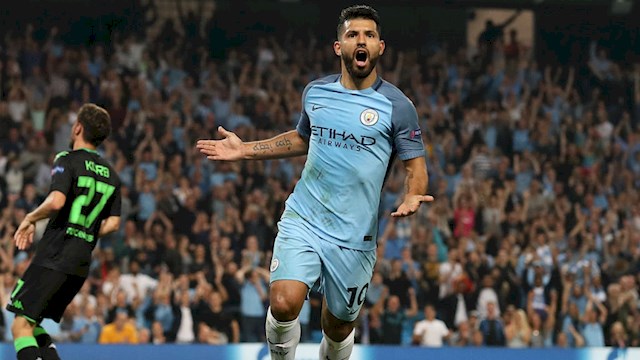
But Sergio Agüero himself is the centre of absence problems. Namely, does Pep want him permanently absent? There’s the continued suggestion he doesn’t fit the style and isn’t part of his plans. But nothing should be read into Kun not starting the Burnley game. That was a good absence. He has a history of injuries when overplayed. A four-game rest means little with only one day off between fixtures. Initially, it wasn’t worth the risk.

Absence of Support

More than once (Empty Seats, Empty Gestures) the fallacy about empty seats has been explained. What is absent at the moment, is a strong atmosphere. Pep understandably demands more from the crowd. But fans and players share a symbiotic relationship. Fans need to see passion to give it back, and vice-versa.

It took until the hour mark at home against Watford for fans to sing, “We’ve got Guardiola” and a hammering of Slaven Bilić’s side in the FA Cup for it return with any gusto.

Absence of the Panto

With an extended rest, Guardiola and his side have a chance to take stock. The coach has indicated he’s perhaps demanded too much, too soon. What he’ll be looking for now is the comedy of errors that have turned pantomime season into a circus to disappear. The focus is now on establishing a top four berth.

Beyond that, anything is still possible. Pep may continue to stress this is all a learning curve but one lesson he doesn’t need is on the unpredictability of the Premier League. Every team will drop points, if City can establish solid form it will lead to success.

Will that translate to trophies in season one of Pep’s reign? It’s hard to say. But an absence of silverware won’t be a concern if several months from now clear progression has been made.

Images: http://www.mancity.com; apart from Joe Hart: http://www.torinofc.it
 

EFL Short-sighted

EFL Short-sighted

The English Football League (EFL) demonstrated ignorance and a lack of understanding with wider issues this week, in doing so it deepens a rift between its member clubs and the administration of the EFL. The much derided EFL Trophy, now renamed Checkatrade Trophy, was always a bone of contention. Now the fears of lower league clubs have been manifested in the form of ridiculous fines.

The concept of the revised EFL Trophy was after the lower tiered Football League clubs spoke out against the proposed League Three option, fearing the inclusion of Premier League B Teams would be a further example of looking after the big clubs at the expense of those without. Also, it would have damaged the accessibility of the current loan system.

The Football Reflective was a fan of the idea (Fair and Three) as it took a holistic view. The current loan system hasn’t proven to be beneficial for the donor clubs. Aside from Manchester City, who appear to frequently send their coaches to assess and assist those loaned out, once a player has left the nest they are under the guidance of lower grade coaches using lesser facilities.

The FA, after years of mounting evidence that suggests the national team has a bleak future, is desperate for a solution. When League Three was written off, they needed a halfway house. A trial to see if there would be the appetite for B Teams to mix in competitive ties with lower league clubs.

They took the essence of a good idea and managed to turn it against itself.

The EFL Trophy in its former guise was a good opportunity for the teams from the bottom two tiers to have a day out at Wembley. Not many cared for the competition until that chance was on the horizon, but when it appeared a play-off final vibe arose.

Adding select upper league clubs’ under-21s to the mix destroyed that slight fantasy. The idea of Stoke U21s v Wolverhampton U21s at Wembley doesn’t have any of the romance. All it would do is confirm to the smaller clubs that football in this country only cares about those higher up the league pyramid.

But the clubs that bemoaned the idea of League Three do need to take some responsibility. Their fears have turned into a self-fulfilling prophecy, acted out during the EFL Trophy.

Most blame has to go to the EFL itself. This week they fined twelve clubs, ranging from £3,000 to £15,000 each, for fielding weaker sides(five players must have appeared in the previous game, or contain the five most used players from the season as a whole). A format they didn’t trust has now hit their pockets.

Luton chairman Gary Sweet summed up the disparity best when he remarked he shouldn’t be paying fees to give his youth players experience. To make matters worse, his club’s youth defeated a side from the higher tier. So, is the Checkatrade Trophy only about developing youth players from big clubs?

The fear of the voiceless now realised with the opening of a cheque book.

The EFL Trophy fines come at the same time as talks to restructure the EFL to four leagues of twenty teams collapsed. Here the clubs and league are equally short-sighted. Chief Executive of Shrewsbury, Brian Caldwell, has been one of the most outspoken against. His concern, one mirrored up and down the country, was a reduction in fixtures would mean less money.

The EFL countered this by promising more Saturday fixtures, seen as a way to avoid the lesser attended midweek matches, claiming this would actually increase overall revenues. That plan was supposedly scuppered by the FA’s latest oversees TV deal for the FA Cup. The weekends they’d planned to use are now locked in for FA Cup ties.

By removing themselves from the negotiating table too soon, the EFL has failed to see its strong hand. Without the EFL clubs there is no FA Cup. The football league could have driven the demands for better distribution of wealth and proceeded with the reformation of its structure.

Not compromising for a few FA Cup weekends means its platform stays stuck in the past.

The Championship may be the fifth most watched league in the world but it has the weight of the entire lower tiers on its shoulders. It can’t thrive unabated like the Premier League, there is a glass ceiling imposed due to the EFL’s overall structure. It may carry the load but it is the EFL that should shoulder the burden.

Doing nothing will only see the gap between the haves and the have-nots grow.

By being overly defensive of the FA and Premier League’s intentions, the EFL and its members have only spited themselves. If the road to Hell is paved with good intentions, the road to obscurity and obsoletion is paved with paranoia.

Interfering with Play

Interfering with Play

The offside rule used to be a tool used for misogynist jokes about a woman’s inability to understand a law that “real” men saw as child’s play. Nowadays, it is the rule itself that has become a bad joke.

The constant tweaking of the rule (Law 11 in association football’s, Laws of the Game) started with a desire to make football more exciting. As far back as 1925, it has been altered for this very purpose. In that year they modified the last defenders from three to two, this led to 1,673 more league goals being scored that the previous season.

There is clearly a precedent for the rule to slow the game down, with constant free kicks and breaks in play, or goals being ruled out. The modern variants of the law have centred around if players in offside positions are active. Or interfering with play. The problem is, the open to interpretation approach is what’s now interfering with play.

The rule is written as such:

It is not an offence in itself to be in an offside position.

 A player is in an offside position if:

  • he is nearer to his opponents’ goal line than both the ball and the second-last opponent

A player is not in an offside position if:

  • he is in his own half of the field of play or
  • he is level with the second-last opponent or
  • he is level with the last two opponents

Offence

A player in an offside position is only penalised if, at the moment the ball touches or is played by one of his team, he is, in the opinion of the referee, involved in active play by:

  • interfering with play or
  • interfering with an opponent or
  • gaining an advantage by being in that position

No offence

There is no offside offence if a player receives the ball directly from:

  • a goal kick
  • a throw-in
  • a corner kick

Most people that watch a game of football understand the basic principles of the offside law. The flaw with it lies in the opening line: It is not an offence in itself to be in an offside position.

This ambiguous statement evolved from former amendments that stated: obstructing the opponent’s line of movements or making a gesture or movement which, in the opinion of the referee, deceives or distracts an opponent, before changing to: challenging an opponent for the ball.

Now we have first and second phases of play, being stood in front of goalkeepers on free kicks but officials making on-the-spot assumptions about where the ‘keeper should be looking, as if they are robots that ignore their peripheral vision.

As Brian Clough famously said: “If you’re not interfering with play, what are you doing on the pitch?”

We all want to see flowing football, but not to the detriment of the laws that govern the game. FIFA will never implement a rule change allowing dangerous tackles to be ignored if a goal comes from the subsequent attack.

So why are we being asked to ignore dubious application of an age old law to assist illegal goals?

The attitude to ignore the rule is becoming quite pandemic. Everton scored their first goal against Manchester City in the opening leg of the League Cup semi-final with Romelu Lukaku stood in front of the goalkeeper. The hazy understanding of the rule means it stands with little debate.

Juan Mata scored a beautiful free kick against Shrewsbury Town in their FA Cup clash. Unfortunately, a three-man wall, placed in front of the goalkeeper, never made it back onside before the ball was struck. However, the officials believed they weren’t interfering with play. If you’re not interfering with play when stood in front of the goalkeeper, you never will be.

This attitude to ignore now stretches to even simple decisions. Wayne Rooney scored against Derby County in the previous round, after being marginally offside before receiving the ball. BBC commentator Danny Murphy declared he’d rather enjoy such a good strike than focus on whether or not Rooney was offside. So the message is clear: It doesn’t matter about the rules if it looks good.

This ambiguity needs to end. It’s making the referee and linesmen’s jobs almost impossible. Sooner, rather than later, a major tournament will be decided by a dubious call that sits in the offside grey area.

Nobody wants to see the Champions League or World Cup decided with a goal that leads to an inconclusive debate about if a player was interfering with play.

It’s time to go back to basics. If a player is stood in an offside position when the ball is played, then he’s offside. Leaving it open to interpretation places an unnecessary spotlight on a sport already riddled with mistrust and bad calls.