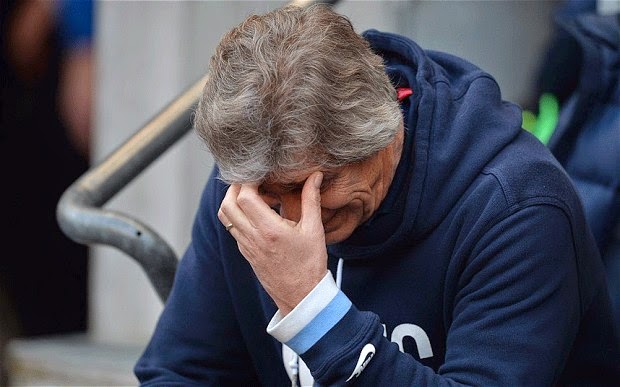
Make FFP Morally Fair

Make FFP Morally Fair

There’s no point arguing against Financial Fair Play anymore. With Manchester City accepting the punishment offered by UEFA, a court battle that could have shuck the system will never be realised. I can’t blame the club for this, they require stability for the team and the third party sponsors attached to them. A quick resolution prevents it becoming an unhealthy distraction. Even though I disagree with FFP it looks like it’s here to stay. This being the case, all I ask now is: why don’t we have a morally fair FFP in place? People have been very vocal about Manchester City “just buying the league” and having an unfair advantage but these sorts don’t mind the established big clubs having an unassailable monetary advantage already. Today I ask them why they never offered an alternative that made it the same for everyone, instead of a closed shop for the big boys at the top.

These supporters of Financial Fair Play are so hung up on the rules being broken, that there is no other outcome than a punishment for clubs like City. Presumably these sorts never exceed 70mph on the motorway, never cross the road when the Red man is showing even if it’s clear, and have never littered – because rules are rules. To these law abiding citizens, that have such a strong sense of morality, I simply ask: Why have you never suggested a version of Financial Fair Play where wealth is completely negated?

Playing Devil’s advocate, and ignoring the legal and business implications (you’ll allow me this as it seems these are ignored anyway where FFP is concerned), why don’t we create a simplified, truly fair, level playing field version of FFP? Financial Fair Play fans feel so aggrieved by Manchester City’s wealth, it stands to reason they must be equally angered by other clubs that can naturally afford high wages and dominate the transfer market, because I’d hate to think for a minute they are hypocrites.

Instead of complicated interpretations regarding FFP’s guidelines that stretch the credibility and constructs designed to enforce soft wage caps and arrest transfer spending, let’s just set a clearly defined a wage limit and net transfer spend per season. All the top leagues in Europe could be reviewed and a mean average of safe expenditure determined. It’d mean the smaller clubs may still be a little off being able to afford the wage cap, but not by much, and the top clubs would no longer be able to throw excessive cash at every player; every marquee signing would mean less to spend elsewhere.

Players would be attracted by facilities, which healthy owners already care about. The mean average spend could be worked out for each tier of league across Europe, creating a unified cash ecosystem. The limit on spend would mean the clubs with high incomes from worldwide support could of course be greedy, they’d still have a high ticket and merchandise turnover but, thanks to a morally fair set of rules, be able to spend less to accrue them. Hopefully this would have another positive knock-on effect: a more affordable product for the fans as clubs are pressured into lowering ticket prices. We’d be left with every club playing with the same set of parameters and every fan not dipping as deep into his pocket.

This idea was probably hushed away as soon as it was first formed during the genesis of Financial Fair Play. The big clubs would never agree to handing back their cash advantage, they just don’t want new clubs appearing with oil cash. And many got on board with FFP for the right reasons but then followed blindly. Like Nazi soldiers believing the evil regime’s propaganda machine, they’ve lacked the ability to step back and see the bigger picture. They’ve been so firm in their belief, they have never stopped to ask if what they are suggesting is a fair system. From a business point of view they never cared if it was fair to introduce a system that would retard the growth of new-money clubs, they just snapped their heels together and shouted “Rules!” The demand for order and adherence to Financial Fair Play meant they never stopped to ask if the idea was correct. Not the business side of it, but the moral issue of ensuring small clubs will be forever alienated. The lack of fervour there means we goose step forward, away from the football as we know it.

FFPDystopia

We’ll find ourselves living a future we should never have visited. Finances may even start to look better on spreadsheets, but a Doncaster or a Rotherham may have been denied their Champions League run, clubs will have stopped investing on infrastructure. It’ll appear healthier but in truth it’ll have been stunted. The big clubs will be unreachable, and as a Manchester City fan I expect to be sat in that elite grouping – but I am far from comfortable with such a scenario.

Perhaps football’s saving grace lies within. I am always wary when a person has a second team (“Oh, they are my Premier League team,” or “That’s my London club.”) but a second team that is an extension of your own would be fine. The B Teams playing in a League Three could generate a wealth of young talent to equalise the money at the top. But that’s a chat for another day.


Not Fair, Just A Financial Play

Not Fair, Just A Financial Play

It seems we are entering the final phases in the implementation and take up of Financial Fair Play. All the fear mongering, ignorance and general debate is slowly being replaced by the certainties that UEFA has presented as we move forward. In the past I have made no secret of my opposition to Financial Fair Play, and this hasn’t changed, if anything it’s hardened as my fears have become facts. FFP doesn’t have the best interests of the sport as a whole at heart; it is self-serving, hypocritical and greedy. Before the first set of major sanctions are placed on teams let’s analyse what it means.

Not to go over old ground or opinions but there is a loud chorus developing that Financial Fair Play is good because it stops “Cheats” or people buying the league, something I have always laughed at. Except, it’s now no laughing matter. We have Wenger coming out claiming Manchester City should be banned from Europe, and rival fans claiming a club shouldn’t be able to spend in excess to find success. All these people are speaking from their Ivory towers or behind jealous faces. It’s easy to say a club should only spend its turnover when you’ve already established a high one over a long period of time. One that was invariably acquired due to success, which – more often than not – required investment in the first place. These types don’t want the apple cart upset, they fear new teams emerging.

You’ll never hear the pro-FFP bunch mention the protection of the smaller teams, how Financial Fair Play protects clubs from financial mismanagement – the very reason the system is supposed to exist in the first place. And if such a system – with those solitary goals – did exist, I’d throw my full support behind it. But they never mention this side of FFP because the little clubs, whether there or not, pose no threat to their success. A club managed with a wealthy owner that is willing to pay out of his own pocket and write-off any debt, is good for that club’s growth, and in the long run will generate a higher turnover. Manchester City is the extreme example of this but take a League Two club, give them a generous chairman and over time they would develop.

The Football League has the Benefactor Model for this very reason. It allows clubs to clear losses if the owner absorbs them, thus progress financially and grow without restraint. It acknowledges these clubs don’t need protecting from all wealthy owners, it’s the maverick ones that play Russian Roulette with cash they don’t really have that pose a problem. There’s no reason UEFA couldn’t adopt the Benefactor Model if all it cares about is the health of football’s finances. If that was their sole intention they’d worry less about imposing sanctions on clubs like Manchester City and start to question how giants like Manchester United can be bought and run on debts.

Messi

Financial Fair Play experts will claim one reason UEFA are focusing on clubs like Manchester City is to prevent an escalation in wages. This is folly. It still is – and will always be – the established teams that set the upper limit on wages, dictated by the best players in the world and their agents. When teams like City and PSG are in periods of accelerated growth they don’t raise the ceiling on wages, they just increase the number of players earning the top dollar. In England it was Manchester United that went to £300,000 a week for Rooney; overseas I’m confident Ronaldo at Madrid and Messi at Barcelona got their mammoth wages because of their market value, not because oil tycoons were ploughing money into clubs elsewhere.

So what are we left with if FFP isn’t protecting the little clubs or preventing the market becoming damaged for the larger ones? Greed. The jealous or ignorant types will claim Manchester City is greedy, that they are the evil doers, when if they stopped to look at how the money has been spent and the goodness that has come from it, they’d realise Sheikh Mansour is an angel – Platini and UEFA are the devils. The infrastructure at City has been taken to the next level and the community is thriving, and City will become a market leader on the pitch, and off it, financially. Punishing this isn’t protecting football, it’s UEFA trying to maintain the status quo with the favoured big clubs and introducing a rich tax to line their own pockets. It’s worth noting the Premier League say Manchester City comply with their FFP rules.

It’s laughable that if FFP is about sending a clear message that money in football needs to be healthier, one of the punishments both PSG and Manchester City face is a hefty fine (reports from £29M to £50M). So they worry clubs are leaking money, but to make sure they stop they want them to leak a bit more their way first. An oil tax. And supposedly this fine will be on the accounting books, further restricting expenditure over the following reporting period. Also they face restrictions on squad size and wages for the Champions League, making it harder to compete with UEFA’s chosen children.

For a long time City fans in pubs have been saying the first time a restriction prevents a player appearing in the Champions League it’ll be the players – not the clubs – that take UEFA to court for restriction of trade. It seemed a fairly reasonable argument, that there was a case for loss of earnings. UEFA have engineered a situation where this could never be levelled at them. They aren’t removing the clubs from European competition. It would be the clubs themselves that didn’t place them in the Champions League squad. Yes, it may be due to the sanctions UEFA have placed on the club, but not a restriction.

The only murky area for UEFA – and glimmer of hope for the type of lawyers usually found with a match day pint – is the absolute definition of sporting regulations. If UEFA and FIFA suddenly changed or removed the off-side rule, teams would comply, it’d be in the sporting rules, same for two goalkeepers per team, everyone dressed in clown suits – whatever they fancy, if it became sporting code it would be followed. But the rich fuelled sport of Formula One tried to implement an expenditure limit in its sporting regulations and to this day it is unresolved with no official cap set down. Because sport is also business and in business it’s far from “Fair” to tell companies how much they are allowed spend as they try to increase their standing within the industry.

As a consumer we also do not accept services that diminish. If your broadband provider, insurance company, car manufacturer, any product you subscribe to, started to fall behind the industry standard you wouldn’t accept that the CEO wanted to place his own funds in to revive the company but was bound by red tape. And as sports fans we dream and hope our team one day can become the best in the land. If Financial Fair Play isn’t challenged at this final hurdle they’ll be no more new teams having their day in the sun. It will all become stale, stagnant; hope for some will be replaced with acquiescence. That’s not fair – it’s cruel.

How to Make The FA Cup Great Again

How to Make The FA Cup Great Again

Paul Lambert claimed this week that if asked, and they answered honestly, most managers would rather like to do away with The FA Cup. What a grim view of the oldest domestic cup competition in the world. The greatest domestic cup, in fact. I understand the sentiment he was trying to make but he is wrong.

As I have discussed in blogs here, and extensively in Financial Fair Prejudice, football today is a business. Lambert was highlighting how Premier League survival is more important than a good cup run, or even cup success, it seems. The implication that he’d trade places in The FA Cup for three points is disrespectful to the great competition. Whilst I understand the money on offer by competing in the Premier League overshadows the domestic cup competition in the modern game, I fail to believe proper fans want mid-table mediocrity for their entire existence over an FA Cup being added to an otherwise sparse history with regard to successes.

Of course the chairmen will take mid-table – hell, even a relegation battle every year – as long as the Premier League money keeps rolling in. Surely it’s better to go down, survive on the parachute payments, then return and be able to say you’d won the domestic big one. If Wigan do return to the Premier League in the next few years they’ll be no worse off than they were previous but their history is richer. The taste of one glorious day at Wembley makes an inevitable relegation easier to bear. And from disappointment tinged with success great things can grow. What Lambert suggests is we should all be happy with a bleak existence.

For those – like the Villa manager – that will never agree to this, that dream of one day flirting with a six place finish so they can qualify for the Europa League, which they can do if they win The FA Cup, I can offer one alternative. Wouldn’t it be great if The FA Cup winners gained entry to the Champions League? Suddenly the dismissive comments made about competing in The FA Cup disappear. Suddenly it’s one lotto every chairman in the land wants to buy a ticket for.

Thusly the problem emerges: UEFA would never want to allow the risk of a Wigan entering the top European competition whilst potentially battling in the Championship. I see the conundrum but it is a shame. Ignoring the fact the Champions League itself turns into a knockout tournament, so is a little lottery when all said and done, the fear a team too weak to qualify would prove unfounded. The prize of Champions League qualification would mean the top sides would try even harder to win it. To the point any team – even one from outside the established top six in the Premier League – would have to be deemed worthy as they’d need to defeat a usual Champions League opponent at some point. An opponent firing on all cylinders, focused on the ultimate prize.

If Champions League qualification was attached to The FA Cup imagine how electric the Wembley final would become once again. For children of my generation cup final day was the highlight of the year. The Superbowl of Soccer, if you will. By making victory equate to what only the top three teams in England gained after a long thirty-eight game season it’d have fans around the globe on the edge of their seats.

I mention the top three because clearly that qualification spot would be grabbed from the fourth placed team. This year’s Premier League has been the most open and engaging for a long time, imagine how much more fascinating it would be with less league qualification spots and the cup wildcard thrown in. And how’s this for a kicker – if a team outside the top three happened to win the Champions League that year it’d only be the top two and The FA Cup victors that would qualify alongside them. Those chairman in the usual top six would be the most reluctant to slim their league chances further. They’d be the minority. The majority would crave FA Cup football. At the moment everyone is lukewarm to The FA Cup and a minority placed in Premier League relegation fights seem to actively dislike it.

Let’s do what’s good for the many – not the few. The many clubs that would love a cup competition with such a rich prize, not to mention history. And the many, many fans. It’s always the fans that should matter first. Not chairmen blinded by money, or managers lacking imagination and desire.