Not Fair, Just A Financial Play

Not Fair, Just A Financial Play

It seems we are entering the final phases in the implementation and take up of Financial Fair Play. All the fear mongering, ignorance and general debate is slowly being replaced by the certainties that UEFA has presented as we move forward. In the past I have made no secret of my opposition to Financial Fair Play, and this hasn’t changed, if anything it’s hardened as my fears have become facts. FFP doesn’t have the best interests of the sport as a whole at heart; it is self-serving, hypocritical and greedy. Before the first set of major sanctions are placed on teams let’s analyse what it means.

Not to go over old ground or opinions but there is a loud chorus developing that Financial Fair Play is good because it stops “Cheats” or people buying the league, something I have always laughed at. Except, it’s now no laughing matter. We have Wenger coming out claiming Manchester City should be banned from Europe, and rival fans claiming a club shouldn’t be able to spend in excess to find success. All these people are speaking from their Ivory towers or behind jealous faces. It’s easy to say a club should only spend its turnover when you’ve already established a high one over a long period of time. One that was invariably acquired due to success, which – more often than not – required investment in the first place. These types don’t want the apple cart upset, they fear new teams emerging.

You’ll never hear the pro-FFP bunch mention the protection of the smaller teams, how Financial Fair Play protects clubs from financial mismanagement – the very reason the system is supposed to exist in the first place. And if such a system – with those solitary goals – did exist, I’d throw my full support behind it. But they never mention this side of FFP because the little clubs, whether there or not, pose no threat to their success. A club managed with a wealthy owner that is willing to pay out of his own pocket and write-off any debt, is good for that club’s growth, and in the long run will generate a higher turnover. Manchester City is the extreme example of this but take a League Two club, give them a generous chairman and over time they would develop.

The Football League has the Benefactor Model for this very reason. It allows clubs to clear losses if the owner absorbs them, thus progress financially and grow without restraint. It acknowledges these clubs don’t need protecting from all wealthy owners, it’s the maverick ones that play Russian Roulette with cash they don’t really have that pose a problem. There’s no reason UEFA couldn’t adopt the Benefactor Model if all it cares about is the health of football’s finances. If that was their sole intention they’d worry less about imposing sanctions on clubs like Manchester City and start to question how giants like Manchester United can be bought and run on debts.
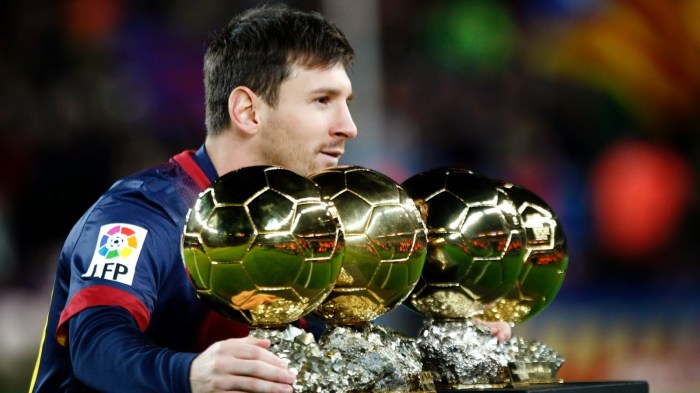
Messi

Financial Fair Play experts will claim one reason UEFA are focusing on clubs like Manchester City is to prevent an escalation in wages. This is folly. It still is – and will always be – the established teams that set the upper limit on wages, dictated by the best players in the world and their agents. When teams like City and PSG are in periods of accelerated growth they don’t raise the ceiling on wages, they just increase the number of players earning the top dollar. In England it was Manchester United that went to £300,000 a week for Rooney; overseas I’m confident Ronaldo at Madrid and Messi at Barcelona got their mammoth wages because of their market value, not because oil tycoons were ploughing money into clubs elsewhere.

So what are we left with if FFP isn’t protecting the little clubs or preventing the market becoming damaged for the larger ones? Greed. The jealous or ignorant types will claim Manchester City is greedy, that they are the evil doers, when if they stopped to look at how the money has been spent and the goodness that has come from it, they’d realise Sheikh Mansour is an angel – Platini and UEFA are the devils. The infrastructure at City has been taken to the next level and the community is thriving, and City will become a market leader on the pitch, and off it, financially. Punishing this isn’t protecting football, it’s UEFA trying to maintain the status quo with the favoured big clubs and introducing a rich tax to line their own pockets. It’s worth noting the Premier League say Manchester City comply with their FFP rules.

It’s laughable that if FFP is about sending a clear message that money in football needs to be healthier, one of the punishments both PSG and Manchester City face is a hefty fine (reports from £29M to £50M). So they worry clubs are leaking money, but to make sure they stop they want them to leak a bit more their way first. An oil tax. And supposedly this fine will be on the accounting books, further restricting expenditure over the following reporting period. Also they face restrictions on squad size and wages for the Champions League, making it harder to compete with UEFA’s chosen children.

For a long time City fans in pubs have been saying the first time a restriction prevents a player appearing in the Champions League it’ll be the players – not the clubs – that take UEFA to court for restriction of trade. It seemed a fairly reasonable argument, that there was a case for loss of earnings. UEFA have engineered a situation where this could never be levelled at them. They aren’t removing the clubs from European competition. It would be the clubs themselves that didn’t place them in the Champions League squad. Yes, it may be due to the sanctions UEFA have placed on the club, but not a restriction.

The only murky area for UEFA – and glimmer of hope for the type of lawyers usually found with a match day pint – is the absolute definition of sporting regulations. If UEFA and FIFA suddenly changed or removed the off-side rule, teams would comply, it’d be in the sporting rules, same for two goalkeepers per team, everyone dressed in clown suits – whatever they fancy, if it became sporting code it would be followed. But the rich fuelled sport of Formula One tried to implement an expenditure limit in its sporting regulations and to this day it is unresolved with no official cap set down. Because sport is also business and in business it’s far from “Fair” to tell companies how much they are allowed spend as they try to increase their standing within the industry.

As a consumer we also do not accept services that diminish. If your broadband provider, insurance company, car manufacturer, any product you subscribe to, started to fall behind the industry standard you wouldn’t accept that the CEO wanted to place his own funds in to revive the company but was bound by red tape. And as sports fans we dream and hope our team one day can become the best in the land. If Financial Fair Play isn’t challenged at this final hurdle they’ll be no more new teams having their day in the sun. It will all become stale, stagnant; hope for some will be replaced with acquiescence. That’s not fair – it’s cruel.
Qatar! What about Brazil?

Qatar! What about Brazil?

Ask football fans the biggest problem facing future FIFA World Cups and they’ll more often than not mention the heat issue in Qatar, more specifically, the calls from some quarters to make it a winter World Cup. What most of these fans, with their legitimate fears over Qatar’s ability to host and the nature of their acquisition, overlook, are the shortfalls facing next year’s tournament. It’s as if the world is turning the other cheek because of Brazil’s glamorous sporting history. But for the day-to-day folks on streets across Brazil they care less for football than they do for an improved quality of life.

The problem at the heart of the situation arose back in March 2003, when FIFA announced that South America would hold the tournament. It sounded reasonable, the continent had been travelling to World Cups across the globe since it last acted as hosts during Argentina ’78. Without a challenged bidding process from the other confederations it was left to the countries within South America to create candidates. Much muted alliances never materialised; hence, Brazil was chosen without a rival bid. Less choice is bad. That lack of competition was unhealthy. We’ll get back to that process – of bidding and attempting to sell your bid – in a minute. The cause has resulted in a Brazil unprepared and a tournament, which by all accounts, should be in jeopardy.

The cancellation of Soccerex, a football industry conference scheduled to take place in Rio de Janeiro, should have raised alarm bells. Instead it was reported with a murmur before being buried amongst far more entertaining football stories or snippets from Alex Ferguson’s autobiography (or character recollections). The organisers claimed the ongoing civil unrest was to blame. The State of Rio says it was due to Soccerex lacking private funding and they wouldn’t spend any public money to hold the event.

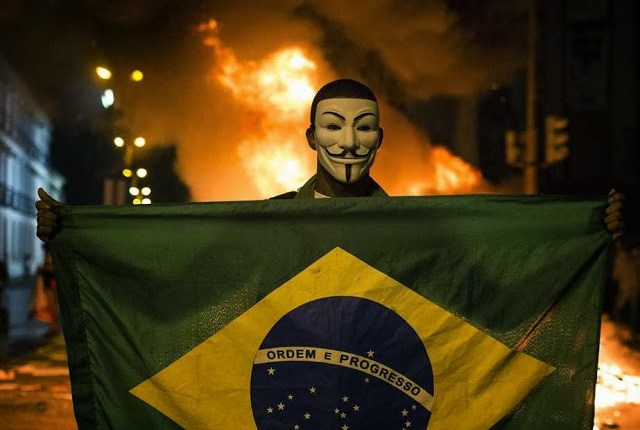
The truth may well be both, just played off against one another for political gains. There have been well documented violent protests across Brazil; Soccerex probably would have liked to have been helped out with a donation from the Brazilians. For the State of Rio to claim they wouldn’t waste public money in this manner is quite cheeky, though. As if to appease the protesters that claim public services should be funded over the World Cup, the Brazilian figure heads are ignoring – or failing to mention – that their World Cup has already cost them three and a half times that of the South African one, and more than double Germany 2006.

Where has all that money gone? Stadiums alone amount to £550M, another £2 billion on airports, £1.1 billion for works attached to the “Growth Acceleration Programme”; this doesn’t include spending on things like the buses, they come in at £375M for a better fleet. Facts and figures can be generated all day, to put it in the best perspective a recent protester was quoted saying: “We love the World Cup, we love sports – what we don’t accept is a government which wants to look good by investing millions in the World Cup but forgets about health and public education.” Sounds reasonable to me.

The truth in that statement highlights the hypocrisy and self-serving attitude that football’s governing body lives by. They care little for the effects on the supporters of the beautiful game as long as their bank accounts increase exponentially. Brazil didn’t even have to bid against other nations and prove they could host an effective games, let alone afford one. And FIFA doesn’t care if a country runs itself into the ground as long as they make money in the process. A football club may be banned from competition if it exceeds Financial Fair Play guidelines but it’s perfectly acceptable for a nation’s health service and education system to crumble if FIFA make a tidy sum of cash.

These are the people of the world they claim to care so much about. The people they wish to bring football to. The people that are all equal and should come together under the banner of football. But, for the people that come together, some are more equal than others. They fail to take strong action against clubs when their fans use racist chants. They suggest openly through President Sepp Blatter that homosexuals should refrain from activity during the Qatar World Cup. So certain groups are willingly ostracised if it serves their greater good (which in FIFA’s case is always money).

This brings us neatly back to the topic of bidding for a World Cup, and selling your bid as an attractive option. Well Qatar went about it in a slightly different fashion. To cut a long-ish story short, they bought the World Cup. Why waste time having the best bid when you can just purchase the thing instead. Allegations have since been retracted but it’s plain to see how the process really works. If it was just about new areas hosting and the strongest bid winning then Australia would be 2022 hosts. As it stands they are poised to strike FIFA with a legal serving. If the 2022 does indeed become a winter games they will seek compensation for expenditure incurred for their failed bid. They entered a process for a fixed tournament with stringent parameters, to then shift it to a different time of year voids that process. Sounds reasonable.

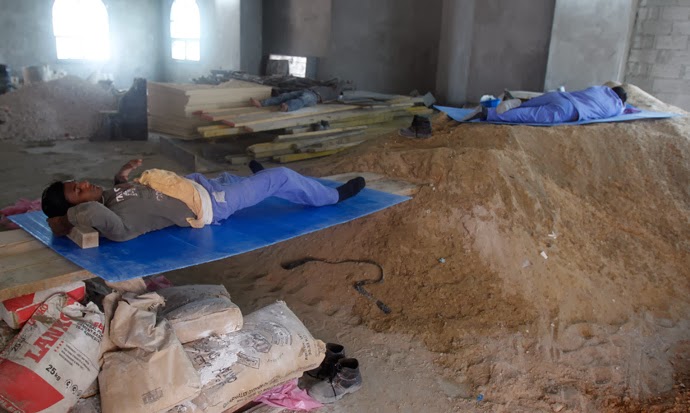
The time of year appears to be the big debate with Qatar. The English say it will affect three years of Premier League fixtures if it’s moved to winter. Michel Platini, very maturely, pointed out football’s fixture list had suited the English for one hundred and fifty years so we could change just once (albeit three years running). These squabbles take away from the most important point: we should spare a thought for the migrant workers building the 2022 World Cup. Often denied food and water it’s estimated that up to four thousand will perish. It’s not slavery if it serves FIFA; it must be acceptable. Because the World Cup is all about bringing people together.

Qatar

And the next World Cup, that’s getting ever closer, is bringing the people together. The real people on the streets. Mass protests hampered the Confederations Cup, this served as a warning that was ignored. Since then the outrage has become more violent with police vehicles torched. Yet, people power alone might not be what brings Brazil 2014 to its knees, ironically it could be the same greed and bureaucracy that drives its Big Daddy, FIFA, on.

Most major tournaments face that scare mongering close to the curtain call. Whether it be an Olympic games in Greece or a World Cup in Russia (they’ve come out of this article unscathed and unmentioned), they’ll always be panic that the place won’t be ready. But they always are and always will be. The chances are, civil unrest included, Brazilians will take to the World Cup, embrace it and put on a great show. There’s also a high chance they won’t be ready in time. No really, this isn’t me scare mongering now. For several months I have been back and forth to Brazil. What I have found is a county unable to function in a modern and professional manner. It ties itself up in red tape at every corner and there’s always a tax be applied at an extortionate rate. They lack the impetus to move forward because too many are looking for short term pots of gold. All those billions spent – from public money – will have lined the pockets of the rich while structures remain half built with no sign of progress.

For the fans that do come to Brazil they’ll be met with aged modes of transport, crowded roads alongside semi-built ones, legitimate ATM machines that still magically clone cards, and locals that will enjoy the games then return to under-funded lives and a country with less cash than ever to spare for its working class. Perhaps a last minute switch to the USA won’t be such a bad thing, as long as we keep Diana Ross away from the opening ceremony.

Qatar and Brazil, two very different World Cups. One bought, then a further £138 billion ploughed in to build it; the other taken as the only choice and built with money that should be supporting future generations. Both will continue to face criticisms along the way, before collectively we all will watch as fans, taking the immoral choice to ignore human rights issues for short-lived sporting entertainment, embracing ignorance, thusly legitimising wrong doings. Two World Cup bidding processes without genuine competition, and what are we left with . . . .perhaps no competition at all.