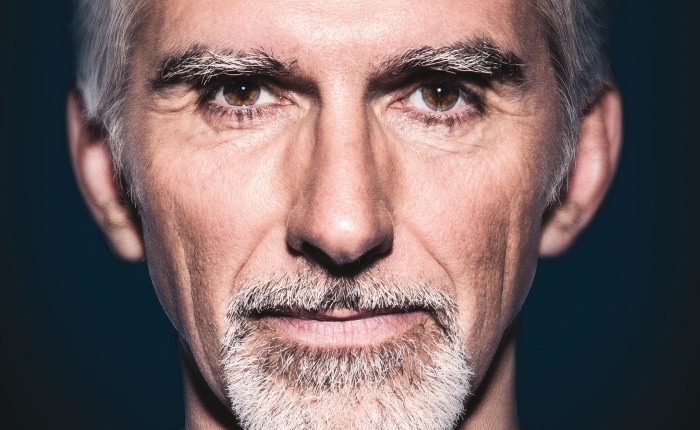
Damon Hill: Watching the Wheels

Damon Hill: Watching the Wheels

Damon Hill was always a different type of motorsport star. In the flamboyant world of Formula One he came across as reserved. In a sport dominated by money, he struggled to the top. A successful family name, that should have eased the transition, proved to be a burden. Unlike stars today, he never cashed in with a cheap autobiography at the time. Twenty years later, Hill explains why in his book Watching the Wheels.

Damon Hill was unique and also a first. The history books will forever state he and his legendary father Graham were the first father and son to win F1 Driver World Championships. His father’s career and untimely death shaped Hill’s formative years and adult life in ways that took decades for him to understand.

Before Hill begins his story, the foreword explains his absence during the decades between retiring and re-emerging into public life as a broadcaster. In a brave and important move, he discusses his battle with depression. Raising awareness to the issue and explaining its nature will give hope to many sufferers.

After facing up to his demons, and sharing them with the reader, it’s understandable that Hill doesn’t shy away from how they were created. Before diving into the autobiography, it’d be fine to expect little of Graham Hill’s story. His shadow loomed over Damon’s career and it was something he could never find the speed to race away from.

His account of his younger years explains what it was like to live with a larger than life character. How Graham, like Damon would be himself, was a late addition to the sport. The effects of his fame did affect his mother at times and there’s a sense Damon adored, admired, and worshipped his father while feeling he was inaccessible.

The showcase of F1, in days where it was a different type of showbiz and the community was close rather than filled with suspicious rivals, didn’t appeal to the young Hill. He was a shy, under confident child. The attention that came his way he tried to avoid, feeling it wasn’t deserved, and he didn’t want to be defined by the success of others.

Despite the negatives that came with fame, like being singled out in school, he had a happy childhood. Sadly, when he lists the reasons why, labouring the point, it reads like a top ten of superficial positives. It could be a sign that even before his father passed, Damon was destined to have emotional difficulties.

The painful realisation Damon was getting closer to his father before his passing is even more upsetting. He uses the book as a means to exonerate Graham’s role in the plane crashed that took his life and those of his team on board. It rightly lays falsehoods to rest, explains how rumours had played like Chinese whispers over the years. And refers to a crash investigator that offers probable causes for the incident. It enables the legend of Graham Hill to continue untarnished.

After his father’s death, he buried the pain, choosing not to mourn, believing his father would have done the same. He had to assume the role of man of the house before he was a legal adult. The lavish lifestyle started to fade away. Lawsuits against the family and the loss of income meant the Hills went into survival mode.

Fast forward to adulthood and Damon found himself working in the building trade. The graft enabled him to focus, stopping his mind from dwelling on his father. It’s quite telling that during these stories he refers to “that Scottish man” and “the Irish man” he worked with for four weeks. Even after a month the class divide meant they were labels, not named people. Or at least, people not worthy of remembering now.

His passion was racing bikes, and he became a delivery driver around London, claiming the day-to-day hustle in the traffic honed his driving skills. During this period he met his future wife Georgie. Theirs was a stop-start relationship but it’s clear they had a deep connection early on. Sadly, the reader only gets an insight during the early days. Once F1 begins, the chapters are filled with a notable lack of family life.

His journey to Formula One wasn’t through desire. Damon preferred motorcycle racing but realised the chance of career-ending injury was high, the rewards low. So he took the decision to race single-seater cars.

It wasn’t a smooth transition, he lacked funding but it’s hard to fully empathise with his hardships when he explains how a Beatle rang him to offer the £75,000 required to race the following season. Through a good sponsorship deal he finally secured a safer drive and managed to get on the radar.

By his own admission, he was never the standout performer, and people like Johnny Herbert and Martin Brundle were the established names of his generation. But he had an inner grit that people overlooked all his career.

He wasn’t trying to capitalise on his father’s fame, quite the opposite. He wanted to right a wrong, complete the family mission, and discover his true self.

Of course, he achieved that aim. He added a British Grand Prix victory to the family heirloom, a thing that had eluded his father. And repeated the feat of being crowned champion of the world.

The standoffishness and inaccessibility that made him less lovable than people like Nigel Mansell, permeates the pages. But this shows how he has always been genuine, wearing his heart on his sleeve.

A quiet heart doesn’t mean a smaller one.

The brooding intensity was mistaken for not being passionate enough. He explains his treatment at Williams, how he was never a preferred choice, even after keeping the team close-knit following Ayrton Senna’s untimely passing.

The comparisons to rate Hill have always been lopsided. No one would ever claim he was a Senna, he even called upon the spirit of the great Brazilian to help him in Japan, but he wasn’t below the likes of fan-favourite Mansell. Hill never had a number two like Riccardo Patrese.

He partnered the best of all time, a David Coulthard in his peak, Mansell himself, world champion Jacques Villeneuve, and the brother of his chief nemesis Ralf Schumacher.

Those looking for a better insight to the battle with Michael may be disappointed. We get a glimpse into his mindset but a golden opportunity is missed when he mentions driving to see the German laid up in hospital with broken legs. This was after the 1999 British Grand Prix.

Instead we break to hear about more contract woes, it would have been nice to see that interaction. What was their relationship like as Michael was bed ridden? Especially poignant now the seven-time world champion may never communicate with the wider world again.

Early on in the book Hill talks about how motorsport is dangerous and we should never move away from the part of nature that is drawn to it like moths to a flame. Ultimately, the sense of that danger is what made him want to leave.

People will draw their own conclusions as to how successful Hill’s endeavours were. He was a victim of the British media’s classic “build ‘em up, to knock ‘em down” formula. As a wronged loser, they adored him. As a champion, they tore strips from him.

Perhaps this has had Hill on the defensive ever since. Parts of the book read like a list of excuses rather than reasons. He also has a sense of entitlement that can’t be overlooked. There are undertones throughout that Michael Schumacher was the chosen driver, protected by his team and given preferential treatment.

Later he demands special treatment believing he has earned it and paid his dues. Many drivers before and since have sacrificed just as much and never had the gifts that were delivered to Damon.

Hill should be applauded for speaking out about mental health issues and be thanked for taking a trip to the nostalgic years of his racing days and the enduring memory of his father’s. It’s unlikely this self-written book will win over many new fans but its greatest triumph is detailing the recovery of a man lost in the wilderness.
F1’s Mexican Standoff

F1’s Mexican Standoff

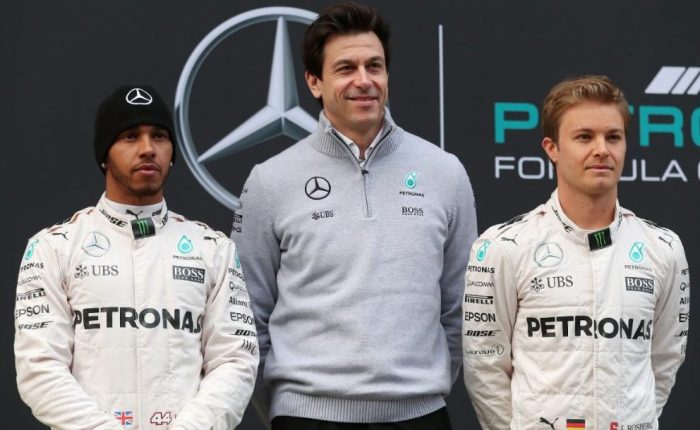
With three races to go on the Formula One calendar, the Drivers’ Championship hangs in the balance. Lewis Hamilton no longer controls his own destiny; Nico Rosberg doesn’t need to win again to clinch his first world title. In the background Mercedes holds its breath, acutely aware the tense relationship between the pair could fracture the team. Each of the three parties has a loaded gun pointed toward the one they deem weakest. Can there be a happy ending?

Toto Wolff has his pistol pointing at the talented British world champion. In any team sport an individual can never become more important than the group they represent. Wolff has been gifted reasons to come down on Lewis should he feel the need.

The Snapchat episode, and then Hamilton’s decision to leave the following press conference without taking a single question, add to moments that could be interpreted as unprofessional. The most telling is Lewis’s comments that a “higher power” was responsible for his continued reliability issues.

In hindsight, he probably regrets airing this concern in public. All it does is pave the way for more (ridiculous) conspiracy theories and is the slap in the face to those that work hard each weekend to give him the best chance of victory.

It does look bizarre only one driver using the Mercedes engine is victim of all the failures, especially when they are unique and do not follow a pattern. Nevertheless, it is still more likely to be coincidence than the team sabotaging results to ensure they have a German champion in a German branded car.

As hard as it will be for Lewis to hear, Toto will – in a roundabout way – remind him the Mercedes is the best car on the grid, that anyone would jump at a chance to be there because it’s the best chance to win a title. Wolff would be sad to see such a talented driver leave but if he did, there’s no reason to believe Mercedes would struggle win the Constructors’ Championship.

But the Austrian points the gun reluctantly. The best teams want the best drivers and Lewis still tops that list for most. A shot fired would be sent with a heavy heart.

Pointed at Wolff’s head is Nico’s pistol. This year he has defied perception. Ever since Lewis joined Mercedes it’s looked like the German has been in his pocket. It’s been said many times that Nico couldn’t compete wheel-to-wheel but the gap between them was more than this. Lewis had better pure speed, he gave the impression he had the ability to find a few more tenths when required while Nico was already at his performance ceiling.

From a psychological point-of-view, this eroded Rosberg’s ability. It was a vicious circle that the German appeared destined to repeat forever.

Then 2016 happened.

Bad luck finding Lewis may have provided impetus to Nico Rosberg, allowing him to amass an early championship lead, but it also allowed him to exorcise some demons. Even when Lewis started his fight back, this new Rosberg didn’t fold. With every passing race, he’s gone from a man in Lewis’s shadow to a man looking like a worthy world champion.

If Lewis does create disharmony within the team, Nico can politely point out he had to suck it up when the Brit was taking titles and that he’d expect nothing less than the same support. The team couldn’t offload their new German world champion who has impeccable conduct, in favour of a guy with a chequered history when it comes to behaviour.

Which leaves Lewis Hamilton: the man with two guns.

The first of those is firmly aimed at his teammate. He can’t fire him from the team but he can break his spirit to such an extent that Mercedes no longer rate him worthy of a drive. When Rosberg outperformed Michael Schumacher, then team boss Ross Brawn commented that Nico could be the fastest man on the grid, implying Schumacher’s performance was still of a high standard.

There is now weight to that remark. Given the best car, Rosberg has held his own with Hamilton. Given some confidence, he stands on the cusp of a world title. It’s the type of belief he displayed after getting results against the old master and legend, Michael Schumacher.

But Hamilton has had the privilege of a better car and scoring the first world title on its behalf. This has given him the upper hand. Their history goes back to childhood and one wonders if there’s some hold Lewis has over Rosberg that the German can’t shake. Every time Nico matches Lewis, the Brit finds another level. A win in Austin and now a pole in Mexico, the doubts must be creeping into Rosberg’s mind.

To be within touching distance of the title and have it snatched would cement the mental edge Hamilton has over Rosberg.

But it’s the gun Lewis holds in his other hand that should be the real concern. It isn’t pointed at the towering Toto Wolff – it’s pressed beneath his own chin.

Despite the impression he can mentally break Rosberg, the person he causes most psychological damage to is himself. He’s a guy that wears his heart on his sleeve but far too often likes to write his own narrative. The early season party lifestyle was moulded into some character transition. That the flying Lewis needed to let his hair down to focus best on the track.

But the truth is, when the going is good it doesn’t matter what Hamilton is doing on or away from the circuit. The problems begin when he starts to write dark chapters instead of taking a step back from the circus.

He has showed cracks in the past, most notably when Button got the better of him as teammate. We saw then, as we have again this season, the exuberant Lewis become a moody, withdrawn, petulant impression of a teenager.

But he’s thirty-one years of age and should be setting an example as a world champion when off the track. Bad winners are worse than bad losers, Lewis is displaying traits of both.

Should Nico Rosberg win the title, Lewis has claimed he’ll, “take it like a man,” which begs the question: why hasn’t he managed to so far? If he did jump from the team, there would be nowhere to go following Mercedes of any worth. He’d become the next Fernando Alonso. A great driver, destined to struggle in second-rate cars.

None of the gunslingers can be confident of what the future holds but all three can be certain of one thing: they’ll be more losers than winners.

Formula One for All

Formula One for All

It’s a long held dream that sport can unite everyone on the planet. The FIFA World Cup breaks down barriers faster than men sitting at a negotiating table. The Olympics brings all the nations together with flag parades. Casual observers then become hooked on sports they usually have zero interest in. Unity makes these lesser reported events suddenly important.

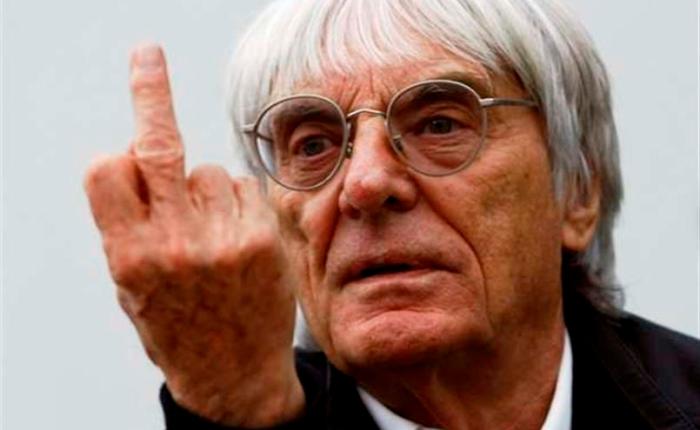
And we have F1. A powerful advert for a connected world. The pinnacle of motorsport that travels the globe. A sport for everyone . . . everyone that fits into Bernie Ecclestone’s world view, that is.

The problem with universal sports is they will eventually cross party lines and some will attempt to use them as a tool for their own gain. It is at times like this sport should first be protected, then take a subtle step back. It is a permanent position that can’t be altered when it suits decision makers within that sport. When they voluntarily alter these rules they become as bad as the exterior forces trying to gain leverage by foul means.

In 2012 F1 came under severe scrutiny over the Bahrain Grand Prix. The previous year had seen it cancelled twice due to civil unrest and when it was announced the following season human rights activists called for it to be removed once again. It wasn’t. Bernie Ecclestone said at the time: “I don’t think sport should be involved in politics. When any sport goes into a country, they respect the laws of the country whatever they are.”

On the face of it this is a valid stance to take. Sport should only be used for good, not to thrust ideals on emerging nations. However, human rights should be free from political boundaries and ignoring them to facilitate a multi-million-dollar sport does feel inappropriate. F1 should take note how FIFA have struggled on this front (Qatar! What about Brazil?)

Bernie’s problem with Bahrain was quickly overlooked. This would have been fine if the man in charge of Formula One Management stuck to his own mandate. But Bernie’s biggest problem is his mouth and the ignorant brain it is connected to.

For a man that believes politics have no place in sport, it seems strange he thinks it is fine to make this comment about Vladimir Putin: “He’s the guy who should run Europe.” He added that he didn’t like democracy because not much got done.

The problem he has here isn’t with democracy, but the fact the teams are trying their best to prevent him continuing his reign as sport’s dictator. There’s no suggestion they want to oust him but they are standing firmer on new agreements. Jenson Button recently put the idea forward that Ross Brawn would be a great rule maker for the sport.

It’s a sentiment echoed by Red Bull boss Christian Horner and undoubtedly countless others would join the cause if Brawn showed an interest. Of course, a rule maker superseding the FIA’s view wouldn’t stop Bernie’s commercial arm entirely but it would make him slightly (more) impotent.

So the hypocrisy of Ecclestone’s claims that sport should be free from politics is multifaceted. On one hand we are told politics have no place while he parades with foreign leaders, claiming they should be ruling continents and the current political system in place in those opposing areas is fundamentally flawed.

Within the sport there is no such thing as negotiation or compromise. It is about how much power he can exert on the teams making him richer by the second. Sport is used as a symbol to join people together, to transcend class and gender. Yet he sees the rich and the poor on his own grid.

He makes outlandish comments that women are unable to compete with men. He says men will not take them seriously. This is only true if the men in question are chauvinistic or only interested in self-gain, things Ecclestone can relate to. He claims they are not physically able to drive a Formula One car.

In doing so he completely ignores the achievements of Susie Wolff, how she proved modern F1 cars are fine in the hands of a female. He is ignorant of women in American motorsport. Pippa Mann has completed four Indy 500s. Most famous of all is Danica Patrick. She has 115 Indy Car races to her name and is currently in NASCAR.

To say all women are incapable based on perceived body strength and stamina is ludicrous. There are women out there that easily exceed their male counterparts. It’s a sexist view that should have been buried decades ago.

It continues to be given life when ignorant little men with lots of money hold positions of power for too long.
Formula One is for everyone, like all good sport should be.

Bernie Ecclestone continues to prove he is out of touch with the world, the time we live in, and the sport he represents.