The Tyring Problem of F1

The Tyring Problem of F1

There is no doubt that Formula One is currently going through a difficult period in its long history. Smaller teams are struggling financially despite more money than ever being in the sport. Worldwide television audiences are in decline. And worst of all, the competition on track is far too predictable. In a desperate search for solutions even qualifying has seen a shake-up before reverting to its 2015 format. But there is an easier way to fix the problem on the track – and it’s a method we’ve seen before.

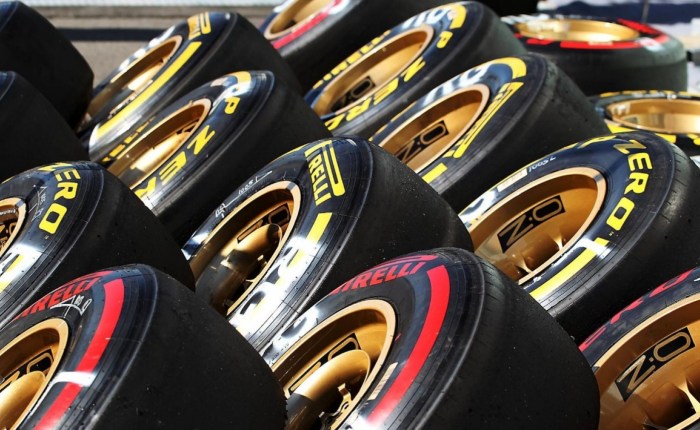
The reintroduction of multiple tyre manufacturers would be a game changer and an injection of sporting challenge that F1 needs. The negatives against are grossly outweighed now by the potential positives. The current drive to alter, or even deliberately randomise the grid, comes from a realisation that there is no way to reduce Mercedes’ vast advantage in a short space of time.

The recent regulation changes follow a long line of modifications that all had the intention to remove power from a dominant team’s design, only to fail in the long term as they make the corridor for experimentation smaller. Once a team like Mercedes, or Red Bull before them, crack the code, the other teams can only play catch-up. The problem is they are always two moves behind.

This is coupled with another downside to modern day F1 racing. Drivers are no longer flat out, lap-after-lap, trying to squeeze every last bit of life from the car. Instead, they have become micro-managers that worry about everything from tyre life, to gearbox wear and engine use.

A tyre war changes this.

No longer would drivers be nursing tyres through to pit stop windows. The suppliers would design tyres that encourage them to be driven hard while maintaining performance. Indeed, a tyre that fell off the cliff too soon, or was fractions of a second slower when being pushed hard compared to a rival brand, would be embarrassing for the company in question.

Those design corridors that have been getting smaller, suddenly open up to new interpretation. Certain tracks would suit one tyre manufacturer over another. Performance in one area heightened, thus, designers make sacrifices in certain downforce set-ups if over the season they see large gains elsewhere.

Suddenly the small strides Ferrari have made over the summer become leaps at one circuit, before the Williams has the fastest car for one weekend at a unique track, and so on. The desired grid shake-up would occur organically.

During a race, this unpredictability aside, we’d also see entirely different pit stop strategies. Rather than knowing all the cars that start on the same compound will pit roughly the same time, allowing for the undercut, we’d have cars on track racing with tyres in different stages of life and performance.

The main concern for a tyre war is cost. One supplier is seen as a way to ensure costs remain low. This is a false economy. F1 has finally embraced the idea of cost saving. It’s not like ten years ago (the last time there was multiple manufacturers) when the talk of budgeting was mere lip service.

The current in-season restriction on the number of test days prevents too many ancillary tyre costs. Also, at the moment teams are having to make their overall package work around Pirelli’s rubber. For some this will cost more than having the freedom to understand and maximise a tyre design to be pushed hard, in the knowledge the car can only have maximum effectivity on certain tracks.

It would be a good chance to reduce the penalties for gearbox and engine changes. Clearly this cost saving measure has merit but it doesn’t really work in its current form. Teams take the hit and still find themselves investing more than was expected. If a tyre war returns, all components would be pushed harder. The production should then be allowed to shift from finite life to maximum performance.

Remaining with the sole provider has been a commercial choice. It gives Bernie complete control over a company he can lean on and place under pressure. When Pirelli headed into a Monza GP with a Spa problem on their shoulder, the spectre of the 2005 US Grand Prix hung over the sport. They didn’t consider halting the race. Ecclestone won’t want people back around the negotiating table that could derail his spectacle – even if it means risking safety.

That’s the real money issue here. The danger to commercial interests. Despite the long term health of F1 looking bleak, decisions are continually made for the here-and-now. The rich teams continue to get richer, the small ones continue to have less. It seems only probable the rule makers would only allow a second tyre supplier if it gave away cheap, less effective rubber. This way they could claim to be offering a budgeted choice while ensuring favoured teams – like Ferrari – remain at the top of the pile.

Rather than admit defeat with the current car specifications in a few years’ time, the choice could be made now to terminate the Pirelli contract. This way the current design parameters can remain the same whilst their application gets a reboot.

In a technically complicated sport, sometimes the simplest choice is the most effective. Right now F1 is blessed with a promising generation of drivers and team’s dedicated to competing. It is being held back by monotony.

Breaking the new status quo doesn’t require cars with radical new shapes or ways to manipulate the starting grid.

Just change the boots and let the teams go racing. Drivers should be racers, not component fatigue life managers. Make the pinnacle of motorsport about flat-out driving once again. If they do, it will become less predictable.

It will become the product we pray for every race weekend.
Formula None

Formula None

Formula One is a sport that thrives in controversy. Thankfully, the element that could have undermined an entire Drivers’ Championship – Double Points – played no part in the end. That was a small rest bite during a time when F1 is under the microscope for different reasons.

With two teams in administration, and others close to the wall, its finances and wealth distribution require a review. Bernie and the large teams need to realise the product as a whole is only worth something if there is diversity across the grid. The current model almost ensures the big teams will remain near the top of the field but if this continues there’ll be no one else left to compete against. Three car teams would eventually become a three team championship.

Love or hate Bernie Ecclestone, the improvements made to the sport under his leadership can be clearly seen. It still is the pinnacle of motorsport and rather than keeping up with the times, it has defined them. New circuits, however bland some may be, come with state of the art facilities. The product generates more money than ever. Luxury companies pay a premium to be associated with each event. All this should bode well for the sport. But it somehow hasn’t helped abate the current situation.

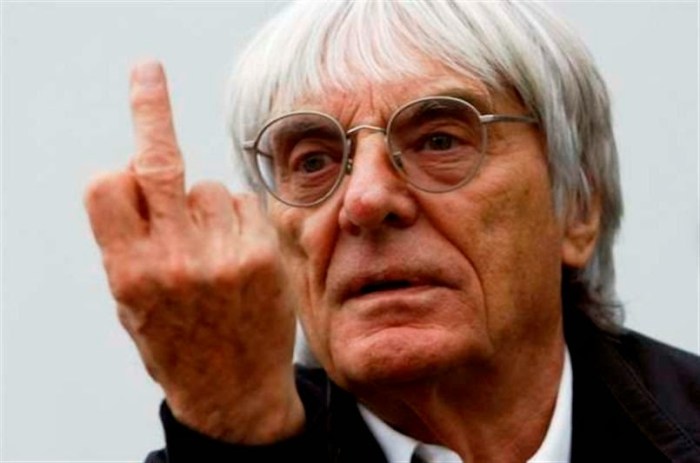
It’s easy to see Bernie as a cantankerous old man. He’s holding all the cards, the ultimate power broker. He dismisses the pleas from the smaller teams out of hand. His remarks appear ill-informed and uneducated. With Caterham and Marussia heading to collapse he made numerous remarks, none of support, just disdain. Bernie doesn’t want to see begging jars in the paddock and claims the teams are mismanaged and haven’t ran their businesses correctly.

Berne F1

By doing this Bernie has quickly washed his hands of a problem he helped facilitate. These teams didn’t throw caution to the wind and spend big bucks to buy a title. They were scraping together the budget each season just to survive. When the now defunct HRT, Caterham and Marussia (badged as Virgin) came into the sport as the three fresh teams, they did so under the impression F1 would implement cost-cutting measures. Of course teams like Ferrari, with their seemingly bottomless pot of cash, felt uneasy levelling the playing field like this. A compromise of sorts was reached: the teams would slowly reduce running costs without a hard cap being installed. To this day it has never happened.

So the new teams haven’t been mismanaged as such, they’ve just been the victim of being told one thing then living another. To make matters worse the gulf in affluence is exacerbated by the distribution of wealth. Ferrari receives an extra cut of the cash, before any prize money is distributed, for just being in the sport. This is similar to the way Real Madrid and Barcelona negotiate their own TV deals in Spain. A fairer system is the English Premier League that splits its deal twenty ways. Obviously prize money will, and should, go to the most successful teams. But all teams need the same starting point. It’s ludicrous to give handouts to those that need them less.

It’s also clear that the teams can’t be trusted to introduce fair cost-cutting measures. The time has come for a fixed budget cap which excludes driver wages. When I have discussed Financial Fair Play in football, my tone has always been against the system. In that sport it handcuffs safe wealthy owners, maintaining a status quo for the elite teams across Europe. In any business a company should be able to make a loss in order to catch its competitors. However, the current system in F1 has created and facilitates a continuing status quo of its own. Smaller teams are losing money, but not to catch-up, just to stay in business.

USA F1 Empty Grid

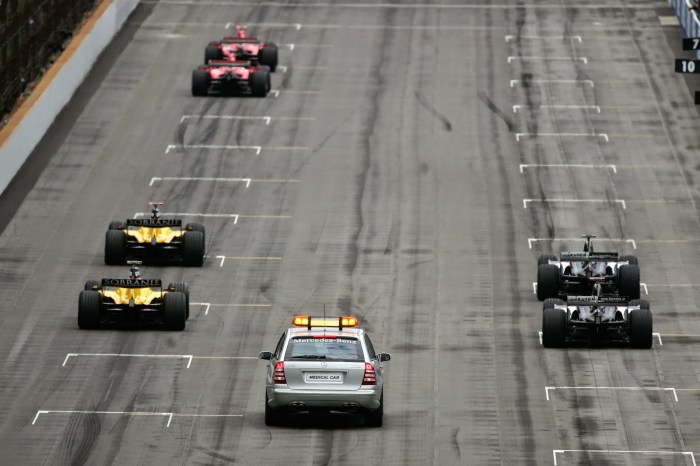
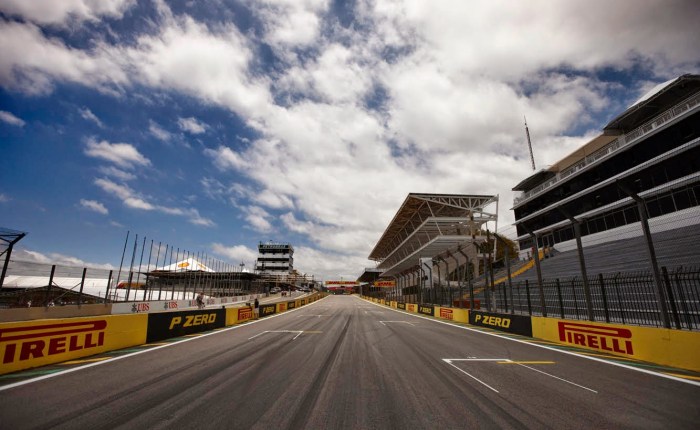
The largest spenders, like Red Bull, McLaren and Ferrari, may resist a cap because it removes their advantage. But long term they may be racing amongst themselves, at which point, they’d also be at the back of the grid . . . and the middle and the front. Fans need variety. Imagine a future where every F1 race resembled the grid from the infamous 2005 United States Grand Prix. That’s where we’re heading. And Bernie doesn’t mind because the cash cow still has plenty of milk. Some circuits are paying around $70M just to host an event, and all the race revenues combined only equate to 30% of F1’s income.

Another 30% is from the television deals. This would be the first victim of a decline in the sport. If the ratings fell so would the sale price. It’s this fear that gives us the ever changing rules to make the sport more competitive. Tighter regulations to create a narrower band of creative manoeuvre. The best designer in the modern era, Adrian Newey, decided he’d had enough of these restrictions so took on a different role within the Red Bull group. It’s a shame that the pinnacle of motorsport is hindered by its own self-inflicted parameters. Rules to increase excitement that will never work as long as a gulf in spending exists.

All the teams need to realise they need one another. An independent body needs to be set up to implement the cost-cutting measures and to clarify what goes on in the murky waters of F1 management. At the moment Bernie and the big teams feels more corrupt than a FIFA World Cup bidding process.

It’s ironic F1 spends so much time and energy tweaking itself to make racing closer without making the money in the sport fairer. A much better model would be one that has a hard budget cap, and at the same time has wider design windows. Cars would be cheaper to run, so the small teams wouldn’t be facing extinction, but a relaxation of the rules would add greater variety across the design process. The more creative or forward thinking would have the ability to flourish. They could even return to multiple tyre manufacturers with a set price for the season support. The entire onus would then be on those tyre providers to produce the best rubber at an affordable price. The difference in compounds would create exciting races as different teams on different rubber face unique race strategies. There’d be less tyre management and more non-stop pushing.

Whether you agree with the idea of a fixed budget or not, Bernie’s ignorance is something that is fact not opinion. He recently remarked he doesn’t care for social media or the younger generation of F1 fans. That his product is aimed at wealthy men in old age. That no young man on Twitter is going to buy a Rolex, a product his sport is paid to advertise. This is sheer arrogance and short-sightedness. Sponsorship accounts for 15% of F1 income, another 15% from merchandise and corporate hospitality, but that 30% from TV deals should have greater importance to Bernie.

To ignore the poorer young fans is to care little for the viewing figures that account for a third of his income. The same people whom the regulations are forever tweaked to create closer racing. The people that could be watching the sport for decades to come. But Bernie isn’t a man of the people. He isn’t even a man that cares for teams within his own sport. Unless you’re a big red Italian car company, or a 70 year old man wearing a Rolex sat in a corporate box, he won’t give you a second thought.

Sporting Confidence

Sporting Confidence
No matter how remarkable professional sportsmen, or women, appear to be they are only human. Their bodies my be finely tuned machines but they are run by one final key component — the brain. The biggest fuel this organ provides is confidence. With confidence people can be propelled to the next level. It separates the average from the good, the good from the greats, the greats from the legends. Obviously without genes on your side confidence is redundant. I can feel confident about my ability as a footballer all day long but I’m never keeping Lionel Messi on the bench.
 
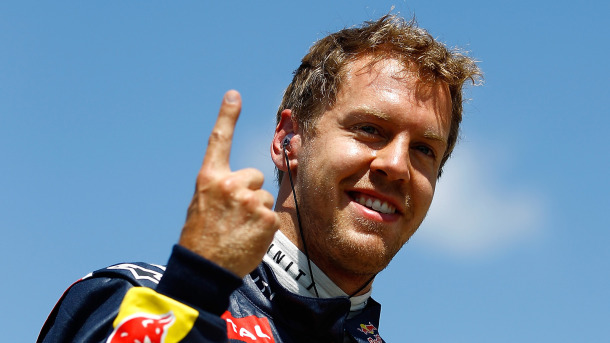
There are good examples of when confidence has had dramatic effects within certain sporting fields. Take Formula One for example. Currently Sebastian Vettel is the man to beat. The youngest double world champion in the history of the sport and shows no signs of surrendering his place at the top any time soon. It could have been so different. In the 2010 season he claimed his first world title but it was no walk-in-the-park. The British Grand Prix that year witnessed an inter-team political feud when Vettel was given teammate Mark Webber’s front wing. Webber went on to win the race and famously said over the team radio, “Not bad for a number two driver.” At the time the outside world saw them as equals trying to assert their personal control as number one. Vettel took the lead of the world championship for the first time after winning the last race of the season.
 
The following season a different Vettel took to the grid. One that was confident he was the best driver in the world. The first nine races of the 2011 season he finished no lower than second. Mark Webber was a changed man. His perception he was Vettel’s equal, if not superior, had been destroyed. Confidence breeds resilience but a lack of it spreads like a cancer damaging belief and ability. 
 
Other men on the F1 grid have buckets of confidence they use in a manner of ways. Alonso rightly stands tall as a man that has won world titles and even challenged for them when his car has been severely lacking. He’s mature and assured in his approach. Whereas Lewis Hamilton has shown he can slip off the rails when his confidence boarders on arrogance. The season Jenson Button outscored him when they shared the same McLaren his inner belief that he was “the man” led to his confidence acting as a poison.
 
Before we leave formula one we should mention Michael Schumacher. A man that during his first run in the sport was seen as arrogant. That he may well have been at times, he’d probably admit it himself nowadays. But he was a class above his opponents when he was in his prime. For him, confidence in his ability was replaced with a simple fact — he was better. In his return to F1 we saw a different Michael. A humbled character that appeared to accept the magic was gone but still enjoyed the theatre of race day. We’ll never know, but I suspect had his Mercedes been the best car on the grid the old Schumacher would have made the odd appearance. What we can take from Schumacher is a lesson to give our children when we say, “It’s not the winning, it’s the taking part.” His legacy is assured, his character reformed.
 
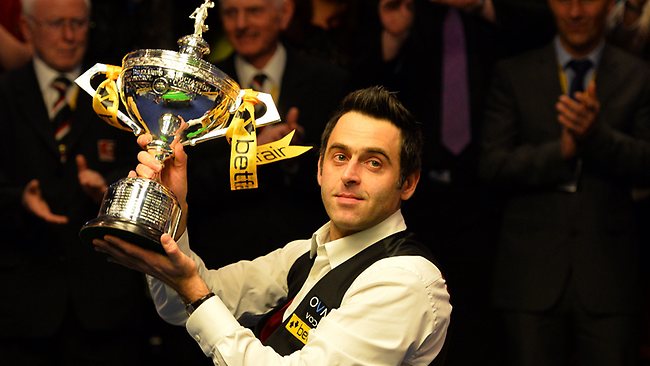
In snooker this year we saw Ronnie O’Sullivan take time away from the regular season. As current World Champion he had the right to defend the title at this year’s event. So he did. And he retained it before disappearing from the scene again. I don’t think anybody would be surprised if Ronnie appeared once a year, won the world title and wasn’t seen again for twelve months, followed by another win. He has the confidence that comes from being the most naturally gifted player that sport has ever seen. If he wants to win, he will.
 
In football a winning mentality is only attainable if team spirit exists. The communal belief of being the best creates a shared confidence. Manchester United’s ability to retain titles with teams that seem to be more than the sum of their parts is down to belief. Winning games in “Fergie Time” is the confidence that they should win. But we also saw how a crack in that confidence can be devastating. With six games to go United led Manchester City by eight points in the 2011/12 season but still lost the title. Doubts must have crept in when they lost a game then followed it up with draws in the final run-in. The 6-1 defeat at the hands of City in the home fixture earlier on in the season may have played on their minds. As for the City players that 6-1 victory must have given them the confidence they should be the champions. That unwavering belief allowed them to clinch the title in injury time. Sergio Aguero striking the winner like he couldn’t miss. The sort of confidence that requires no thought and is most effective.