What £100m means in Manchester

What £100m means in Manchester

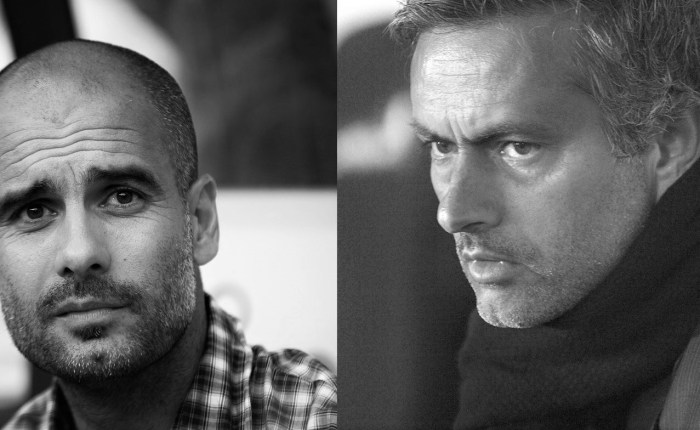
The two clubs baring Manchester in their name have both spent big this summer. But that is where the similarity ends. In the centre of Manchester, Pep Guardiola has spread his cash as he rebuilds and reimagines The Citizens style of play. Over in Trafford, their new man at the helm José Mourinho, also faces a reshaping job. But he has decided to take a big, singular gamble. There is a reason for these two differing approaches.

The irony of United being the club to break the world transfer record, when it was “City ruining football” with their accelerated growth period, won’t go unnoticed with football fans around the country. But the protracted Paul Pogba transfer is the peak of a continued period of United high-spending.

Moyes, Van Gaal, and now Mourinho, have all been supported by the Glazers in the transfer market.

The ethics of a £100m move have been widely discussed. Regardless of opinion, the truth is football’s finance has been heading this way for a long time. The new TV money should have found its way back to the pockets of fans but this was always going to be difficult when chairman saw it as a way to increase the ransoms on their top players.

Juventus have only done what Everton have been trying for the last two summers, and this despite the Goodson Park outfit benefitting from the increased TV revenue and a new, presumably richer, owner. The Italian club have a tighter budget, if they hadn’t broken the world record fee with United’s money, Real Madrid would have stepped in and come close.

What makes the move murkier for United, are the reports the Frenchman preferred a move to the Spanish giants. A few eyebrows must have been raised from Sir Alex Ferguson to Sir Bobby Charlton, when the realisation hit home that a player who left for a tribunal fee, looked to be returning, somewhat underwhelmed, for a world record fee.

The debate about whether he is worth the fee is null and void. The moment a club are willing to pay a price, that is the market value.

What the Pogba debacle does, is detract attention from United’s net summer spend. The positive press campaign focuses on four acquisitions, one of them Zlatan Ibrahimovic for absolutely nothing. A player of such quality on a free transfer is more than a bargain, the only doubts surround his ability to step up from the tamer French league to the tough English season at the age of 34.

The other half of Mourinho’s summer quartet are Henrikh Mkhitaryan and Eric Bailly. At a combined fee of £68m they are hardly cheap supplements to the lofty pursuit of Pogba.

This is where the Manchester divide became a chasm over the summer.

As it stands City, who admittedly are still seeking reinforcements, have spent £114m and recouped £10m. Both of those figures are set to rise, with the imbalance increasing on the expenditure side of the equation.

For the price of one Pogba, City have brought in six new faces and still have over £60m to go before equalling United’s outgoings. This is without acknowledging the offloading process City are going through which is trickling some cash back into the coffers.

The reason the alternative approaches are so glaring is because both clubs had the same problem: they need complete overhauls.

José Mourinho even commented lately that he needed twenty players to undo the damage inflicted from the Louis Van Gaal era, and that his approach differed so wildly, it would take many new faces to adjust the style.

So why place all his faith in one big summer signing?

Because he lacks a luxury only Pep Guardiola can boast in the modern world of football: time.

The Spaniard holds a major advantage over José and it isn’t a bigger cheque book or even a better youth system. It’s the lack of urgency for immediate results. The Etihad board didn’t allow the Pellegrini era end with a canter to then make a kneejerk reaction with their long-term managerial target.

Guardiola knows he can take his time developing new signings like Marlos Moreno without fearing the need for instant success. That’s not to say he can fail to achieve minimum targets. Champions League qualification is a must to the big clubs. But even failure to meet that wouldn’t necessarily cost Pep his job.

Mourinho is breathing the air of a different planet. He is a proven manager that suddenly has everything to prove. After the Chelsea sacking, he can’t afford a slow start, let alone a disappointing season. He didn’t have the support of the entire United board but he was seen as a necessary evil.

That conjoined dilemma of club and man brought them together. Now they face a future where development gives way to desperation in the transfer market.

Mourinho is in the casino, play for high stakes risks, and Pogba is one big throw of the dice.

His inner-city rival can smile and take cab journeys with fans instead. He has the time to send players like Zinchenko and Gabriel Jesus on loan, not worry about Ilkay Gündogan’s lengthy injury, or bend to transfer fee demands he feels excessive. And all the time he works the current crop – whom many now seek redemption – into his mould.

Leicester proved last year that money doesn’t guarantee success, this season Manchester will see if patience pays dividends.

Dr Strangelove

Dr Strangelove

For some time now José Mourinho has been making statements akin to the village idiot. So his latest course of action, demoting club doctor Eva Carneiro, could be seen as a further example of his diminishing IQ. However, it’d be foolish to think behind seemingly acts of madness there isn’t a greater plan at work.

First off, he probably was genuinely enraged that his team were down to nine men because Eva Carneiro opted to take to the field and treat Eden Hazard. This period of anger may have only lasted minutes. Maybe an hour at most, taking into account he’s a bit mardy at times. After this period he’d have seen sense (one would hope).

The facts all stack up in the doctor’s favour. She was called onto the pitch by the referee. Now I’m not saying a physio has to respond to this call, after all the player himself can wave off the help, but without such a response from the presumed injured party she was left with little choice.

Also – and most importantly now – a doctor has a duty of care that to the patient that exceeds all other issues. Whether it’s the height of competition or a traffic accident, a doctor has to put the person first. Chelsea FC as employers have to abide by this. They too can be held accountable for inaction or poor treatment. Eva Carneiro has an ethical duty to fulfil.

Moaninho (see what I did there) knows this as well as you or I. Misreading the game or not seeing the big picture is one thing, and he’s right to suggest all staff should understand every aspect of the game and how decisions impact it, but he also knows ethical responsibilities can never be overlooked.

Why has he taken such drastic action then? You may ask that whilst concluding he certainly is mad, come on, what boss would forgo his duty of care to players and what man would choose to not sit near Ms Carneiro every week. A crazy one, seems a fair answer. Or one that is using the furore to mask his team’s less than impressive start to the season.

The press love going wax lyrical for José’s Chelsea. They won the league last year in November and this season was gifted it, via their column inches, before a pre-season ball had been kicked. Not taking anything away from the achievement, after thirty-eight games the league never lies, they were the best the Premier League had to offer last season, but to make them appear invincible is pushing it a little.

Last season there were vulnerabilities there, it just so happened they were spared a decent sparring partner. This season they have started cold. Attempting to retain the title always brings extra pressures and perhaps it is this that can used to explain the Community Shield match and the performance against Swansea. That’s not taking anything away from the Welsh side, they more than deserved a point, but the Press’ Super Team shouldn’t be looking so inferior when playing at home to such opposition.

José’s obvious port of call was to dispute the red card. Only the bias Sky Sports team could even suggest there might be a case for a yellow. It was a red. Clear and simple. The Chelsea boss also knows this. The Eva Carneiro case has just padded out a week where he’d need to use a red card debate as deflection for the team’s performance.

There’s no doubt Chelsea will bounce back, they are a good side. But there’s also no doubt Mourinho is just using his favoured old tactic. The more the press and the clickbait sheep talk about him, the less they think about how his team are playing. Hopefully this time ethics, and the reputation of a well-respected doctor, will put the Portuguese manager to shame.

We all want to win, but decent people don’t want to do it regardless of the cost.

Financial Fair Palter

Financial Fair Palter

A little over two years ago I made my opposition to Financial Fair Play clear in Financial Fair Prejudice. At the time the arguments against the system felt like the final futile attempts of resistance before football’s fair days of competiveness would be glazed over by a constant status quo. But this week Michel Platini proved that money’s more fluid than the previous positive counter-arguments. He announced that FFP would be eased this summer.

Victory at last? Not quite, well, not quite yet. It won’t be until the end of June we see exactly how much UEFA will ease the current rules. It also remains open to debate how they will do this and maintain a governable system. It is a step in the right direction. Or more accurately, a shuffle away from the wrong one.

Throughout various articles here I have attempted to demonstrate the reasons FFP is wholly unfair. That’s not to say I scoffed at Platini’s other remarks this week, namely the claim FFP was “working well.” To some degree, it is. If you recall, I have always been an advocate of a system that prevented a future Leeds or Portsmouth situation. My distaste for FFP has never meant I’ve overlooked this sentiment.

The figures themselves highlight the areas where FFP has been a positive force for change. But these should be used with caution, as other figures indicate an alternative version why FFP is being eased. Far be it from me to think ill of Platini or UEFA, or question their motives, but one could argue they aren’t acting out of benevolence at this point.

First, those good stats. The easiest demonstration is the net debt across all of Europe’s clubs. This has fallen from €1.7Bn to €400M over the three years from 2011 to 2014. Here in the Premier League transfer spending was the same in the recent January window as it was twelve months before, but notably less (by approximately £95M) than the 2011 January window. If we examine the club punished on our shores due to FFP, Manchester City, they have reduced their wage bill by £40M over this period.

Some will argue clubs, such as Manchester City, have shuffled some wages on their accounts (it’s reported support staff at Manchester City now are on the City Football Group’s payroll) but no one can deny a concerted effort has been made by England’s leading clubs to become more financially responsible. This is if we ignore the example set by Manchester United since their departure from the Champions League.

Newly crowned champions, Chelsea, did their business in the summer and reluctantly had to balance the books to bring in the signings they wanted. Arsenal have been doing this for years and continued to do so. The aforementioned City may not have spent as wisely but it was all within the tight confines their punishment afforded. Relegated Burnley resisted the urge to splash to survive and depart the top flight as a healthy model.

As a whole it appears that the majority are making the transition from potentially reckless to greener pastures.

This article now sets a record for the longest I’ve spoken about FFP without a criticism. Don’t worry, I have a few to hand. One last positive before we get there, and an example why we do need FFP to some (lesser) degree, the QPR model. They claim to be cutting costs but they are leaking money without any sign of on-field progression. Shareholders wrote off £60M worth of debt but they are still accountable to the Football League for financial irregularities. This alone could see them plummet through another division. Tony Fernandes isn’t fooling anyone when he says the club has learned from previous mistakes.

Fernandes is also the embodiment of the fair-weather rich chairman, fans of clubs without money threaten to those with new wealth. Manchester City fans have heard for the last few years, “What happens when they get bored and take their money with them?” It’s similar to what people levelled at Chelsea supporters when Roman Abramovich first appeared on the scene. He’s still going strong and so will Sheikh Monsour for years to come. It’s the QPR owner that has invested in a reckless, ill-advised, foolish manner, without an overarching plan or ways to improve club revenue streams, and he’s also the only one that has flirted with the idea of turning his back on football.

Roman and the Sheikh are successful business men. Most of these are rich because they are good with cash. They don’t consistently lose money. Rich football owners – those running the club with cash, not debt – are bound to apply similar rules. Losing cash isn’t in their DNA. The difference with Fernandes and his sporting ventures, QPR and the Caterham F1 team, have been treated like pet projects. Chelsea and Manchester City were extensions of successful business portfolios. As such they were examined and reshaped to flourish as a business. Success on the pitch was intertwined with eventual profits off it.

What irks me is the two-faced side emanating from Stamford Bridge in recent years. They should take applause for being an example of why FFP is bad for the game. The Chelsea model should be a term for how to achieve success. Instead they shade over their accelerated growth period and pretend they are on board with FFP for the good of the game. They’re on board to prevent new money clubs catching up with those in the elite party.

José Mourinho speaks as if he’s a crusader for FFP. That heavy spending – regardless of how it is sourced – should be stamped out. That this is Year One and the income you generate now is the only allowed money. No accelerated growth periods for anyone else. This is repulsive for more than one reason. Mourinho never mentions how Chelsea posted a £140M loss in 2005 in order to transform the club from also-rans into the outfit they are today.

During this heavy investment the model has seen Chelsea become the third largest generators of income in the Premier League. They only achieved this by spending in the first place. José also speaks as if they now comply because of the rules. This is a fallacy. In 2006, then Chelsea Chief Executive Peter Kenyon, claimed they would be self-sufficient within a year. His figures may have been out but the business model was clear: Roman didn’t want to run at a loss forever. Just like Sheikh Monsour, he knows to make a better business an initial loss has to be absorbed.

As usual Arsène Wenger sits in room complaining without many listening. This week’s snippet from Moan Corner was how UEFA lost FFP when it removed youth investment from the calculations. It seems Mr Wenger not only wanted to ensure the Have Nots never will have, but that the Always Haves also corner the youth market.

This encapsulates the reasons why the voices that at first appeared ignored, (I myself wrote: “There’s no point arguing against Financial Fair Play anymore,”) have suddenly found welcoming ears. The idea that clubs could never catch the big guns without being allowed to follow a well-implemented growth period, albeit running at a temporary loss, found traction. It did this slowly and with a dawning realisation across Europe.

The impending court cases levelled against UEFA have played their part. They highlight the moral hypocrisy of the current system but more worryingly for defence lawyers, the legal problems set off alarm bells. UEFA is tied to EU laws. And while the EU doesn’t want to see a sport in their lands defy current convention, they are accountable by their own mandates. Freedom of trade and competition laws being the major headaches.

Also, the money in football generates its own mini-economy. If the cash at the top is prevented from purchasing assets then smaller clubs find reduced revenue. Debts may reduce for those chasing the perfect model but ends can’t be met in smaller boardrooms. Blackburn Rovers are a solid example here. Their debt has increased by £24M in spite of reducing the wage bill. The secondary economy – but most important to me – is the impact on the fans. FFP, in its original form, will mean supporters pay the price as clubs try to balance the books.

Everything has a breaking strain. For the current FFP it came from European clubs struggling to stay on the top level without extra investment. They saw the Premier League sell its TV rights for £5.5Bn and realised the gap was about to become unbridgeable. Even Platini admits the Italians have asked for FFP to be eased even though it is other nations that currently benefit most from foreign investment. Monaco had already reacted by loaning out Falcao to remove his high wage from their books. Their loss was the gain of nineteen other clubs in the Premier League.

It’s possible big clubs like Manchester United – going through an accelerated growth period of their own – and Real Madrid lent on UEFA to lessen FFP because of the impending cases. They do operate with large debts; something that clubs like City and PSG have argued should be factored into calculations. Easing FFP takes the spot light away from those with big debt but large fan bases, reducing the microscopic moral investigation.

The most telling statement from Michel Platini was: “Any potential changes will look to encourage more growth, more competition and market stimulation while strengthening the emphasis on controlling spending and safeguarding financial stability.”

MCFCAc

He’s summoned up perfectly the Manchester City model, the very ethos I championed before FFP was introduced. But don’t worry Michel, hindsight is 20/20.