EFL Short-sighted

EFL Short-sighted

The English Football League (EFL) demonstrated ignorance and a lack of understanding with wider issues this week, in doing so it deepens a rift between its member clubs and the administration of the EFL. The much derided EFL Trophy, now renamed Checkatrade Trophy, was always a bone of contention. Now the fears of lower league clubs have been manifested in the form of ridiculous fines.

The concept of the revised EFL Trophy was after the lower tiered Football League clubs spoke out against the proposed League Three option, fearing the inclusion of Premier League B Teams would be a further example of looking after the big clubs at the expense of those without. Also, it would have damaged the accessibility of the current loan system.

The Football Reflective was a fan of the idea (Fair and Three) as it took a holistic view. The current loan system hasn’t proven to be beneficial for the donor clubs. Aside from Manchester City, who appear to frequently send their coaches to assess and assist those loaned out, once a player has left the nest they are under the guidance of lower grade coaches using lesser facilities.

The FA, after years of mounting evidence that suggests the national team has a bleak future, is desperate for a solution. When League Three was written off, they needed a halfway house. A trial to see if there would be the appetite for B Teams to mix in competitive ties with lower league clubs.

They took the essence of a good idea and managed to turn it against itself.

The EFL Trophy in its former guise was a good opportunity for the teams from the bottom two tiers to have a day out at Wembley. Not many cared for the competition until that chance was on the horizon, but when it appeared a play-off final vibe arose.

Adding select upper league clubs’ under-21s to the mix destroyed that slight fantasy. The idea of Stoke U21s v Wolverhampton U21s at Wembley doesn’t have any of the romance. All it would do is confirm to the smaller clubs that football in this country only cares about those higher up the league pyramid.

But the clubs that bemoaned the idea of League Three do need to take some responsibility. Their fears have turned into a self-fulfilling prophecy, acted out during the EFL Trophy.

Most blame has to go to the EFL itself. This week they fined twelve clubs, ranging from £3,000 to £15,000 each, for fielding weaker sides(five players must have appeared in the previous game, or contain the five most used players from the season as a whole). A format they didn’t trust has now hit their pockets.

Luton chairman Gary Sweet summed up the disparity best when he remarked he shouldn’t be paying fees to give his youth players experience. To make matters worse, his club’s youth defeated a side from the higher tier. So, is the Checkatrade Trophy only about developing youth players from big clubs?

The fear of the voiceless now realised with the opening of a cheque book.

The EFL Trophy fines come at the same time as talks to restructure the EFL to four leagues of twenty teams collapsed. Here the clubs and league are equally short-sighted. Chief Executive of Shrewsbury, Brian Caldwell, has been one of the most outspoken against. His concern, one mirrored up and down the country, was a reduction in fixtures would mean less money.

The EFL countered this by promising more Saturday fixtures, seen as a way to avoid the lesser attended midweek matches, claiming this would actually increase overall revenues. That plan was supposedly scuppered by the FA’s latest oversees TV deal for the FA Cup. The weekends they’d planned to use are now locked in for FA Cup ties.

By removing themselves from the negotiating table too soon, the EFL has failed to see its strong hand. Without the EFL clubs there is no FA Cup. The football league could have driven the demands for better distribution of wealth and proceeded with the reformation of its structure.

Not compromising for a few FA Cup weekends means its platform stays stuck in the past.

The Championship may be the fifth most watched league in the world but it has the weight of the entire lower tiers on its shoulders. It can’t thrive unabated like the Premier League, there is a glass ceiling imposed due to the EFL’s overall structure. It may carry the load but it is the EFL that should shoulder the burden.

Doing nothing will only see the gap between the haves and the have-nots grow.

By being overly defensive of the FA and Premier League’s intentions, the EFL and its members have only spited themselves. If the road to Hell is paved with good intentions, the road to obscurity and obsoletion is paved with paranoia.

Fair and Three

Fair and Three

The season is well underway again, as we enter October let’s take a look back to the summer transfer window, and forward to how English football can better equip itself for the future. Much has been made of the transfer spend this summer. A whooping £200M more was spent by Premier League clubs compared to the same window twelve months earlier. Approximately £400M of that net spend went abroad, only £60M to Football League clubs. The increase in expenditure isn’t surprising – everyone is trying to keep up with the Joneses – it is a slap in the face for FFP though.

The Premier League does enjoy increased television revenue so many clubs will feel comfortable spreading the cash further. Also, clubs like Southampton reinvested the income of their sales to Liverpool straight back into the team. However, the overall trend is clubs stretching the limits of FFP in order to compete. I take no pleasure in any club suffering at the hands of Financial ‘Fair’ Play but it is slightly amusing that the very vocal Liverpool, a club that made great efforts in highlighting Manchester City’s non-compliance, are already under UEFA’s microscope. Rumour has them facing a £16M fine.

It’s absurd that these collected fines will now be redistributed to the compliant teams playing in European competition. It’s as if Michel Platini is Robin Hood in reverse. The fines should go to grass roots and lower league teams, not to the elite that already has placed a protective shield around their hierarchy with the invention of FFP.

It’s ironic that FFP was designed to protect the repeats of Leeds and Portsmouth, they both would have passed under current FFP guidelines, and fines a club like Manchester City whom are safe financially and require no loans or financial restructuring to pay for transfers and wages. Furthermore, after deciding to comply with the punishment, City’s FFP restrictions helped them perform a much needed spring clean of fringe personnel. It must be witnessing the strengthening of City’s finances that has opposing managers discuss them so much. A system that should have suppressed the rise of a Blue Moon has enforced it this summer.

Further irony comes from the borough of Trafford in Greater Manchester, just outside Manchester itself, from the Red Devils. Alex Ferguson once said: ‘We know City are going to spend fortunes, pay stupid money and silly salaries. We know that happens. We can’t do anything about that. We are not like other clubs who can spend fortunes on proven goods.’ Guess that message wasn’t passed on to the ‘genius’ that is Van Gaal. In one transfer window the blueprint has been screwed up and discarded in the bin. Suddenly it’s okay to have an accelerated growth period if you’re one of the existing established big clubs. What’s good for the goose should be good for the gander.

The disturbing element with the Manchester United summer spend is the way it signifies the end of home grown talent coming through the ranks. The class of ’92 was a long time ago now. All top clubs in England are guilty of neglect in the youth department. It’s not that they don’t invest; it’s that they daren’t give them game time when every single minute of every top flight game is so important. Gone are the days of twenty minute run outs every few weeks for upcoming players. Nowadays we either burn them out by the age of twenty-three with over exposure or lose them entirely.

MCFCACR

There is an over-reliance on the loan system to develop players. Chelsea alone has twenty-six players away on loan. Clearly not all of these – if any – will arrive back at Stamford Bridge and get a shot in the first team. That’s fine, somebody has to be the Robbie Savage in a good bunch, but any players returning to the top flight after loans away and making it are few and far between. It’s damaging youth development in this country, and as I mentioned at the start of this article, means clubs are going abroad with their money.

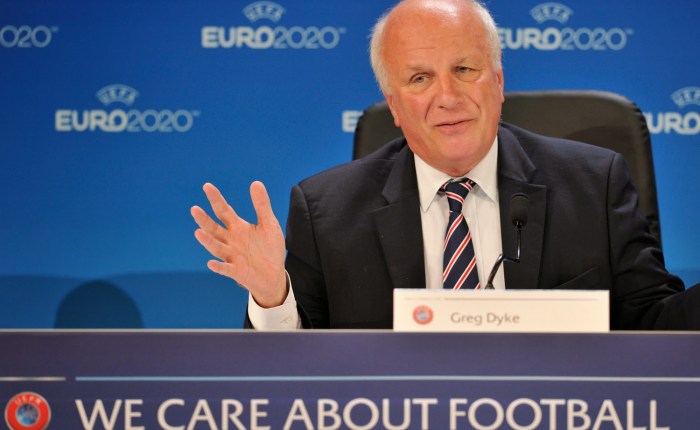
The FA Chairman, Greg Dyke, did propose a good alternative to combat these issues. Sadly the Football League clubs vetoed it. It is an idea that deserves further review. He suggested a League Three, placed between the Conference and League Two, compromising ten Premier League B Teams and the ten best non-league sides. The B teams could only ever progress to League One, so even if they finished first to tenth in that league the eleventh placed side would be promoted, to prevent them mingling too far up.

The benefits would work both ways. Currently young players are leaving their parent clubs primarily for game time. Experience of competitive matches seen as the best way to aid development. This is clearly an important factor. However, they are leaving superior training facilities, better coaches, and the ethos and tactical beliefs of their parent clubs. If they stayed within the hub of the family and played for the B teams they could be assessed and developed firsthand, making the transition to the first team more likely.

Whilst B teams would mean less loaned players to the Football League clubs that look forward to free talent, they would benefit from higher gates. A B team of Manchester City players would increase revenue compared to one loaned City player in a Rochdale team. Also, it stands to reason that these B teams would improve the overall quality in the lower leagues. Playing against better teams will only raise the game overall. Players get better if they play regularly at a higher standard.

The Football League players would benefit from the increased exposure: It would act as a better scouting method. Recently players have come up to the Premier League with teams like Norwich that played through a couple of the lower leagues, proving there is quality down there. At the moment there is an over reliance to spend on foreign talent when if we dug a little deeper we could find it here in England. A League Three would end the now ridiculous loan system, allow young players to fully benefit from an attachment to a club with state of the art facilities, and accelerate the progression of players from the Football League to the top flight.

We need to embrace changes like this before we find English football set on tracks that allow no room for manoeuvre. If FFP is to be an unnoticed backdrop we need to improve the way we develop the future generations, and currently the systems in place are failing them.

Make FFP Morally Fair

Make FFP Morally Fair

There’s no point arguing against Financial Fair Play anymore. With Manchester City accepting the punishment offered by UEFA, a court battle that could have shuck the system will never be realised. I can’t blame the club for this, they require stability for the team and the third party sponsors attached to them. A quick resolution prevents it becoming an unhealthy distraction. Even though I disagree with FFP it looks like it’s here to stay. This being the case, all I ask now is: why don’t we have a morally fair FFP in place? People have been very vocal about Manchester City “just buying the league” and having an unfair advantage but these sorts don’t mind the established big clubs having an unassailable monetary advantage already. Today I ask them why they never offered an alternative that made it the same for everyone, instead of a closed shop for the big boys at the top.

These supporters of Financial Fair Play are so hung up on the rules being broken, that there is no other outcome than a punishment for clubs like City. Presumably these sorts never exceed 70mph on the motorway, never cross the road when the Red man is showing even if it’s clear, and have never littered – because rules are rules. To these law abiding citizens, that have such a strong sense of morality, I simply ask: Why have you never suggested a version of Financial Fair Play where wealth is completely negated?

Playing Devil’s advocate, and ignoring the legal and business implications (you’ll allow me this as it seems these are ignored anyway where FFP is concerned), why don’t we create a simplified, truly fair, level playing field version of FFP? Financial Fair Play fans feel so aggrieved by Manchester City’s wealth, it stands to reason they must be equally angered by other clubs that can naturally afford high wages and dominate the transfer market, because I’d hate to think for a minute they are hypocrites.

Instead of complicated interpretations regarding FFP’s guidelines that stretch the credibility and constructs designed to enforce soft wage caps and arrest transfer spending, let’s just set a clearly defined a wage limit and net transfer spend per season. All the top leagues in Europe could be reviewed and a mean average of safe expenditure determined. It’d mean the smaller clubs may still be a little off being able to afford the wage cap, but not by much, and the top clubs would no longer be able to throw excessive cash at every player; every marquee signing would mean less to spend elsewhere.

Players would be attracted by facilities, which healthy owners already care about. The mean average spend could be worked out for each tier of league across Europe, creating a unified cash ecosystem. The limit on spend would mean the clubs with high incomes from worldwide support could of course be greedy, they’d still have a high ticket and merchandise turnover but, thanks to a morally fair set of rules, be able to spend less to accrue them. Hopefully this would have another positive knock-on effect: a more affordable product for the fans as clubs are pressured into lowering ticket prices. We’d be left with every club playing with the same set of parameters and every fan not dipping as deep into his pocket.

This idea was probably hushed away as soon as it was first formed during the genesis of Financial Fair Play. The big clubs would never agree to handing back their cash advantage, they just don’t want new clubs appearing with oil cash. And many got on board with FFP for the right reasons but then followed blindly. Like Nazi soldiers believing the evil regime’s propaganda machine, they’ve lacked the ability to step back and see the bigger picture. They’ve been so firm in their belief, they have never stopped to ask if what they are suggesting is a fair system. From a business point of view they never cared if it was fair to introduce a system that would retard the growth of new-money clubs, they just snapped their heels together and shouted “Rules!” The demand for order and adherence to Financial Fair Play meant they never stopped to ask if the idea was correct. Not the business side of it, but the moral issue of ensuring small clubs will be forever alienated. The lack of fervour there means we goose step forward, away from the football as we know it.

FFPDystopia

We’ll find ourselves living a future we should never have visited. Finances may even start to look better on spreadsheets, but a Doncaster or a Rotherham may have been denied their Champions League run, clubs will have stopped investing on infrastructure. It’ll appear healthier but in truth it’ll have been stunted. The big clubs will be unreachable, and as a Manchester City fan I expect to be sat in that elite grouping – but I am far from comfortable with such a scenario.

Perhaps football’s saving grace lies within. I am always wary when a person has a second team (“Oh, they are my Premier League team,” or “That’s my London club.”) but a second team that is an extension of your own would be fine. The B Teams playing in a League Three could generate a wealth of young talent to equalise the money at the top. But that’s a chat for another day.