Greatest Achievement in League Football

Greatest Achievement in League Football

Leicester City winning the English Premier League completes a dream season for a club that battled to survival only twelve months previous. This unexpected success still belies belief, for months so-called experts have struggled to give reason for their insurmountable lead. A common denominator is that other teams have failed. This denies The Foxes the full credit they deserve.

The obvious comparison people have gone for is between the current Leicester side and Brian Clough’s Nottingham Forest. Clough’s side gained promotion from the old First Division and went on to win the title as the new boys. Throughout that season they had many doubters. It was deemed unlikely they could maintain the pace and stay at the top.

Sound familiar?

Of course, Forest went onto greater success but this initial title win has been the watermark for all underdogs in English football. Until now. Football was a different game back then. The gap between the haves and the have nots has never been greater than it currently stands. Massive clubs like Liverpool – who are the third highest spenders in Premier League history – have still yet to win their first Premier League title.

Clubs of Leicester’s stature are supposed to be happy with Premier League survival – nothing more. But they haven’t read the script this season, even after a bad start at Arsenal. It’s imperfect beginnings that laid the way for this journey.

Unlike Forest in 1978, who came up in good form and were full of confidence, they should have been riddled with doubts. A great escape didn’t mask their deficiencies. Sacking their manager, Nigel Pearson, after a series of explosive moments could have upset a fragile dressing room. Then they brought in The Tinker Man.

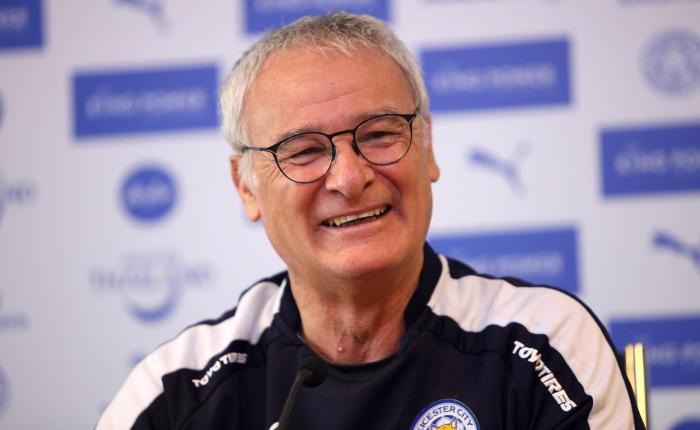
Claudio Ranieri, a man that had never won a top flight championship, was hired to ensure they reached 40 points. Many pundits claimed his arrival would send Leicester down, whenever anyone questioned this they were reminded his Greece side lost to San Marino.

As a polar opposite to Brian Clough, he remained a man happy to be in the shadows. Humble rather than full of Clough’s bravado. He was living the dream along with his fans. His humility sowed the squad together. He protected them from pressure, maintained expectation.

It was a case of all the pieces coming together at the right time. A manager with years of experience, a bunch of players with a point to prove, and the bigger boys struggling for one reason or another. That latter point shouldn’t be used against The Foxes. If teams failed to meet their personal targets for the season it doesn’t take away from Leicester’s success.

The league table never, ever, lies. Only three defeats speak volumes in a season where so many teams have struggled for form and stability. Some of the big guns may have been shy, but somebody had to take the chance. It was Leicester that came out head and shoulders above the rest.

A man that once tinkered stuck with familiar players. Unlike so many current managers, that claim to have an “ideology” or “project” as a cover for stubbornly sticking to rigid tactics, Ranieri evolved along with his players. They started the season almost playing like a Sunday league side, fast on the counter, looking like grinding out results was above them and it was only a matter of time before they became unstuck. Rather than become stale, they morphed into a side capable of chalking up one-nils.

It proves that cash doesn’t guarantee victory. The football goliaths should hang their heads in shame. Extensive scouting networks and the best facilities in the land have continued to show snobbery and fail to give talent within the lower leagues a chance. How many more Jamie Vardys are hidden, waiting for someone to take a gamble?

Naysayers have pointed to Leicester’s summer transfer spend but it is small fry compared to the likes of clubs expected to finish in the top four. With the new TV money coming into the game next season they now have the ability to spend. The sad fact is they will probably have to with the extra European games filling up their schedule.

Even if they do now splash the cash, it will be brought about because of success, not the pursuit of it.

The fear with Financial Fair Play was that football would be plunged into a status quo. That the dreams of fans up and down the land, clubs big and small, would be extinguished unless a rich benefactor spent billions. Leicester may have the new rich owner but it is good old-fashioned on the pitch ethics that have brought about the fairy-tale title.

The gap between the top and bottom has never been so high, the scope for daring to dream the impossible so low, but Leicester have changed this. Winning the Premier League is an achievement unlikely to ever be matched. Unless they go onto further success in Europe next season. But that can’t happen . . . can it?

It’d be a brave person that placed any restriction on hope following this triumph.
A Tale of Two Cities

A Tale of Two Cities

“It was the best of times, it was the worst of times.”

– Charles Dickens, A Tale of Two Cities

It is the strangest of times. This season has been one of the most unpredictable in Premier League history. It’s long been noted, especially by this writer, that the technical standard of England’s top flight has been on the decline. Any doubts surrounding this can be erased by noting the recent performances of Premier League sides in Europe. For several years the excitement levels have increased while tactical know-how has been reduced. It couldn’t go on forever and have the steady balance at the top of the league remain. This season the status quo was demolished.

When Manchester City gate-crashed the top four party, they took their place at the established table with the look of a team willing to fit the mould. They spent big to play catch-up, only asking for a place in the Champions League that usually went to a team like Liverpool.

Their presence didn’t threaten the see-saw of dominance, that hadn’t moved for so long one could assume it had rotten to a rigid state. It was coincidence that City’s arrival at the top coincided with a slow drop-off in domestic tactical astuteness. La Liga sides had evolved, with most of that thanks going to Pep Guardiola’s Barcelona team.

Gone were the days of expecting two English sides in the Champions League semi-finals; just getting to the knockout phase has become an achievement. In tandem with La Liga’s intelligence growing at a rate faster than the Premier League’s, so was the Bundesliga’s.

Bayern Munich became the dominant force in Germany and won Europe’s top competition. It’s often remarked, in a negative angle, that there isn’t the weekly competition for Bayern that English teams have to face. La Liga has similar accusations aimed at it. There’s an idea there’s only two good teams – Barcelona and Real Madrid – and the rest are just walkovers.

If this was the case, these three giant teams would struggle. A lack of big games would lead to head’s drifting off. But they remain focused in Europe and it’s battle-hardened Premier League sides that struggle midweek. This season the sentiment that anyone can beat anyone in England has never been truer.

Even in the face of such inconsistency patterns were emerging that pundits and fans failed to recognise or accept. And even with normality taking a break, people expect old ways to return. Leicester City were tipped to drop away before the hectic Christmas period. When that didn’t occur the prediction was it would happen during. That never materialised so the next prediction was it would happen after.

We’re now in February and they still top the league.

The latest effort to reduce their expectations meets reality with the failing perceptions halfway. Observers still can’t allow themselves to believe they are in a title race – even after 24 games – but concede they are likely to finish top four now.

It’s a tremendous accomplishment. The Foxes started the season as a relegation candidate. Claudio Ranieri has taken a set of players that weren’t in the spotlight and instilled belief and most importantly: a strong work ethic.
There may be more money spent on players in the Premier League, both in transfers and wages, and new TV deals eclipse those from more successful European leagues, but that doesn’t mean the best players are here.

Leicester have exploited the weakness in the league as a whole, not the shortcomings of separate teams that expected to be placed higher. Now that they have momentum, stopping them will be hard.

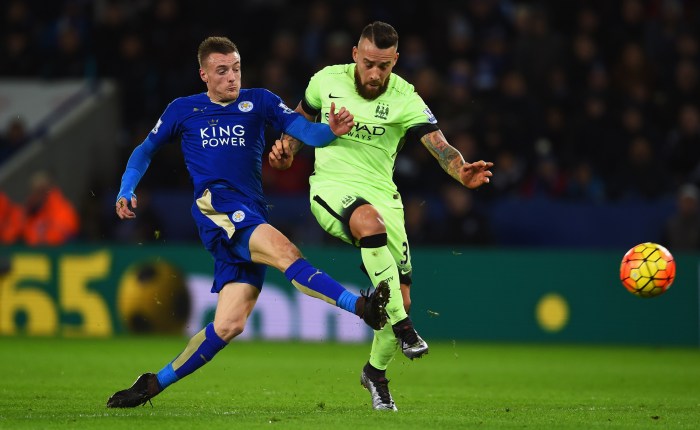
Against Manchester City they face a team that won’t begrudge the Foxes any lasting success at the top. Fans of Manchester’s club can easily recall a time before the Sheikh’s money, when winning one more League Cup would have been a heady dream and chances of a Premier League title were folly.

Financial Fair Play (FFP) was seen as a tool to maintain a status quo for the traditional big names. The assumption being, only a massive outlay of cash could enable a side to break the top four.

Multiple articles here, and Financial Fair Prejudice, never spoke out against FFP to keep Manchester City safe. They already made it in the castle before the drawbridge was up. The bordering on illegal and morally ambiguous FFP meant teams feared that if weren’t already a big fish, they never would be.

Leicester have changed all this.

Okay, they do have billionaire owners that have restructured the club. But their accelerated growth period pales in comparison to Man City’s.

Their stubbornness to accept everybody else’s predictions and perceptions has been aided by a stuttering league campaign from the title rivals they face next. The Citizens have been equally consistent in their form by being the antithesis of Leicester’s attitude.

Instead of non-stop application, Pellegrini’s men appear to fire in spits and spats. When their backs are against the wall then a world class City emerges and brushes sides away with ease. Far too often they spend the first twenty minutes of matches drifting, as if their talent alone will ensure success. The effort comes later, when the task has been made harder than it should have been.

After Saturday there should be a clearer idea on where the season’s heading. The neutral will warm to the idea of Leicester City taking victory and then securing a title win so improbable Hollywood movie execs wouldn’t dare use it in a script. If the Foxes win, the press will say it is remarkable achievement that they won the “best league in the world.”

If Manchester City remove Leicester’s point advantage it could be the start for the final push. Players are now fighting for their careers as they try and impress incoming manager, Pep Guardiola, from afar. With Arsenal commencing their annual fall away, only Tottenham lurk as the other potential dark horse.

If Man City win the title in Pellegrini’s final year, the press will comment on the lack of a legitimate challenger and make more news about the low number of points needed to win a weak league. The points spread is currently being used to rejoice at how competitive and tough it is.

But there’s nothing but truth in the statement: the league never lies after 38 games. Whoever that is will deserve it most, all other factors become irrelevant.

The City that takes three points Saturday lunch time will start to imagine their hands on the title.

Fan Friendly Prices

Fan Friendly Prices

We’re poised to embark on another exciting Premier League season. Our clubs are working hard to secure players in the transfer market, at the same time we lay down cash to keep our season tickets. For those that can’t make a season ticket viable, a quick look to the fixture list highlights months where savings are required in order to attend games. Financial Fair Play was all about making sure football was healthy. My disdain for the system has been duly noted before; today I take a glance at the cost for those attending games this season. Unsurprisingly it makes for disappointing reading. FFP hasn’t protected the game’s most important commodity: the fans. Nor has it managed fairness in FFP’s execution.

The Premier League’s latest television deal has been well documented. Dreams that the £5.5 billion would convert to cheaper tickets for fans was always folly. As we are so often reminded, football is big business now. For most it was a way to bridge a gap to the top guns whilst getting closer to FFP conformity. I won’t argue against large TV deals, if the product is worth that price – or more importantly, someone is willingly to part with that amount of cash – then the Premier League clubs should lap it up. I do take umbrage with the idea UEFA is trying to introduce a soft cap on wages by limiting loss and expenditure, but fails to introduce universal limits on tickets and merchandise prices.

This failure from UEFA allows some clubs to penalise fans without ever facing the wrath of FFP restrictions. The grey area of different countries having to pay more to players each month for tax purposes (a player in England is taxed higher than one plying his trade in La Liga, thus, to match his wage a Premier League club has to pay a higher basic) is one area UEFA have failed to address directly. I suppose arguments over tax havens are best left to Starbucks, Amazon, or Jimmy Carr. But a failure to impose sanctions on clubs overinflating ticket prices would be easy to amend.

I’m not naïve enough to suggest a newly promoted club should be charging the same as a regular top four side. Clearly the established top teams are providing a constantly higher standard of product. In tandem with this their facilities exceed expectations. However, should Arsenal be allowed to set their cheapest season ticket at £1,014 when Manchester City manages to offer one at £299? This is the same club that argued City received too much sponsorship money from Etihad, missing the point that a value is only what someone is willingly to pay, then counterargument there is a market for high valued tickets in London. It’s unfair to the loyal fans and makes an uneven playing field. All clubs are punished by the same quotas if they fail FFP but allowed to run wild in other areas.

The disparity between ticket prices is now alarming. Arsenal’s most expensive match day ticket will be £127 this year. That’s just for ninety minutes of football. Crazy. Liverpool also play in the Champions League, are a club with a loyal fan base and extensive support, but they will charge no higher than £75 for a match day ticket this season, £19 being their lowest match day offering. You can argue that if fans of the Gunners are willing to pay it the club should cash in, but that misses the point. Other clubs can generate funds from their resources but aren’t allowed because of FFP. Yet UEFA aren’t stopping clubs from raiding the pockets of the most vulnerable first.

Understandably, it’s two of the newly promoted teams that see the largest percentage increase in ticket prices, as they meet the higher wage demands and chase players better equipped for top flight football. Burnley and QPR see an increase of 37% and 38% respectively on their highest priced season tickets (this takes Burnley’s price to £685; QPR’s to a whooping £949), both their cheapest offerings come in at £499. A tip of the cap to the other new boys, Leicester City. They have only made a 3% increase to the lowest priced season ticket (now £365) and a 2% one to the highest priced (£730). It’s worth noting Hull’s increased prices. For a club that has been very vocal – almost, overly proud – regarding their pricing structure, they have jumped prices by 25%. However, there is only a seventy quid difference between their cheapest and most expensive offering. Nobody is paying more than £572 to watch The Tigers this season.

I paid £675 for my season ticket this year. Would I have liked it cheaper? Of course, wouldn’t we all? But I could afford it, and would rather choose my seat than take the £299 offer. The highest priced at the Etihad this season was £860. Sounds a lot, I suppose, but it is the home of the champions, and a club that has failed FFP, so is clearly on the limit when it comes to breaking even. All clubs can squeeze a bit more. For some, any rise will be a deal breaker, but I dare say the 10% rise seen on City’s highest priced season ticket could have been pushed to 15% and the uptake would have been the same. The club won’t win any awards for keeping prices reasonable but others won’t be chastised for the ludicrously high bars that have been set. Arsenal, who haven’t been champions of England since 2004, sell their highest-priced season ticket at £2,013. A mere 3% rise, showing that prices have been inflated for a long time there.

So clubs are free to inflate and flog the fans all they want. No governing body will step in and protect the working man. What adds a touch of humour to this is how the FFP fines are going to be redistributed among other clubs. To appease teams that have competed domestically with clubs that “cheated” FFP, any fines they incur will be spread out amongst the teams that played in the league during the season in question. So Arsenal is set to receive some money from Manchester City’s FFP fine, topping the coffers that are overflowing from exorbitant ticket prices. No consideration is given to making clubs redistribute this cash to ticket buyers. Nor is the spreading of this cash fair when you consider some clubs – like Liverpool, for example – also would have failed Financial Fair Play last season had they been competing in Europe. UEFA only audited the clubs that competed in the Champions League or Europa League, so not only have some teams dodged a bullet, they’ll get a cash reward from those as guilty as they are.

If UEFA don’t act now the ticket prices will continue to rise. The working class man at top flight games will become a thing of the past. Short of introducing a cap on prices – something impossible to implement without a hard cap on a salaries – then a system should be in place to reduce a percentage of final turnover in FFP workings if ticket prices exceed an agreed market value. If sponsorship deals have to be justified then so should the cash received from fans.

FFP hasn’t protected clubs from themselves; it’s just made them the most dangerous predators to the fans’ wallets.