Heart to Hart

Heart to Hart

If history is truly written by the winners, no party involved with the Joe Hart saga will be able to place anything on record. There are only losers as the situation plays out, drawing to an uncomfortable conclusion for the main protagonists.

The questions and doubt continue to reign. Is Pep Guardiola justified or making a mistake? Hearts break watching Hart face an uncertain future, Claudio Bravo arrives facing a lukewarm reception, and fans cry to the club’s better nature at the treatment of a true legend. Amidst the confusion, some answers are already obvious.

The first, and clearest, is that months before Pep pitched up in Manchester, Joe’s cards had been marked. A poor showing in the Euros acted as a catalyst to enact the bold step of removing England’s number one from the club. Most fans never expected to see Willy Caballero play for City again, all along Pep was plotting this exact fate for Hart.

Wednesday’s Champions League tie was the managers farewell gift, not a glimmer of hope that if Hart stayed he could fight for his place. This act made the manager contradict his former statement on Hart about being prepared to work with the ‘keeper to improve his game, if he stayed.

However, Guardiola shouldn’t be made into the bad guy here. He made a judgement call. All managers have to; the best ones aren’t scared to make the big ones. If he has politicked a little, it was to keep an air of professionalism when facing the sensationalist tabloid press.

If City fans harbour some dislike, it’s because of what Joe Hart represents rather than a judgement on his ability. He belongs to an elite group (Zabaleta, Kompany and Agüero) that appear to love the club. They get City. Pulling on the shirt for players like Hart has been about more than collecting a pay cheque or doing a job. It’s been a love affair.

And that love is reciprocated in the stands, as proven on Wednesday. In singing for Joe, the fans always brought to attention one uncomfortable truth. Maybe he wasn’t good enough? The reworking of the Billy Ray Cyrus song, “Achy Breaky Heart”, to “Don’t Sell Joe Hart” is now a self-fulfilling prophecy. Its existence a case for Pep’s defence when he’s accused of making a kneejerk reaction.

If Hart was beyond reproach as a top class ‘keeper, why did the fans feel the need to create this song for the benefit of a former manager? The doubts about Hart’s pedigree have been around for some time. He’s weathered storms in the past but a fresh manager had zero attachment to any member of the squad. Pep agreed with the doubters and acted immediately.

Bravo’s arrival is the nail in Joe’s coffin that had been halfway in for some time. City may well have upgraded – at a bargain price – and now make the step forward in Europe. But the Chilean can’t afford a less than stellar start to his City career.

Fans know he isn’t here for City. He’d play for Leicester City if Pep was manager at the King Power. That’s fine, but it says more about the future of the club and its detachment from core players, its fundamentals and values.

Aside from an attitude problem, an existing player at a top club, that has contributed heavily to championships and aided the growth of the whole organisation, should be given a fair chance.

Any areas of Hart’s ability that haven’t improved at an acceptable rate are down to coaching rather than his lack of potential or professionalism. Gaps in his game – like playing sweeper-keeper – can be blamed on the management, or lack of, from previous regimes. Do you really think Manuel Pellegrini ever tried to enhance Joe’s overall game? He didn’t even send his outfield players out with clear instruction.

Pep is in the unique position of being almost untouchable. He could finish outside of the top six and the hierarchy would continue to believe in his project. With such a period of grace he can afford to take six months to develop the players already in Manchester. Surely the club expect a manager on a contract that exceeds £12m-a-year to hone existing talent.

Not everyone that stood up for Joe Hart Wednesday night has always been an advocate of his ability. This doesn’t make them hypocrites. He has made mistakes and his distribution has been a poor aspect of his game that many have criticised over the years.

But he holds the record for number of Premier League golden gloves and any sense that Hart hasn’t improved over the years is ill-founded. It’s heart-breaking that the world will never find out what a bit of Pep polish could have done for a legendary City goalkeeper.

Instead of deciding to work things through, Guardiola has called time on matters.

It’s now like a relationship that doesn’t feel over but the other party declares is unsalvageable. The only thing the rejected person can see is how much there is left to fight for, how much can be saved. They picture a future with many more moments, rivalling the best from the past before going on to exceed those highs. Begging and frustration vie with confusion, clouding logic and analytical thinking.

The party cutting the strings is completely emotionally detached, to the point they lose sight of pure logic which leads to reinforced stubbornness.

You have to move on because there is no alternative but it leaves a void that never finds closure.

That painful gap in City’s heart will be Hart shaped. The fans and player parted ways emotionally, both powerless to stop the wheels that had been put in motion by others, but it wasn’t a comfortable farewell. It was awkward and the demands for reconciliation fruitless.

No future success will ever remove the memory of losing a legend before his time.
What £100m means in Manchester

What £100m means in Manchester

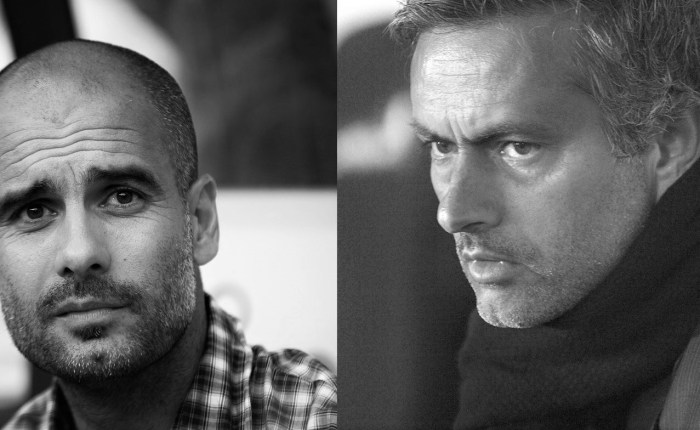
The two clubs baring Manchester in their name have both spent big this summer. But that is where the similarity ends. In the centre of Manchester, Pep Guardiola has spread his cash as he rebuilds and reimagines The Citizens style of play. Over in Trafford, their new man at the helm José Mourinho, also faces a reshaping job. But he has decided to take a big, singular gamble. There is a reason for these two differing approaches.

The irony of United being the club to break the world transfer record, when it was “City ruining football” with their accelerated growth period, won’t go unnoticed with football fans around the country. But the protracted Paul Pogba transfer is the peak of a continued period of United high-spending.

Moyes, Van Gaal, and now Mourinho, have all been supported by the Glazers in the transfer market.

The ethics of a £100m move have been widely discussed. Regardless of opinion, the truth is football’s finance has been heading this way for a long time. The new TV money should have found its way back to the pockets of fans but this was always going to be difficult when chairman saw it as a way to increase the ransoms on their top players.

Juventus have only done what Everton have been trying for the last two summers, and this despite the Goodson Park outfit benefitting from the increased TV revenue and a new, presumably richer, owner. The Italian club have a tighter budget, if they hadn’t broken the world record fee with United’s money, Real Madrid would have stepped in and come close.

What makes the move murkier for United, are the reports the Frenchman preferred a move to the Spanish giants. A few eyebrows must have been raised from Sir Alex Ferguson to Sir Bobby Charlton, when the realisation hit home that a player who left for a tribunal fee, looked to be returning, somewhat underwhelmed, for a world record fee.

The debate about whether he is worth the fee is null and void. The moment a club are willing to pay a price, that is the market value.

What the Pogba debacle does, is detract attention from United’s net summer spend. The positive press campaign focuses on four acquisitions, one of them Zlatan Ibrahimovic for absolutely nothing. A player of such quality on a free transfer is more than a bargain, the only doubts surround his ability to step up from the tamer French league to the tough English season at the age of 34.

The other half of Mourinho’s summer quartet are Henrikh Mkhitaryan and Eric Bailly. At a combined fee of £68m they are hardly cheap supplements to the lofty pursuit of Pogba.

This is where the Manchester divide became a chasm over the summer.

As it stands City, who admittedly are still seeking reinforcements, have spent £114m and recouped £10m. Both of those figures are set to rise, with the imbalance increasing on the expenditure side of the equation.

For the price of one Pogba, City have brought in six new faces and still have over £60m to go before equalling United’s outgoings. This is without acknowledging the offloading process City are going through which is trickling some cash back into the coffers.

The reason the alternative approaches are so glaring is because both clubs had the same problem: they need complete overhauls.

José Mourinho even commented lately that he needed twenty players to undo the damage inflicted from the Louis Van Gaal era, and that his approach differed so wildly, it would take many new faces to adjust the style.

So why place all his faith in one big summer signing?

Because he lacks a luxury only Pep Guardiola can boast in the modern world of football: time.

The Spaniard holds a major advantage over José and it isn’t a bigger cheque book or even a better youth system. It’s the lack of urgency for immediate results. The Etihad board didn’t allow the Pellegrini era end with a canter to then make a kneejerk reaction with their long-term managerial target.

Guardiola knows he can take his time developing new signings like Marlos Moreno without fearing the need for instant success. That’s not to say he can fail to achieve minimum targets. Champions League qualification is a must to the big clubs. But even failure to meet that wouldn’t necessarily cost Pep his job.

Mourinho is breathing the air of a different planet. He is a proven manager that suddenly has everything to prove. After the Chelsea sacking, he can’t afford a slow start, let alone a disappointing season. He didn’t have the support of the entire United board but he was seen as a necessary evil.

That conjoined dilemma of club and man brought them together. Now they face a future where development gives way to desperation in the transfer market.

Mourinho is in the casino, play for high stakes risks, and Pogba is one big throw of the dice.

His inner-city rival can smile and take cab journeys with fans instead. He has the time to send players like Zinchenko and Gabriel Jesus on loan, not worry about Ilkay Gündogan’s lengthy injury, or bend to transfer fee demands he feels excessive. And all the time he works the current crop – whom many now seek redemption – into his mould.

Leicester proved last year that money doesn’t guarantee success, this season Manchester will see if patience pays dividends.

How to Sweep up the Premier League Tactical Problem

How to Sweep up the Premier League Tactical Problem

It may be regarded as the most competitive top flight European league, but the Premier League has been going backwards tactically for some time now. This is evident by the declining performances, year after year, by English sides in the Champions League. It seems top sides here have suffered from acquiescence regarding their place in the pecking order. But there could be a way to stop them from faltering further.

On a weekly basis we see goals conceded that, while making the Premier League exciting and unpredictable, are a tactician’s nightmare. Some of the errors border on the schoolboy variety; others highlight how the pace of the English game makes defending a thankless task.

The solution could come from – quite ironically – an old European favourite: the sweeper system.

Before we go on, it needs to be pointed out, my personal level of football coaching begins on Championship Manager (the version before CM’93) and ends with Football Manager 2016. As a player, my greatest contribution was the post-match karaoke for the Sunday team I represented.

However, I did take England to two World Cup final victories and scored a screamer when hungover once (and just once, making me the least prolific striker in history). But you don’t have to be an all-time great to have valid observations. Indeed, the majority of top managers were, at best, average players.

The call for Premier League teams to adopt a sweeper system isn’t borne from some romantic notion. I’m not expecting John Stones to be the next Franco Baresi, although, it’s not too difficult to imagine. It comes from common sense.

The reasons that made European teams evolve away from the sweeper system are no longer valid in this country. Some factors apply across the board, including the Champions League.

Take the inability to apply a successful offside trap when employing a sweeper. When was the last time you saw an English side lockout Bayern Munich or Real Madrid because of their quick-thinking high defensive line?

Moreover, the offside trap requires linesman to never make a mistake. Okay, perhaps they can be afforded a few. And in days gone by the odd error would have been taken on the chin. But nowadays we have an overcomplicated offside rule. A defender can play a perfect “trap” and be caught out by the second or third phase of play. He can lose to the official’s interpretation.

A sweeper removes this area of potential ambiguity. He just clears up and prevents shock counters and breakaways.

Another argument against could be the modern defensive midfielder already does the role of sweeper but in a more advantageous position on the field.

To a certain degree, this is clearly true in some cases. The current Barcelona team never look like they need a sweeper. And Pep Guardiola’s conversion of Philipp Lahm to the defensive midfield role shows how versatile and effective it can be.

Under Guardiola, Lahm performed a similar role to the one Busquets had in Pep’s Barça side. Sometimes they slotted back, making a line of three centre backs, with the option for one to sweep. But it wasn’t an in-game reversion. The role of sweeper is too complex for players to cameo in the position. These instances were an example of a team responding to pressure and adapting for short bursts.

But aside from the very top sides, the role elsewhere is either performed by charlatans or capable players stuck in teams that don’t know how to support it. Take Manchester City, it can’t be argued they have the talent to play the modern defensive midfield role. They also have demonstrated how deadly it can be at times. But sides from Bournemouth to Middlesbrough to Juventus, have all shown how easy it is to bypass their midfield.

When that happens, you don’t have a sweeper sat in front of the defence – you have nothing but empty space protecting two centre backs.

This lack of cover combined with today’s blistering pace means even the best defenders will be made to look stupid. Eliaquim Mangala would have had an entirely different season if he’d have been given better protection in front of him. With a sweeper behind, he’d have excelled.

A sweeper would make teams more solid in the Premier League, the question then becomes: How would they fare in Europe.

This is harder to answer, mainly because it reduces some of the advantages English sides take into a game. The play goes slower still, the intelligence of the midfield to receive passes from a ball-playing sweeper needs to increase, and the best forwards in the world can try and camp out on your defensive line.

But the current weak imitation of how to play their style is sending Premier League teams backwards.

Perhaps a perceived disadvantage of the system would help English sides in Europe. The sweeper is seen as a waste of a defensive player when so many modern sides play with only one striker. This is an illusion at best.

A 4-3-2-1 soon becomes an out-and-out 4-3-3 when a good side is in possession.

The extra insurance at the back can deal with the morphing forward line.

Many will believe it’s outdated or impossible to try the system now. They’ll say defensive midfielders shore up a team. But ask yourself: when was the last time you saw a player properly anchor a side during a Premier League match?

Marcel Desailly? Nigel de Jong, at a stretch.

The sweeper system is a solution that keeps getting ignored. Someone needs to try it. Failure to do so ensures the European dominance stays with the German/Spanish power share and the domestic game will continue to suffer tactical devolution.