Loyalty Pays

Loyalty Pays

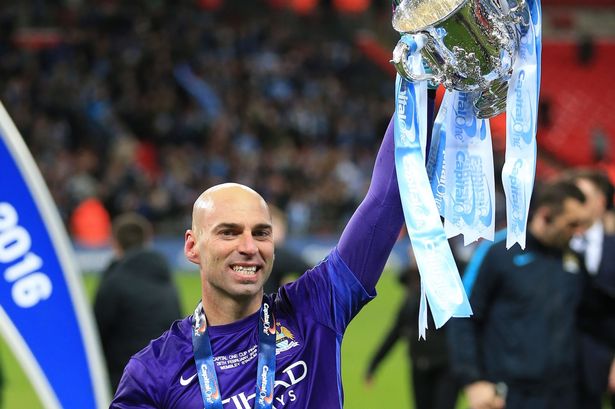
Sunday saw Manchester City lift the Capital One Cup after a penalty shoot-out with Liverpool. It adds a second League Cup to Manuel Pellegrini’s CV but he won much more than silverware. He silenced critics and demonstrated that being a gentleman often pays dividends.

After Willy Caballero’s FA Cup performance against Chelsea, the only two men in the world that wanted to see him play in Sunday’s final were himself and Pellegrini. His showing a week before was so poor, he had made himself very droppable. The idea he is the domestic cup ‘keeper goes out of the window if form is so terrible.

Unless it’s Pellegrini’s window. He decided to take – what he presumably saw as a little – gamble. He explained that his word was more important than football. Keeping his promises surpassed any significance winning a trophy holds.

It is the sort of bold and open statement only a manager relieved of his duties can publically declare. As stated in Capital Gains, winning the League Cup offers a fresh surge of momentum.

Willy turning into a hero demonstrates how the cliché, a week’s a long time in football, couldn’t be more true. Such is the soap opera nature of the sport, when it went to penalties, it was almost inevitable Caballero was going to find redemption. From hero to villain, enabling him to sign off his City career in style (if it’s to be believed he will form part of a summer exodus).

His teary eyed interview on the field showed that top pros do care about the clubs they turn out for. It was touching to see a good guy get a reward for persevering.

Which brings us to Manuel Pellegrini. He placed himself in the firing line with his selection of Caballero. Victory – and its manor – justifies yet another decision is a week where his every action has been scrutinised.

It also brings a greater bonus. Any dissident voices in the dressing room will now be silenced for the remainder of the season. The players can look at City’s Charming Man and know they have a manager on their side. A gaffer that will stand by them and keep his word.

Honesty is an underrated trait and Pellegrini has it in abundance. Any wavering respect some players may have had, will be stamped out. Instead of working hard to impress Pep Guardiola, everyone has been given a reminder they still have work to do for the current boss.

With renewed unity they could be heading toward another domestic double. Even if they fall short, Pellegrini has given them a greater prize – proof that loyalty pays.
Capital Gains

Capital Gains

Sunday sees a League Cup final that carries greater significance than it is usually afforded. It is Jurgen Klopp’s first chance for silverware at Anfield, for his counterpart in the opposite dugout, it is the start of his swansong. The often derided competition suddenly has the opportunity to play a pivotal role in the season.

Manuel Pellegrini has never shied away from the League Cup’s significance. He rightly points out, it was a catalyst for securing the Premier League in his first season and that it’s no coincidence that last year’s winners, Chelsea, also went on to take the title.

In a season where the pecking order has been turned on its head, a cup victory here, and the boost of confidence it provides, could be the thing that finally settles City into their stride. Despite league defeats at home to both Leicester and Tottenham in recent weeks, they are still very much in the title chase.

The importance of the League Cup was highlighted when Pellegrini relegated the FA Cup on his list of priorities. The FA’s ignorance – or perhaps arrogance – to give into the BBC’s demands for a Sunday fixture, when there were other TV slots available, meant their domestic cup was shown up as an inferior product.

Pellegrini has had to deal with months of speculation about his future, only to endure weeks of assumption since Pep Guardiola’s announcement that he’d be joining the Manchester club in the summer. It’s been easy for outsiders to imply that the dressing room is looking beyond Pellegrini now, that they have their eyes on either the next manager or a transfer.

A cup win ends that debate. It would prove the team is still focused on the here and now. Walking around Wembley with a trophy will reaffirm the unity within the squad and its senior management. It further justifies the FA Cup side after a big win in Kiev.

All that stands in Pellegrini’s way is the competition’s most successful entrant, eight time winners, Liverpool.

For them, the League Cup provides a chance to add some shine to what has turned into a difficult season for Klopp. A new manager always needs time to reshape the club in his vision. But after much fanfare the initial buzz has faded and the enormity of the task has become evident.

Any hopes for a Champions League push by finishing in the top four have disappeared. Their only chance now is through the Europa League, where they face bitter rivals Manchester United next. Even the most optimistic fan can’t be eying Europe’s secondary tournament this season; winning it will be a bonus rather than meeting expectation.

Indeed, all expectations must have shifted in recent times. Was sitting eighth in the table the goal when they fired Brendan Rodgers? It’s hard to believe they wouldn’t have fared better without the overhaul but Fenway Sports Group must have been thinking long term.

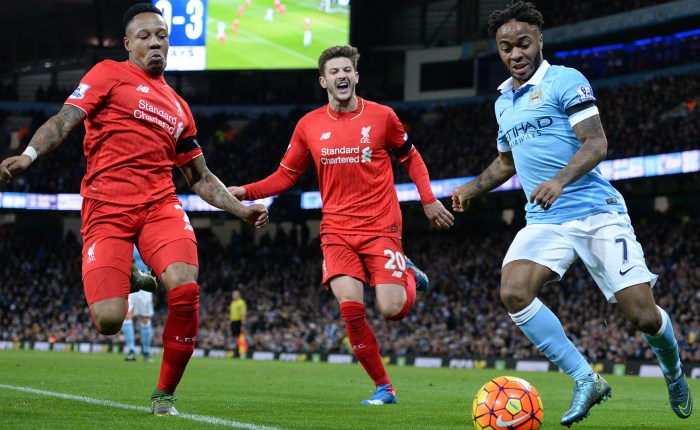
Liverpool will be confident of finding an immediate antidote against City following their 4-1 league triumph at the Etihad. Klopp will go into Sunday’s showcase believing an application of gegenpressing will provide a similar outcome. He also knows, like the rest of us, that Pellegrini is stubborn. He won’t modify his approach now, he will try to outgun Liverpool and hope they collapse before his team is overrun.

Sunday could see the coronation of Klopp or the cementing of Pellegrini’s legacy. Failure could lead to the collapse both teams have flirted with all season. It’s not just a cup they fight for at Wembley, it’s precious, season-saving momentum.

Interfering with Play

Interfering with Play

The offside rule used to be a tool used for misogynist jokes about a woman’s inability to understand a law that “real” men saw as child’s play. Nowadays, it is the rule itself that has become a bad joke.

The constant tweaking of the rule (Law 11 in association football’s, Laws of the Game) started with a desire to make football more exciting. As far back as 1925, it has been altered for this very purpose. In that year they modified the last defenders from three to two, this led to 1,673 more league goals being scored that the previous season.

There is clearly a precedent for the rule to slow the game down, with constant free kicks and breaks in play, or goals being ruled out. The modern variants of the law have centred around if players in offside positions are active. Or interfering with play. The problem is, the open to interpretation approach is what’s now interfering with play.

The rule is written as such:

It is not an offence in itself to be in an offside position.

 A player is in an offside position if:

  • he is nearer to his opponents’ goal line than both the ball and the second-last opponent

A player is not in an offside position if:

  • he is in his own half of the field of play or
  • he is level with the second-last opponent or
  • he is level with the last two opponents

Offence

A player in an offside position is only penalised if, at the moment the ball touches or is played by one of his team, he is, in the opinion of the referee, involved in active play by:

  • interfering with play or
  • interfering with an opponent or
  • gaining an advantage by being in that position

No offence

There is no offside offence if a player receives the ball directly from:

  • a goal kick
  • a throw-in
  • a corner kick

Most people that watch a game of football understand the basic principles of the offside law. The flaw with it lies in the opening line: It is not an offence in itself to be in an offside position.

This ambiguous statement evolved from former amendments that stated: obstructing the opponent’s line of movements or making a gesture or movement which, in the opinion of the referee, deceives or distracts an opponent, before changing to: challenging an opponent for the ball.

Now we have first and second phases of play, being stood in front of goalkeepers on free kicks but officials making on-the-spot assumptions about where the ‘keeper should be looking, as if they are robots that ignore their peripheral vision.

As Brian Clough famously said: “If you’re not interfering with play, what are you doing on the pitch?”

We all want to see flowing football, but not to the detriment of the laws that govern the game. FIFA will never implement a rule change allowing dangerous tackles to be ignored if a goal comes from the subsequent attack.

So why are we being asked to ignore dubious application of an age old law to assist illegal goals?

The attitude to ignore the rule is becoming quite pandemic. Everton scored their first goal against Manchester City in the opening leg of the League Cup semi-final with Romelu Lukaku stood in front of the goalkeeper. The hazy understanding of the rule means it stands with little debate.

Juan Mata scored a beautiful free kick against Shrewsbury Town in their FA Cup clash. Unfortunately, a three-man wall, placed in front of the goalkeeper, never made it back onside before the ball was struck. However, the officials believed they weren’t interfering with play. If you’re not interfering with play when stood in front of the goalkeeper, you never will be.

This attitude to ignore now stretches to even simple decisions. Wayne Rooney scored against Derby County in the previous round, after being marginally offside before receiving the ball. BBC commentator Danny Murphy declared he’d rather enjoy such a good strike than focus on whether or not Rooney was offside. So the message is clear: It doesn’t matter about the rules if it looks good.

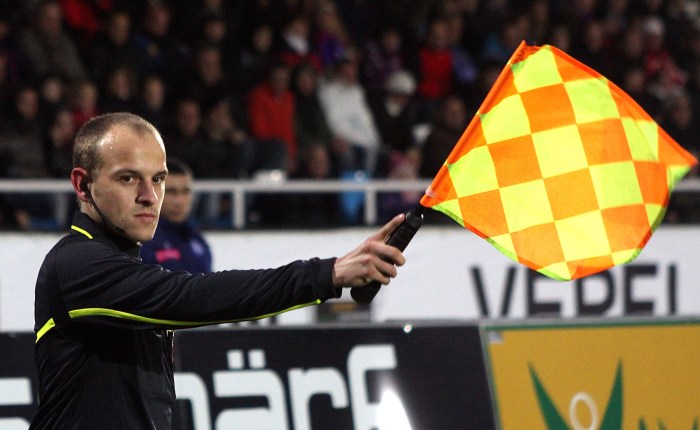
This ambiguity needs to end. It’s making the referee and linesmen’s jobs almost impossible. Sooner, rather than later, a major tournament will be decided by a dubious call that sits in the offside grey area.

Nobody wants to see the Champions League or World Cup decided with a goal that leads to an inconclusive debate about if a player was interfering with play.

It’s time to go back to basics. If a player is stood in an offside position when the ball is played, then he’s offside. Leaving it open to interpretation places an unnecessary spotlight on a sport already riddled with mistrust and bad calls.