Not Fair, Just A Financial Play

Not Fair, Just A Financial Play

It seems we are entering the final phases in the implementation and take up of Financial Fair Play. All the fear mongering, ignorance and general debate is slowly being replaced by the certainties that UEFA has presented as we move forward. In the past I have made no secret of my opposition to Financial Fair Play, and this hasn’t changed, if anything it’s hardened as my fears have become facts. FFP doesn’t have the best interests of the sport as a whole at heart; it is self-serving, hypocritical and greedy. Before the first set of major sanctions are placed on teams let’s analyse what it means.

Not to go over old ground or opinions but there is a loud chorus developing that Financial Fair Play is good because it stops “Cheats” or people buying the league, something I have always laughed at. Except, it’s now no laughing matter. We have Wenger coming out claiming Manchester City should be banned from Europe, and rival fans claiming a club shouldn’t be able to spend in excess to find success. All these people are speaking from their Ivory towers or behind jealous faces. It’s easy to say a club should only spend its turnover when you’ve already established a high one over a long period of time. One that was invariably acquired due to success, which – more often than not – required investment in the first place. These types don’t want the apple cart upset, they fear new teams emerging.

You’ll never hear the pro-FFP bunch mention the protection of the smaller teams, how Financial Fair Play protects clubs from financial mismanagement – the very reason the system is supposed to exist in the first place. And if such a system – with those solitary goals – did exist, I’d throw my full support behind it. But they never mention this side of FFP because the little clubs, whether there or not, pose no threat to their success. A club managed with a wealthy owner that is willing to pay out of his own pocket and write-off any debt, is good for that club’s growth, and in the long run will generate a higher turnover. Manchester City is the extreme example of this but take a League Two club, give them a generous chairman and over time they would develop.

The Football League has the Benefactor Model for this very reason. It allows clubs to clear losses if the owner absorbs them, thus progress financially and grow without restraint. It acknowledges these clubs don’t need protecting from all wealthy owners, it’s the maverick ones that play Russian Roulette with cash they don’t really have that pose a problem. There’s no reason UEFA couldn’t adopt the Benefactor Model if all it cares about is the health of football’s finances. If that was their sole intention they’d worry less about imposing sanctions on clubs like Manchester City and start to question how giants like Manchester United can be bought and run on debts.
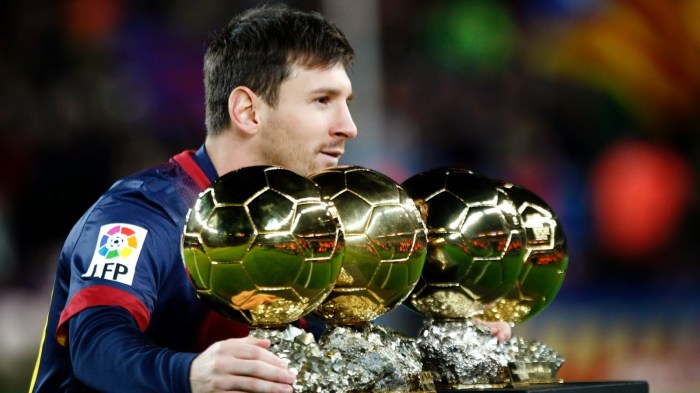
Messi

Financial Fair Play experts will claim one reason UEFA are focusing on clubs like Manchester City is to prevent an escalation in wages. This is folly. It still is – and will always be – the established teams that set the upper limit on wages, dictated by the best players in the world and their agents. When teams like City and PSG are in periods of accelerated growth they don’t raise the ceiling on wages, they just increase the number of players earning the top dollar. In England it was Manchester United that went to £300,000 a week for Rooney; overseas I’m confident Ronaldo at Madrid and Messi at Barcelona got their mammoth wages because of their market value, not because oil tycoons were ploughing money into clubs elsewhere.

So what are we left with if FFP isn’t protecting the little clubs or preventing the market becoming damaged for the larger ones? Greed. The jealous or ignorant types will claim Manchester City is greedy, that they are the evil doers, when if they stopped to look at how the money has been spent and the goodness that has come from it, they’d realise Sheikh Mansour is an angel – Platini and UEFA are the devils. The infrastructure at City has been taken to the next level and the community is thriving, and City will become a market leader on the pitch, and off it, financially. Punishing this isn’t protecting football, it’s UEFA trying to maintain the status quo with the favoured big clubs and introducing a rich tax to line their own pockets. It’s worth noting the Premier League say Manchester City comply with their FFP rules.

It’s laughable that if FFP is about sending a clear message that money in football needs to be healthier, one of the punishments both PSG and Manchester City face is a hefty fine (reports from £29M to £50M). So they worry clubs are leaking money, but to make sure they stop they want them to leak a bit more their way first. An oil tax. And supposedly this fine will be on the accounting books, further restricting expenditure over the following reporting period. Also they face restrictions on squad size and wages for the Champions League, making it harder to compete with UEFA’s chosen children.

For a long time City fans in pubs have been saying the first time a restriction prevents a player appearing in the Champions League it’ll be the players – not the clubs – that take UEFA to court for restriction of trade. It seemed a fairly reasonable argument, that there was a case for loss of earnings. UEFA have engineered a situation where this could never be levelled at them. They aren’t removing the clubs from European competition. It would be the clubs themselves that didn’t place them in the Champions League squad. Yes, it may be due to the sanctions UEFA have placed on the club, but not a restriction.

The only murky area for UEFA – and glimmer of hope for the type of lawyers usually found with a match day pint – is the absolute definition of sporting regulations. If UEFA and FIFA suddenly changed or removed the off-side rule, teams would comply, it’d be in the sporting rules, same for two goalkeepers per team, everyone dressed in clown suits – whatever they fancy, if it became sporting code it would be followed. But the rich fuelled sport of Formula One tried to implement an expenditure limit in its sporting regulations and to this day it is unresolved with no official cap set down. Because sport is also business and in business it’s far from “Fair” to tell companies how much they are allowed spend as they try to increase their standing within the industry.

As a consumer we also do not accept services that diminish. If your broadband provider, insurance company, car manufacturer, any product you subscribe to, started to fall behind the industry standard you wouldn’t accept that the CEO wanted to place his own funds in to revive the company but was bound by red tape. And as sports fans we dream and hope our team one day can become the best in the land. If Financial Fair Play isn’t challenged at this final hurdle they’ll be no more new teams having their day in the sun. It will all become stale, stagnant; hope for some will be replaced with acquiescence. That’s not fair – it’s cruel.
Less Means More


Before I start, let me make it clear: this article isn’t trying to take any shine off what has been a great season for Liverpool FC. I am only writing it due to an online debate turning, what I see as a fairly simple matter, into a divisive subject. I claimed – no, wait, I pointed it out because it’s factual – that playing less games has helped Liverpool in their title challenge this year. Suddenly people are making stats out of isolated moments and missing the point entirely. So let me explain.

First off, I’ll reiterate, this is a good Liverpool side, and their challenge is no fluke. I’m not saying fringe teams lacking the extra European commitment will break the top four every year. Usually the established teams have the extra funds from playing Champions League football so they can fortify their squads accordingly, thus, keeping a stronghold at the top. But Liverpool has been an emerging force aided by the opening up of spaces above them. When was the last time the reigning champions fell so far away from a title race? That was all the way back when Blackburn defended their crown in the 95/96 season, they finished seventh. Normally the top four alone is a tough nut to crack. Let’s not forget though, that Liverpool are the third highest spenders in Premier League history so they should be there-or-thereabouts every year.

In an earlier blog I mentioned – as it’s been pointed out to try and unravel my own argument – a Chelsea win over PSG would give them a boost in the title run. I stand by that claim, winning is habit forming. To use it against me is an example of people using singular instances to dismiss the whole. At this stage of the season teams are fragile psychologically, one defeat can destroy a run. Indeed, Manuel Pellegrini claimed the Sunderland draw at home was down to the players still thinking about the Liverpool loss. I’m sure if City had turned over Liverpool at Anfield, Sunderland would have faced a side that didn’t feel the fatigue so much, and would have been out for more blood. So yes, in the case of winning helping, either in Europe or a few days earlier in the Premier League, it provides a mental boost. However, over the course of a long season it gets harder to maintain those runs if the squad has played extra matches along the way.

I was also asked to provide evidence showing that when teams playing more games have suffered an impact on their season, and why has a team never challenged for the title before when free of European commitment. That’s pretty simple to answer. Spurs were looking strong 09/10 but failed to make an impact the following year when they were juggling Champions League football. When Liverpool last won the Champions League they were unable to finish in the top four. And pretty much every small squad that gets Europa League football struggles in the following campaign. This year we’ve seen Arsenal start strong, hold top spot for longer than anyone expected, but still fall away when injuries and extra games caught up with them.

To put it in a crude way, if playing extra games had no effect, then a team facing seven matches a week would be at no disadvantage over a team in the title race facing just one. Of course they would. Liverpool have benefitted from having less miles on the clock. If they don’t add significant numbers to the squad over the summer they won’t be challenging for the league next May after playing the extra European games. José Mourinho has even sought permission this week to field a weaker side on Sunday because he’s prioritised the Champions League over the Liverpool clash. There we have explicit proof that playing no games in Europe makes the league easier. It’s a shame that such an exciting, close season, is undermined at the final showdown by José’s stance but it could be a mind-game. Considering how ineffective he’s been with those all season it’d be a long overdue one if it proves to be successful at Anfield.

None of this is designed to undermine Liverpool’s efforts, they have been worthy contenders this year, but there seems to be such a sensitivity toward them at the moment that you can’t even point out valid observations. Every media outlet is in love with them and plastic football fans have been transported back to the Eighties. To say less games hasn’t helped is the same as disputing how great Suarez has been this year. Facts are facts. I look forward to watching them adapt next season with the extra games coming their way.

Four Horses, Final Furlong

Four Horses, Final Furlong

The Premier League has seen an open and exciting title race this season. Made all the better by the absence of Manchester United. That’s not just a dislike for the Red Devils speaking, but with them out of the picture it’s opened up another slot at the top. That gap has been filled emphatically by Liverpool, the rulers of old. This weekend sees the two North West teams involved in the hunt for the title face North London opposition, both of whom appear to have a salvage operation underway.

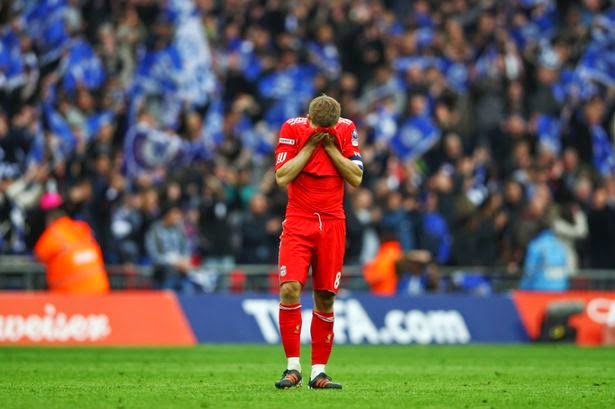
It has been refreshing to see Liverpool back on the prowl for league honours again. The neutral in me recalls a childhood watching them rule over England in dominant fashion. Back then my City were also rans. I didn’t love them any less but people weren’t queuing up to jump on that particular bandwagon. Elvis, Led Zeppelin and Black Sabbath were my favourite bands but they weren’t on Top of the Pops so, with much regret in hindsight, I donned a Bros t-shirt and accepted popular culture. Children are fickle. That young side of me did admire the Liverpool teams of old. The football Top of the Pops – Match of the Day – would play goals from the Red Men like hits from the charts. They were hard not to notice. That same neutral head would find some comfort in Liverpool winning this year, if it’s not to be City, because it’d mean Steven Gerrard getting a Premier League medal. He’s been a world class player for England (about the only one of his generation) and loyal to his club.

This season Liverpool are being noticed once again. And with good reason. Manchester City started the season in explosive fashion. After a few shaky weeks when playing away they started to overturn teams at will. It seemed conceivable they’d score at least four every week, and if you scored four they might score six. But at the business end of the season it’s the red half of Merseyside that has come on strong. After an anxious finish to Sunderland they face a Spurs side spluttering through uncertainty. A win here will more than likely end Tottenham’s hope for a top four finish – Everton are looking a better bet right now – and could spell the end of Tim Sherwood’s reign. I’m not suggesting he’d be sacked now, but the war kitty won’t be his by the time pre-season comes around.

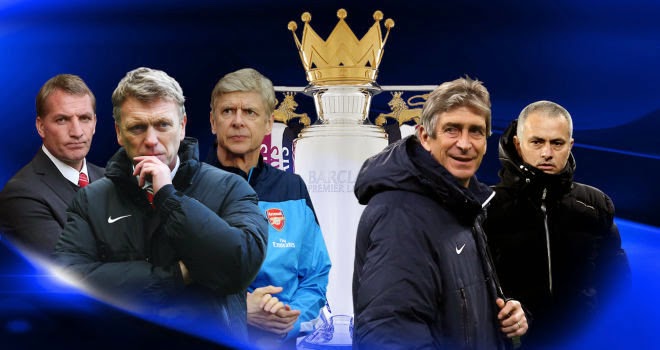
It’s amusing Brendan Rodgers mentioned the pressure on Spurs after spending heavily when in fact Liverpool have a higher net loss than Tottenham in regard to transfer fees, not just this season, but around £70M since 2010. It appears the Northern Irishman learnt how to play mind games – by talking tripe – from his former mentor Mourinho, who has spent the year doing a good impression of the village idiot. Make no mistake: There is an immense pressure on Liverpool now. History weighs heavy with expectation. So far they are coping. If they defeat Spurs, Chelsea and Manchester City at home they’ll stand an excellent chance of bringing the first Premier League title to Anfield.

Attempting to prevent a Merseyside title win are the two sides that meet Saturday tea time: Arsenal and Manchester City. The Gunners are now the outsiders for the crown. I admire the way Wenger has maintained top four finishes on a tight budget while they paid for the new stadium but they continue to fall short. All his trophies came during the first five hundred games of his tenure. How many more hundreds will he get before the fans demand a different approach? He claims the race is still on – and with his side only six points from Chelsea he has every right – but he’ll have one eye over his shoulder now. It’s almost inconceivable that in a season where they were title race pace setters they could finish in a Europa League spot.

They’d have good company there as the reigning champions, Manchester United, look to the high ground, baffled. The most exciting part of their weekend will be a plane flying over The Theatre of Dreams trailing a banner that will read: The Wrong One – Moyes Out, highlighting just how bad the nightmare has become.

Pellegrini’s men have maths on their side, as every rival manager is happy to point out, but the games in hand are a buffer for mistakes more than certainty for points. It’s likely all the teams in the chase will drop silly points in the remaining games, City just have a way to lessen the impact if they do. Taking the three points at Old Trafford in such an easy fashion will give them a welcome boost, a repeat at Arsenal will set them up nicely. You’d fancy them in home games to Southampton and Sunderland in the coming weeks but they mustn’t overlook anyone now. The early season dazzle has dimmed a little but a new steelier centre is evident. This City team has the backbone to grind out a title.

As for Chelsea: well, I won’t say too much because their manager does that for them. But don’t be fooled by his claims the extra games in Europe will play a factor. Winning becomes habit forming and boosts confidence. A good showing against a tricky PSG side will push them on, not drain them. They currently sit top of the pile and must wear a favourites tag without trying to pretend otherwise.

Wherever this year’s trophy goes it will be a season we can look back on with fond memories, a four horse race to the end. That’s four horses, no little dogs. I’m not sure where the dogs are, I’ll ask a United fan, they seem to have gone there.