Made of Stone

Made of Stone

The Stone Roses are once again back in Manchester. After the 2012 Heaton Park reunion the unknown has been replaced with a new question: Will they fill four nights of gigs with unheard material?

Leading up to the Heaton Park performances the fear was the band would no longer have the magic. That history had made The Stone Roses the thing of legend. That a reunited band, most likely driven purely by money, would desecrate the memory of something that was fleeting yet special.

The causes of a collapse were made before any evidence surfaced. Ian Brown was a prime target. Bootleg copies of old gigs revealed a voice that was left wanting. Even the most ardent fans braced themselves for a disappointment.

They needn’t have worried. The Stone Roses moved into the modern day effortlessly. The fears over performance immediately subsided. Even if Ian Brown had struggled to sing in 2012, it wouldn’t have mattered – the crowd did it for him. So timeless are the tracks from their two albums, age hadn’t harmed them at all.

Without the concerns they could no longer do it, one can rightly ask what makes this new Manchester experience a must see. Why did extra nights need to be put on? New track “All for One” indicated it was perhaps an old fashioned tour to promote new material. That reasonable assumption would be incorrect.

If the 2012 events were a heavy nostalgia trip, this one buckles under a weight of reminiscence surpassed only by a demand for tickets.

Out of twenty songs performed on the night, only two were new. The aforementioned “All for One” clearly designed for a quick feel-good stadium sing-a-long, that unlike the back catalogue, won’t survive the test of time.

This isn’t to say it was a bad night – far from it. But it was another live performance of their greatest hits album which is really just an album and a half worth of music. That’s all they have ever produced. And there lies the initial fear from four years previous: what if they have nothing left in the creative tank?

Perhaps they don’t? But it doesn’t matter when what remains is so enduring.

Other bands can go under the radar with greatest hits tours, they pull their material from sources spanning decades. The Stone Roses lack that luxury, thus, are bound to face criticism.

Like a stone, they are hard to reshape now. Creatively they have become rigid, captured in time like a fossil. Pure nostalgia rather than pioneering or fresh. However, the audience seems to connect with this condition.

There were more bucket hats on the night than particles of confetti Chris Martin had spread on the Etihad weeks earlier. The fans no longer blown away by a return to form, just soothed into rose-tinted memories of an earlier time.

The Stone Roses have always been a snapshot of a band in their prime, a music scene at its peak. Maybe it is with careful plotting they have decided not to tarnish that with a modern take, allowing their followers to immerse themselves into a myopic musical memory.
13

13

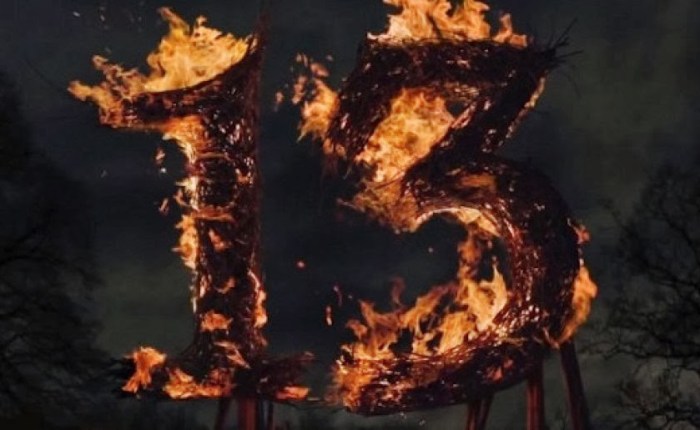
With this being my thirteenth article I thought it’d make good subject matter. Not the number itself, often termed as “unlucky for some,” but the Black Sabbath album. An album that didn’t rely on luck and certainly suffered from no ill fortune. Also we’ll take a look at how it has placed Sabbath in the modern world of music.

Even with the absence of Bill Ward the current incarnation of the band is widely seen as a return to the past, a last hurrah of the old boys. There have been calls from fans all over to get Bill on board but the contract dispute makes it seem unlikely to occur now, so we should enjoy and examine this Sabbath for all it is.

I can see both arguments for and against Bill Ward’s inclusion. Yes, he was a founding member and enjoyed a long run of success in the band. Many see him as much as Sabbath as Ozzy or Iommi. Sharon Osbourne would counter this by claiming Ozzy could make more money touring solo with Ozzfest and his appearance in the band now is for the fans – but he needs a higher cut. Iommi is Black Sabbath. The only member to appear on every single Sabbath album. His riffs not only make the band but defined a genre. Geezer Butler provides the signature bass and all the lyrics. When laid out like that it’s easy to see why they thought Bill was expendable.

The album the reunited members (with Brad Wilk as the sessions drummer) gave birth to was 13. It would have been so easy to produce a record that played by the numbers and offered nothing new or relevant. Instead it acknowledges its past, the lineage, whilst becoming as necessary as anything in the current metal scene. “End of Beginning” opens up with hints of NIB’s DNA before kicking up a gear or two. From the off the album gives the feel of an authentic effort. The popular “God is Dead” follows and the decades fall away. Iommi’s ability to produce a tune is reemphasised time and time again.

There are no weak songs on an album that isn’t afraid to change tone and pace. They could have taken the easy route and produced forty minutes of songs like the first two. Instead they are happy to play and twist all the sounds in their arsenal. “Loner” could have been taken from the Dio era with Ozzy adapting more than ever previously heard on a Sabbath record.

If “Loner” was revolution then the slow paced “Zeitgeist” is pure evolution from Paranoid’s “Planet Caravan.” Evidence of advancement is further found in “Age of Reason” which wouldn’t sound out of place on Metallica’s Death Magnetic. It’s fitting how a band that created a sound can progress further in the atmosphere developed by their students.

Geezer Butler over the decades has provided some great lyrics and this album equals most of them. “Damaged Soul” could well be his deepest metaphor yet. Age may have mellowed the players involved and it’s offered Geezer more introspective views on the world.

The album ends with rain and church bells, much like their debut album began. In doing so it gives a sense of completion, a circle that is now complete. If it is to be their last album I approve of the gesture – I’m a sucker for things with a cyclical nature.

But I have a feeling there is much more to come. The idea the last album loops to the first is great, but the gesture can also be seen as a nod to the past, confident they are rightly placed moving forward. It’s commendable that on this album they provided enough flavour of their former glories without becoming a parody of themselves. Whilst one shouldn’t get too carried away – it’s does lack the textures and depths attained in Vol 4 and Sabotage – they have pulled off the trick of being a genuine article of days-gone-by and something modern.

Like true legends, that have faced adversity before, the process of them coming together again hasn’t been easy, but they have managed to make it work. Contract disputes and well-documented illnesses aside, the feel of them live was missing as recent as 2012. I saw them perform when they headlined the Download Festival. It’d be easy to make excuses (Iommi was in recovery from his treatments; Ozzy had fallen off the wagon) but the fact was they hadn’t found their sweet-spot. For lesser bands they’d have called it a day. Seen it as a sign that perhaps they were past their best.

Not Sabbath. They carried on. 13 was completed and a world tour began. During the process they grew organically again. When I saw them in Manchester at the end of 2013 it was like being transported back in time. Ozzy sounded like he was on an LP, not a live mic. Iommi played effortlessly with great enthusiasm. Butler played as well as he did at Download – and for my money he was on fire there. Tommy Clufetos also provided the best drum solo I have ever witnessed, and I’ve seen Cozy Powell live and Roger Taylor play a bass with his drum sticks.

At one point Ozzy asked, “Should we come back and do this again?” The crowd roared approval. “I think we may,” he replied. Let’s hope they do. There’s still a role in the world of music for Black Sabbath to play.

Manchester International Festival

Manchester International Festival
The Manchester International Festival, or MIF, has already started to fade in our memories just like the sun is slowly starting to be obscured by clouds. Before it’s no more than a light drizzle in the mind’s eye I shall recall my highlights.

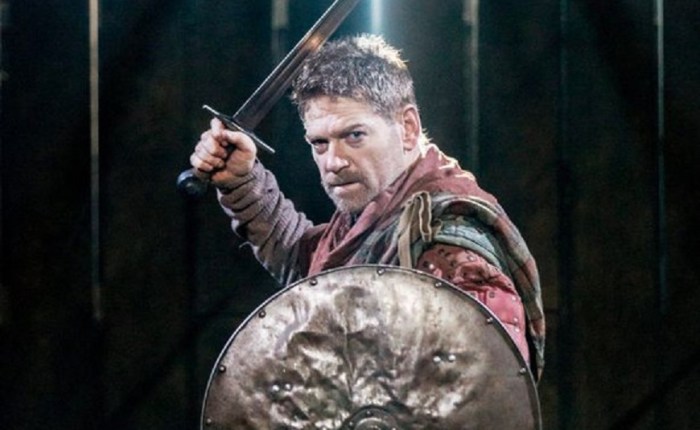
I felt as privileged witnessing the great actor undertaking a Shakespearean role as I did being party to the unique setting. The deconsecrated church in Ancoats provided an absorbing atmosphere that allowed the play to feel large when required but was intimate enough to engage during the delicate nuances each top performer provided. Two tall wooden viewing platforms faced one another with a mud filled aisle separating them. An aisle that was to become the stage throughout, along with the former alter area that gave way to candles beneath the stain-glassed windows.

From the Wicked sisters starting us off with a haunting interpretation that had me squeezing my partner’s hand, to the initial battle scene played out with rain and mud, the experience never let up. Branagh was particularly engaging earlier on as he wrestled with his guilt. As he became the ruthless leader his Lady Macbeth, played by Alex Kingston, demonstrated the plunge to madness with chilling effect. There wasn’t a weak performance during a play that delivers some of Shakespeare’s best lines.

Much has been made of how close the action was in relation to the public – to the extent we were warned not to wear clothes that needed dry cleaning – and how it made the opening sequence all the more breathtaking. Whilst all that talk has been valid a special mention should go to the sequence when Macbeth is shown the prophecy that concludes with the procession of Kings. The alter area had a line of flames that cast a hellish look over a contorting image below. If I say it was multiple actors squirming beneath a patterned sheet I wouldn’t be lying but it would be a great discredit. Periodically a face would appear as it pressed upward through a now seemingly thin cover. What the prophecy foretells is scary enough for Macbeth; the literal vision was a pure art of horror.

Will I see such a strong cast again in an iconic play? Maybe. Will it be in such a great venue? Probably not.

If a viewing of the Scottish play has people discussing the obsession of power then Massive Attack v Adam Curtis took a string of that theme and expanded upon it. After waiting for the curtains to open I found myself in a horseshoe of big screens, meaning the documentary is played all around the public, with the band behind the apex section. Adam Curtis’s film starts with the East and West in the 1960s. He quickly, and without debate, tells us how the two opposing sides want to control and change the world. Through a series of national events and interweaving personal stories we move onwards through history. As we go we’re told the governments realised they couldn’t control the world so they stopped making us worry about that “other side” and to panic over ourselves instead. When computer technology came along they tried to construct models to predict the future. Of course, they failed.

Curtis gets you on his train of thought early on and takes you along his predetermined viewpoints without room for consideration. There are no alternative interpretations, only what he sees as fact. And it works. At least for the purposes here. The soundtrack – because that’s what it was, it was no gig – was played out as a perfect accompaniment. When Nirvana’s version of “Where did you sleep last night?” started to play I couldn’t help but join in. In doing so I reinforced Curtis’s view of the two-dimensional world we now live.

Curtis himself has been quoted as saying the documentary is about the illusion of power and power of illusion. In a world that runs this way it’s us – the normal, everyday majority – that appear to suffer. It seems that Curtis is from The Matrix opening our eyes with a red pill but feeding our minds a blue one of his own creation.

Festival square saw its fair share of the majority each day. It provided a relaxed meeting place with food and drink. The Pavilion also gave us Rob da Bank for a Friday night mix of music and a slideshow of Mancunian music history on the cinema-esque screen. It could have easily slipped into the Land of Cheese but the DJ chose his soundtrack with excellence.

The following night I witnessed New Century Hall and Despacio. Tickets were in high demand for what promised to have all the ingredients of a good boogie. James Murphy of LCD Soundsystem fame joined David and Stephen Dewaele (Soulwax, 2Manydjs). Had you previously seen the latter at a festival you may have been underwhelmed but they played a way befitting the venue. Seven large speaker sets that appeared to have been robbed from a retro-future bar lit up whilst a disco ball glittered across the high walls. It was more disco than dance. Those in search of a Sankeys (RIP) replacement should have been mindful this was still MIF, and as such, a different audience.

A personal highlight of the festival was Tino Sehgal’s This Variation. Beforehand all I knew was it was sensory overload due to a darker setting. I’ll be honest, I was expecting a light show that perhaps distorted images on a projector in a dark room, or something like that. It’s fair to say I was going in blind. Quite apt then that what I found it to be was a room in pitch-blackness thus making me completely blind. If you recall, the Weird Sisters in Macbeth managed to put the heebie-jeebies up me, so being a dark room, bumping into strangers, hearing shuffles and whispers and chanting had me wishing I was in a diaper. After what seemed like an hour (it was thirty seconds) those chants became a full-on dance song. I quickly turned for the exit.

Not proud of feeling like a chicken and getting a strange look from the volunteer outside when I remarked: “That was pretty scary,” I took a few minutes to have a word with myself. I reasoned that a blind-person in a dance club had more noise, more strangers around them, more cause for confusion. I reached the conclusion I should try again. This decision was accelerated by the fact I was also watching the mise-en-scène by Mårten Spångberg entitled Epic. My mind is open to varied interpretations but I couldn’t escape the idea later that evening people wouldn’t have understood it but would be spouting pretentious statements about its true meaning. When it got to the point a guy in a see-through top was waving his out stretched arm slowly to a David Bowie song whilst doing a belly dance that started in his shoulders I knew it was darkness or bust. Although it’s only fair I come clean and admit I stole this particular dance move and used it at the aforementioned Despacio night.

Second time in the pitch black setting of Tino Sehgal I found my inner force. Okay, not exact bravery but the intimidation was more comfortable than the idea of facing more Epic. Slowly my eyes, thanks to a dim purple light above, started to make out shapes. The slap of white paint across the walls gave the room a dimension. A little while longer (about fifteen minutes) I could make out the performers. They were moving around, moving up to guests that had acquired night vision. Together they produced all the required beats, hums, special effects and vocals. They danced at times like a dance troop, at others formed segregated areas. In the dim light it struck me I was in an alternative reality’s idea of a nightclub. It had music, people, an underground feel like a twisted Turnmills (RIP). Moody acid.

Familiar songs sometimes appeared with a unique twist as the talented performers made their way through each variation like one organism. For a person that started out so scared I amazingly didn’t want to leave. So I didn’t until they formed a single wall and sang “it was time for us to go now” with cheeky smiles. It hadn’t all been music, Sehgal likes debate, too. There were periods when the show stopped and the performers would raise and discuss various points. Like the income you earn is of great consequence but the job you do could be of little consequence. Even these staged chats had an ad-libbed feel that complemented the experience. It wasn’t just the music that faced time-outs, very briefly the purple light above shone full beam giving the blackness a rest. By now the light was the unwelcome stranger to the rapture given by the dark.

An experience so good I went back the next day and went through it all again, this time even receiving a hug from a performer as we danced in close proximity. Much closer to the action than even those on the front row at Macbeth.

This year’s MIF was a resounding success. It succeeded in opening up the city and its people in every possible way.