The Trouble with Touré

The Trouble with Touré

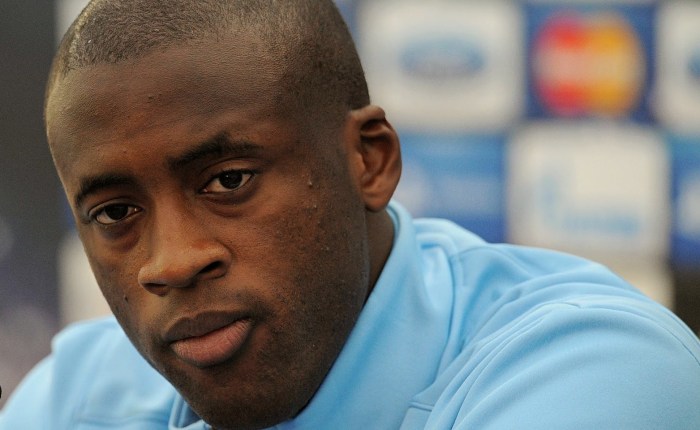
Certain things can’t be denied when it come to Yaya Touré. His talent is unquestionable. Last season he drove Manchester City to a league and cup double, scoring 24 goals in all competitions from midfield. He is also controversial and divides the opinion of loyal supporters. From missed birthday cakes to protracted transfers, he appears in the media for the wrong reasons, when it’d be more fitting if he was revered in the same way players like Messi and Ronaldo are. Or is this a stretch too far?

Before we go any further, I should make my personal thoughts regarding a few things Yaya clear. In spite of his performance last season, I would have happily seen him sold in the summer. A number of factors played into this. The obvious one was the way he allowed his agent to act unprofessionally and disrespectfully toward the club. It seems obvious they were either haggling for an improved contract or were seeing if they could manufacture a move away. He’d just had the season of his life so they assumed Yaya’s stocks were high, that they should cash in.

Of course, they didn’t get a move, and City held firm. These initial actions undid all of Yaya’s work gaining loyalty from the fans. I have no problem with players wanting to move on. As Sami Nasri noted when he left Arsenal, he wasn’t a fan, it’s just his career. I get that. I don’t expect everyone that pulls on the blue shirt to be a City fan. This doesn’t mean they can act in manner that wouldn’t be acceptable in another line of work. Yaya was unprofessional. This combined with the high wage, the fact he’s already 31, meant it wouldn’t have been a terrible move to balance the books the same summer we faced FFP fines and restrictions, by offloading a player that had stepped out of line.

The standard response here is to argue he is irreplaceable. Well, no man on the planet is irreplaceable. I’m not suggesting there is a like-for-like player out there. City would have needed to change the way the team plays. Formed a Plan B and C. Given the one dimensional tactics we adopt in the Champions League, this wouldn’t have been such a bad thing. Mentioning the Champions League, it is worth noting that Frank Lampard, the 36-year-old, warming-up for his American vacation, looked a level above regular City midfielders the night we played Roma. The only one comfortable at that level. So perhaps we shouldn’t place Yaya on that pedestal just yet.

Which brings us to the main niggle I hear at the ground, in the pub afterwards, and in groups and forums: The idea Yaya can’t be dropped/should be dropped. Some argue his moments of magic, which appear from nowhere and clinch big games, allow him to drift rather than put a shift in. That he looks laboured when he’s not. Others argue that no player should be guaranteed a place if their form continues to dip. I sit more on the fence with this one. At some point any player, regardless of stature or former contributions, should face the axe if they fail to deliver. For me, at this moment in time, Yaya is still one of the first names on the team sheet. The recent Aston Villa game is a good example of why he’s a worthwhile passenger to have along for the ride.

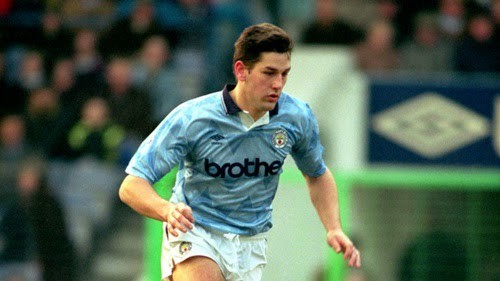
The idea of who your favourite player is should lend an idea to the damage Yaya has inflicted on his own legacy with the club. David White is my personal favourite. I know he’s not the best footballer I’ve seen play for the Citizens. But watching him burst off at pace, smash shots on goal, was like watching a superhero when I was younger. I know nostalgia plays its part there. It still breaks my heart, that Niall Quinn made the club’s Hall of Fame, and White didn’t.
MCFC White

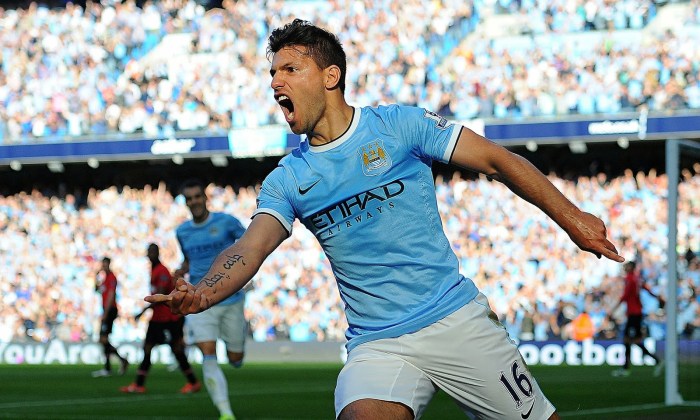
As for the best player I’ve seen, the most talented, it has to be from the current crop. I think Sergio is a true world class talent, belonging in the upper echelons of the world elite. David Silva also rates highly; if he added more goals to his game it’d be hard to dismiss him. Yaya Touré should be above both of these though, in terms of contribution and evident talent. Yet, how many City fans would have him as their number one now?
There’s still time for the fans that criticise him to warm once again. The tarnished summer can be painted over with the gloss of further success. I don’t subscribe to the idea any dip in form is a loss of interest. Reneging on the agreement he wouldn’t attend the 2015 African Cup of Nations could be seen as a further effort to appear inflammatory, I suspect it’s just a change of heart. Also, the loss of his brother will be weighing heavy on him and affecting his actions. Such an experience often requires years of recovery.

Yaya hasn’t been given the recognition by external awarding bodies. Last season he was cruelly overlooked. It’s easy to see why that could breed a feeling of being unloved. It doesn’t excuse his actions over the summer, but as fans we should wipe the slate clean. If the professional critics fail to give him his dues, the best we can do is start sending back positive vibes from the stands.

Summer Transfer Market and FFP

Summer Transfer Market and FFP

The summer transfer window has come to a close and with it an end to months of speculation. This year it wasn’t just the destination of our favourite stars that was widely discussed, it was if Financial Fair Play (FFP) would alter spending habits. Now that the dust has settled we can see if FFP had any effect on the window.

On the face of it one would be forgiven for believing that FFP has had little effect on clubs. Before we jump to that conclusion we need to look at factors that affect the net spend of individual leagues. The English Premier League managed to spend a combined total of £630M on new players. To offset this outlay clubs are dipping into their newly topped-up television deal fund, believed to be worth around £500M for the clubs this year. In the past I have been critical of FFP and believe the rewards on offer in the game negate sensible business approaches from clubs. This has been highlighted once again at the close of the transfer window.

Manchester City spent £102M in the transfer window in the hope to regain the Premier League title and have a decent Champions League campaign. They have the wealthy owner to bankroll such an outlay but it is optimistic to assume they will comply with FFP at their current rate of losses. Their sponsorship deal with Etihad is still under review, if that is deemed unfit they would find themselves in a difficult position. It must be said that despite the seemingly high spend they do have an eye on FFP. Clever deals to sell Tevez – a high wage earner, close to the end of his contract – and loaning out Gareth Barry to reduce the wage bill further, along with ten other players leaving, displays an awareness they must comply. More on compliance later.

Staying with England for now, Tottenham Hotspur top the spending charts with a sizable spend of £107M. This is covered by the world record fee received for Gareth Bale, so when you consider they have approximately £25M extra with the new TV money, they’ve refreshed their squad free-of-charge. Newcomers Southampton and Cardiff both spent £34M, placing them sixth place in the spending table. This is an example that clubs will spend – perhaps more than they should be comfortable with when you consider their previous season income – in order to stay in the rich land of the Premier League. Avoiding relegation brings riches comparable to a top four finish for the “big” clubs.

A club hoping to rejoin the top four is Liverpool. They have outlaid a not-to-be-sniffed-at £49M. However, this has been a club spreading their money wisely. Whilst they lack the traditional marquee signing, they have successfully strengthened their squad and kept FFP in mind. Where needed faces have been released or loaned but they’re taking a prudent approach that is showing signs it will improve them. Arsenal did make a marquee signing, a whooping £42.4M for Mesut Ozil. All summer they threatened to spend big and did so in style. They have managed the repayments of their new stadium in recent years to the detriment of their transfer policy. It seems those lean days are over. Expect them to go hunting for a striker again in January, knowing they can spend and comply with FFP.

Manchester United have been the focus of much ridicule and criticism following a transfer window that saw them fail to capture their major targets and ending up with Marouane Fellaini at a price higher than his former buy-out clause. David Moyes would have had insider knowledge of this clause, having just come from Everton himself, but Manchester United’s slow manoeuvres in the market meant their first choice targets weren’t acquired and Fellaini was signed out of desperation to do some business. Had they really wanted him it stands to reason they’d have met his buy-out clause earlier in the summer.

What is most shocking about Manchester United’s activity is how they appear most aware of FFP and thus most reluctant to spend. This is shocking because out of all the clubs in the Premier League we’re led to believe they most easily meet the requirements. But they refused to increase their offer for Ander Herrera by a mere €6M to trigger his release clause. They twice submitted the same bid for Leighton Baines, believed to be £12M. It’s quite ironic that a concern people have with FFP is that it’ll create a status quo, that the big clubs remain big as others can’t compete financially, yet at the end of the summer window the team believed to be biggest of them all spent so little in comparison to its rivals.

Earlier I mentioned FFP compliance and when considering the spending involved with Paris St Germain and Monaco it seems they have, and will, be taking a different approach to the new rules. PSG have a tie-in with the Qatari Tourist Board. Whilst not described as an outright sponsorship, but partnership, that earns the club €125M a year. It’s difficult to see UEFA approving such a deal as income when they’ve spent so much time investigating legitimate sponsorship deals. But PSG must be confident as they spent €84.4M in the last window alone. If that sounds high, and based on dodgy ground, then spare a thought for AS Monaco. Last season they were in the second tier with an average attendance over just over 4,000. This year they have a net transfer spend of €160M. They must be banking on FFP being successfully challenged on the basis it restricts competition. It’d be a sweet moment if Platini’s initiative to haul in English Premier League spending is undone by the two French clubs.

The English Premier League and the aforementioned French clubs aside, there is evidence that FFP is starting to dictate the transfer market. The top flight in both Spain and Italy saw revenue from transfers exceed expenditure. The same is true for their second tiers, along with the English Championship, and a host of other European leagues like the Dutch and Portuguese. In fact, it’s only the French top tier (thanks to PSG and Monaco) and the German Bundesliga that finished the transfer window in the red. And considering that the essence of FFP is based around the German model it’s safe to assume they are spending within their means. Everyone else across Europe is spending with greater caution.

Everyone except the English Premier League, but it goes to show that if there’s money available clubs will spend it. They have to if their rivals do. The transfer system as we know it won’t be dramatically altered in light of FFP, the big transfers will still occur. But overall a more level-headed business approach is coming into play. And even with the EPL’s massive expenditure this summer it could be argued that the major signings took place elsewhere. The English Premier League is becoming the most expensive league without having the highest level of talent. But it is still the most exciting, so it seems fitting it’s the one that has the most summer transfer activity, because watching clubs throw cash around can be fun.


Christopher William Kinsey’s essay Financial Fair Prejudice is still available via the Kindle Store from Amazon.


The Magic of the Cup

The Magic of the Cup

In days gone by the FA Cup Final was the curtain closing showcase end to the English football season. As a boy I’d wait excited all day by the television. Watching the teams arrive at the stadium in their special FA Cup suits. Later doing their special pitch walk. All of them looking relaxed but bubbling with the sense of the big occasion just like the fans watching. Winning the FA Cup may not have given a team bragging rights about being the best in the land but the desire on that day matched the league campaign. If a team managed the league and cup double it was a mark of excellence.
 
Nowadays the cup clubs want in their double, sometimes before the domestic league itself, is the Champions League. The prestige of the world’s greatest and oldest domestic cup now sits above the League Cup as a consolation prize or a good addition to the Premier League/Champions League double. It doesn’t take priority. Which is a shame. It doesn’t even get to be the closing game of the season due to Wembley staging the Champions League final this year. Over the years its value had been left to erode to the point the cause take its slot as the season closer.
 
There is a paradox in this, and I love a paradox. The chase of the Champions League dream and most recent English success came by way of Chelsea. They failed to finish in the top four that year but were crowned Kings of Europe. Back in the old European Cup format at least when teams like Liverpool had their successes they deserved that mantle without question. And the FA Cup still had its importance. Clubs chase the Champions League dream when on paper it should be the one devalued. Unless they’re chasing the cash flow of competitions regardless of other factors. I’d love to see the FA Cup winners be awarded a spot in the Champions League in place of the fourth placed Premier League side. Of course UEFA will never allow that but it’s one way to make the Cup illustrious again.
 
Despite the current state of the Cup compared to its former glory days, come final day it is the biggest game on Earth for the two teams. This year we’ll see Manchester City face Wigan Athletic. Both sets of fans appreciating the trip to compete like it was ten Champions League finals rolled into one. It wasn’t so long ago Manchester City dreamed of the current success they’re currently experiencing and Wigan probably started this season with the aim to avoid relegation. Neither will have enjoyed the league this year so the Cup provides a welcome distraction.
 
It’s more than just a distraction, though, they’ll both desire a win immensely. For Manchester City a season without something in their trophy cabinet will be seen as a massive failure. Whereas Wigan may well be thinking this could be their only chance for a long time to take some silverware. Even the managers’ futures could hang on the result. City’s Mancini could be given more time, as he deserves, should he take the FA Cup back to Manchester like he did a few years ago. Wigan’s Martinez on the other hand could be lured away if he wins a trophy with a small club.
 
The ramifications of success and defeat won’t be felt on the day. For that special time at Wembley the fans and players alike can be lured into the spell of the FA Cup and will willingly partake in the belief it’s the only game that’s mattered all season. If there’s any doubt whether or not this cup is craved look at the faces of the winners after the final whistle. The magic of the cup will be etched on every one of them.