Adidas: The Brand with the two sides

Adidas: The Brand with the two sides

The BBC have reported that sports manufacturer Adidas are to end their commercial agreement with the world governing body of athletics, the IAAF. It appears that the recent doping scandals, highlighted best by the allegations of Russian state sponsored cheating, has brought them to the decision. It seems strange they have found moral ground after refusing to condemn FIFA and Sepp Blatter amidst corruption charges.

In big business making public displays like this from large corporations is more about image than moral fibre. People sat in an Adidas boardroom will have decreed that being associated with drug cheats is detrimental to the sporting brand.

This sounds fair enough. When a company is paying in excess of $8m a year, they deserve to be linked with an honest product. There’s no doubt the doping claims and lack of trust surrounding athletics is a turnoff for spectators and commercial partners.

But the IAAF have been more than willing to root out the wrongdoers and have welcomed – albeit with red faces – the findings from World Anti-Doping Agency (WADA). They reported that corruption was rife within athletics but their condemnation was aimed at former IAAF President Lamine Diack.

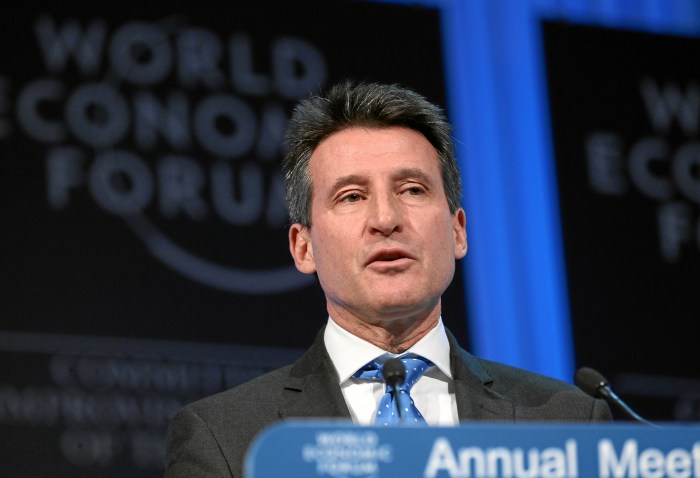
However, the report, presented by respected former president of WADA, Dick Pound, concluded with the statement: “There’s an enormous amount of reputational recovery that needs to occur here and I can’t think of anyone better than Lord Coe to lead that.”

Lord Coe

So we have a large sporting institute in turmoil that has taken steps to correct itself by inviting independent bodies to air their secrets in public. Furthermore, they have installed a new president, in the guise of Lord Coe, who has universal backing and is beyond reproach.

But Adidas want to jump ship.

This is the same Adidas that refused to criticise Sepp Blatter when he was coming under increasing scrutiny towards the end of his FIFA reign. The same Adidas that has been the longest serving sponsor of football’s governing body but didn’t flinch when FBI investigators started to detail a web of corruption far more widespread and complex than the one affecting the IAAF.

The same Adidas that seems to have put money before morals.

Leaving the IAAF now isn’t making a statement against drug cheats in sport; it’s taking money away from an organisation trying its best to fight corruption.

The IAAF want to clean up athletics and isn’t running for cover or acting self-servingly like Blatter and Platini did. They shouldn’t be punished for the actions of some within the sports they represent. If a footballer takes drugs he is accountable for his actions, the authorities he plays under should punish him. Adidas should punish the athletes and nations that sought to gain an advantage, not an IAAF trying to reform.

To put it into context, Coca-Cola, Visa, McDonald’s and Budweiser all made statements in October 2015 stating that Blatter’s continued presence at FIFA was holding back reform. However, at the same time Adidas stood by the now disgraced president.

There’s too much to be gained financially by staying in bed with FIFA.

Adidas weren’t interested in making an ethical choice when the FIFA scandal came to light, don’t be fooled into thinking they care about sporting interests now. To this day, FIFA are still resistant to impartial third parties assisting in reshaping the organisation to help wipe-out corruption. There’s no WADA-type invite being issued by them.

The IAAF will survive and under Lord Coe will overcome the many difficulties facing athletics. When they do triumph they’ll be better off without hypocrites like Adidas in their party.

Financial Fair Palter

Financial Fair Palter

A little over two years ago I made my opposition to Financial Fair Play clear in Financial Fair Prejudice. At the time the arguments against the system felt like the final futile attempts of resistance before football’s fair days of competiveness would be glazed over by a constant status quo. But this week Michel Platini proved that money’s more fluid than the previous positive counter-arguments. He announced that FFP would be eased this summer.

Victory at last? Not quite, well, not quite yet. It won’t be until the end of June we see exactly how much UEFA will ease the current rules. It also remains open to debate how they will do this and maintain a governable system. It is a step in the right direction. Or more accurately, a shuffle away from the wrong one.

Throughout various articles here I have attempted to demonstrate the reasons FFP is wholly unfair. That’s not to say I scoffed at Platini’s other remarks this week, namely the claim FFP was “working well.” To some degree, it is. If you recall, I have always been an advocate of a system that prevented a future Leeds or Portsmouth situation. My distaste for FFP has never meant I’ve overlooked this sentiment.

The figures themselves highlight the areas where FFP has been a positive force for change. But these should be used with caution, as other figures indicate an alternative version why FFP is being eased. Far be it from me to think ill of Platini or UEFA, or question their motives, but one could argue they aren’t acting out of benevolence at this point.

First, those good stats. The easiest demonstration is the net debt across all of Europe’s clubs. This has fallen from €1.7Bn to €400M over the three years from 2011 to 2014. Here in the Premier League transfer spending was the same in the recent January window as it was twelve months before, but notably less (by approximately £95M) than the 2011 January window. If we examine the club punished on our shores due to FFP, Manchester City, they have reduced their wage bill by £40M over this period.

Some will argue clubs, such as Manchester City, have shuffled some wages on their accounts (it’s reported support staff at Manchester City now are on the City Football Group’s payroll) but no one can deny a concerted effort has been made by England’s leading clubs to become more financially responsible. This is if we ignore the example set by Manchester United since their departure from the Champions League.

Newly crowned champions, Chelsea, did their business in the summer and reluctantly had to balance the books to bring in the signings they wanted. Arsenal have been doing this for years and continued to do so. The aforementioned City may not have spent as wisely but it was all within the tight confines their punishment afforded. Relegated Burnley resisted the urge to splash to survive and depart the top flight as a healthy model.

As a whole it appears that the majority are making the transition from potentially reckless to greener pastures.

This article now sets a record for the longest I’ve spoken about FFP without a criticism. Don’t worry, I have a few to hand. One last positive before we get there, and an example why we do need FFP to some (lesser) degree, the QPR model. They claim to be cutting costs but they are leaking money without any sign of on-field progression. Shareholders wrote off £60M worth of debt but they are still accountable to the Football League for financial irregularities. This alone could see them plummet through another division. Tony Fernandes isn’t fooling anyone when he says the club has learned from previous mistakes.

Fernandes is also the embodiment of the fair-weather rich chairman, fans of clubs without money threaten to those with new wealth. Manchester City fans have heard for the last few years, “What happens when they get bored and take their money with them?” It’s similar to what people levelled at Chelsea supporters when Roman Abramovich first appeared on the scene. He’s still going strong and so will Sheikh Monsour for years to come. It’s the QPR owner that has invested in a reckless, ill-advised, foolish manner, without an overarching plan or ways to improve club revenue streams, and he’s also the only one that has flirted with the idea of turning his back on football.

Roman and the Sheikh are successful business men. Most of these are rich because they are good with cash. They don’t consistently lose money. Rich football owners – those running the club with cash, not debt – are bound to apply similar rules. Losing cash isn’t in their DNA. The difference with Fernandes and his sporting ventures, QPR and the Caterham F1 team, have been treated like pet projects. Chelsea and Manchester City were extensions of successful business portfolios. As such they were examined and reshaped to flourish as a business. Success on the pitch was intertwined with eventual profits off it.

What irks me is the two-faced side emanating from Stamford Bridge in recent years. They should take applause for being an example of why FFP is bad for the game. The Chelsea model should be a term for how to achieve success. Instead they shade over their accelerated growth period and pretend they are on board with FFP for the good of the game. They’re on board to prevent new money clubs catching up with those in the elite party.

José Mourinho speaks as if he’s a crusader for FFP. That heavy spending – regardless of how it is sourced – should be stamped out. That this is Year One and the income you generate now is the only allowed money. No accelerated growth periods for anyone else. This is repulsive for more than one reason. Mourinho never mentions how Chelsea posted a £140M loss in 2005 in order to transform the club from also-rans into the outfit they are today.

During this heavy investment the model has seen Chelsea become the third largest generators of income in the Premier League. They only achieved this by spending in the first place. José also speaks as if they now comply because of the rules. This is a fallacy. In 2006, then Chelsea Chief Executive Peter Kenyon, claimed they would be self-sufficient within a year. His figures may have been out but the business model was clear: Roman didn’t want to run at a loss forever. Just like Sheikh Monsour, he knows to make a better business an initial loss has to be absorbed.

As usual Arsène Wenger sits in room complaining without many listening. This week’s snippet from Moan Corner was how UEFA lost FFP when it removed youth investment from the calculations. It seems Mr Wenger not only wanted to ensure the Have Nots never will have, but that the Always Haves also corner the youth market.

This encapsulates the reasons why the voices that at first appeared ignored, (I myself wrote: “There’s no point arguing against Financial Fair Play anymore,”) have suddenly found welcoming ears. The idea that clubs could never catch the big guns without being allowed to follow a well-implemented growth period, albeit running at a temporary loss, found traction. It did this slowly and with a dawning realisation across Europe.

The impending court cases levelled against UEFA have played their part. They highlight the moral hypocrisy of the current system but more worryingly for defence lawyers, the legal problems set off alarm bells. UEFA is tied to EU laws. And while the EU doesn’t want to see a sport in their lands defy current convention, they are accountable by their own mandates. Freedom of trade and competition laws being the major headaches.

Also, the money in football generates its own mini-economy. If the cash at the top is prevented from purchasing assets then smaller clubs find reduced revenue. Debts may reduce for those chasing the perfect model but ends can’t be met in smaller boardrooms. Blackburn Rovers are a solid example here. Their debt has increased by £24M in spite of reducing the wage bill. The secondary economy – but most important to me – is the impact on the fans. FFP, in its original form, will mean supporters pay the price as clubs try to balance the books.

Everything has a breaking strain. For the current FFP it came from European clubs struggling to stay on the top level without extra investment. They saw the Premier League sell its TV rights for £5.5Bn and realised the gap was about to become unbridgeable. Even Platini admits the Italians have asked for FFP to be eased even though it is other nations that currently benefit most from foreign investment. Monaco had already reacted by loaning out Falcao to remove his high wage from their books. Their loss was the gain of nineteen other clubs in the Premier League.

It’s possible big clubs like Manchester United – going through an accelerated growth period of their own – and Real Madrid lent on UEFA to lessen FFP because of the impending cases. They do operate with large debts; something that clubs like City and PSG have argued should be factored into calculations. Easing FFP takes the spot light away from those with big debt but large fan bases, reducing the microscopic moral investigation.

The most telling statement from Michel Platini was: “Any potential changes will look to encourage more growth, more competition and market stimulation while strengthening the emphasis on controlling spending and safeguarding financial stability.”

MCFCAc

He’s summoned up perfectly the Manchester City model, the very ethos I championed before FFP was introduced. But don’t worry Michel, hindsight is 20/20.
Qatar! What about Brazil?

Qatar! What about Brazil?

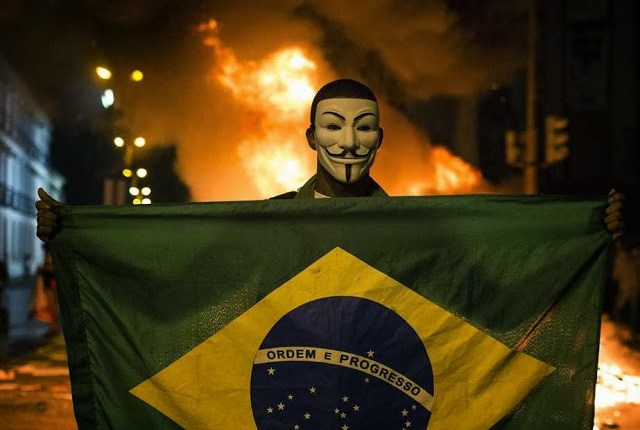
Ask football fans the biggest problem facing future FIFA World Cups and they’ll more often than not mention the heat issue in Qatar, more specifically, the calls from some quarters to make it a winter World Cup. What most of these fans, with their legitimate fears over Qatar’s ability to host and the nature of their acquisition, overlook, are the shortfalls facing next year’s tournament. It’s as if the world is turning the other cheek because of Brazil’s glamorous sporting history. But for the day-to-day folks on streets across Brazil they care less for football than they do for an improved quality of life.

The problem at the heart of the situation arose back in March 2003, when FIFA announced that South America would hold the tournament. It sounded reasonable, the continent had been travelling to World Cups across the globe since it last acted as hosts during Argentina ’78. Without a challenged bidding process from the other confederations it was left to the countries within South America to create candidates. Much muted alliances never materialised; hence, Brazil was chosen without a rival bid. Less choice is bad. That lack of competition was unhealthy. We’ll get back to that process – of bidding and attempting to sell your bid – in a minute. The cause has resulted in a Brazil unprepared and a tournament, which by all accounts, should be in jeopardy.

The cancellation of Soccerex, a football industry conference scheduled to take place in Rio de Janeiro, should have raised alarm bells. Instead it was reported with a murmur before being buried amongst far more entertaining football stories or snippets from Alex Ferguson’s autobiography (or character recollections). The organisers claimed the ongoing civil unrest was to blame. The State of Rio says it was due to Soccerex lacking private funding and they wouldn’t spend any public money to hold the event.

The truth may well be both, just played off against one another for political gains. There have been well documented violent protests across Brazil; Soccerex probably would have liked to have been helped out with a donation from the Brazilians. For the State of Rio to claim they wouldn’t waste public money in this manner is quite cheeky, though. As if to appease the protesters that claim public services should be funded over the World Cup, the Brazilian figure heads are ignoring – or failing to mention – that their World Cup has already cost them three and a half times that of the South African one, and more than double Germany 2006.

Where has all that money gone? Stadiums alone amount to £550M, another £2 billion on airports, £1.1 billion for works attached to the “Growth Acceleration Programme”; this doesn’t include spending on things like the buses, they come in at £375M for a better fleet. Facts and figures can be generated all day, to put it in the best perspective a recent protester was quoted saying: “We love the World Cup, we love sports – what we don’t accept is a government which wants to look good by investing millions in the World Cup but forgets about health and public education.” Sounds reasonable to me.

The truth in that statement highlights the hypocrisy and self-serving attitude that football’s governing body lives by. They care little for the effects on the supporters of the beautiful game as long as their bank accounts increase exponentially. Brazil didn’t even have to bid against other nations and prove they could host an effective games, let alone afford one. And FIFA doesn’t care if a country runs itself into the ground as long as they make money in the process. A football club may be banned from competition if it exceeds Financial Fair Play guidelines but it’s perfectly acceptable for a nation’s health service and education system to crumble if FIFA make a tidy sum of cash.

These are the people of the world they claim to care so much about. The people they wish to bring football to. The people that are all equal and should come together under the banner of football. But, for the people that come together, some are more equal than others. They fail to take strong action against clubs when their fans use racist chants. They suggest openly through President Sepp Blatter that homosexuals should refrain from activity during the Qatar World Cup. So certain groups are willingly ostracised if it serves their greater good (which in FIFA’s case is always money).

This brings us neatly back to the topic of bidding for a World Cup, and selling your bid as an attractive option. Well Qatar went about it in a slightly different fashion. To cut a long-ish story short, they bought the World Cup. Why waste time having the best bid when you can just purchase the thing instead. Allegations have since been retracted but it’s plain to see how the process really works. If it was just about new areas hosting and the strongest bid winning then Australia would be 2022 hosts. As it stands they are poised to strike FIFA with a legal serving. If the 2022 does indeed become a winter games they will seek compensation for expenditure incurred for their failed bid. They entered a process for a fixed tournament with stringent parameters, to then shift it to a different time of year voids that process. Sounds reasonable.

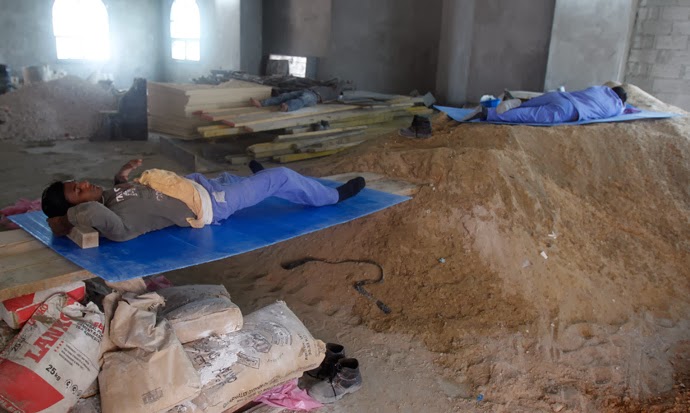
The time of year appears to be the big debate with Qatar. The English say it will affect three years of Premier League fixtures if it’s moved to winter. Michel Platini, very maturely, pointed out football’s fixture list had suited the English for one hundred and fifty years so we could change just once (albeit three years running). These squabbles take away from the most important point: we should spare a thought for the migrant workers building the 2022 World Cup. Often denied food and water it’s estimated that up to four thousand will perish. It’s not slavery if it serves FIFA; it must be acceptable. Because the World Cup is all about bringing people together.

Qatar

And the next World Cup, that’s getting ever closer, is bringing the people together. The real people on the streets. Mass protests hampered the Confederations Cup, this served as a warning that was ignored. Since then the outrage has become more violent with police vehicles torched. Yet, people power alone might not be what brings Brazil 2014 to its knees, ironically it could be the same greed and bureaucracy that drives its Big Daddy, FIFA, on.

Most major tournaments face that scare mongering close to the curtain call. Whether it be an Olympic games in Greece or a World Cup in Russia (they’ve come out of this article unscathed and unmentioned), they’ll always be panic that the place won’t be ready. But they always are and always will be. The chances are, civil unrest included, Brazilians will take to the World Cup, embrace it and put on a great show. There’s also a high chance they won’t be ready in time. No really, this isn’t me scare mongering now. For several months I have been back and forth to Brazil. What I have found is a county unable to function in a modern and professional manner. It ties itself up in red tape at every corner and there’s always a tax be applied at an extortionate rate. They lack the impetus to move forward because too many are looking for short term pots of gold. All those billions spent – from public money – will have lined the pockets of the rich while structures remain half built with no sign of progress.

For the fans that do come to Brazil they’ll be met with aged modes of transport, crowded roads alongside semi-built ones, legitimate ATM machines that still magically clone cards, and locals that will enjoy the games then return to under-funded lives and a country with less cash than ever to spare for its working class. Perhaps a last minute switch to the USA won’t be such a bad thing, as long as we keep Diana Ross away from the opening ceremony.

Qatar and Brazil, two very different World Cups. One bought, then a further £138 billion ploughed in to build it; the other taken as the only choice and built with money that should be supporting future generations. Both will continue to face criticisms along the way, before collectively we all will watch as fans, taking the immoral choice to ignore human rights issues for short-lived sporting entertainment, embracing ignorance, thusly legitimising wrong doings. Two World Cup bidding processes without genuine competition, and what are we left with . . . .perhaps no competition at all.