Lego Batman: A Dark Knight Parody

Lego Batman: A Dark Knight Parody

It’s been quite the turbulent time for Gotham’s finest on the big screen. Batman peak will be seen as the critical and financial success of The Dark Knight. Its sequel divided the new followers from an appreciative core audience. Then came the announcement Ben Affleck would fill the cape and cowl following the wrapping up of Christopher Nolan’s universe. The world groaned.

Movies Reflective joined the calls of dismay (The Dark Knight Relapses) and made its apologies (Batman v Superman: There is a Winner). Batfleck turned out to be a success. His anticipated solo film, directed by the man that made Argo an Oscar winner, promises to balance the dark side of the Bat with the commercial demands of the DC Extended Universe.

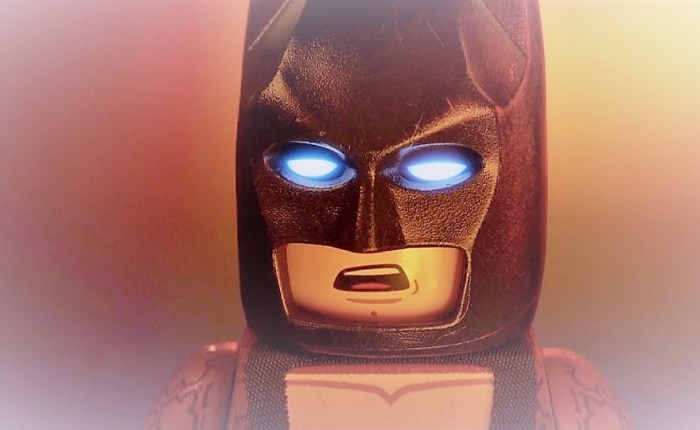
So where does that leave The Lego Batman Movie? Surely, it’s just an example of Warner Bros. lending one of their largest properties to a non-threat in order to make money? But with this approach must come a series of prerequisites. If this is the case, director Chris McKay and his eight writers either didn’t read the memo or stretched what was acceptable.

The Lego Batman Movie is a parody disguised as a standard children’s animation film.

It’s is so self-aware, it manages to deconstruct Batman at every level. Nothing is off limits. From Hans Zimmer’s tense action score from The Dark Knight Rises; Bruce Wayne’s backstory; Batman’s real world history; and the typical rules used in a superhero movie.

It pokes fun at all the failings of previous films. Too many villains over saturating the script: usually three bad guys will induce this effect. Lego Batman aims not for double figures, but triple. Bruce Wayne forever moping about and driven to dark places because he saw his parents killed. Lego Batman turns it into a comedy sketch.

Heath Ledger’s Joker summarising the unique relationship his character shared with The Caped Crusader (“I think you and I are destined to do this forever.”) becomes the drive for The Lego Batman Movie. Joker wants Batman to realise they are connected, that they need one another.

It’s great fun for the kids, Lego brick explosions everywhere, but the speed of the one liners indicate they have been written for the experienced Batman fan. And the embrace of the past, including the sixties TV version, goes beyond nostalgia or even paying homage.

If it weren’t for the child-friendly humour and tone, you could compare this to Team America: World Police. It knows what it is imitating so decides to have a good laugh with it.

In many ways, this means Will Arnett isn’t playing Bruce Wayne/Batman, because this isn’t really that character. It’s a shame for Joel Schumacher that the Lego Movie concept didn’t exist in 1997 when he gave the world Batman & Robin. It was his intention then to produce a Batman big screen outing for kids. He failed to impress children and adults alike, killing the franchise in the process.

The Lego Batman Movie shows how it can be done. When it’s clear from the off that all seriousness should be left in the cinema foyer, it doesn’t matter how colourful Gotham City is or how outlandish the story becomes. People can just sit back and enjoy.

With that freedom to do what they want with the property, Lego Batman manages to get a few more satirical scenes in under the radar. There’s a clear dig at Suicide Squad when Batman says getting bad guys to fight bad guys is stupid. And then, with a nod to that movie – and several other superhero flicks – the doomsday weapon of being invaded by another realm enters the fray.

It’s not here to comply with the structure of grown-up superhero films, it’s to point out how preposterous the notion is.

Even the happy ending is tongue-in-cheek. With it, The Dark Knight becomes a light comedy genius. Whether the DC Extended Universe is a success or not (and it hangs in the balance), Warner Bros. can always fall back on a Lego version of events and bring a bit of laughter, and a lot of revenue, into the boardroom.

Lego Batman isn’t the hero you deserve, but it’s the one you need right now.
T2: Trainspotting Judgement Day

T2: Trainspotting Judgement Day

Let’s face it, Danny Boyle doesn’t make bad movies. Every single one that his name has been attached to has been worthy of your time and deserved any success that came its way. It was his second as director, Trainspotting, that sent him on a roll. Its momentum helped create a career in Hollywood most modern movie makers can’t begin to rival. 2017 is the year he returns to the setting of a timeless piece of cinema.

In a perfect world, my first novel will be adapted by Boyle and Manchester would have its iconic movie (we did grow up on the same streets, so it’s not that far-fetched). It’s the dream choice because Boyle understands the drive of a story, then delivers a visual experience that goes beyond the vision of its creator. Irvine Welsh is a talented author, no doubt, but Trainspotting elevated his novel to heights he couldn’t have envisioned.

That was aided by the John Hodge screenplay and determination of producer Andrew Macdonald. Back in the nineties it was Boyle that had to convince Welsh a movie was a good idea. Years later it is the director in the hot seat calling the shots but it’s warming to know he wanted to make a sequel. It is something he actively sought, waiting merely for the actors to age accordingly.

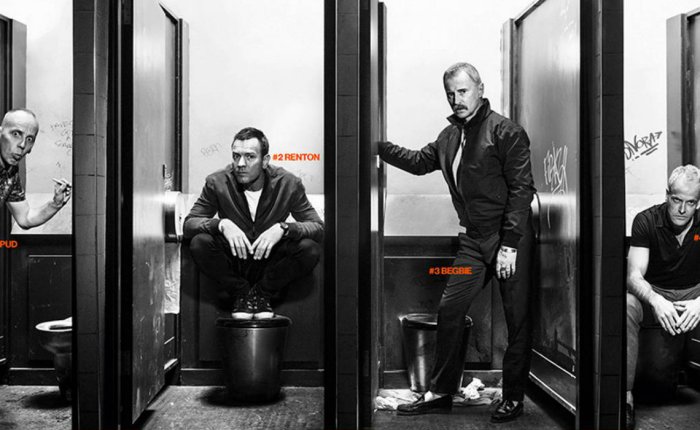
The stars have aligned (and reassembled) to bring back the core characters from the original. Ewan McGregor’s “Rent Boy” has been missing for twenty years, as expected after stealing £16,000 from madman Begbie. Robert Carlyle was a scene stealer back in the first film (remember that glass chucking moment?) and his new Begbie is just as intense. But back then it was mindless, after twenty years in prison, it’s pure focus.

He escapes, and the lack of police follow-up is something we will just have to accept, and attempts to resume life. It’s here we get some laughs. Trainspotting was a black comedy at times, the laughs here are lighter and directly played for.

Sick Boy, or Simon, is now putting more coke up his nose than Renton put heroin in his arms first time around. He’s trying to run scams and wants to open a brothel to keep his girlfriend happy. Yep, the Edinburgh they inhabit still has its murky sides.

Ewen Bremner’s Spud is the final member of the quartet and plays a larger role than last time. He is still a heroin addict, estranged from his partner and child and is suicidal. The unexpected arrival of Renton gives his life a new direction.

For a time, the movie’s direction, while new, isn’t ground-breaking. It openly reminisces over famous scenes from the original. This trip down memory lane would be pure nostalgia in the hands of any other movie maker, and would be crude self-awareness – not unlike the last series of This Is England – if it weren’t for Boyle’s ability to bottle a mood a make everything feel fresh.

This talent is aided by a cast better equipped to deliver the vision this time around. They have all grown as actors. What the script lacks in depth, they fill out with more meaningful performances.

There was no point trying to replicate Trainspotting, that time has passed, the characters inhabit different bodies. But it would be soulless not to have them look back at key events after being separated for two decades. The soundtrack aides this natural introspection with a hint of familiar themes with new vibes laid over.

There are times the suspension of disbelief is stretched as coincidences and situations appear to drive us to a forced conclusion. That’s a nod to the power of the first film, perhaps there was no real story to tell after that one? But that’s not to say it is poor, far from it. Certain Boyle hallmarks displayed in Trance, and novel use of lighting in the finale, give this film the contemporary nod that separates if from its grimy predecessor.

Easily a four-star film, maybe as it settles it’ll take its place alongside the first. And in a few decades’ time, there’ll be no complaints if Boyle wants to visit these characters again.

The Exorcist

The Exorcist

The start of a Halloween weekend sees many turn to their movie collection to dig out the best fright-fests. This invariably leads to discussion that asks the big question: What is the scariest film ever?

The answer from these quarters: The Exorcist.

As firm as that answer will always be, so is the chance it’ll find disagreement. Since its release in 1973, the horror genre has gone through many reinventions in order to maintain appeal. The search for shocks, of the jumpy kind or those that push the boundaries of what is acceptable to show on film, means the psychological chills have seen less usage.

Sure, The Exorcist wasn’t averse to special effects designed purely for a gasp, and to test the viewer’s constitution, but it’s credit to its real scares along the way that these still stand-up. Admittedly some have lost their immediate power after years of being parodied, either on purpose by the likes of French and Saunders, or by cheap copy-cat horror productions looking to recreate some of the magic.

Those untouched by the movie are the ones most likely to dispute the existence of life after death. But if you spend your days praying to a force for universal good – or just believe there might be something after death – then playing with the notion of a bad side becomes unsettling.

The build to the evil emerging is a deliberate slow step. In the opening scenes we witness Father Merrin unearth a token in Iraq, signalling a demon has returned. This backstory is developed in other media, here we just get a hint and he later alludes to it himself.

A skip to Georgetown and we are introduced to the life of famous actress Chris MacNeil (played by Ellen Burstyn) and her daughter Regan. What is most remarkable about Linda Blair’s performance of the twelve-year-old is that any evidence of over-acting can only be found in the pre-possession scenes. Before the demon is inside her, the acting is cringe worthy. But once she is asked to perform as a possessed human, it’s far too believable.

The seemingly innocuous occurrences ramp-up until Regan herself displays changes in behaviour. Being famous comes with suspicion. It’s conceivable a daughter exposed to the Hollywood lifestyle would have a sense of theatrics. When Chris seeks help from local priest Father Doctor Damien Karras (double titled to highlight he is also a psychiatrist), he even asks if Regan could have accessed recreational drugs.

The Father is assured that hasn’t occurred. What let the demon in was Regan playing with a Ouija board. But the case comes at a time he has lost his faith in God. This morphs once he begins to believe Regan could be possessed for real and it’s not a disorder, fake or a result of being exposed to drugs or a situation.

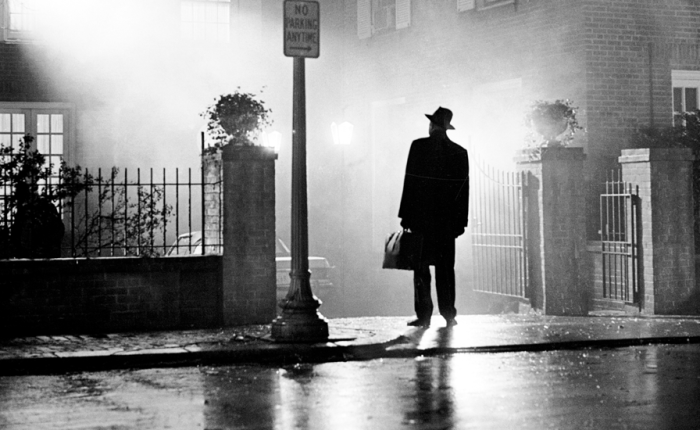
He calls in Father Merrin for assistance. The shot of Max von Sydow’s Merrin arriving on a dense, murky, atmosphere filled night is beyond iconic. If a sense of a character and his importance to a film has ever been better captured then that footage must be missing: This is the pinnacle of achieving such a feat.

Merrin brings great advice (“But he [the demon] will also mix lies with the truth to attack us.”) and prior experience. And soon begins a battle between good and evil, to a suspense filled climax.

It may sound an over-the-top reaction now, but upon its release stories of nuns sprinkling Holy Water as people stood in the queue to watch the film, added to its notoriety. It’s the sort of marketing campaign movie execs wouldn’t dare dream up. Such was its impact, those that saw it, understood why. In England, St John’s Ambulance had extra staff on standby as people passed out when confronted with the images.

Its 1998 re-release in the UK is when this writer appreciated those concerns from the seventies. Undiminished by time, it was equally as shocking and thought provoking.

By the time the famous head-spinning scene arrives, you are absorbed and truly believe the young girl is possessed, the words that follow, “Do you know what she did? Your cunting daughter?” are chilling. Far from the potential comical, dated look it should have had two decades after being made.

Remarkably, when adjusted for inflation it is the highest grossing film Warner Bros. has ever released. It explains why they were quick to call for a sequel but makes one wonder why the successful formula was abandoned. More surprising is how no movie maker has ever gotten close to replicating the style.

Usually when a movie gets rated number one in a genre, it is revisited on a fairly regular basis. The Exorcist is the exception to this rule. Even though it’s a horror movie and this is Halloween season (and the eagle-eyed viewer will note the story takes place over Halloween) it’s not one I’ll be revisiting any time soon.

After seeing it in the cinema during its 1998 run, three weeks of nightmares followed. A little older now, after a viewing this can be reduced to three uneasy nights.

Until such a time the demon can be faced once again, the aim is to try and enjoy “Tubular Bells” as nothing more than a piece of music, not associate it as the perfect soundtrack to the perfect horror movie.