Is DC committing Suicide?

Is DC committing Suicide?

Suicide Squad befell the same fate as Batman v Superman: Dawn of Justice. It started strong at the box office before second week drop-offs compounded negative reviews. In an age where everyone is a critic and the professional critics are ignored, it appears the dissenting voices are the loudest. With further doubts raised about the DC Extended Universe (DCEU), is the Warner Bros. led property starting to implode?

Before the cameras even started to roll on Batman v Superman, DC and Warner Bros. had their work cut out. They faced the unenviable task of chasing down rivals Marvel. The Avengers led superhero cinematic universe is a magnet for two things: cash and compliments.

Both of these can be attributed to the accessibility of the Marvel movies. From the opening feature in the Marvel Cinematic Universe (MCU), Iron Man, they have made no attempt to hide the comic book roots from which they grew. They have been easy going action films, driven by simplicity.

The peak was arguably The Avengers (or Avengers Assemble). It would have been easy to crowd the film with too many main players but Joss Whedon pulled it off using a blend of humour and a clear plot.

This love has allowed Marvel fanboys to escape the negative points within the MCU. Those that were quick to pounce on Suicide Squad are not so quick to discuss Iron Man 2.

Therein lies a fundamental problem: DC haven’t been afforded the time to find their footing or been allowed to develop their own style. They are judged harshly for not being Marvel, but equally derided if any element of the DCEU mimics the MCU.

Historically, DC films have carried a darker tone (we’ll ignore Catwoman) or more recently with Christopher Nolan’s Dark Knight Trilogy, been grounded in something closer to reality.

Man of Steel and Batman v Superman approached the arrival of superheroes in a more realistic manner than Marvel ever will. When given the chance to explore these themes in Captain America: Civil War, Marvel shied away. Unfortunately for DC, being a superhero flick in a time the market is over saturated, means they aren’t judged on their own merits but compared to the market leader.

And this is where DC seem to be turning the gun on themselves.

A dark tone can be well received, Nolan’s trilogy was hardly a mainstream cartoon like The Avengers, so DC were right to start their movies with a more serious undertone. The problem is, dark for dark’s sake is draining on viewers. Without substance it has a depleting effect rather than become tone setting.

That objectively observed lack of substance isn’t down to DC characters having an inability to explore larger themes, it’s because parent company Warner Bros. are being swayed to the Marvel mainstream.

This leaves them in no man’s land.

DC wants the popular Marvel share while retaining a more meaningful scope. It can’t do both and the cracks are beginning to show.

Suicide Squad was another film that some critics went after in a big way. Most of those observations were unfounded or unfair. It wasn’t a muddled mess nor depressing. It was a simple action flick that ran from start to finish without a hiccup. There were enough laughs, decent action scenes and enough character introduction to allow DC to now use the villains ad hoc.

But average isn’t DC’s aim and Suicide Squad took a big step to selling out.

It was a further step away from a gothic palette and real world influences on fantasy elements. Those things were still there, but delivered with less certainty. Unless it comes across forceful and confident, DC’s vision will be swallowed up by internet trolls and critics that are judging DC based on a rival’s blueprint.

Warner Bros. will point to critics often getting it wrong. Transformers has always reviewed poorly and taken home massive returns. Same with Pirates of the Caribbean. But these films are cash cows that don’t care about artistic acclaim. DC on film should be about satisfying the comic book fans and pioneering new visions for the big screen.

Long after the current superhero phase, Tim Burton’s Batman entries will still stand out as a turning point and The Dark Knight will forever be the benchmark. If DC decides to forgo long standing values to chase down Marvel for their share of cinema revenue, it will fail on all accounts.

Unless it stops worrying about box office returns and market share compared to Marvel, it will march toward a self-induced, slow creative death, in which it may never find resurrection.
Rewarding Boxing Belief

Rewarding Boxing Belief

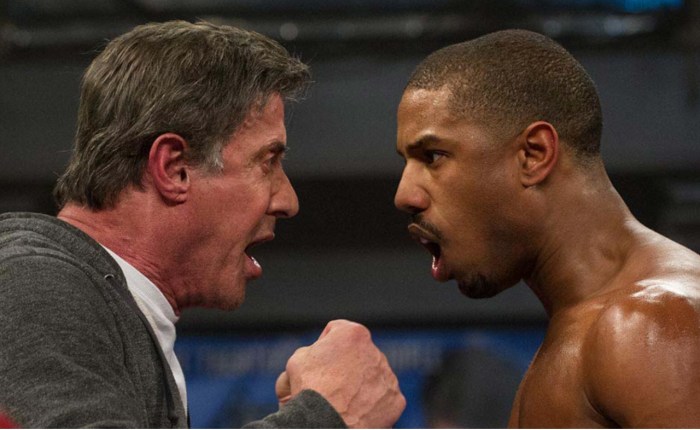
Sylvester Stallone once again steps into his Rocky Balboa persona. It’s the one that brought him success at a time he was struggling to make ends meet, and the role that revived his career after multiple misfires. After winning a Golden Globe for the latest portrayal of the Philly boxer, and receiving an Academy nomination, it’s time to see if Creed is a movie that can go the distance.

With award season in full swing, and Stallone receiving surprise appreciation, it’s only right the interest in Rocky is once again high on the agenda. But it should be noted Stallone’s nominations have been in the Supporting category and that Creed isn’t a further extension of the Rocky Legacy. That was neatly wrapped up in Rocky Balboa.

This is a story set in a familiar universe but coming from a fresh perspective. What Stallone does here is serve as the cement, bonding the old with the modern, the myth with reality. In doing so he gives an outstanding performance. It is easy to be sceptical about the award nominations. Are they a polite way of noting his lifetime achievements? Absolutely not. Stallone delivers a performance that surpasses the one delivered in Rocky and beyond another else in his long career.

If time catches up with us all, it has caught Rocky and dragged him back to earth.

But Stallone doesn’t hide behind his spectacles in the way Dustin Hoffman did to cover his performance in Papillion. His aged version of Rocky is a genuine examination, leaving every facet of his character open for the world to see. It has every intricate detail of authenticity required to portray the character.

Even in Rocky Balboa, a movie that attempted to press the reset switch on comic book shenanigans and moved the franchise back to drama, the title role was played like he was a wholesome hero. In Creed we see the flaws in Rocky. These human faults add the final level of detail to a character already well covered and much loved.

A character study-esque moment from Stallone wouldn’t be enough to make Creed the movie it is. That’s where Michael B. Jordan comes in. He plays the illegitimate son of legendary deceased boxer, Apollo Creed. Jordan gives a performance that also deserves awards. His level of believability is what assists Stallone in exploring the deeper nuances of the Italian Stallion.

It’s also his story.

As Adonis Johnson, he attempts to make his own path without using his father’s name. He is filled with anger and fear. His birth mother died when he was young, meaning he went through the juvenile system, always determined to fight his corner. Apollo’s widow located Adonis and raised him as her own.

But he has his father’s blood, his passion for boxing, his desire to be the best.

He finds Rocky, after walking away from his easy life and good job, to train like it’s the old days in Philadelphia. Cue the love interest, played by a convincing and impressive Tessa Thompson. She is an upcoming singer with troubles of her own. When her cold exterior melts the two learn to trust and inspire one another.

Also cue the training montages. But they feel fresh and for the first time the plot drives these sequences rather than serves as an excuse for them.

It also includes the best fight scenes seen in a boxing film. And it’s the movie Southpaw wanted to be but came up short. This film does acknowledge the way modern boxing is run, includes the presentation of the modern sport, and still manages to be a drama first.

Tony Bellow, the real life Liverpudlian boxer, could be seen as the only weak link. His character, “Pretty” Ricky Conlan, is one-dimensional and lacks any true charisma. But the story is about Adonis. The challenge was never the man opposite him in the ring. And Bellow does bring in-ring craft that enables the fight sequences to excel.

Director Ryan Coogler has surpassed expectation and produced a modern, contemporary movie. It nods to its source material, but unlike The Force Awakens which ran on a nostalgia trip for two hours, the attention is paid out of respect without it ever feeling like a rehash of old ideas. A startling feat when you consider how many underdog tales require the same ingredients.

After its box office success there will be a sequel. Stallone has handed the baton to very capable hands.

Why the Force will always sway to the Dark Side

Why the Force will always sway to the Dark Side

This article contains spoilers regarding the Star Wars saga but if you’re reading this there’s a good chance you’ve seen all the movies multiple times.

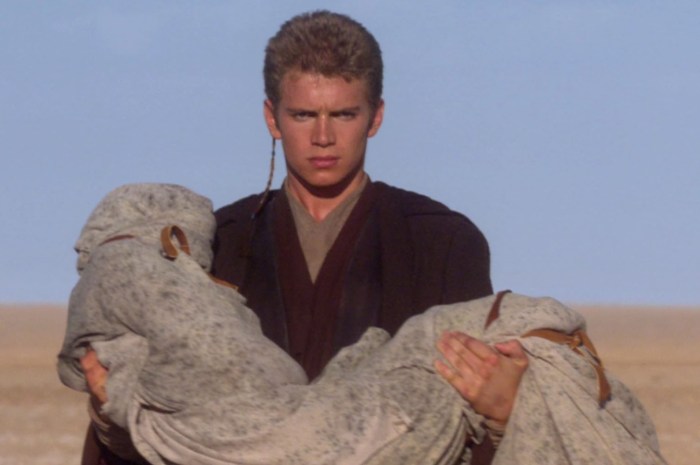
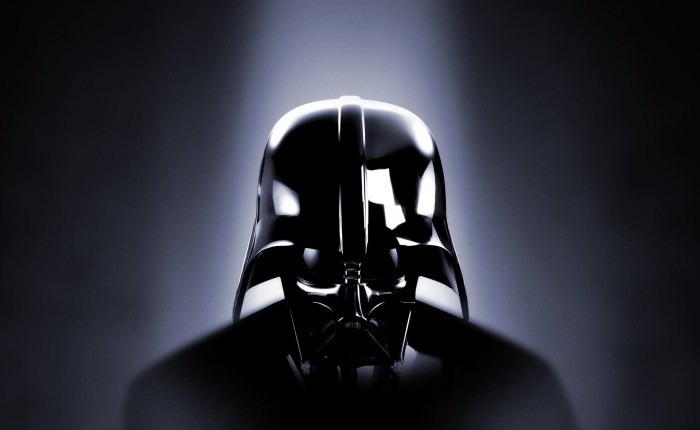
One thing we’re told repeatedly, across all the Star Wars movies, is that the Force requires balance. There’s a notion that both Light and Dark must exist in equilibrium. The prophecy forming the foundation of this mythology that was used in the prequel trilogy, states a Chosen One will come and bring balance to the Force. Of course, that person was Anakin Skywalker and it’s because of him that the Force is always destined to be Dark.

This assumption isn’t based on the fact he became an evil Sith Lord or that Hayden Christensen’s performance was so wooden the Chosen One has tarnished the Force for good. It’s because he is an example of undiluted, pure Force and we all know how that went. He turned easier than milk on a warm day. Okay, he had Palpatine leading him astray but if the Force was an equal balance to start with, his interactions would have been cancelled out by the influence of the Jedi (more on them later).

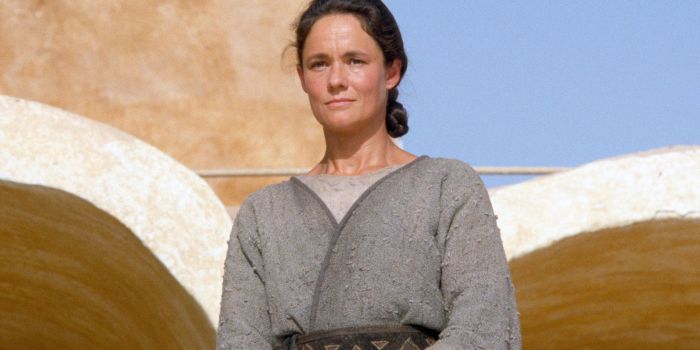
The reason we can say Anakin was pure Force is down to his mother’s assertion there was never a biological father. Unless she was lying and he was the product of some unwanted liaison – a path I’m sure Disney will be keen to avoid – then we have to take her word for it. This means the midi-chlorians (sorry for bringing them up) impregnated Shmi Skywalker in a Virgin Mary like manoeuvre.

Pure Force at conception.

The counter argument here is that even if this was 100% force, her DNA still diluted it a little, thus, enabling negative human traits to enter the fray. The problem with this point of view is Shmi Skywalker is probably the most wholesome, good-natured and kind character found in the Star Wars universe. If anything, it goes to show the Force knows it’s a little bit bad and needed pure goodness to balance it out at birth.

As it happens, not enough Shmi got into Anakin and he was doomed from the beginning. The Jedi council were right to be hesitant when he showed up. Yoda sensed the conflict within the young boy in The Phantom Menace but was railroaded into allowing his training.

All his poor personality traits have been passed on to his offspring and their children. Despite having unmatched Force abilities, good political and royal ties, he never returned to free his mother from slavery. There’s probably some twisted code of ethics at play here about not interfering with planetary customs (the fact slavery is commonplace and not denounced by the Jedi doesn’t place them in a favourable light) but surely they could have bought her freedom?

Even if they released her under the proviso she couldn’t live near Anakin in case she became a distraction, it would have been better then what she endured. When Anakin finally decides to do something for his mother he’s way too late and the climax of the process just serves as a step closer to the Dark Side.

Some of the best human emotions – like love and empathy – are lacking in all Skywalkers apart from Shmi. Remember Luke breaking down in A New Hope and being haunted for the remainder of the original trilogy after seeing the burnt corpses of his foster parents. Nope, because he never mentions them once. His aunt and uncle who raised him from birth were forgotten within hours. Very touching.

It’s the same level of not being bothered that Leia expressed when she witnessed the destruction of an entire planet: couldn’t care less. They come across as very selfish, self-centred individuals. All of them are very, “me-me-me.” This is great for being driven to achieve their goals but it’s not very pleasant when even losing close ones is no different than water off a duck’s back.

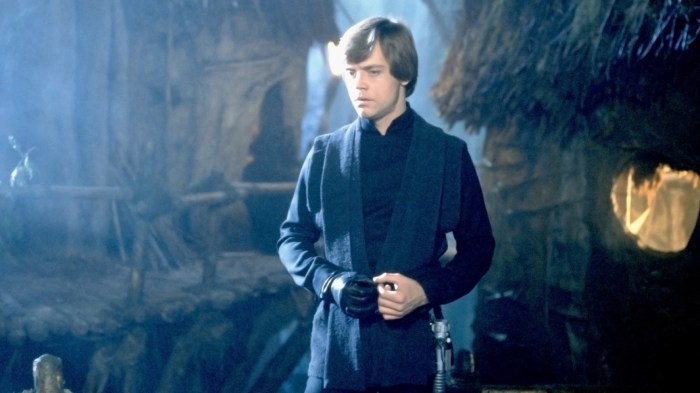
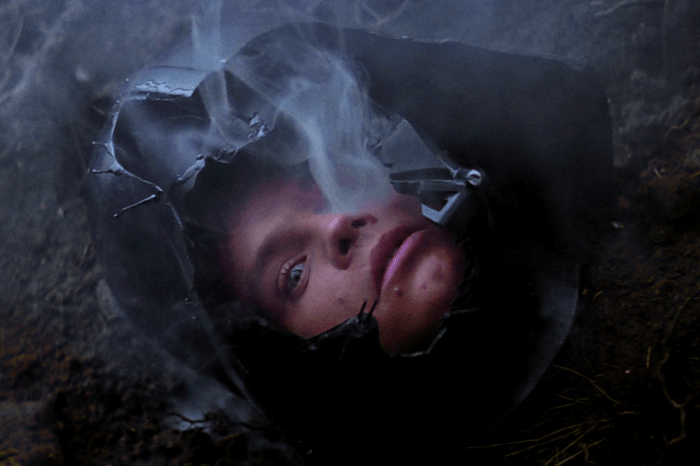
By the time we see Luke in Return of the Jedi, he’s going around with a title he’s yet to earn after bailing on his training, whilst displaying all the traits of a man on the path to the Dark Side. He threatens to wipe out Jabba the Hutt, not very Jedi-like, and the only way he defeats Darth Vader is by getting angry. And we all know that anger leads to the Dark Side.

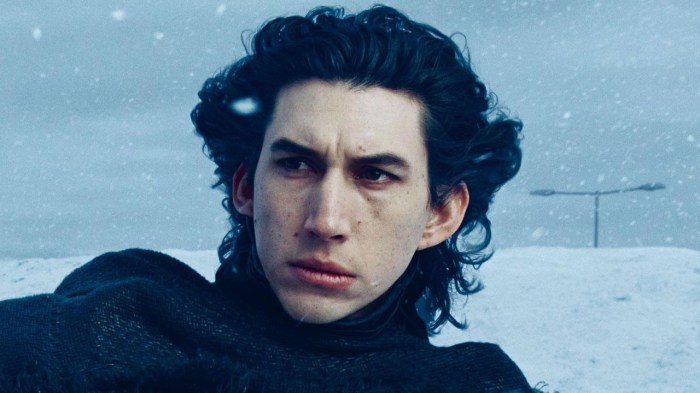
Ben Solo, aka Kylo Ren, never stood a chance. He has his grandfather’s DNA mixed with Han Solo’s. His father may have played a prominent part in freeing the galaxy but he was no clean-cut monk. He was a rogue that under different circumstances could have easily been a bad guy. Hardly the 100% goodness of Shmi to dilute the evils of the Force.

Of course, it’s not just the Skywalkers that have the Force. If we look elsewhere it’s possible to see how it’s fundamentally flawed. Take the Jedi, the supposed teachers of the Light and all things good, they have some dodgy ethical codes.

Firstly, they outright deny a Jedi love. From a writing point of view, Lucas was presumably giving them a religious feel, as if they are priests of the Force. The application of this rule means the good guys of the Force deny the warmest human emotion. A life without love isn’t a very healthy existence.

They’re also happy to breakup families to train younglings, creating inner turmoil from a tender age and fuelling all the negative emotions they work tirelessly to keep at bay. These oppressive traits go against everything that feels good. Only a Force built upon darkness would drive these demands so hard.

The Jedi are also pretty good at running away from problems. Even in The Phantom Menace the galaxy is in a pretty bad mess. They just mosey around, dipping in and out of conflict as the council deems fit. They should have been working around the clock to clean things up.

At the end of Revenge of the Sith, Yoda and Obi-Wan go into hiding and spend twenty years watching chaos and evil reign. With great power comes great responsibility, or if you’re a Jedi, great cowardice. In homage to those that went before him, Luke repeats this trick once Kylo Ren turns a bit nasty.

Obi-Wan comes across as the most decent of all the Force users. He even alludes to a love affair he once had so he’s the most in touch with his humanity. But it doesn’t stop him showing a ruthless side that is pure darkness.

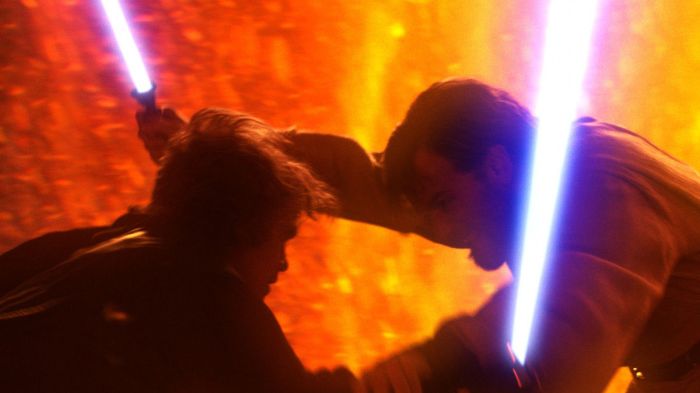
At the end of his battle with Anakin he appears genuinely pained to see his friend’s slide to the Dark Side. However, that doesn’t mean he won’t let him get burned alive. Come on, now either do the humane thing and drag him up the bank and call for medical assistance or put him out of his misery. But burning alive . . . really? And by the next scene he’s fully composed, watches Padmé pass away, and carries on without a care in the world.

Perhaps these examples prove that Anakin wasn’t the Chosen One after all.

It seems that the Force as we know it, from the undiluted Anakin to the Jedi and the Sith, suffers from an inherent imbalance. Maybe the genuine Chosen One will be born in the same way, fatherless, but with an exponent of midi-chlorians not yet seen.

Just as we can’t see dark matter but are certain of its existence, maybe the Light Side of the Force is just theorised in the Star Wars universe. It will take a real Chosen One to appear and actually reveal its true nature.

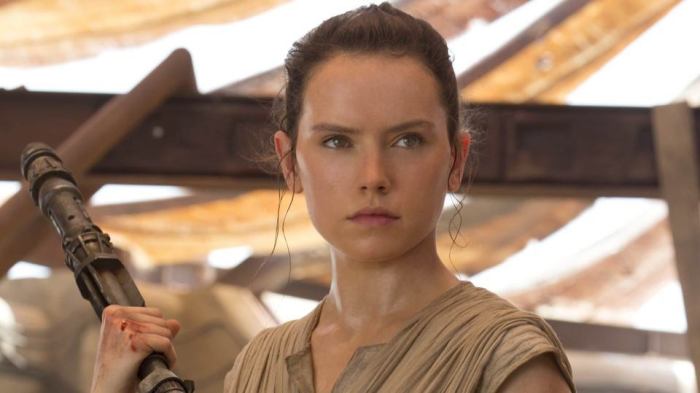
Until then we have a bunch of people using a force that is perpetually pulling to the Dark Side. But there is a “Rey” of light on the horizon…