Tag: Novels
Buzzing
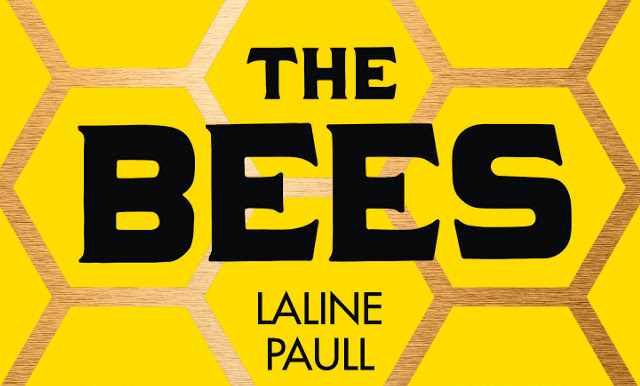
Laline Paull’s debut novel is set inside a hive of bees. The protagonist, and heroine of the tale, is lowly sanitation worker Flora 717. Straight from the start it’s obvious Flora is a special case. Bright, sharp, inquisitive and strong. The backdrop of the hive is seen from her perspective, as she evolves from naïve outsider to determined veteran.
In relative terms her switch is rather fast. Such is the life of an insect. However, in the early chapters there is a slight lag. It isn’t immediately dealt with in a smooth fashion. Paull has to present certain cases and events to build up Flora’s – and the reader’s – understanding of hive life. Information that serves 717 later on in the tale.
As Flora absorbs this we take in the world that Paull creates. From cold insect perspectives (they have no qualms about acts of genocide for the greater good of the Queen) to the rigid structure of the society they occupy. All done for “devotion,” an addictive chemical release from the Queen that brings about glee. Always with the mantra: “Accept, obey, serve.”
Throughout the tale Paull interchanges bee physiology with anthropomorphism. This serves to keep Flora’s tale flowing, and after the first third it never lets up. The author also leaves much of the metaphors that apply to human society to the reader’s interpretation. How we perceive their individual messages will say much about our own personal views.
At the heart it is a tale of supressed love, the control of many by the elite few, how faith can be controlled by those that are faithless. It isn’t the political allegory Animal Farm was for its generation but it doesn’t attempt to simplify an ever increasingly complex world.
In the end The Bees is a sweet tale with a sting in its tale.
More Than Just Flesh

When I first read Michael Faber’s excellent novel Under the Skin, I made a beeline for what was then his newest release, The Crimson Petal and the White. The two couldn’t have been much more different but both had the hallmarks of a great writer. Whilst reading the former I often wondered what a great film it’d make. Fourteen years on that is a reality, thanks to a Scarlett Johansson flick. But is it another case of the novel being infinitely better than the big-screen attempt?
The book was a tense and teasing affair in which the female protagonist was slowly revealed page-by-page as her motives and emotions started to unravel. The big reveal took a fairly long time to come around, and by then Faber had you in his hands as he went toward the dark finale. I’m glad to report the movie manages to encapsulate the sense of tension equally well; however, it aims for a different path. From the start it’s obvious that Johansson’s character is alien to this world. Everything that unfolds does so with the feel of a cagey, dark sci-fi. The pace that it approaches the subject matter will divide opinion, much like the movie itself has.
One thing for sure is how good Scarlett Johansson portrays so much, using so little in the way of scripted dialogue. In the novel we had her character’s perspective fed to us along with a back-story that served as a way to offer empathy. Here we rely purely on the actress’s ability to convey all the unspoken, but highly important, character developments. Thankfully she is more than up to the task, displaying a master class that will sadly go unnoticed.
The story does take a different turn than the book, the fact it will is evident early on, but this only serves to enhance the mood and the lead’s performance. Before it has the chance to lag under its own tension we are served a chilling end, not the sort Faber gave us but by the final scenes this had become very much its own beast. So not a case of the book being better, just different. Quite fitting when both the novel and movie challenge us to explore differences and perceptions.
 The Reflective Page