
Greatest Achievement in League Football

Greatest Achievement in League Football

Leicester City winning the English Premier League completes a dream season for a club that battled to survival only twelve months previous. This unexpected success still belies belief, for months so-called experts have struggled to give reason for their insurmountable lead. A common denominator is that other teams have failed. This denies The Foxes the full credit they deserve.

The obvious comparison people have gone for is between the current Leicester side and Brian Clough’s Nottingham Forest. Clough’s side gained promotion from the old First Division and went on to win the title as the new boys. Throughout that season they had many doubters. It was deemed unlikely they could maintain the pace and stay at the top.

Sound familiar?

Of course, Forest went onto greater success but this initial title win has been the watermark for all underdogs in English football. Until now. Football was a different game back then. The gap between the haves and the have nots has never been greater than it currently stands. Massive clubs like Liverpool – who are the third highest spenders in Premier League history – have still yet to win their first Premier League title.

Clubs of Leicester’s stature are supposed to be happy with Premier League survival – nothing more. But they haven’t read the script this season, even after a bad start at Arsenal. It’s imperfect beginnings that laid the way for this journey.

Unlike Forest in 1978, who came up in good form and were full of confidence, they should have been riddled with doubts. A great escape didn’t mask their deficiencies. Sacking their manager, Nigel Pearson, after a series of explosive moments could have upset a fragile dressing room. Then they brought in The Tinker Man.

Claudio Ranieri, a man that had never won a top flight championship, was hired to ensure they reached 40 points. Many pundits claimed his arrival would send Leicester down, whenever anyone questioned this they were reminded his Greece side lost to San Marino.

As a polar opposite to Brian Clough, he remained a man happy to be in the shadows. Humble rather than full of Clough’s bravado. He was living the dream along with his fans. His humility sowed the squad together. He protected them from pressure, maintained expectation.

It was a case of all the pieces coming together at the right time. A manager with years of experience, a bunch of players with a point to prove, and the bigger boys struggling for one reason or another. That latter point shouldn’t be used against The Foxes. If teams failed to meet their personal targets for the season it doesn’t take away from Leicester’s success.

The league table never, ever, lies. Only three defeats speak volumes in a season where so many teams have struggled for form and stability. Some of the big guns may have been shy, but somebody had to take the chance. It was Leicester that came out head and shoulders above the rest.

A man that once tinkered stuck with familiar players. Unlike so many current managers, that claim to have an “ideology” or “project” as a cover for stubbornly sticking to rigid tactics, Ranieri evolved along with his players. They started the season almost playing like a Sunday league side, fast on the counter, looking like grinding out results was above them and it was only a matter of time before they became unstuck. Rather than become stale, they morphed into a side capable of chalking up one-nils.

It proves that cash doesn’t guarantee victory. The football goliaths should hang their heads in shame. Extensive scouting networks and the best facilities in the land have continued to show snobbery and fail to give talent within the lower leagues a chance. How many more Jamie Vardys are hidden, waiting for someone to take a gamble?

Naysayers have pointed to Leicester’s summer transfer spend but it is small fry compared to the likes of clubs expected to finish in the top four. With the new TV money coming into the game next season they now have the ability to spend. The sad fact is they will probably have to with the extra European games filling up their schedule.

Even if they do now splash the cash, it will be brought about because of success, not the pursuit of it.

The fear with Financial Fair Play was that football would be plunged into a status quo. That the dreams of fans up and down the land, clubs big and small, would be extinguished unless a rich benefactor spent billions. Leicester may have the new rich owner but it is good old-fashioned on the pitch ethics that have brought about the fairy-tale title.

The gap between the top and bottom has never been so high, the scope for daring to dream the impossible so low, but Leicester have changed this. Winning the Premier League is an achievement unlikely to ever be matched. Unless they go onto further success in Europe next season. But that can’t happen . . . can it?

It’d be a brave person that placed any restriction on hope following this triumph.
How to Sweep up the Premier League Tactical Problem

How to Sweep up the Premier League Tactical Problem

It may be regarded as the most competitive top flight European league, but the Premier League has been going backwards tactically for some time now. This is evident by the declining performances, year after year, by English sides in the Champions League. It seems top sides here have suffered from acquiescence regarding their place in the pecking order. But there could be a way to stop them from faltering further.

On a weekly basis we see goals conceded that, while making the Premier League exciting and unpredictable, are a tactician’s nightmare. Some of the errors border on the schoolboy variety; others highlight how the pace of the English game makes defending a thankless task.

The solution could come from – quite ironically – an old European favourite: the sweeper system.

Before we go on, it needs to be pointed out, my personal level of football coaching begins on Championship Manager (the version before CM’93) and ends with Football Manager 2016. As a player, my greatest contribution was the post-match karaoke for the Sunday team I represented.

However, I did take England to two World Cup final victories and scored a screamer when hungover once (and just once, making me the least prolific striker in history). But you don’t have to be an all-time great to have valid observations. Indeed, the majority of top managers were, at best, average players.

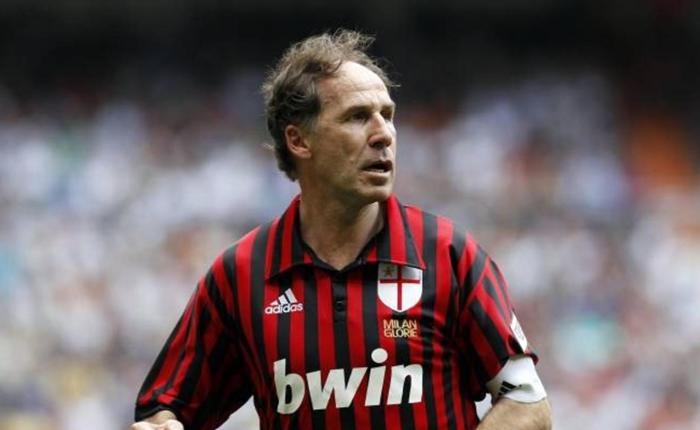
The call for Premier League teams to adopt a sweeper system isn’t borne from some romantic notion. I’m not expecting John Stones to be the next Franco Baresi, although, it’s not too difficult to imagine. It comes from common sense.

The reasons that made European teams evolve away from the sweeper system are no longer valid in this country. Some factors apply across the board, including the Champions League.

Take the inability to apply a successful offside trap when employing a sweeper. When was the last time you saw an English side lockout Bayern Munich or Real Madrid because of their quick-thinking high defensive line?

Moreover, the offside trap requires linesman to never make a mistake. Okay, perhaps they can be afforded a few. And in days gone by the odd error would have been taken on the chin. But nowadays we have an overcomplicated offside rule. A defender can play a perfect “trap” and be caught out by the second or third phase of play. He can lose to the official’s interpretation.

A sweeper removes this area of potential ambiguity. He just clears up and prevents shock counters and breakaways.

Another argument against could be the modern defensive midfielder already does the role of sweeper but in a more advantageous position on the field.

To a certain degree, this is clearly true in some cases. The current Barcelona team never look like they need a sweeper. And Pep Guardiola’s conversion of Philipp Lahm to the defensive midfield role shows how versatile and effective it can be.

Under Guardiola, Lahm performed a similar role to the one Busquets had in Pep’s Barça side. Sometimes they slotted back, making a line of three centre backs, with the option for one to sweep. But it wasn’t an in-game reversion. The role of sweeper is too complex for players to cameo in the position. These instances were an example of a team responding to pressure and adapting for short bursts.

But aside from the very top sides, the role elsewhere is either performed by charlatans or capable players stuck in teams that don’t know how to support it. Take Manchester City, it can’t be argued they have the talent to play the modern defensive midfield role. They also have demonstrated how deadly it can be at times. But sides from Bournemouth to Middlesbrough to Juventus, have all shown how easy it is to bypass their midfield.

When that happens, you don’t have a sweeper sat in front of the defence – you have nothing but empty space protecting two centre backs.

This lack of cover combined with today’s blistering pace means even the best defenders will be made to look stupid. Eliaquim Mangala would have had an entirely different season if he’d have been given better protection in front of him. With a sweeper behind, he’d have excelled.

A sweeper would make teams more solid in the Premier League, the question then becomes: How would they fare in Europe.

This is harder to answer, mainly because it reduces some of the advantages English sides take into a game. The play goes slower still, the intelligence of the midfield to receive passes from a ball-playing sweeper needs to increase, and the best forwards in the world can try and camp out on your defensive line.

But the current weak imitation of how to play their style is sending Premier League teams backwards.

Perhaps a perceived disadvantage of the system would help English sides in Europe. The sweeper is seen as a waste of a defensive player when so many modern sides play with only one striker. This is an illusion at best.

A 4-3-2-1 soon becomes an out-and-out 4-3-3 when a good side is in possession.

The extra insurance at the back can deal with the morphing forward line.

Many will believe it’s outdated or impossible to try the system now. They’ll say defensive midfielders shore up a team. But ask yourself: when was the last time you saw a player properly anchor a side during a Premier League match?

Marcel Desailly? Nigel de Jong, at a stretch.

The sweeper system is a solution that keeps getting ignored. Someone needs to try it. Failure to do so ensures the European dominance stays with the German/Spanish power share and the domestic game will continue to suffer tactical devolution.

A Tale of Two Cities

A Tale of Two Cities

“It was the best of times, it was the worst of times.”

– Charles Dickens, A Tale of Two Cities

It is the strangest of times. This season has been one of the most unpredictable in Premier League history. It’s long been noted, especially by this writer, that the technical standard of England’s top flight has been on the decline. Any doubts surrounding this can be erased by noting the recent performances of Premier League sides in Europe. For several years the excitement levels have increased while tactical know-how has been reduced. It couldn’t go on forever and have the steady balance at the top of the league remain. This season the status quo was demolished.

When Manchester City gate-crashed the top four party, they took their place at the established table with the look of a team willing to fit the mould. They spent big to play catch-up, only asking for a place in the Champions League that usually went to a team like Liverpool.

Their presence didn’t threaten the see-saw of dominance, that hadn’t moved for so long one could assume it had rotten to a rigid state. It was coincidence that City’s arrival at the top coincided with a slow drop-off in domestic tactical astuteness. La Liga sides had evolved, with most of that thanks going to Pep Guardiola’s Barcelona team.

Gone were the days of expecting two English sides in the Champions League semi-finals; just getting to the knockout phase has become an achievement. In tandem with La Liga’s intelligence growing at a rate faster than the Premier League’s, so was the Bundesliga’s.

Bayern Munich became the dominant force in Germany and won Europe’s top competition. It’s often remarked, in a negative angle, that there isn’t the weekly competition for Bayern that English teams have to face. La Liga has similar accusations aimed at it. There’s an idea there’s only two good teams – Barcelona and Real Madrid – and the rest are just walkovers.

If this was the case, these three giant teams would struggle. A lack of big games would lead to head’s drifting off. But they remain focused in Europe and it’s battle-hardened Premier League sides that struggle midweek. This season the sentiment that anyone can beat anyone in England has never been truer.

Even in the face of such inconsistency patterns were emerging that pundits and fans failed to recognise or accept. And even with normality taking a break, people expect old ways to return. Leicester City were tipped to drop away before the hectic Christmas period. When that didn’t occur the prediction was it would happen during. That never materialised so the next prediction was it would happen after.

We’re now in February and they still top the league.

The latest effort to reduce their expectations meets reality with the failing perceptions halfway. Observers still can’t allow themselves to believe they are in a title race – even after 24 games – but concede they are likely to finish top four now.

It’s a tremendous accomplishment. The Foxes started the season as a relegation candidate. Claudio Ranieri has taken a set of players that weren’t in the spotlight and instilled belief and most importantly: a strong work ethic.
There may be more money spent on players in the Premier League, both in transfers and wages, and new TV deals eclipse those from more successful European leagues, but that doesn’t mean the best players are here.

Leicester have exploited the weakness in the league as a whole, not the shortcomings of separate teams that expected to be placed higher. Now that they have momentum, stopping them will be hard.

Against Manchester City they face a team that won’t begrudge the Foxes any lasting success at the top. Fans of Manchester’s club can easily recall a time before the Sheikh’s money, when winning one more League Cup would have been a heady dream and chances of a Premier League title were folly.

Financial Fair Play (FFP) was seen as a tool to maintain a status quo for the traditional big names. The assumption being, only a massive outlay of cash could enable a side to break the top four.

Multiple articles here, and Financial Fair Prejudice, never spoke out against FFP to keep Manchester City safe. They already made it in the castle before the drawbridge was up. The bordering on illegal and morally ambiguous FFP meant teams feared that if weren’t already a big fish, they never would be.

Leicester have changed all this.

Okay, they do have billionaire owners that have restructured the club. But their accelerated growth period pales in comparison to Man City’s.

Their stubbornness to accept everybody else’s predictions and perceptions has been aided by a stuttering league campaign from the title rivals they face next. The Citizens have been equally consistent in their form by being the antithesis of Leicester’s attitude.

Instead of non-stop application, Pellegrini’s men appear to fire in spits and spats. When their backs are against the wall then a world class City emerges and brushes sides away with ease. Far too often they spend the first twenty minutes of matches drifting, as if their talent alone will ensure success. The effort comes later, when the task has been made harder than it should have been.

After Saturday there should be a clearer idea on where the season’s heading. The neutral will warm to the idea of Leicester City taking victory and then securing a title win so improbable Hollywood movie execs wouldn’t dare use it in a script. If the Foxes win, the press will say it is remarkable achievement that they won the “best league in the world.”

If Manchester City remove Leicester’s point advantage it could be the start for the final push. Players are now fighting for their careers as they try and impress incoming manager, Pep Guardiola, from afar. With Arsenal commencing their annual fall away, only Tottenham lurk as the other potential dark horse.

If Man City win the title in Pellegrini’s final year, the press will comment on the lack of a legitimate challenger and make more news about the low number of points needed to win a weak league. The points spread is currently being used to rejoice at how competitive and tough it is.

But there’s nothing but truth in the statement: the league never lies after 38 games. Whoever that is will deserve it most, all other factors become irrelevant.

The City that takes three points Saturday lunch time will start to imagine their hands on the title.