A Human Tale

A Human Tale
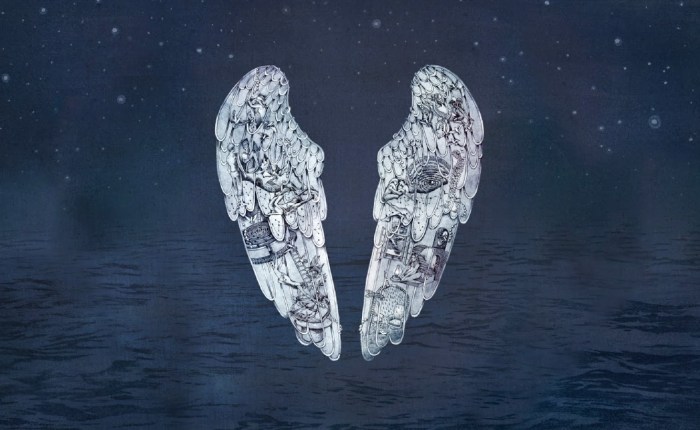
Coldplay’s latest offering, Ghost Stories, hit the shops on Monday, revealing a change of pace compared to its predecessor. It also strips back Chris Martin’s shell and reveals what he went through when splitting with Gwyneth Paltrow. This doesn’t mean it’s the gloomy album some would have you believe, it happens to be uplifting in surprising ways.
 
Much focus has been made about the album’s opening words (“I think of you, I haven’t slept”) but that’s been a hook used by some to conclude the album starts low and swims in its own self-induced depression. This must come with the territory when a band becomes the biggest in the world; there are always people ready to snipe. Also, Mylo Xyloto was high-energy grandiose commercial rock, this starts with a reserved feel. But the DNA from the previous album is there in those first gentle sounds. It’s rumoured that when the band started Mylo Xyloto they planned it to be a double album, one half of which would have featured a stripped-back sound. That never materialised and what we got was Coldplay’s extravagant peak.
 
Perhaps during the recording of Mylo Xyloto it was decided to save the acoustic inspired set pieces for another day, after all, they had something on their hands that didn’t deserve to be pegged back. The previous tour wouldn’t have become the action-packed fantasy if they had been obligated to include tracks from a stripped down section. It’s that side we get now with Ghost Stories, but that’s not to say it’s an afterthought or leftovers; considering the subject matter it’s all Martin’s real thoughts and his everything. What makes it progressive as a musical performance is the hint of the last album’s opening track existing in the vibe that kicks off “Always in My Head.” It’s subtle, but so was the “conscious uncoupling” of the two albums.
 
“Magic” is already comfortably sitting alongside songs like “Fix You.” It’s remarkable after all these years they can seemingly produce such a classic at will. Any doubters about the positive nature of the record need look no further. Has a break-up song before now ever been so thankful for the former relationship? The following song, “Ink,” lyrically may delve into Martin’s pain but it’s counterbalanced by the chirpy beat. It’s only when we get to “Midnight” that we wallow in an electric purgatory as we contemplate the meaning of his loss.
 
“Another’s Arms” continues this idea in a more tangible light. The choir that leads us into the song shows that the duet with Rhianna is now light years away from the way to achieve dramatic effect. This reflective Mylo only needs his thoughts.
 
The song that follows steps away from the new-DNA and could have easily been on the Brothers and Sisters EP. Having said that, “Oceans” doesn’t feel out of place, which can only be testament to their talent. It could well be this flip-back to the older sound that has made some liken the entire album to Parachutes, some have even mentioned X&Y, but Coldplay have evolved into a different band since those albums. Music is like comedy, very subjective, so some new fans will be disappointed it doesn’t follow up with a sound similar to the last album, while at the same time long serving fans with cling to anything indicating that the old Coldplay still exist. One song shouldn’t pigeon hole an entire album, though.
 
“A Sky Full Of Stars” follows and, personally, I see it as the only dip across the nine songs. There’s no doubt it’ll be a singles hit and a soundtrack to the summer. And critics of albums that linger in self-pity too much, accusing them of becoming drab, may welcome a dancey number, but it feels disingenuous when viewed as part of a concept album. I won’t go as far to suggest it was just made for a commercial hit, but if others do I won’t correct them.
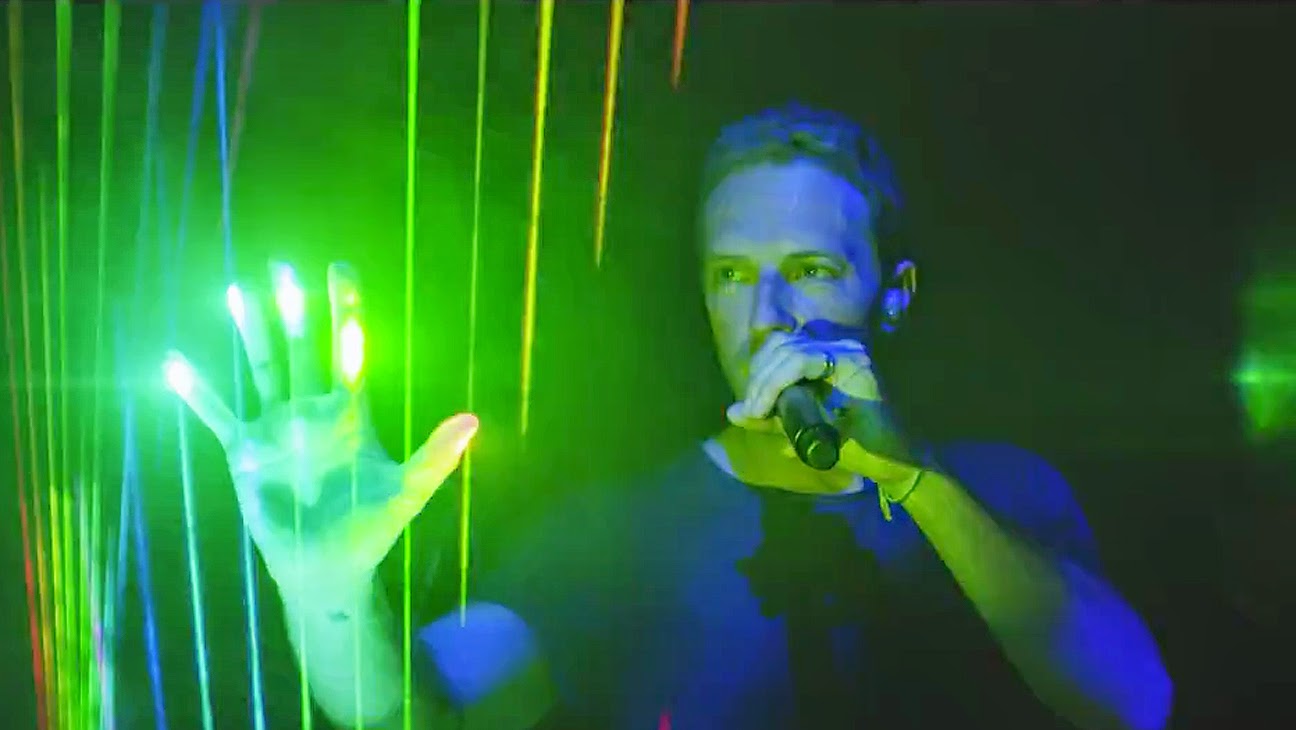
 
 
“O” is the sort of uplifting song that exists so we don’t need a forced, false, jumpy peak. The lyrics form a beautiful metaphor of hope and acceptance, with a simple bass and piano for company. On the subject of lyrics, some areas of the press have criticised Martin’s efforts as being overly simple and lacking depth. While I’ll admit there aren’t any profound statements that better quantify the loss of a human relationship found here, what we do get served works well in the arena that’s been set. Also, when in the eye of the storm, still in the moment of heartbreak, it’s hard to step back and describe one’s true emotions – everything is too raw.


Years from now Martin may see the woods after stepping back from the trees and revisit this painful period with better clarity. In those intervening years this album will take its rightful place amongst their best. You won’t always fancy lively Coldplay, or guitar Coldplay (I think I’ll always have a spare hour in my day for A Rush of Blood To The Head) but when you want chilled Coldplay this is where you’ll go. I have faith that wherever they decide to take the sound next will be a story worth listening to.


Staying Out Of Trouble

Staying Out Of Trouble

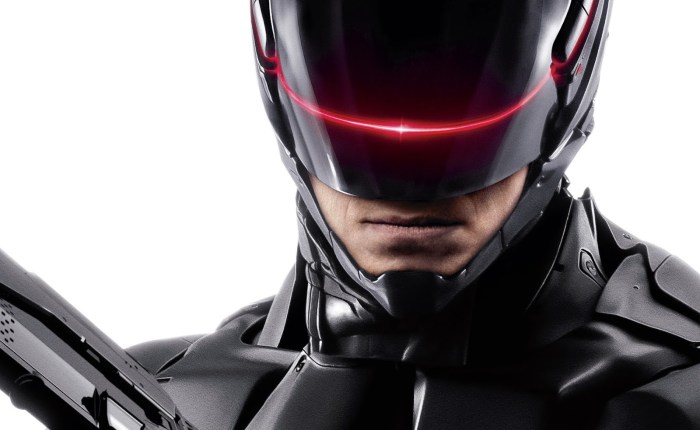
Reboots, remakes, recycling old ideas for cash, however you want to put it, Hollywood loves bringing back movies from yesteryear and milking a familiar cash cow. The latest character to get the treatment is Robocop. There was collective sigh asking “why” when the remake was first announced, followed by constant interest. Leaked photos of the new look Robo followed, accompanied with details about plot and on-set action. Forums were alight. The reason: Robocop does deserve a successful franchise. We never complain when Batman gets reshaped, next time around the Dark Knight’s absence will amount to only several years, and Robocop is an identifiable legend too.

That reasoning aside, some people are opposed a new flick because of the old classic line: It won’t be as good as the original. More often than not that statement is true for all remakes/reboots/reimaginings. The new Total Recall made me want to dream it away, and that movie was the tip of the rehash iceberg. So going into the new Robocop one should make peace with the idea that it won’t be as good as Paul Verhoeven’s original (but can’t be any worse than Robocop 3). After this has been accepted then we can judge why this is so in a more positive light.

First off a look at the age rating shows the studio’s intentions, dropping the 18 cert for a wider audience was a financial choice. In itself this needn’t be to the movie’s detriment, intelligent films don’t need blood and guts. So while there’ll be nobody asking, “Does it hurt? Does it hurt?” the sad truth is it starts to hurt the movie in unseen ways. If after stripping away the graphic violence you reveal a product posing less IQ than the predecessor, problems arise. Of course these are hidden by modern polish but the transition from the original’s dystopia to the new franchise’s gloss makes you wonder where the soul is. Remaining positive, I’d say there is one there, but it’s less certain than the classic.

It’s simple to say what doesn’t work. Without giving any plot away it lacks the satire of the Verhoeven’s, yet somehow tries to address this with Samuel L. Jackson’s character. This amounts to a bad impersonation, like watching Elvis live one night then visiting a bad karaoke the next. By trying to pay homage to the original it losses the point on why it worked first time around. The ideas around capitalism, distraction, greed from the first were natural political observations of the time – still valid now. Padilha, director of the remake, has his own points to raise and should have stuck firmly to them. By trying to absorb the sense of the original his head is nodding everywhere but finding a message nowhere. Because of this the humanity of Murphy is lost, which is a sin considering this version has Joel Kinnaman more man than machine (psychologically) after his accident, whereas Peter Weller’s Robocop undertook a journey to regain his human side.

Where it lacks the grit and realism of the first it does come across as a complete and well-thought-out film. In many ways we’ve surpassed the fictional technology presented first time around and yet this movie still feels fresh, even incorporating new ideas to aid our hero. After a viewing nobody could claim it’s been cobbled together for a quick buck; they do care about this brand. They’ve just dumbed it down for the masses, even the fourth directive now comes as a visual aid.

If sequels appear they may find the comparisons to the 1984 movie cease and the groundwork laid here will start to pay off. The only welcoming leftover at that point would be the theme music, which I was happy to hear after all these years. With a production budget of $100M already surpassed by box office totals of $146M it’s possible we’ll get those sequels. With Gary Oldman attached they stand a good chance of success, both with his undeniable ability and his record of being the highest box-office earner in terms of franchises he’s connected to.

Overall you’ll come away from the 2014 Robocop thinking it’s actually okay, not as good as the original – but you already knew that. There’s no one asking Bobby if he can fly, no cool names like Clarence Boddicker, no acute observations on class warfare, media or consumerism, but it is a healthy new take that revives a franchise – something not many reboots can say.

13

13

With this being my thirteenth article I thought it’d make good subject matter. Not the number itself, often termed as “unlucky for some,” but the Black Sabbath album. An album that didn’t rely on luck and certainly suffered from no ill fortune. Also we’ll take a look at how it has placed Sabbath in the modern world of music.

Even with the absence of Bill Ward the current incarnation of the band is widely seen as a return to the past, a last hurrah of the old boys. There have been calls from fans all over to get Bill on board but the contract dispute makes it seem unlikely to occur now, so we should enjoy and examine this Sabbath for all it is.

I can see both arguments for and against Bill Ward’s inclusion. Yes, he was a founding member and enjoyed a long run of success in the band. Many see him as much as Sabbath as Ozzy or Iommi. Sharon Osbourne would counter this by claiming Ozzy could make more money touring solo with Ozzfest and his appearance in the band now is for the fans – but he needs a higher cut. Iommi is Black Sabbath. The only member to appear on every single Sabbath album. His riffs not only make the band but defined a genre. Geezer Butler provides the signature bass and all the lyrics. When laid out like that it’s easy to see why they thought Bill was expendable.

The album the reunited members (with Brad Wilk as the sessions drummer) gave birth to was 13. It would have been so easy to produce a record that played by the numbers and offered nothing new or relevant. Instead it acknowledges its past, the lineage, whilst becoming as necessary as anything in the current metal scene. “End of Beginning” opens up with hints of NIB’s DNA before kicking up a gear or two. From the off the album gives the feel of an authentic effort. The popular “God is Dead” follows and the decades fall away. Iommi’s ability to produce a tune is reemphasised time and time again.

There are no weak songs on an album that isn’t afraid to change tone and pace. They could have taken the easy route and produced forty minutes of songs like the first two. Instead they are happy to play and twist all the sounds in their arsenal. “Loner” could have been taken from the Dio era with Ozzy adapting more than ever previously heard on a Sabbath record.

If “Loner” was revolution then the slow paced “Zeitgeist” is pure evolution from Paranoid’s “Planet Caravan.” Evidence of advancement is further found in “Age of Reason” which wouldn’t sound out of place on Metallica’s Death Magnetic. It’s fitting how a band that created a sound can progress further in the atmosphere developed by their students.

Geezer Butler over the decades has provided some great lyrics and this album equals most of them. “Damaged Soul” could well be his deepest metaphor yet. Age may have mellowed the players involved and it’s offered Geezer more introspective views on the world.

The album ends with rain and church bells, much like their debut album began. In doing so it gives a sense of completion, a circle that is now complete. If it is to be their last album I approve of the gesture – I’m a sucker for things with a cyclical nature.

But I have a feeling there is much more to come. The idea the last album loops to the first is great, but the gesture can also be seen as a nod to the past, confident they are rightly placed moving forward. It’s commendable that on this album they provided enough flavour of their former glories without becoming a parody of themselves. Whilst one shouldn’t get too carried away – it’s does lack the textures and depths attained in Vol 4 and Sabotage – they have pulled off the trick of being a genuine article of days-gone-by and something modern.

Like true legends, that have faced adversity before, the process of them coming together again hasn’t been easy, but they have managed to make it work. Contract disputes and well-documented illnesses aside, the feel of them live was missing as recent as 2012. I saw them perform when they headlined the Download Festival. It’d be easy to make excuses (Iommi was in recovery from his treatments; Ozzy had fallen off the wagon) but the fact was they hadn’t found their sweet-spot. For lesser bands they’d have called it a day. Seen it as a sign that perhaps they were past their best.

Not Sabbath. They carried on. 13 was completed and a world tour began. During the process they grew organically again. When I saw them in Manchester at the end of 2013 it was like being transported back in time. Ozzy sounded like he was on an LP, not a live mic. Iommi played effortlessly with great enthusiasm. Butler played as well as he did at Download – and for my money he was on fire there. Tommy Clufetos also provided the best drum solo I have ever witnessed, and I’ve seen Cozy Powell live and Roger Taylor play a bass with his drum sticks.

At one point Ozzy asked, “Should we come back and do this again?” The crowd roared approval. “I think we may,” he replied. Let’s hope they do. There’s still a role in the world of music for Black Sabbath to play.