
Modern Game, Archaic Attitudes

Modern Game, Archaic Attitudes


Last week the Daily Mail, a publication not renowned for high class output, once again confirmed its status as a small minded rag, pouring out the worst of society’s views. The target this time was Cristiano Ronaldo of Real Madrid; a man many believe is the greatest player on Earth. The article didn’t centre on any of his on-field activities, instead it speculated what he enjoyed doing in private – with other men.
The Daily Mail wrote: Real Madrid star Cristiano Ronaldo is in a gay relationship with a Moroccan kickboxer, it has been sensationally claimed.
Proving that in the world where low-end papers exist, it’s always the 1970s. It doesn’t matter if Ronaldo is homosexual or not. It shouldn’t be newsworthy.
The real problem is how a paper known for its xenophobia is using the rumour as some sort of slight against the Portuguese player.
It’s indicative of a fault well rooted in football’s primitive attitudes. In a sport that can change with the times when it comes to generating income, it still hasn’t learnt one thing since the days of Justin Fashanu.
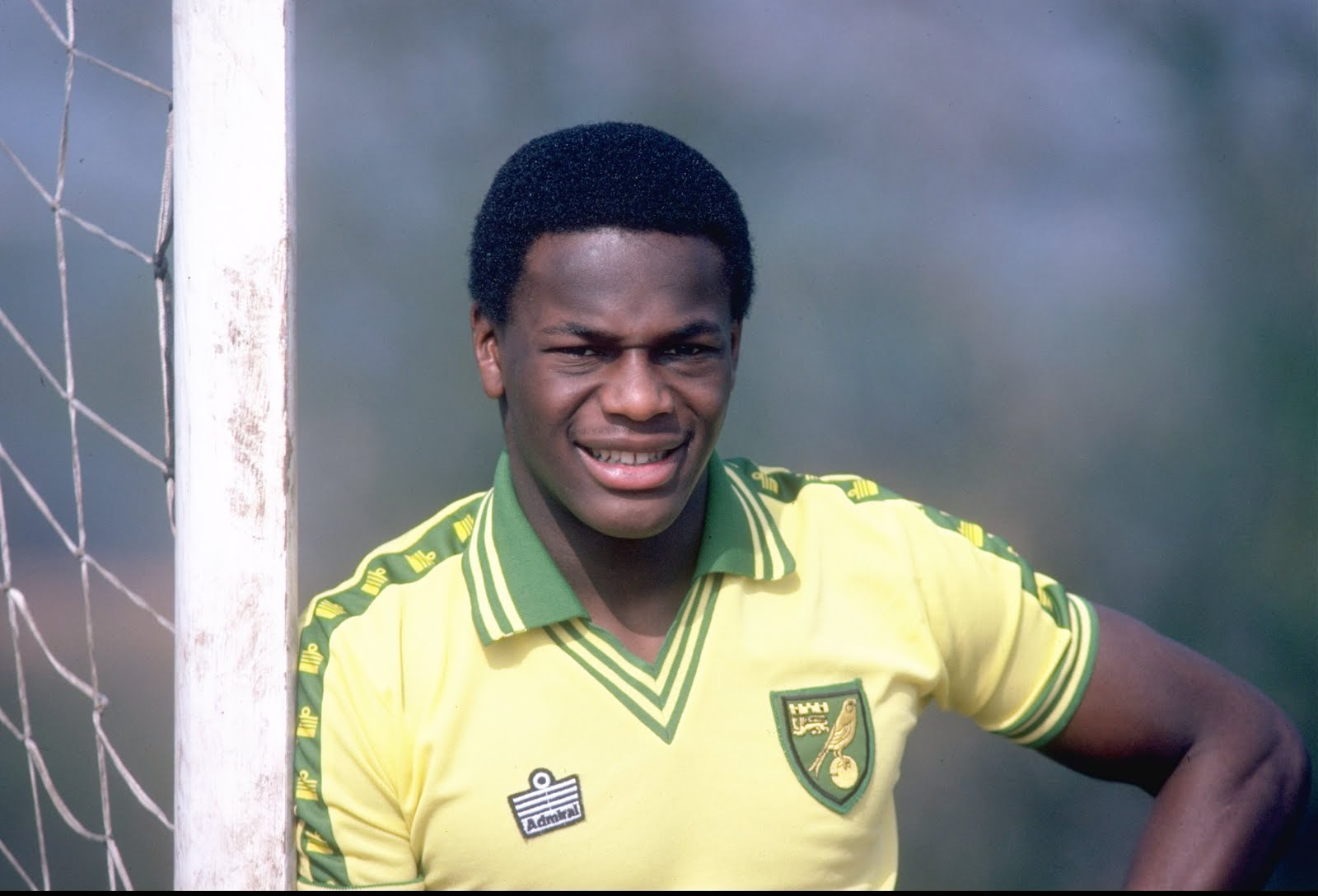
He was the first £1m black footballer and the first professional player to come out as gay in England. The high fee was paid by Brian Clough who took him to Nottingham Forest. The legendary manager admitted in his autobiography one of his biggest regrets was his poor handling of Fashanu.
This came with the benefit of hindsight, coloured by the eventual suicide of the once promising talent. At the time Clough lacked the understanding and knowledge surrounding the issue. Like many back then, he was ignorant when it came to the subject of homosexuality.
Instead of being the father figure he later wished he’d been, when he first found out about Justin’s lifestyle he barred him from training with the first team. Then he hauled Justin into his office and broached the rumour in the manner recalled here, as written in Clough’s autobiography:
“‘Where do you go if you want a loaf of bread?’ I asked him.
‘A baker’s, I suppose.’
‘Where do you go if you want a leg of lamb?’
‘A butcher’s.’
‘So why do you keep going to that bloody poofs’ club?’”
It must have worn Justin down over the years, and by the time he was accused of sexual assault after an incident in America, he feared his colour and sexual orientation would make his case impossible to win.
Watching the many struggles he endured, it’s not hard to understand why only one other player has openly come out since. The fact it was Robbie Rodgers, a free agent at the time and hardly a household name in this country now, proves no top flight players believe it’s worth the risk.
More recently Sol Campbell became the centre of nothing more than gossip. A rumour spread that he left during Arsenal’s halftime interval with West Ham in 2006, a game The Gunners lost 3-2, because his agent had informed him a national newspaper was going to run a story about his sexual preferences.
Pink News printed comments made by Sol Campbell explaining how the racist and homophobic remarks were hard to deal with, he said, “There were moments when it became too much. West Ham at home with Arsenal I couldn’t come out in the second half. It was a chipping effect over the years. I suddenly couldn’t face it.”

The irony is, Campbell is one of the most outspoken players of his generation, had the rumours been true he would have been one of the first to come out and stand tall. But the tabloid press wasn’t going to let the truth get in the way of a story, even if it meant the well-being of a top England international was going to be damaged.
In the end they did run a story, omitting all names, only referencing the person in question as a current Arsenal and England defender. This led to Ashley Cole taking the heat. Something he put to bed when he married Cheryl Tweedy.
It was another example of sexuality being used as a negative. There shouldn’t have been a story to print. It isn’t in the public’s interest and doesn’t affect how a player performs for his club. How it’s used as a shaming tactic is disgusting in this supposedly enlightened age.
It was only a few months ago the Daily Mail (them again) reported that before the start of next season two Premier League players would come out as gay. Once more, an absolute no-news story, reported for the shock and shame value. Of course any player in the closet will expect some chants from rival fans but most of this will be more like pantomime and banter than anything close to hatred. It’s only papers such as the Daily Mailthat try and spread that.
Players should also have zero concerns about teammates making life difficult. They are protected by laws and men in other male dominated sports, such as British-born NBA basketballer John Amaechi, and Welsh Rugby star Gareth Thomas, have had no trouble since coming out.
The Ronaldo article shouldn’t have asked if he was gay, but simply: Who cares what he does in private with a consenting adult.

Not Fair, Just A Financial Play

Not Fair, Just A Financial Play

It seems we are entering the final phases in the implementation and take up of Financial Fair Play. All the fear mongering, ignorance and general debate is slowly being replaced by the certainties that UEFA has presented as we move forward. In the past I have made no secret of my opposition to Financial Fair Play, and this hasn’t changed, if anything it’s hardened as my fears have become facts. FFP doesn’t have the best interests of the sport as a whole at heart; it is self-serving, hypocritical and greedy. Before the first set of major sanctions are placed on teams let’s analyse what it means.

Not to go over old ground or opinions but there is a loud chorus developing that Financial Fair Play is good because it stops “Cheats” or people buying the league, something I have always laughed at. Except, it’s now no laughing matter. We have Wenger coming out claiming Manchester City should be banned from Europe, and rival fans claiming a club shouldn’t be able to spend in excess to find success. All these people are speaking from their Ivory towers or behind jealous faces. It’s easy to say a club should only spend its turnover when you’ve already established a high one over a long period of time. One that was invariably acquired due to success, which – more often than not – required investment in the first place. These types don’t want the apple cart upset, they fear new teams emerging.

You’ll never hear the pro-FFP bunch mention the protection of the smaller teams, how Financial Fair Play protects clubs from financial mismanagement – the very reason the system is supposed to exist in the first place. And if such a system – with those solitary goals – did exist, I’d throw my full support behind it. But they never mention this side of FFP because the little clubs, whether there or not, pose no threat to their success. A club managed with a wealthy owner that is willing to pay out of his own pocket and write-off any debt, is good for that club’s growth, and in the long run will generate a higher turnover. Manchester City is the extreme example of this but take a League Two club, give them a generous chairman and over time they would develop.

The Football League has the Benefactor Model for this very reason. It allows clubs to clear losses if the owner absorbs them, thus progress financially and grow without restraint. It acknowledges these clubs don’t need protecting from all wealthy owners, it’s the maverick ones that play Russian Roulette with cash they don’t really have that pose a problem. There’s no reason UEFA couldn’t adopt the Benefactor Model if all it cares about is the health of football’s finances. If that was their sole intention they’d worry less about imposing sanctions on clubs like Manchester City and start to question how giants like Manchester United can be bought and run on debts.

Messi

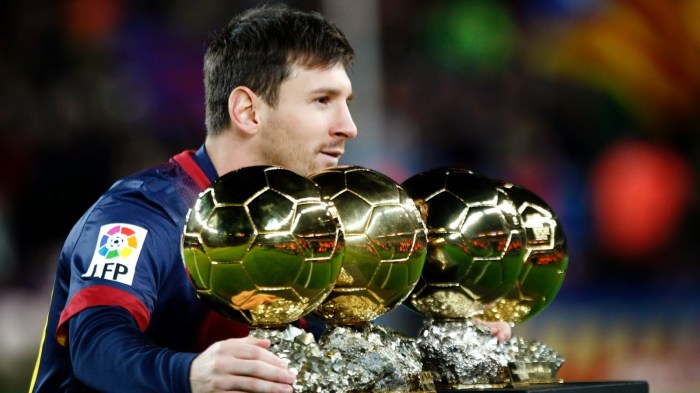
Financial Fair Play experts will claim one reason UEFA are focusing on clubs like Manchester City is to prevent an escalation in wages. This is folly. It still is – and will always be – the established teams that set the upper limit on wages, dictated by the best players in the world and their agents. When teams like City and PSG are in periods of accelerated growth they don’t raise the ceiling on wages, they just increase the number of players earning the top dollar. In England it was Manchester United that went to £300,000 a week for Rooney; overseas I’m confident Ronaldo at Madrid and Messi at Barcelona got their mammoth wages because of their market value, not because oil tycoons were ploughing money into clubs elsewhere.

So what are we left with if FFP isn’t protecting the little clubs or preventing the market becoming damaged for the larger ones? Greed. The jealous or ignorant types will claim Manchester City is greedy, that they are the evil doers, when if they stopped to look at how the money has been spent and the goodness that has come from it, they’d realise Sheikh Mansour is an angel – Platini and UEFA are the devils. The infrastructure at City has been taken to the next level and the community is thriving, and City will become a market leader on the pitch, and off it, financially. Punishing this isn’t protecting football, it’s UEFA trying to maintain the status quo with the favoured big clubs and introducing a rich tax to line their own pockets. It’s worth noting the Premier League say Manchester City comply with their FFP rules.

It’s laughable that if FFP is about sending a clear message that money in football needs to be healthier, one of the punishments both PSG and Manchester City face is a hefty fine (reports from £29M to £50M). So they worry clubs are leaking money, but to make sure they stop they want them to leak a bit more their way first. An oil tax. And supposedly this fine will be on the accounting books, further restricting expenditure over the following reporting period. Also they face restrictions on squad size and wages for the Champions League, making it harder to compete with UEFA’s chosen children.

For a long time City fans in pubs have been saying the first time a restriction prevents a player appearing in the Champions League it’ll be the players – not the clubs – that take UEFA to court for restriction of trade. It seemed a fairly reasonable argument, that there was a case for loss of earnings. UEFA have engineered a situation where this could never be levelled at them. They aren’t removing the clubs from European competition. It would be the clubs themselves that didn’t place them in the Champions League squad. Yes, it may be due to the sanctions UEFA have placed on the club, but not a restriction.

The only murky area for UEFA – and glimmer of hope for the type of lawyers usually found with a match day pint – is the absolute definition of sporting regulations. If UEFA and FIFA suddenly changed or removed the off-side rule, teams would comply, it’d be in the sporting rules, same for two goalkeepers per team, everyone dressed in clown suits – whatever they fancy, if it became sporting code it would be followed. But the rich fuelled sport of Formula One tried to implement an expenditure limit in its sporting regulations and to this day it is unresolved with no official cap set down. Because sport is also business and in business it’s far from “Fair” to tell companies how much they are allowed spend as they try to increase their standing within the industry.

As a consumer we also do not accept services that diminish. If your broadband provider, insurance company, car manufacturer, any product you subscribe to, started to fall behind the industry standard you wouldn’t accept that the CEO wanted to place his own funds in to revive the company but was bound by red tape. And as sports fans we dream and hope our team one day can become the best in the land. If Financial Fair Play isn’t challenged at this final hurdle they’ll be no more new teams having their day in the sun. It will all become stale, stagnant; hope for some will be replaced with acquiescence. That’s not fair – it’s cruel.