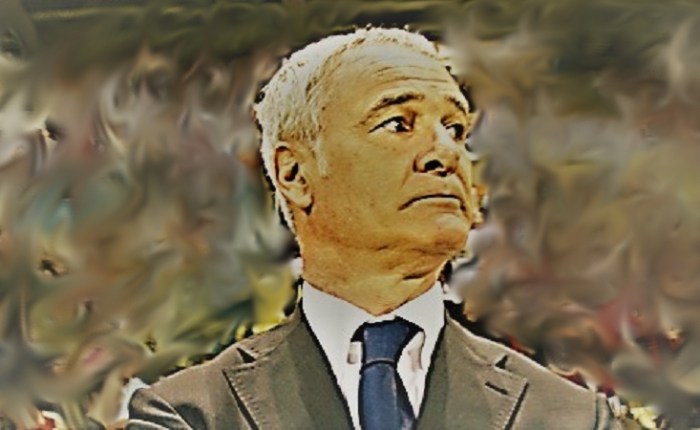
Claudio Ranieri – the man responsible for taking Leicester City to dreamland – was brought crashing back to reality with the ruthless nature of the Premier League once again being displayed by a twitchy chairman. He becomes the fifth top flight manager to leave his post this campaign, and the fourth out of the last five to win the title only to be axed the following season. The time to analyse each individual case on its merits has passed – if Ranieri can be sacked, there is no measure of safety to consider – it’s time to question the staff system as a whole.
Before offering an alternative to the current way of life for football managers, it’s worth noting every club making a change has clear (if cold) reasons for doing so. Swansea believed Bob Bradley was in a sink or swim scenario with his lack of Premier League experience and showed no signs of doing even a doggy paddle.
Mike Phelan on the other hand, had shown signs of improvement at Hull City. His seemed a thankless task: a small squad, no money, an eleventh-hour appointment. Despite the cards being stacked against him, he soldiered on. That aforementioned improvement didn’t translate into the only element club owners care about when faced with relegation: points.
That’s why Crystal Palace replaced Alan Pardew with Sam Allardyce. The former went on long runs without collecting many, the latter almost guarantees survival.
It’s the fear of not surviving that prompted Vichai Srivaddhanaprabha to wield the axe at Leicester. (Yes, the chairman’s name was copy and pasted.)
It’s the players at the King Power who should be taking ownership of a change in their application and work ethic. It’s clear to see their interest levels have only peaked in the Champions League. They used player power, regardless of what Craig Shakespeare says in press conferences, to avoid taking direct responsibility for their attitude and performance.
Ironically, the man favourite to replace Claudio Ranieri – Roberto Mancini – left Manchester City for the same reason.
He lost that dressing room and Manchester City hired a pussy cat. The Foxes have gone the opposite way, fired Mr Nice Guy and hired a disciplinarian. Makes sense when people need whipping into shape but the players who lacked professionalism will rue the day they got a good man fired.
All these managers needed the same thing: Time.
The panic of losing Premier League status, and all its rich financial rewards, has chairman all too eager to press the panic button. The League Managers Association (LMA) have a thankless task. They have no negotiating power in the boardroom and can only transition managers into the job market. The chance of them ever taking a big club to tribunal is on the same scale as it was for Leicester to retain the title and win the Champions League this season.
If the managers and the LMA can’t enable a fairer work place, who can?
Well, it has to come from the top. It would require UEFA to make it law or for the Premier League to take a bold step and make rules for clubs on these shores that would remove the equal playing field they currently enjoy with the rest of Europe.
And while this sounds outlandish at first, it’s worth remembering the Premier League has set out to differentiate itself from its European equivalents. The new branding seen this year, without the need for a sponsor, was an effort to make the Premier League a global symbol like the NFL or NBA.
It’s from those American counterparts they could take inspiration.
Before we get to their methods, there is already a system in place that could afford managers protection: the players’ transfer window. Seen as an awkward disruption nowadays (ask a West Ham fan about Dimitri Payet) and a way for clubs to inflate prices, it does offer one thing to players – a settled block period without the threat of being moved on.
Of course, a club can fire a player by releasing him from his contract, but they see the financial loss as too great to ever do this. Unless the player involved is Joey Barton. This gives players a fighting chance to prove themselves. And when the writing is on the wall, at least they have time to prepare and fashion a deal with their agent for a new club.
The modern day manager goes week-to-week – sometimes day-to-day – with the threat of the chop in the background. If they were afforded the same protection by only being removable during the player transfer window, clubs would have to show the same commitment they gave on day one of the manager’s reign.
Maybe it would only result in the January transfer window becoming a crazy merry-go-round of players and managers, but there’s also a chance clubs would buckle in for the season. Clubs that still felt the need to part ways when relegation loomed would only be able to promote from within, giving backroom staff a chance and some form of continuity.
But maybe the Americans have got it correct. In NFL, coaches are fired on the first day of the regular season. It’s known as Black Monday and several sackings is seen as harsh. A regular debate within NFL is whether firing bosses actually improves results. They still make changes during the regular season but across American sports it’s not as prevalent as it is in football.
So, what if there was no transfer window for managers in football because clubs couldn’t replace a Head Coach with an external appointment at any point in the season?
It would ensure clubs got behind their managers 100%. They’d have to make it work. The time, and undue pressure a lack of it brings, would be afforded to coaches often struggling against resistant waters. Some players don’t like a new ethos or coaching methods and in today’s football world, they know all the power lies with them.
If a chairman had to retain his manager, that power would swing back to where it should be: with the boss.
These ideas are the extreme end of the spectrum but the results they offer would please fans and clubs alike. Currently agents have more influence than the people that work long hours coaching teams and preparing for matches. A safety net and legal assurances for managerial staff would reduce this ugly side-effect of today’s game.
It seems far-flung right now, but everything has a breaking point. If the Premier League carries on its current trajectory, it will buckle under its own weight. The manager sack race is just another indication football is in silly season.
It’s time for calmer heads to prevail, and loyalty and respect to have more bearing than the potential of a few short-term victories to snatch the pound signs flying around.
 The Reflective Page