Wonder of Wimbledon

Wonder of Wimbledon

Wimbledon strikes its penultimate day. For the women, a legend takes her seventh singles title at the famous venue. The men play tomorrow, with Andy Murray still representing Britain, being recognised as Scottish only in defeat by the masses.

Young children will have watched on during the last few weeks, picking up on peculiarities unique to tennis. Their enquiries ranging from why the man in charge keeps asking for a drink. The reason why those dressed in armed forces’ uniform stand with ball boys and girls. Why do players ask for three balls and always send one back?

These new fans help fill courts up and down the country, along with adults dusting off their rackets for the yearly outing. Promising that they really will carry on playing this time; the delayed New Year’s resolution that meets the same fate as all the rest.

The cross generational experience resumes when watching the telly. They see those that can’t afford Wimbledon strawberries and cream, let alone a premium ticket, wave from Murray Mound. This coming together, just for a glimpse, helps give a taste of the atmosphere to viewers at home. Those too young to remember are informed the grass verge used to be named Henman Hill.

They screw up their faces and ask, “Who?”

The explanation about some Tiger Tim character sums up a deeply seated fear regarding English sport: heroes are made of nearly men that are never quite up to it.

England has spent the summer singing and talking about Three Lions only to be let down by cubs and rich fat cats. But it is at Wimbledon they get to see a true lioness, banishing the focus of sporting failure, replacing it with greatness.

Serena Williams, prowling centre court with beauty and power in equal measure. Delivering feline ferocity while maintaining untouchable grace. This victory makes Wimbledon the spiritual home for a tennis legend. England has been lucky to witness it; tennis is lucky to have her.

The nation waits for tomorrow. The long winter of years without a British Wimbledon winner passed thanks to Murray. Mentions of ’77 and Virginia Wade were only a paracetamol to mask the headache that Fred Perry’s name brought on. The three-time winner is celebrated with deserved adoration, but his last title in 1936, revealed a chasm in domestic sporting achievement.

The youngsters of today think he is just a guy that makes clothes, they see no tennis connection. Nor do they realise the gulf of those vacant decades. They only see a British man entering a Wimbledon final as a clear favourite. As such, Murray now faces a new pressure: expectation.

Such is the fickle nature of sport, the belief a curse was placed on a home winner is overtaken by the conspiracy fate is working to ensure another title for the world’s number two.

Nadal watches on, side-lined and reducing the elite field. Federer was beaten by Father Time and Djokovic left under a mysterious cloud. The path to victory cleared for a presumptive British favourite to take centre court.

He has tasted Olympic gold here, a singles victory, now he looks to assert his place among the upper classes of the game.

If he does, perhaps the British will use an old sentiment and claim Wimbledon victories are like buses. They’ll make this joke as they drag out tennis practice for an extra week while still drinking Robinsons orange juice…the children wondering if the umpire ever got his.
Formula One for All

Formula One for All

It’s a long held dream that sport can unite everyone on the planet. The FIFA World Cup breaks down barriers faster than men sitting at a negotiating table. The Olympics brings all the nations together with flag parades. Casual observers then become hooked on sports they usually have zero interest in. Unity makes these lesser reported events suddenly important.

And we have F1. A powerful advert for a connected world. The pinnacle of motorsport that travels the globe. A sport for everyone . . . everyone that fits into Bernie Ecclestone’s world view, that is.

The problem with universal sports is they will eventually cross party lines and some will attempt to use them as a tool for their own gain. It is at times like this sport should first be protected, then take a subtle step back. It is a permanent position that can’t be altered when it suits decision makers within that sport. When they voluntarily alter these rules they become as bad as the exterior forces trying to gain leverage by foul means.

In 2012 F1 came under severe scrutiny over the Bahrain Grand Prix. The previous year had seen it cancelled twice due to civil unrest and when it was announced the following season human rights activists called for it to be removed once again. It wasn’t. Bernie Ecclestone said at the time: “I don’t think sport should be involved in politics. When any sport goes into a country, they respect the laws of the country whatever they are.”

On the face of it this is a valid stance to take. Sport should only be used for good, not to thrust ideals on emerging nations. However, human rights should be free from political boundaries and ignoring them to facilitate a multi-million-dollar sport does feel inappropriate. F1 should take note how FIFA have struggled on this front (Qatar! What about Brazil?)

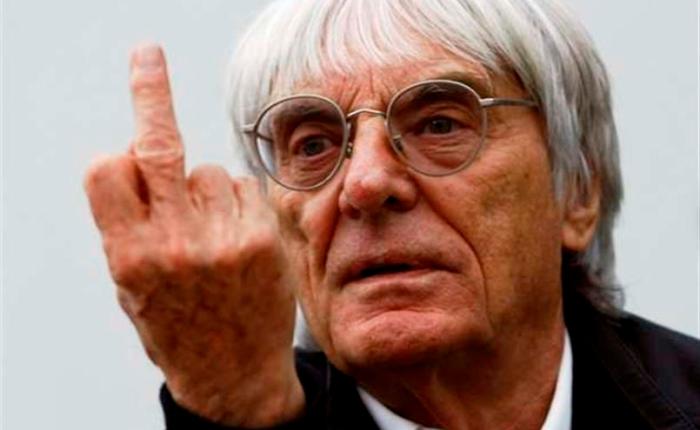
Bernie’s problem with Bahrain was quickly overlooked. This would have been fine if the man in charge of Formula One Management stuck to his own mandate. But Bernie’s biggest problem is his mouth and the ignorant brain it is connected to.

For a man that believes politics have no place in sport, it seems strange he thinks it is fine to make this comment about Vladimir Putin: “He’s the guy who should run Europe.” He added that he didn’t like democracy because not much got done.

The problem he has here isn’t with democracy, but the fact the teams are trying their best to prevent him continuing his reign as sport’s dictator. There’s no suggestion they want to oust him but they are standing firmer on new agreements. Jenson Button recently put the idea forward that Ross Brawn would be a great rule maker for the sport.

It’s a sentiment echoed by Red Bull boss Christian Horner and undoubtedly countless others would join the cause if Brawn showed an interest. Of course, a rule maker superseding the FIA’s view wouldn’t stop Bernie’s commercial arm entirely but it would make him slightly (more) impotent.

So the hypocrisy of Ecclestone’s claims that sport should be free from politics is multifaceted. On one hand we are told politics have no place while he parades with foreign leaders, claiming they should be ruling continents and the current political system in place in those opposing areas is fundamentally flawed.

Within the sport there is no such thing as negotiation or compromise. It is about how much power he can exert on the teams making him richer by the second. Sport is used as a symbol to join people together, to transcend class and gender. Yet he sees the rich and the poor on his own grid.

He makes outlandish comments that women are unable to compete with men. He says men will not take them seriously. This is only true if the men in question are chauvinistic or only interested in self-gain, things Ecclestone can relate to. He claims they are not physically able to drive a Formula One car.

In doing so he completely ignores the achievements of Susie Wolff, how she proved modern F1 cars are fine in the hands of a female. He is ignorant of women in American motorsport. Pippa Mann has completed four Indy 500s. Most famous of all is Danica Patrick. She has 115 Indy Car races to her name and is currently in NASCAR.

To say all women are incapable based on perceived body strength and stamina is ludicrous. There are women out there that easily exceed their male counterparts. It’s a sexist view that should have been buried decades ago.

It continues to be given life when ignorant little men with lots of money hold positions of power for too long.
Formula One is for everyone, like all good sport should be.

Bernie Ecclestone continues to prove he is out of touch with the world, the time we live in, and the sport he represents.

The Tyring Problem of F1

The Tyring Problem of F1

There is no doubt that Formula One is currently going through a difficult period in its long history. Smaller teams are struggling financially despite more money than ever being in the sport. Worldwide television audiences are in decline. And worst of all, the competition on track is far too predictable. In a desperate search for solutions even qualifying has seen a shake-up before reverting to its 2015 format. But there is an easier way to fix the problem on the track – and it’s a method we’ve seen before.

The reintroduction of multiple tyre manufacturers would be a game changer and an injection of sporting challenge that F1 needs. The negatives against are grossly outweighed now by the potential positives. The current drive to alter, or even deliberately randomise the grid, comes from a realisation that there is no way to reduce Mercedes’ vast advantage in a short space of time.

The recent regulation changes follow a long line of modifications that all had the intention to remove power from a dominant team’s design, only to fail in the long term as they make the corridor for experimentation smaller. Once a team like Mercedes, or Red Bull before them, crack the code, the other teams can only play catch-up. The problem is they are always two moves behind.

This is coupled with another downside to modern day F1 racing. Drivers are no longer flat out, lap-after-lap, trying to squeeze every last bit of life from the car. Instead, they have become micro-managers that worry about everything from tyre life, to gearbox wear and engine use.

A tyre war changes this.

No longer would drivers be nursing tyres through to pit stop windows. The suppliers would design tyres that encourage them to be driven hard while maintaining performance. Indeed, a tyre that fell off the cliff too soon, or was fractions of a second slower when being pushed hard compared to a rival brand, would be embarrassing for the company in question.

Those design corridors that have been getting smaller, suddenly open up to new interpretation. Certain tracks would suit one tyre manufacturer over another. Performance in one area heightened, thus, designers make sacrifices in certain downforce set-ups if over the season they see large gains elsewhere.

Suddenly the small strides Ferrari have made over the summer become leaps at one circuit, before the Williams has the fastest car for one weekend at a unique track, and so on. The desired grid shake-up would occur organically.

During a race, this unpredictability aside, we’d also see entirely different pit stop strategies. Rather than knowing all the cars that start on the same compound will pit roughly the same time, allowing for the undercut, we’d have cars on track racing with tyres in different stages of life and performance.

The main concern for a tyre war is cost. One supplier is seen as a way to ensure costs remain low. This is a false economy. F1 has finally embraced the idea of cost saving. It’s not like ten years ago (the last time there was multiple manufacturers) when the talk of budgeting was mere lip service.

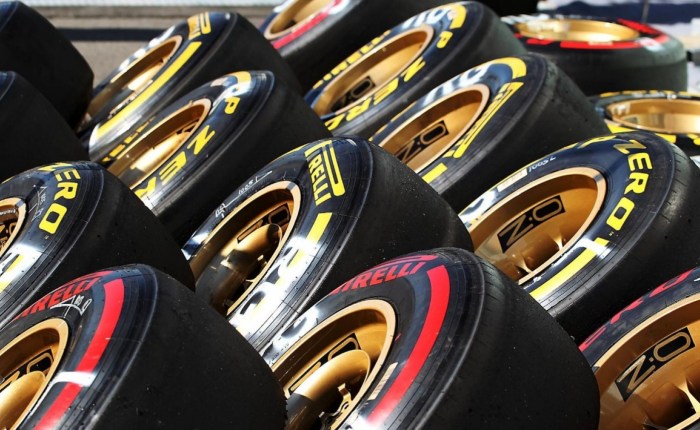
The current in-season restriction on the number of test days prevents too many ancillary tyre costs. Also, at the moment teams are having to make their overall package work around Pirelli’s rubber. For some this will cost more than having the freedom to understand and maximise a tyre design to be pushed hard, in the knowledge the car can only have maximum effectivity on certain tracks.

It would be a good chance to reduce the penalties for gearbox and engine changes. Clearly this cost saving measure has merit but it doesn’t really work in its current form. Teams take the hit and still find themselves investing more than was expected. If a tyre war returns, all components would be pushed harder. The production should then be allowed to shift from finite life to maximum performance.

Remaining with the sole provider has been a commercial choice. It gives Bernie complete control over a company he can lean on and place under pressure. When Pirelli headed into a Monza GP with a Spa problem on their shoulder, the spectre of the 2005 US Grand Prix hung over the sport. They didn’t consider halting the race. Ecclestone won’t want people back around the negotiating table that could derail his spectacle – even if it means risking safety.

That’s the real money issue here. The danger to commercial interests. Despite the long term health of F1 looking bleak, decisions are continually made for the here-and-now. The rich teams continue to get richer, the small ones continue to have less. It seems only probable the rule makers would only allow a second tyre supplier if it gave away cheap, less effective rubber. This way they could claim to be offering a budgeted choice while ensuring favoured teams – like Ferrari – remain at the top of the pile.

Rather than admit defeat with the current car specifications in a few years’ time, the choice could be made now to terminate the Pirelli contract. This way the current design parameters can remain the same whilst their application gets a reboot.

In a technically complicated sport, sometimes the simplest choice is the most effective. Right now F1 is blessed with a promising generation of drivers and team’s dedicated to competing. It is being held back by monotony.

Breaking the new status quo doesn’t require cars with radical new shapes or ways to manipulate the starting grid.

Just change the boots and let the teams go racing. Drivers should be racers, not component fatigue life managers. Make the pinnacle of motorsport about flat-out driving once again. If they do, it will become less predictable.

It will become the product we pray for every race weekend.