Safe Standing is Football’s Oxymoron

Safe Standing is Football’s Oxymoron

Until three o’clock yesterday afternoon, I would have described myself as a proponent of safe standing areas in football stadia. The arguments for have mounting evidence as teams in Germany, and now Celtic, demonstrate its effectiveness. Then a turnstile failure at Manchester City’s Etihad Stadium gave an example of why the risk with standing areas is greater than any benefit.

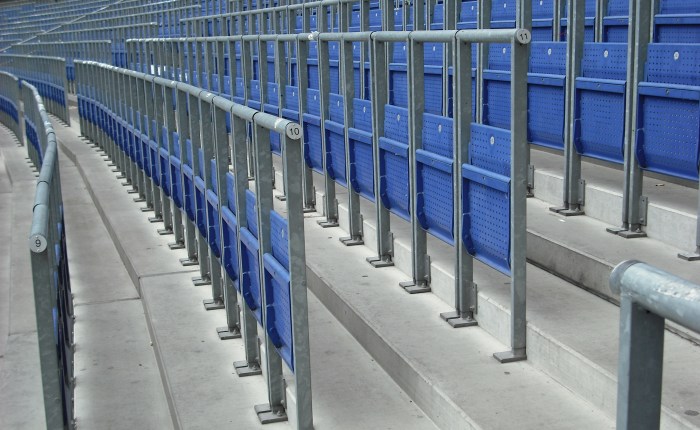
On the face of it, safe standing is sold as a modern take on an old fashioned way to view football matches. Those that want the system will explain how each person is allotted a seat number which relates to the folded away chair. This ensures order and crowd control. Within the standing areas barriers prevent surges, eliminating forced migration of fans into areas when things get a little raucous.

They rightly point out that in today’s top flight, many fans stand anyway. In doing so they are at greater risk than if they were inside a properly policed safe standing area.

In a perfect world, the arguments for safe standing cannot be denied. 70% of Premier League clubs would back its return, Tottenham Hotspur are even including the feature in the design of their new stadium. It’s also believed Manchester City would incorporate such a section within their North Stand when it’s remodelled to add an extra tier.

But this isn’t a perfect world. The supporters of safe standing never consider the potential pitfalls. At the Etihad on Saturday a power loss showed how errors can align to create potential nightmare scenarios.

It should be noted, there were no major problems at the ground but the blueprint for disaster was written.

As turnstiles became inoperative, queues quickly filled the concourse outside the back of the South Stand and the streets beyond. With some fans being delayed for up to fifteen minutes, there was clearly pressure on staff to appease the frustration.

So they opened the large exits walls beside the turnstiles and allowed fans to flock in, en masse. From a slightly elevated position on chairs, staff made the call for fans to have passes on display. But with such a determined flow, and at least several people wide, it would have been difficult to say with any degree of certainty that every ticket and seasoncard was seen. As with any system, it is the introduction of the human element that leads to problems.

Had Saturday not been against Everton but a Manchester Derby, and the fans were rushing into a safe standing area, the outcome could have been very different. There would have been more fans than available spaces. Unlike with a seat – where if you don’t have one, you can’t sit on someone’s knee – with safe standing the uncounted extras would have squeezed in next to their mates.

Human nature would have led many fans to share their space. But the fans would have kept coming, the available space decreasing. Unlike an all-seater stadium, where overcrowding is immediately apparent, the safe standing area would encourage a stealth swell.

All these elements to align like this would only happen once in a blue moon, but to have the potential for it to occur once is one time too many.

Tragedies like Hillsborough should have taught us to safe guard against a repeat. To ignore the Taylor Report and legislation in the 1989 Football Spectators Act demanding all-seater stadiums, would be a step back. A step in the direction of needless danger.

Events at Manchester City on Saturday display only one perfect storm template. There are countless others and it’s the ones that can’t be imagined that will slip through the net.

In hindsight, the safest thing City staff could have done was to deny access until each supporter could be counted through one at a time. It would have led to mass disappointment and thousands of refunds but wouldn’t have courted with danger.

Because the match day experience in England is now so sanitised, the staff working the grounds, many of them too young to recall the tight-packed days experienced in places like Maine Road’s Kippax, don’t appreciate how close they are to catastrophe.

Without better training and education, highlighting the unique hazards packed sporting events face, errors in judgement would prove fatal if the safeguards of the Taylor Report are removed.

Formula One isn’t looking at ways to make the cars more dangerous because the current safety measures are proving effective, so why is football looking at ways to drive without a seat belt and helmet?

The words “safe” and “standing” should never be placed together and spoken aloud in the Premier League. Failure to heed the warnings of the past will see the future tainted with further failings.

Summer Transfer Market and FFP

Summer Transfer Market and FFP

The summer transfer window has come to a close and with it an end to months of speculation. This year it wasn’t just the destination of our favourite stars that was widely discussed, it was if Financial Fair Play (FFP) would alter spending habits. Now that the dust has settled we can see if FFP had any effect on the window.

On the face of it one would be forgiven for believing that FFP has had little effect on clubs. Before we jump to that conclusion we need to look at factors that affect the net spend of individual leagues. The English Premier League managed to spend a combined total of £630M on new players. To offset this outlay clubs are dipping into their newly topped-up television deal fund, believed to be worth around £500M for the clubs this year. In the past I have been critical of FFP and believe the rewards on offer in the game negate sensible business approaches from clubs. This has been highlighted once again at the close of the transfer window.

Manchester City spent £102M in the transfer window in the hope to regain the Premier League title and have a decent Champions League campaign. They have the wealthy owner to bankroll such an outlay but it is optimistic to assume they will comply with FFP at their current rate of losses. Their sponsorship deal with Etihad is still under review, if that is deemed unfit they would find themselves in a difficult position. It must be said that despite the seemingly high spend they do have an eye on FFP. Clever deals to sell Tevez – a high wage earner, close to the end of his contract – and loaning out Gareth Barry to reduce the wage bill further, along with ten other players leaving, displays an awareness they must comply. More on compliance later.

Staying with England for now, Tottenham Hotspur top the spending charts with a sizable spend of £107M. This is covered by the world record fee received for Gareth Bale, so when you consider they have approximately £25M extra with the new TV money, they’ve refreshed their squad free-of-charge. Newcomers Southampton and Cardiff both spent £34M, placing them sixth place in the spending table. This is an example that clubs will spend – perhaps more than they should be comfortable with when you consider their previous season income – in order to stay in the rich land of the Premier League. Avoiding relegation brings riches comparable to a top four finish for the “big” clubs.

A club hoping to rejoin the top four is Liverpool. They have outlaid a not-to-be-sniffed-at £49M. However, this has been a club spreading their money wisely. Whilst they lack the traditional marquee signing, they have successfully strengthened their squad and kept FFP in mind. Where needed faces have been released or loaned but they’re taking a prudent approach that is showing signs it will improve them. Arsenal did make a marquee signing, a whooping £42.4M for Mesut Ozil. All summer they threatened to spend big and did so in style. They have managed the repayments of their new stadium in recent years to the detriment of their transfer policy. It seems those lean days are over. Expect them to go hunting for a striker again in January, knowing they can spend and comply with FFP.

Manchester United have been the focus of much ridicule and criticism following a transfer window that saw them fail to capture their major targets and ending up with Marouane Fellaini at a price higher than his former buy-out clause. David Moyes would have had insider knowledge of this clause, having just come from Everton himself, but Manchester United’s slow manoeuvres in the market meant their first choice targets weren’t acquired and Fellaini was signed out of desperation to do some business. Had they really wanted him it stands to reason they’d have met his buy-out clause earlier in the summer.

What is most shocking about Manchester United’s activity is how they appear most aware of FFP and thus most reluctant to spend. This is shocking because out of all the clubs in the Premier League we’re led to believe they most easily meet the requirements. But they refused to increase their offer for Ander Herrera by a mere €6M to trigger his release clause. They twice submitted the same bid for Leighton Baines, believed to be £12M. It’s quite ironic that a concern people have with FFP is that it’ll create a status quo, that the big clubs remain big as others can’t compete financially, yet at the end of the summer window the team believed to be biggest of them all spent so little in comparison to its rivals.

Earlier I mentioned FFP compliance and when considering the spending involved with Paris St Germain and Monaco it seems they have, and will, be taking a different approach to the new rules. PSG have a tie-in with the Qatari Tourist Board. Whilst not described as an outright sponsorship, but partnership, that earns the club €125M a year. It’s difficult to see UEFA approving such a deal as income when they’ve spent so much time investigating legitimate sponsorship deals. But PSG must be confident as they spent €84.4M in the last window alone. If that sounds high, and based on dodgy ground, then spare a thought for AS Monaco. Last season they were in the second tier with an average attendance over just over 4,000. This year they have a net transfer spend of €160M. They must be banking on FFP being successfully challenged on the basis it restricts competition. It’d be a sweet moment if Platini’s initiative to haul in English Premier League spending is undone by the two French clubs.

The English Premier League and the aforementioned French clubs aside, there is evidence that FFP is starting to dictate the transfer market. The top flight in both Spain and Italy saw revenue from transfers exceed expenditure. The same is true for their second tiers, along with the English Championship, and a host of other European leagues like the Dutch and Portuguese. In fact, it’s only the French top tier (thanks to PSG and Monaco) and the German Bundesliga that finished the transfer window in the red. And considering that the essence of FFP is based around the German model it’s safe to assume they are spending within their means. Everyone else across Europe is spending with greater caution.

Everyone except the English Premier League, but it goes to show that if there’s money available clubs will spend it. They have to if their rivals do. The transfer system as we know it won’t be dramatically altered in light of FFP, the big transfers will still occur. But overall a more level-headed business approach is coming into play. And even with the EPL’s massive expenditure this summer it could be argued that the major signings took place elsewhere. The English Premier League is becoming the most expensive league without having the highest level of talent. But it is still the most exciting, so it seems fitting it’s the one that has the most summer transfer activity, because watching clubs throw cash around can be fun.


Christopher William Kinsey’s essay Financial Fair Prejudice is still available via the Kindle Store from Amazon.