What £100m means in Manchester

What £100m means in Manchester

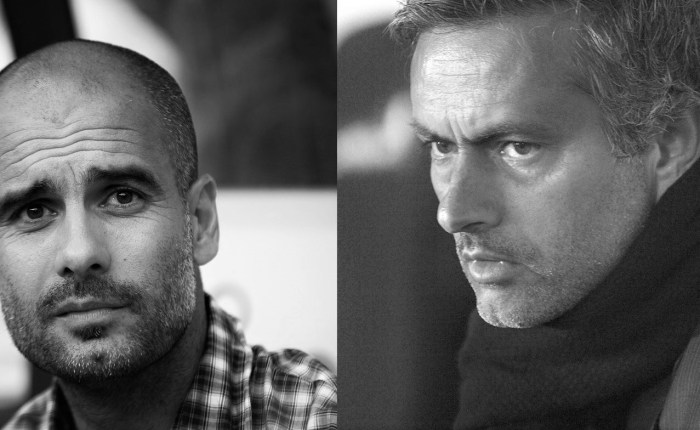
The two clubs baring Manchester in their name have both spent big this summer. But that is where the similarity ends. In the centre of Manchester, Pep Guardiola has spread his cash as he rebuilds and reimagines The Citizens style of play. Over in Trafford, their new man at the helm José Mourinho, also faces a reshaping job. But he has decided to take a big, singular gamble. There is a reason for these two differing approaches.

The irony of United being the club to break the world transfer record, when it was “City ruining football” with their accelerated growth period, won’t go unnoticed with football fans around the country. But the protracted Paul Pogba transfer is the peak of a continued period of United high-spending.

Moyes, Van Gaal, and now Mourinho, have all been supported by the Glazers in the transfer market.

The ethics of a £100m move have been widely discussed. Regardless of opinion, the truth is football’s finance has been heading this way for a long time. The new TV money should have found its way back to the pockets of fans but this was always going to be difficult when chairman saw it as a way to increase the ransoms on their top players.

Juventus have only done what Everton have been trying for the last two summers, and this despite the Goodson Park outfit benefitting from the increased TV revenue and a new, presumably richer, owner. The Italian club have a tighter budget, if they hadn’t broken the world record fee with United’s money, Real Madrid would have stepped in and come close.

What makes the move murkier for United, are the reports the Frenchman preferred a move to the Spanish giants. A few eyebrows must have been raised from Sir Alex Ferguson to Sir Bobby Charlton, when the realisation hit home that a player who left for a tribunal fee, looked to be returning, somewhat underwhelmed, for a world record fee.

The debate about whether he is worth the fee is null and void. The moment a club are willing to pay a price, that is the market value.

What the Pogba debacle does, is detract attention from United’s net summer spend. The positive press campaign focuses on four acquisitions, one of them Zlatan Ibrahimovic for absolutely nothing. A player of such quality on a free transfer is more than a bargain, the only doubts surround his ability to step up from the tamer French league to the tough English season at the age of 34.

The other half of Mourinho’s summer quartet are Henrikh Mkhitaryan and Eric Bailly. At a combined fee of £68m they are hardly cheap supplements to the lofty pursuit of Pogba.

This is where the Manchester divide became a chasm over the summer.

As it stands City, who admittedly are still seeking reinforcements, have spent £114m and recouped £10m. Both of those figures are set to rise, with the imbalance increasing on the expenditure side of the equation.

For the price of one Pogba, City have brought in six new faces and still have over £60m to go before equalling United’s outgoings. This is without acknowledging the offloading process City are going through which is trickling some cash back into the coffers.

The reason the alternative approaches are so glaring is because both clubs had the same problem: they need complete overhauls.

José Mourinho even commented lately that he needed twenty players to undo the damage inflicted from the Louis Van Gaal era, and that his approach differed so wildly, it would take many new faces to adjust the style.

So why place all his faith in one big summer signing?

Because he lacks a luxury only Pep Guardiola can boast in the modern world of football: time.

The Spaniard holds a major advantage over José and it isn’t a bigger cheque book or even a better youth system. It’s the lack of urgency for immediate results. The Etihad board didn’t allow the Pellegrini era end with a canter to then make a kneejerk reaction with their long-term managerial target.

Guardiola knows he can take his time developing new signings like Marlos Moreno without fearing the need for instant success. That’s not to say he can fail to achieve minimum targets. Champions League qualification is a must to the big clubs. But even failure to meet that wouldn’t necessarily cost Pep his job.

Mourinho is breathing the air of a different planet. He is a proven manager that suddenly has everything to prove. After the Chelsea sacking, he can’t afford a slow start, let alone a disappointing season. He didn’t have the support of the entire United board but he was seen as a necessary evil.

That conjoined dilemma of club and man brought them together. Now they face a future where development gives way to desperation in the transfer market.

Mourinho is in the casino, play for high stakes risks, and Pogba is one big throw of the dice.

His inner-city rival can smile and take cab journeys with fans instead. He has the time to send players like Zinchenko and Gabriel Jesus on loan, not worry about Ilkay Gündogan’s lengthy injury, or bend to transfer fee demands he feels excessive. And all the time he works the current crop – whom many now seek redemption – into his mould.

Leicester proved last year that money doesn’t guarantee success, this season Manchester will see if patience pays dividends.

Summer Transfer Market and FFP

Summer Transfer Market and FFP

The summer transfer window has come to a close and with it an end to months of speculation. This year it wasn’t just the destination of our favourite stars that was widely discussed, it was if Financial Fair Play (FFP) would alter spending habits. Now that the dust has settled we can see if FFP had any effect on the window.

On the face of it one would be forgiven for believing that FFP has had little effect on clubs. Before we jump to that conclusion we need to look at factors that affect the net spend of individual leagues. The English Premier League managed to spend a combined total of £630M on new players. To offset this outlay clubs are dipping into their newly topped-up television deal fund, believed to be worth around £500M for the clubs this year. In the past I have been critical of FFP and believe the rewards on offer in the game negate sensible business approaches from clubs. This has been highlighted once again at the close of the transfer window.

Manchester City spent £102M in the transfer window in the hope to regain the Premier League title and have a decent Champions League campaign. They have the wealthy owner to bankroll such an outlay but it is optimistic to assume they will comply with FFP at their current rate of losses. Their sponsorship deal with Etihad is still under review, if that is deemed unfit they would find themselves in a difficult position. It must be said that despite the seemingly high spend they do have an eye on FFP. Clever deals to sell Tevez – a high wage earner, close to the end of his contract – and loaning out Gareth Barry to reduce the wage bill further, along with ten other players leaving, displays an awareness they must comply. More on compliance later.

Staying with England for now, Tottenham Hotspur top the spending charts with a sizable spend of £107M. This is covered by the world record fee received for Gareth Bale, so when you consider they have approximately £25M extra with the new TV money, they’ve refreshed their squad free-of-charge. Newcomers Southampton and Cardiff both spent £34M, placing them sixth place in the spending table. This is an example that clubs will spend – perhaps more than they should be comfortable with when you consider their previous season income – in order to stay in the rich land of the Premier League. Avoiding relegation brings riches comparable to a top four finish for the “big” clubs.

A club hoping to rejoin the top four is Liverpool. They have outlaid a not-to-be-sniffed-at £49M. However, this has been a club spreading their money wisely. Whilst they lack the traditional marquee signing, they have successfully strengthened their squad and kept FFP in mind. Where needed faces have been released or loaned but they’re taking a prudent approach that is showing signs it will improve them. Arsenal did make a marquee signing, a whooping £42.4M for Mesut Ozil. All summer they threatened to spend big and did so in style. They have managed the repayments of their new stadium in recent years to the detriment of their transfer policy. It seems those lean days are over. Expect them to go hunting for a striker again in January, knowing they can spend and comply with FFP.

Manchester United have been the focus of much ridicule and criticism following a transfer window that saw them fail to capture their major targets and ending up with Marouane Fellaini at a price higher than his former buy-out clause. David Moyes would have had insider knowledge of this clause, having just come from Everton himself, but Manchester United’s slow manoeuvres in the market meant their first choice targets weren’t acquired and Fellaini was signed out of desperation to do some business. Had they really wanted him it stands to reason they’d have met his buy-out clause earlier in the summer.

What is most shocking about Manchester United’s activity is how they appear most aware of FFP and thus most reluctant to spend. This is shocking because out of all the clubs in the Premier League we’re led to believe they most easily meet the requirements. But they refused to increase their offer for Ander Herrera by a mere €6M to trigger his release clause. They twice submitted the same bid for Leighton Baines, believed to be £12M. It’s quite ironic that a concern people have with FFP is that it’ll create a status quo, that the big clubs remain big as others can’t compete financially, yet at the end of the summer window the team believed to be biggest of them all spent so little in comparison to its rivals.

Earlier I mentioned FFP compliance and when considering the spending involved with Paris St Germain and Monaco it seems they have, and will, be taking a different approach to the new rules. PSG have a tie-in with the Qatari Tourist Board. Whilst not described as an outright sponsorship, but partnership, that earns the club €125M a year. It’s difficult to see UEFA approving such a deal as income when they’ve spent so much time investigating legitimate sponsorship deals. But PSG must be confident as they spent €84.4M in the last window alone. If that sounds high, and based on dodgy ground, then spare a thought for AS Monaco. Last season they were in the second tier with an average attendance over just over 4,000. This year they have a net transfer spend of €160M. They must be banking on FFP being successfully challenged on the basis it restricts competition. It’d be a sweet moment if Platini’s initiative to haul in English Premier League spending is undone by the two French clubs.

The English Premier League and the aforementioned French clubs aside, there is evidence that FFP is starting to dictate the transfer market. The top flight in both Spain and Italy saw revenue from transfers exceed expenditure. The same is true for their second tiers, along with the English Championship, and a host of other European leagues like the Dutch and Portuguese. In fact, it’s only the French top tier (thanks to PSG and Monaco) and the German Bundesliga that finished the transfer window in the red. And considering that the essence of FFP is based around the German model it’s safe to assume they are spending within their means. Everyone else across Europe is spending with greater caution.

Everyone except the English Premier League, but it goes to show that if there’s money available clubs will spend it. They have to if their rivals do. The transfer system as we know it won’t be dramatically altered in light of FFP, the big transfers will still occur. But overall a more level-headed business approach is coming into play. And even with the EPL’s massive expenditure this summer it could be argued that the major signings took place elsewhere. The English Premier League is becoming the most expensive league without having the highest level of talent. But it is still the most exciting, so it seems fitting it’s the one that has the most summer transfer activity, because watching clubs throw cash around can be fun.


Christopher William Kinsey’s essay Financial Fair Prejudice is still available via the Kindle Store from Amazon.