Rewarding Boxing Belief

Rewarding Boxing Belief

Sylvester Stallone once again steps into his Rocky Balboa persona. It’s the one that brought him success at a time he was struggling to make ends meet, and the role that revived his career after multiple misfires. After winning a Golden Globe for the latest portrayal of the Philly boxer, and receiving an Academy nomination, it’s time to see if Creed is a movie that can go the distance.

With award season in full swing, and Stallone receiving surprise appreciation, it’s only right the interest in Rocky is once again high on the agenda. But it should be noted Stallone’s nominations have been in the Supporting category and that Creed isn’t a further extension of the Rocky Legacy. That was neatly wrapped up in Rocky Balboa.

This is a story set in a familiar universe but coming from a fresh perspective. What Stallone does here is serve as the cement, bonding the old with the modern, the myth with reality. In doing so he gives an outstanding performance. It is easy to be sceptical about the award nominations. Are they a polite way of noting his lifetime achievements? Absolutely not. Stallone delivers a performance that surpasses the one delivered in Rocky and beyond another else in his long career.

If time catches up with us all, it has caught Rocky and dragged him back to earth.

But Stallone doesn’t hide behind his spectacles in the way Dustin Hoffman did to cover his performance in Papillion. His aged version of Rocky is a genuine examination, leaving every facet of his character open for the world to see. It has every intricate detail of authenticity required to portray the character.

Even in Rocky Balboa, a movie that attempted to press the reset switch on comic book shenanigans and moved the franchise back to drama, the title role was played like he was a wholesome hero. In Creed we see the flaws in Rocky. These human faults add the final level of detail to a character already well covered and much loved.

A character study-esque moment from Stallone wouldn’t be enough to make Creed the movie it is. That’s where Michael B. Jordan comes in. He plays the illegitimate son of legendary deceased boxer, Apollo Creed. Jordan gives a performance that also deserves awards. His level of believability is what assists Stallone in exploring the deeper nuances of the Italian Stallion.

It’s also his story.

As Adonis Johnson, he attempts to make his own path without using his father’s name. He is filled with anger and fear. His birth mother died when he was young, meaning he went through the juvenile system, always determined to fight his corner. Apollo’s widow located Adonis and raised him as her own.

But he has his father’s blood, his passion for boxing, his desire to be the best.

He finds Rocky, after walking away from his easy life and good job, to train like it’s the old days in Philadelphia. Cue the love interest, played by a convincing and impressive Tessa Thompson. She is an upcoming singer with troubles of her own. When her cold exterior melts the two learn to trust and inspire one another.

Also cue the training montages. But they feel fresh and for the first time the plot drives these sequences rather than serves as an excuse for them.

It also includes the best fight scenes seen in a boxing film. And it’s the movie Southpaw wanted to be but came up short. This film does acknowledge the way modern boxing is run, includes the presentation of the modern sport, and still manages to be a drama first.

Tony Bellow, the real life Liverpudlian boxer, could be seen as the only weak link. His character, “Pretty” Ricky Conlan, is one-dimensional and lacks any true charisma. But the story is about Adonis. The challenge was never the man opposite him in the ring. And Bellow does bring in-ring craft that enables the fight sequences to excel.

Director Ryan Coogler has surpassed expectation and produced a modern, contemporary movie. It nods to its source material, but unlike The Force Awakens which ran on a nostalgia trip for two hours, the attention is paid out of respect without it ever feeling like a rehash of old ideas. A startling feat when you consider how many underdog tales require the same ingredients.

After its box office success there will be a sequel. Stallone has handed the baton to very capable hands.

More Tragic than Magic Cup

More Tragic than Magic Cup

Heading into another FA Cup weekend the phrase: “Magic of the Cup” will be brandished about in an attempt to repackage nostalgia as relevancy. The sad truth is that the oldest domestic club competition is looking its age. Bold steps need to be taken to save the tournament becoming no different than the League Cup, or worse, a Premier League club’s equivalent of the Johnstone’s Paint Trophy.

The irony is, those two lesser cups have the answers that could help alleviate some of the pressure bearing down on the FA Cup. In How to Make the FA Cup Great Again the notion of making the fourth Champions League place available to the winners was put forward. That’s less likely to occur now than at any point previously.

The FA Cup now needs to accept its place on the priorities and level of importance list that clubs attach to it. Failure to do this will make it nothing more than an annoyance, that witnesses weakened sides take to the field as clubs rest key players for bigger games.

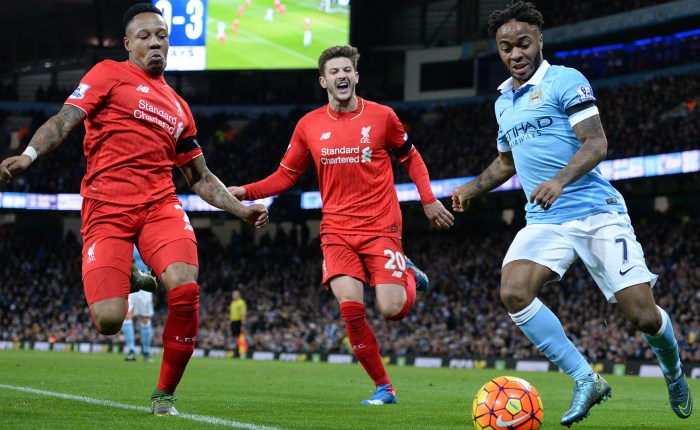
The quickest way to appease the larger teams is the removal of replays. Should Manchester City, a team still in all four competitions, draw with Chelsea on Sunday, they will have to find a week that has eight days to host the replay.

Manuel Pellegrini has already hinted that a weakened City side will face the Londoners, after being upset his team play so close to a long trip to play Dynamo Kiev. This is slightly cheeky considering last season the Citizens travelled to the UAE for a game only days before their FA Cup tie with Middlesbrough. When it suited the club, travelling was played down. Suddenly it’s important again.

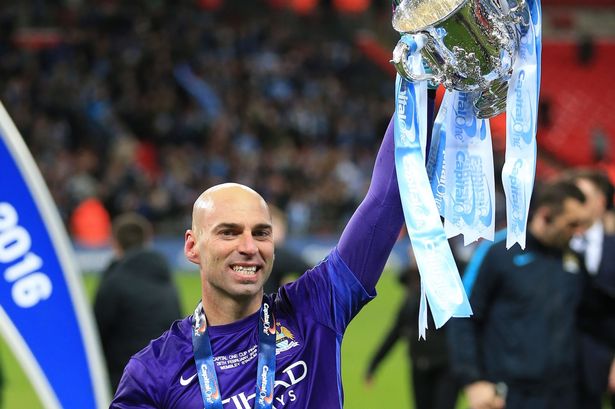
What it does highlight is how the FA Cup is seen as a burden. It sits behind the league and European competition, and at this point in City’s season, less important than the League Cup final. The dread of a replay only further takes away any shine for the club’s management.

Making FA Cup ties one time affairs reduces the fixture congestion. It will also ensure each game is played with the true spirit of a knock-out cup game. At the moment smaller teams hang on for a lucrative payday back at a big ground rather than throw caution to the wind. This enables pampered teams to negotiate the tricky lower league pitches with a degree of danger removed.

But even teams in the lower leagues would prefer to avoid a replay rather than extend a “cup run” that, in all likelihood, won’t get them anywhere near Wembley. Survival is more pressing than chasing empty dreams.

Such is the fear of injuries and fatigue, clubs will consider dropping large numbers of the first team for FA Cup ties, the Johnstone’s Paint Trophy offers a great example of how to help clubs avoid both these problems. After 90 minutes the game should go straight to penalties.

Why give the home team the advantage of another 30 minutes on familiar soil? Save the legs and get straight to the shootout. It’s another way to increase the excitement levels and encourage maverick tactics in normal time.

Traditionalists will feel uncomfortable with the suggestion that FA Cup fixtures could be moved to midweek. At first glance, it does seem like a drastic measure. A further undermining of a flogged dead horse. However, there may be some credit to the idea.

Tuesday and Wednesday games haven’t harmed the Champions League. Perhaps the FA Cup could ride on the coattails of UEFA’s success with a competition and populate otherwise vacant midweeks with something meaningful. The only major concern – aside from losing a familiar (often bemoaned) weekend showcase – is how it will impact working class fans that have to travel on a work night.

The FA needs to consider changes like this. It’s sold its own cup down the river so many times in recent years (starting with the 1999 winners, Manchester United, withdrawing from the following season’s competition to compete in the World Club Cup) and devaluing it ever since. To carry on in the same format is consigning it to death.

No matter how many times the BBC say “The Magic of the Cup” this weekend, the truth is, this once great competition has become a footballing tragedy.

Make a Stand or Lose a place in Yours

Make a Stand or Lose a place in Yours

The stance taken by Liverpool fans against the incoming price hike at Anfield is justified and long overdue. Their decision to say “enough is enough” is a force for good that every football fan in the country should get behind. Loyalties may divide us for 90 minutes when teams face one another, but together we need to protect our mutual interests. Football is for the people and money is slowly taking it away from us.

For far too long, the cash in top flight football has been grotesque. More than ever before, supporters are aware how much money is flowing into the game from commercial avenues. At the same time, the cost of following a team has risen at a greater rate than these business success stories.

It’s as if the working class man has been under a spell. Dazzled by massive names from overseas gracing their town. Stadiums morphing into modern complexes that are among the best in the world. Commenting on their star striker’s new salary as if it’s a bonus section in Premier League Top Trumps.

Under the evil voodoo trick they have failed to notice the rich have been getting richer. Chairman haven’t been using the increased revenues to solely finance the players and new facilities. Everyone has been getting their slice and the common man has been asked to provide more. Agents and men sat in boardrooms are playing the part of the anti-Robin Hood.

The new stadia will remain a source of pride, until they are inaccessible on a working class wage and become filled with corporate fans. Sat there for multiple reasons – none of which are to cheer the team on. Next season they could be going to a different club; it all depends on where the best business is.

The working man instead settles in at home. He watches Sky Sports News fight his corner. They report the justified outrage at the increasing cost of the game for the guy struggling to afford a replica kit for his children. They are either experts in satire or fail to see the irony.

It is their outlandish £5.5bn bids that make this all possible. They balance the books by asking the struggling fan for over £30 a month to access their sports package. But that’s just a starter . . . how about HD, and broadband, and over 300 channels you’ll never watch?

It is greed fed by gluttony.

£77 for one game is the step too far every fan in this country has been made to shuffle toward for too long.

With the latest TV deal, every club in the Premier League could afford to make every single game free for fans at the match and still make more money than the current season. This is before we take into account the latest overseas TV deal, announced last week. That comes in at a cool £3bn.

That’s over £8bn to spread across the 20 clubs and no consideration has been given to the man at the turnstile. Instead, Premier League monsters chase the purple dragon of European success while their counterparts in the Champions League evolve without robbing those in the stands.

It’s time every fan started protests to enhance the impact of the Liverpool walkout. At the same time, everyone with a Sky Sports package should cancel it and show the TV companies their time running (ruining) our game is over.

The longer we sit in silence, the closer we get to suits sat in every last part of our beloved grounds.

And we’ll be left with a despot television empire telling us it’s still the best league in the world and worth every one of our hard-earned pounds to watch it, on their terms, stuck in our living rooms.