I Can’t Breathe

I Can’t Breathe

Henry Nowak was a promising young 18-year-old man who was brutally murdered. Described as “kind, intelligent and talented”. His life was taken in a senseless, violent act. His murderer falsely accused Henry of racism to the police attending the scene. Their subsequent inaction – based on this accusation – condemned Henry to dying in handcuffs while repeating the words: I can’t breathe.

Those same words had been spoken by a man in police detention before. Famously by George Floyd, whose subsequent death during a police arrest led to mass protests – riots – politicians taking the knee. A movement whose core voice was also its name: Black Lives Matter. Anyone, from any race, colour or creed, asking parity for all lives had missed the point.

George Floyd, BLM, taking the knee — civil revolt, they are all by-products of their time and environment.

The treatment of Henry Nowak, the lack of reaction by the general public, the coverage by the mainstream media, and the juxtaposition of deafening silence by people – such as Keir Starmer – as details emerged, compared to the furore in the days following Floyd’s death, show that not only do we live in different times, but that there are different standards applied depending on race.

Instead of people pulling down statues, the wool is being pulled down over eyes and ears.

It is right to call for calm. To avoid using this tragic moment for further hate or political gain. Henry’s father, Mark Nowak, exemplified strength and dignity as he made a speech following the verdict. He said the family didn’t want Henry’s death to cause further division, hatred or tension.

It gave this writer pause before putting words to page.

Division. Hatred. Rising tensions.

All key ingredients for creating the sort of environment where innocent people die in the care of those expected to protect and to serve.

It’s only possible to find hope, love, and understanding through difficult conversations and hard choices.

Vickrum Digwa stabbed Henry five times with a religious ceremonial dagger, known as a kirpan. It is part of the Sikh religious code for believers to carry one. There are accepted alternatives to carrying a full dagger but under UK law, as long as the kirpan is being carried for religious practice, it is not illegal.

Understandably, the legality of carrying a weapon – albeit, purely as a religious artefact – has now come under scrutiny. Some of this will be from dissenting voices distrustful of any outsider faith, others from a place of logic and fairness. It should be noted Sikhs in the UK have a lower crime rate than other demographics while being disproportionately vulnerable to religious and racial hate crimes.

The actions of Vickrum Digwa shouldn’t drag an entire community into the firing line. The murder was the action of an evil individual who had been barred from a Gurdwara for his conduct. He is not reflective of Sikhism, which calls for equality of all mankind, honest conduct, and striving for justice.

Following the case, it is clear Digwa was a despicable human and a non-practising Sikh.

One bad example shouldn’t create division among different people and cultures.

However, if something can go wrong once, to the degree an innocent young man loses his life, every preventable action should be taken to stop it happening again. Blasphemy laws have been abolished in the UK. A step that is seen to modernise society. But to the side of this, certain religions have exemptions. These run counter to the clean worldview a post-blasphemy law country should look like.

No exemption should exist for any faith to carry what would otherwise be illegal.

The laws of the land should not bow to practices and beliefs from elsewhere. It has allowed one bad actor to find a loophole and carry out a heinous act. One time is one too many and it could inspire others to deliberately look for other ways to circumvent laws under the guise of religious freedom.

Creating exemptions – loopholes – is two-tier justice. There have been accusations of two-tier policing. Details that have emerged around police training suggest there has been an over-correction that has led police forces in the UK to be more concerned with appearing racist than acting without prejudice.

Henry Nowak said nine times that he couldn’t breathe.

He told them he’d been stabbed.

One officer replied: “I don’t think you have, mate.”

Of course he had been. Fatally. And the inadequate police inspection for any wounds was only part of the treatment – which Henry’s family described as “inhumane and degrading” – by the police which meant in the last moments of his life, he died without hope, in blind panic.

There was bias – how unconscious or deliberate, you can decide – with both George Floyd and Henry Nowak which led to their respective deaths.

For George Floyd, the attending police officer reacted with bias created because he believed the man in question was a threat and acted with inappropriate force.

Henry Nowak was the victim of a different fear: institutional terror of being seen as racist. To such a degree that an accusation of racism took operational priority over the duty of care to a dying victim.

Even as the details emerged, the power of racism drove the narrative and the media’s acknowledgement of the incident.

Floyd had fentanyl and methamphetamine in his system, which may have contributed to his death, while not being the cause. He didn’t comply with the arresting officers. But the story became charged. His death at the hands of law enforcement created a storm that travelled across the Atlantic, creating a watershed moment.

Nowak had less alcohol in his system than the UK drink driving limit. He had been falsely accused of being drunk, abusive and racist. He pleaded with the police for help, while being compliant with unnecessary handcuffing. While the key difference between the deaths – the police didn’t murder Nowak, Digwa did – the police in both instances acted on assumption and feeling. Fear without evidence.

The backlash has been subdued and gravitas of what such police behaviour represents downplayed by police commissioners and the Prime Minister.

George Floyd’s death was treated as a way to start the great exposé.

Henry Nowak’s has been met with an attempt to create a cover-up.

Some of the covering up is deliberate. It’s from the same agenda that created a world where being white means you can never be the victim of racism. It’s from a legacy media culture more comfortable exposing one kind of institutional prejudice than another. A Prime Minister who is aptly named Two-Tier Keir.

Some of it is so obtuse, it can only offend. Judge Mousley, when sentencing Digwa, started his minimum term at 15 years. In the UK, it is a mandatory life sentence of 25 years for murdering with a knife. Judge Mousley said Digwa hadn’t carried the murder weapon with the intention to use it. A non-Sikh would not be given this leniency if they’d been walking home from Argos with a new set of kitchen knives.

Judge Mousley added eight years (but removed two for “mitigating factors”) because Digwa “abused the privilege extended to Sikhs”. In doing so, reinforcing a two-tier view of the modern UK and protecting the sanctity of a religious exemption above the principle of equal law.

It is all indicative of an imbalance. But people’s rage has become colour-blind. Or worse, driven by the strongest virtue signal.

It is too insensitive to proclaim: White Lives Matter. But leader of the opposition, Kemi Badenoch, said “every life matters”. Which falls very close to another phrase. Writing in 2020 about the aftermath of George Floyd’s death, I wrote: People using the counter chant All Lives Matter, haven’t understood the core issues. It’s a big part of their privilege, believing a universal view is the fix for isolated problems they’ll never face.

It hasn’t aged well. We’re all facing different issues but they are by-products of the same misguided ideology. There is a universal fix: stop the overcorrection, the fear of being seen as something you are not, create a truly equal and fair society.

If your anti-racism, policing concerns, civil-liberty principles, rage against the establishment, or human-rights activism only activate for some victims, you are not seeking fairness or justice. They are nothing more than pliable and malleable principles shaped around misguided loyalty to causes only wearing justice’s clothing to cover harmful agendas.

Justice is when all lives are afforded the same set of rules and are judged through the same lens. No exceptions. No excuses.
Manchester SOS: Save Our Ship

Manchester SOS: Save Our Ship

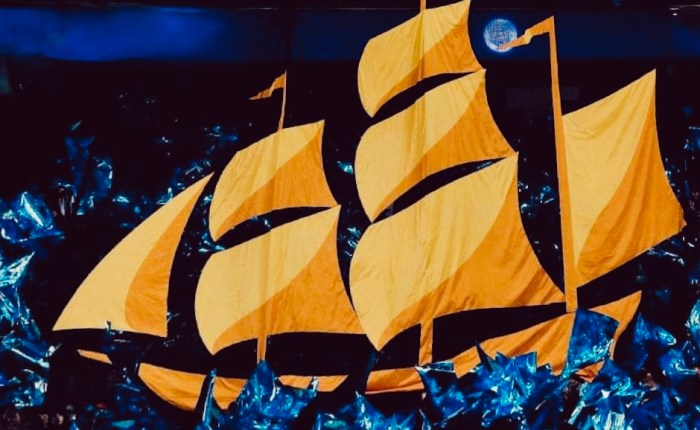
This week The Guardian published an article which claimed Manchester’s football clubs should remove the famous ship from their badges. The ship – which also features on the council’s Coat of Arms – was labelled as a symbol of slavery by journalist Simon Hattenstone. It shouldn’t be surprising The Guardian has managed to find something to be offended by when examining Mancunian symbols, it appears their job is to create issues where they don’t exist.

Not that slavery didn’t exist back when the ship symbol was adopted, nor an attempt to marginalise the effects of an abhorrent trade. Any suggestion that slavery should be celebrated or held aloft would rightly be condemned. But the Cult of Virtue Signalling has run into the problem all conspiracy theorists face: they only take the pieces of evidence which fit their narrative, discarding the rest.

This means everything presented lacks context. In the delicate case of slavery mentioned here, which happened in the nineteenth century, there should be consideration given to judging people by the standards of the day. A previously written piece on this site recalled how there were calls to remove several of Sir Robert Peel’s statues because his family profited from the slave trade. At the time, his father was breaking no recognised laws. By the standards of his day, there wouldn’t have been many complaints.

However, his son – Sir Robert – voted for its abolition. Yes, it can be argued he benefitted from the slave trade but the resulting power and influence helped bring about its end. He’s also the creator of the modern day police force, and brought in the Factory Act to minimise the working hours of women and children and introduced basic safety standards.

So, a pretty mixed bag, that’s impossible to reach a conclusion by wiping him from history. In comparison, the Manchester ship debacle created by The Guardian is easier to decipher.

Slavery had already been abolished when the ship was introduced as a city symbol. There is the misconception its existence is to mark the Manchester Ship Canal, but this isn’t the case. It was representing free trade. Manchester famously became the worker bees of the Industrial Revolution. Sadly, it’s less known just how prominent those workers were in ending slavery abroad.

Hattenstone would have you believe a booming Manchester was created off the backs of cotton slaves in the United States. This is false on two accounts. Firstly, Britain had also been using cotton from within its own empire, namely India. More importantly, Mancunian workers took a strong stance against the American Confederates. Liverpool had already been seduced by the wealth from “slave trade money” as the University of Manchester explains.

It was in Manchester where workers supported Lincoln and the American slaves and refused to conform to Confederate pressures. This even led to riots. The strength of character and principles cannot be overstated here. These were people who risked their very existence, struggling through a cotton famine, in order to enact a change for the better. A change that was on the other side of the Atlantic.

Are we to believe that workers who risked their livelihood to oppose slavery, later raised no objection to the city using a symbol celebrating the act? Or is it plausible that the ship’s inclusion was about free trade all along?

It would be ignorant to say Manchester – and Britain as a whole – didn’t at various points in history benefit from slavery. Where possible, appropriate reparations should take place. But The Guardian can’t pick a tiny snapshot of a situation, and make a large sweeping statement.

The Cult of Virtue Signalling should stop looking for extraneous links in an attempt to remove historical symbols and put some effort into preventing modern day issues. 

Why isn’t Hattenstone demanding Manchester City council close all the Nike stores in the area? His paper, The Guardian, wrote in 2001 that Nike couldn’t guarantee its products wouldn’t be made using child labour. Does anyone recall a twenty-year campaign from The Guardian to end child labour? Is it too far away from these shores to take an interest in? Because distance didn’t stop the ship symbol wearing workers of Manchester taking a personal stand against an issue on the other side of the world.

Do we excuse The Guardian because it’s socially acceptable to wear Nike trainers in spite of the links to child labour? On this issue, it must be okay to pass judgement based on the premise: we can only judge people based on the times they live in. This seems like double-standards.

Instead of trying to reinforce questionable links to slavery in Mancunian symbols, why isn’t The Guardian combating modern day slavery? There were 5,144 recorded offences in the year ending 2019. It’s safe to assume the real numbers dwarf this as organised crime makes it difficult for victims to escape.

Energy should be spent on real issues instead of creating strawman arguments where people in authority are too scared of opposing the view in case its weaponised against them politically.

Wouldn’t it be better to educate the people of today how we benefitted from slavery, acknowledge that evil, then explain how it was abolished and ultimately opposed in Manchester on behalf of those on another continent? That Manchester’s Ship is now a symbol of free trade, open shores — an open world, where every person is equal.

Silver Lining?

Silver Lining?

Is it in bad taste to say some good can come from the loss of life?

When those deaths are in excess of 450,000 plus One is there any reason or outcome that offers justification?

When the plus One was the murder of a black man by law enforcement, should the suggestion come from a white person who may accidentally litter each paragraph with his privilege?

It all sounds a bit of a stretch. Decency and common sense say it’s best to stop typing now. But that decency has come from a background that prevents my neck being pinned down by a cop for eight minutes, forty-six seconds. The white idea of decency is turning the other cheek. Remaining silent now would be the most indecent act of all.

Before we get to the plus One, the number of deaths that will soon reach half a million needs to be considered. Everything requires context. It’s always cause and effect. The largest protests seen in thirty years didn’t come about just because of the plus One. People were primed, had been brimming.

It was coronavirus that saw the daily death rate rocket to nearly half a million. In response, the world went into lockdown. Daily life changed and may never return to a replica of before. Economies tanked by twenty percent. Families sat at home, wondering if their incomes would still exist after furlough schemes. Students couldn’t take exams. Doctors and nurses were used as frontline fodder.

It wasn’t a spring of renewed hope; it became a period of deathly stasis.

With the servitude to the rat race suspended, people became more opinionated, passionate about all causes and views. With each of those coronavirus deaths, people took a step closer to creating unified voices. Examining the government’s response to a never seen before situation was never going to satiate this newfound appetite.

Everyone in the room became restless.

Different sides had already formed—across all political lines—the pandemic just primed them for action. All participants were expecting something akin to the Brexit or Trump debate. The expected arguments would be how the half-million could have been reduced to something much less if only…

Each “If Only” could be argued and countered enough times to last an infinite number of lockdowns. Then those eight minutes and forty-six seconds happened. If there was no lockdown, there would have been widespread condemnation from families around the world. They’d have settled down after a long day at work, shook their heads at the television screens and made comments about how nothing has changed in America.

That America still has a race issue.

No senators would have taken the knee for a photo opportunity. Any protests would have been localised and quickly quashed. Marches in the UK would have been counted in double figures—if there had been marches at all. The world would have been too busy to stop for the murder of one more black person by a police officer. Everyone’s senses would have been dulled by the pressures of the day-to-day.

Lockdown was oppressive and liberating in equal measure, in immeasurable ways.

With each passing week, increased frustrations were harder to suppress, impossible to keep bottled. Eight minutes and forty-six seconds was the length of time it took the fuse to burn.

The murder of George Floyd was a bomb beneath the existing structures of systemic racism.

Thousands flocked to demand change. To chant in the clearest voice: Black Lives Matter.

It took nearly half a million deaths to make the world take stock. To put movie stars and heavyweight boxing champions front and centre, speaking from the heart at protests instead of condemning the situation in sanitised interviews during promotions for their product.

No one is born racist. It is usually taught. But people are born ignorant and that can grow. Worse still, it can be manipulated by those with agendas.

People using the counter chant All Lives Matter, haven’t understood the core issues. It’s a big part of their privilege, believing a universal view is the fix for isolated problems they’ll never face.

They need guidance. They’ve never spent a day in the shoes of a person who is pre-judged, looked at suspiciously, treated as a second class citizen, just because of their skin tone. They don’t see a problem because they’ve never personally witnessed one.
They don’t know what they don’t know, because they don’t know it.

Counter claims that America is the land of opportunity, that they’ve had a black president, underlines the ignorance. Just because you can make it, doesn’t mean you won’t face unequal hardships on the way. Doesn’t mean you won’t still be perceived as second class once you’re there.

The protests then became a magnet for the opposing view.

They didn’t need a fuse to be lit. The far-right are more like a jack-in-a-box, outdated and always ready to spring into action. The problem is, both extremes—right and left—further the other’s cause.

The left breeds hypocrites, the right produces honest liars.

Everyone needs education.

But with each confrontation, ears are closing.

Openness faces a new lockdown. The half a million will have died for no reason if reasonable people become obstinate in their opinions.

Should removing historical monuments occur when they have links to slavery?

The world has been taught to see in black and white, when it operates in a permanent state of grey.

To erase history means we can never learn from it; appearing to champion wrongdoings halts progress.

There is no easy answer. Here in the UK, there have been calls to remove Sir Robert Peel’s statues in Glasgow, Tamworth, Manchester, Bury and his monument on Holcombe Hill. He has fifteen statues around the world. A former Prime Minister and creator of the modern day police force. He had a patchy record on the slave trade. It appears he profited from it but did eventually vote for its abolition.

Peel is one case that needs examination. It’s not clear cut. People are of their time.

A future generation’s harsher standards will judge the presumed principled people of today. There is something uncomfortable about watching a young person fervently protest, and attempt to deface war memorials, based on the cultural oppression that led to a man’s murder while wearing branded trainers. The Nike tick and Adidas stripes are the modern day motif for slavery. But no one is pulling their stores down and placing them in rivers.

Women are trafficked and forced into sex slavery. But no one calls on the government to track each gang and give these women freedom.

Black Lives Matter, and that movement shouldn’t be hijacked or diluted by another. But the emergent voices for change can carry multiple causes going forward. Those ignorant to Black Lives Matter will always take a myopic view. This has been made more difficult with overreactions which further underline the lack of understanding.

When the middle of the road white man sees a classic comedy axed—one which its creator John Cleese defends—it incites a new type of division. A debate he had no facts for to start with, has just been changed into a talk about something else. He’s no longer thinking about those eight minutes and forty-six seconds. He’s blaming political correctness.

He may even begin to harbour feelings for a return to “better times.” Those times are just a construct: a part of the white collective’s imagination. They were never better times. It was a time Black Lives Matter could only be a whisper, not a chant.

Not the loud cry for help which now resonates around the globe.

Can over 450,000 deaths plus One ever be considered a silver lining?

The cloud that accompanies the lining is large. It blocks the sunshine of progress at every given opportunity.

Heading toward half a million is a big number but that single plus One stops a bigger count. It has paved the way for lasting change. The uncountable loss and damage racism produces every day. Utilitarianism states the most ethical choice is the one which is best for the largest number of people.

The plus One represents all people.

A chance for lasting change.

Everyone left behind has a debt to pay to those who have been taken. A vow to turn their passing into a positive action.

If you carry on as before, you’ll take your turn pressing a knee into a neck for eight minutes, forty-six seconds.