The Selective Ethics of Team GB’s Fans

The Selective Ethics of Team GB’s Fans

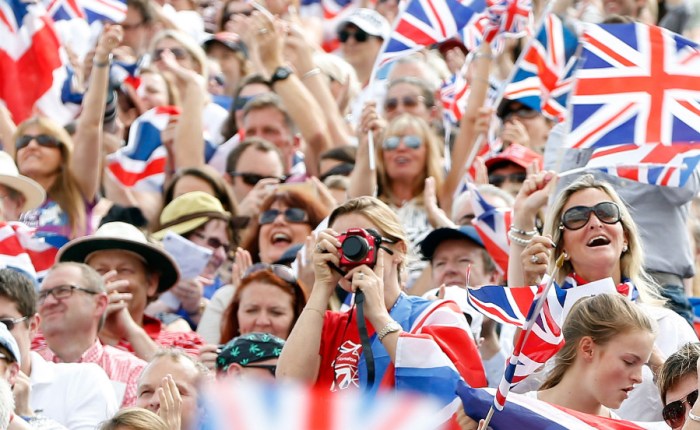
The excitement, euphoria and sense of patriotism which had subsided following Team GB’s success in Rio, will no doubt get a shot in the arm following today’s Olympic parade in Manchester. But enough time has passed since the final medal was placed over an athlete’s head to examine the cost of finishing second in the medal table. Not just the financial implications but the moral bill supporters must front.

The largest element of hypocrisy is the amount of funding Team GB received, yet their supporters have conveniently ignored this. The same people that bemoan the amount of cash in major sports, such as football, F1 and boxing.

When teams win the Premier League (Leicester aside) the usual implication is they bought the title. The winner of the F1 drivers’ championship is labelled as only doing so because he had the fastest car, and that comes from being at one of the richest teams. Normally every sporting achievement has a negative campaign about the finances involved.

Sometimes this is healthy. It highlights inequality surrounding the distribution of wealth within certain competitions. It makes governing bodies accountable and fights the corner of the paying public. Those at grass roots or lower tiers of sports are given a voice, helping raise cash for their survival.

But little has been made of Team Gb’s £275m funding.

Obviously it is important to invest in the future of sport, and the fruits of the cash injection have been clear for all to see during the last two Olympic games. But there is a forced ignorance taking place which means no one is questioning the level of spending or the moral implications.

The Olympics has moved away from the wholesome meet that sees raw athleticism take precedent over large commercial sport. The IOC can be thanked for this. They are the Olympics version of FIFA. Just another “non-profit” organisation that saw the marketing revenue for Rio exceed $9 billion. Television alone accounted for $4.1 billion of the IOC’s revenue.

Money is inextricably linked to top level sport. It is inescapable that if there’s a public interest, large companies will exploit the revenue potential. It would be foolish to believe the Olympics is any different than the NBA, NFL or the Premier League.

Like those global juggernauts, if you want to be successful, you need to spend big. And Team GB was bankrolled as if owned by oil made billionaires. Except the funding came from the tax payer and Lottery money. Most won’t complain about cash being siphoned away for sport but most won’t have examined where it’s gone.

£5.7m for a badminton bronze sounds excessive. If that doesn’t bother you, perhaps £6.9m for the modern pentathlon and its zero medal haul will have you pondering the cost of blind investment. Rowing did bring three gold medals but at a cost of £32m.

Of course, investment always enables better infrastructure but the sense Team GB bought their second place on the medal table permeates the mood when talking to rival nations. That could be sour grapes, but only the sort of comment people here make when discussing other sports. Sports that are self-sustaining and viewed consistently by millions. Despite the £14m investment, how many people will actually watch a gymnastics meet before the next Olympics?

This isn’t sporting legacy, it’s a fleeting fascination that comes around every four years. It was an expensive hit for a short high.

The moral high ground has many spots. As well as bemoaning the money in other sports, people are also quick to pass judgement on other nations when there’s a suspicion of wrong doing. The world revelled and condemned all Russian athletes when evidence of state-sponsored doping came to light.

Without a thorough investigation it was deemed appropriate to label all their athletes guilty until proven innocent. The calls for transparency were loud and clear.

Those calls have become barely audible whispers since Sir Bradley Wiggins’s use of TUEs has been leaked by Russian based hackers. There’s no suggestion he has done anything illegal, but how many people are genuinely comfortable with the notion the rules can be – and have been – bent to enhance the chances of success?

Those involved in the Russian witch-hunt should now be working tirelessly to clear the murky waters surrounding TUEs.

But the games come around every four years and as long as Team GB is successful the hunger to question the processes in place, whether it be funding or medical exemptions, will be virtually non-existent.
Sympathy not Fury

Sympathy not Fury

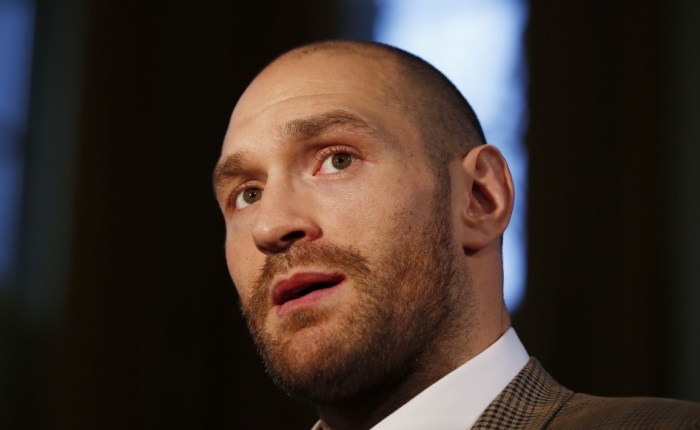
There’s fewer places in the world as unforgiving as a boxing ring. Once inside, there’s nowhere to hide and the only sure way to get out is make a date with the canvas. Unfortunately for the men that are brave enough to step between the ropes, the spectacle that follows them around in between bouts can be more brutal. This week it went into overdrive and focused on world heavyweight champion, Tyson Fury.

The self-proclaimed Gypsy King has always been a polarising figure, both in and out of the ring. His detractors had to review their claims following his unexpected win over Wladimir Klitschko. For years Fury’s hype was seen as a way to deflect attention away from a lack of boxing ability. The win in Germany, that gave him legitimate claim to be the best in the division, marked a step-up in performance.

Until Wladimir fights again the jury will still be out regarding the validity of Fury’s victory. Was Klitschko having an off night, not match fit, or over the hill? If he blows his next opponent out of the water, Tyson Fury’s victory will take on even more emphasis.

It’s the continued questions that speculate Klitschko’s decline and resulting inability to present a genuine challenge that must have worn on Fury’s mind. After finally reaching the mountain top, he wasn’t presented with a round of applause and a pat on the back. They were reserved for Anthony Joshua, despite the Olympian having no names on his boxing record.

For a man like Fury, who clearly wears his heart on his sleeve, the cracks began to show. He aired these frustrations to a press that only give him column inches if he’s dressed as Batman and clowning around. It can be argued people don’t take him serious because he’s always sold himself as a novelty act. But he also always backed that up with a belief he was the best. When he beat the presumed best, he was still cast aside.

Since winning the belts people have become masters of assumption, allowing doubts to be cast over his motives with frightening ease. The UK Anti-doping (UKAD) allegations have hung over his head and multiple cancellations have led to speculation increasing.

Many said he was scared of a rematch. That he wanted to get out of the game with an unchallenged legacy; the singular moment in time he dethroned a king, before heading into the sunset, avoiding the promising young talent holding one of his world titles that was never lost in the ring.

The time for assumption and speculation should have ended when it was revealed Tyson Fury’s latest battle is with depression. In any walk of life, facing up to this illness is always difficult. When in the public eye, even more. It’s exacerbated further in the world of the ultimate alpha males where heavyweight boxers reside.

Rather than look for reasons to expose weaknesses in Fury now, people should take a moment to examine the evidence he left for people to find. After winning the titles it was plain to see he was in a mental slump. Like so many that battle depression, the deepest of lows are matched with the highest of highs. The peak had been achieving a life-long dream, for a person with depression, a return to darker thoughts after this is inevitable.

Tyson talked of walking away from the sport, that nothing could match that high. Most saw that as a boxer wondering if he had the fire in his belly for another fight, the truth is, it was a man struggling to find his spark for life.

The recent positive test for cocaine is further proof he was lost in his mind, not in the ring. He’s not the first person faced with demons that finds sanctuary in substance abuse.

Yet still he finds little in the way of sympathy, instead people spend their time formulating a way to compile his demise and retirement. People with mental health issues can make full recoveries but some connected to the boxing world are trying to quickly move past their embarrassing heavyweight champion “blip.”

The main player so vocal this week has been Eddie Hearn. He represents Anthony Joshua. A man full of potential but without a name on his résumé. Now Hearn is manoeuvring to stake a claim at the soon to be revoked Fury belts. Even if that doesn’t happen, he’s confident a fight with Klitschko can be made. He told Sky Sports the chances were currently better than 60%.

Hearn barely displayed any genuine concern for Fury’s wellbeing, choosing to point out boxing is a business and the authorities lose too much money if their titles are inactive. In doing so, revealing his genetic make-up is closer to that of a fifty-pound note than a human being.

It’s wrong of Eddie Hearn to display conjecture in a public forum. He’s not a medical professional or a close confidante. His remarks are highly insensitive and pure speculation. This will only have a detrimental effect to the well-being of the man he’s trying to announce the retirement of.

The danger is if the public believe it’s acceptable to write Fury off and overlook the real issue here: depression. It’s an uncomfortable subject and having Hearn gloss over it will sit easy with most. But that is wrong. Instead of running campaigns against Team Fury, the boxing community should be rallying around and help raise the awareness of such a silent killer.

Facing this illness so publicly is braver than stepping into the ring with a giant like Wladimir Klitschko. Beating it will be a bigger achievement than winning the world heavyweight titles; the reward, a continued spark that will be hard to diminish.

Wonder of Wimbledon

Wonder of Wimbledon

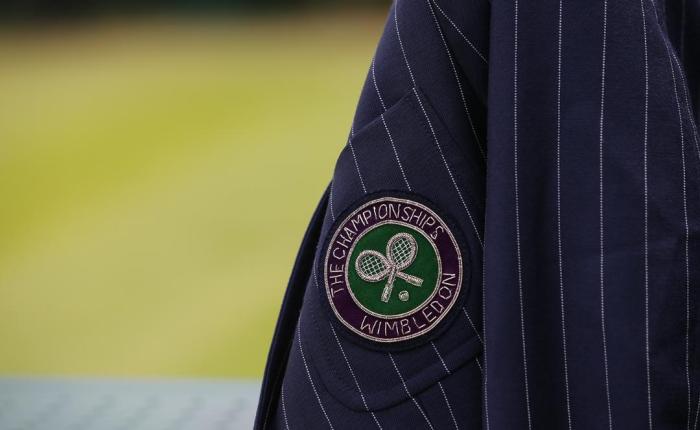
Wimbledon strikes its penultimate day. For the women, a legend takes her seventh singles title at the famous venue. The men play tomorrow, with Andy Murray still representing Britain, being recognised as Scottish only in defeat by the masses.

Young children will have watched on during the last few weeks, picking up on peculiarities unique to tennis. Their enquiries ranging from why the man in charge keeps asking for a drink. The reason why those dressed in armed forces’ uniform stand with ball boys and girls. Why do players ask for three balls and always send one back?

These new fans help fill courts up and down the country, along with adults dusting off their rackets for the yearly outing. Promising that they really will carry on playing this time; the delayed New Year’s resolution that meets the same fate as all the rest.

The cross generational experience resumes when watching the telly. They see those that can’t afford Wimbledon strawberries and cream, let alone a premium ticket, wave from Murray Mound. This coming together, just for a glimpse, helps give a taste of the atmosphere to viewers at home. Those too young to remember are informed the grass verge used to be named Henman Hill.

They screw up their faces and ask, “Who?”

The explanation about some Tiger Tim character sums up a deeply seated fear regarding English sport: heroes are made of nearly men that are never quite up to it.

England has spent the summer singing and talking about Three Lions only to be let down by cubs and rich fat cats. But it is at Wimbledon they get to see a true lioness, banishing the focus of sporting failure, replacing it with greatness.

Serena Williams, prowling centre court with beauty and power in equal measure. Delivering feline ferocity while maintaining untouchable grace. This victory makes Wimbledon the spiritual home for a tennis legend. England has been lucky to witness it; tennis is lucky to have her.

The nation waits for tomorrow. The long winter of years without a British Wimbledon winner passed thanks to Murray. Mentions of ’77 and Virginia Wade were only a paracetamol to mask the headache that Fred Perry’s name brought on. The three-time winner is celebrated with deserved adoration, but his last title in 1936, revealed a chasm in domestic sporting achievement.

The youngsters of today think he is just a guy that makes clothes, they see no tennis connection. Nor do they realise the gulf of those vacant decades. They only see a British man entering a Wimbledon final as a clear favourite. As such, Murray now faces a new pressure: expectation.

Such is the fickle nature of sport, the belief a curse was placed on a home winner is overtaken by the conspiracy fate is working to ensure another title for the world’s number two.

Nadal watches on, side-lined and reducing the elite field. Federer was beaten by Father Time and Djokovic left under a mysterious cloud. The path to victory cleared for a presumptive British favourite to take centre court.

He has tasted Olympic gold here, a singles victory, now he looks to assert his place among the upper classes of the game.

If he does, perhaps the British will use an old sentiment and claim Wimbledon victories are like buses. They’ll make this joke as they drag out tennis practice for an extra week while still drinking Robinsons orange juice…the children wondering if the umpire ever got his.