Heavyweight Boxing Reboot

Heavyweight Boxing Reboot

It is historically seen as the pinnacle of world boxing: The Heavyweight Division. Much of its splendour and glamour has been diminished after the tight and mundane grip of the Klitschko era. The unexpected victory of Tyson Fury over Wladimir has changed all this. Suddenly the division looks alive, led by the Brits with a good-talking American world champion in tow. Boxing at the top end just got a Hollywood style reboot.

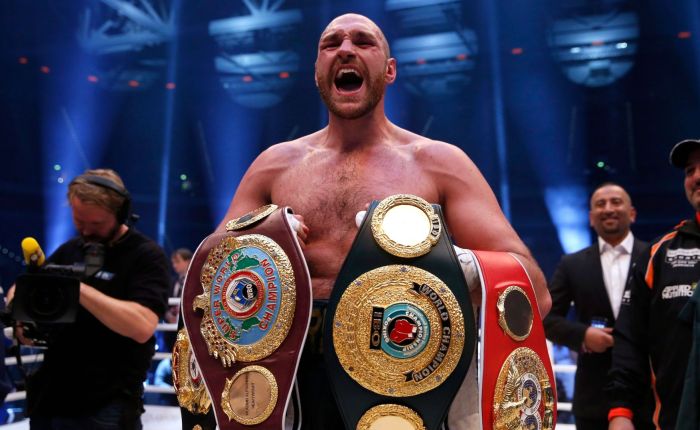
It’s only right to start the reboot with the creator of its genesis: Tyson Fury. A man that’s easy to point derision at and still – even after his impressive upset – has questionable in-ring ability. He is very much a work in progress. The learning curve he’s set on may appear more like a straight line than a bend in trajectory, but evidence suggesting maturity has found its way into his mind-set was apparent during the second clash with Dereck Chisora.

Memories of being put on the canvas by Steve Cunningham (or giving himself an uppercut in the 2009 clash against Lee Swaby) gave genuine doubts over his ability to concentrate and stick to a game plan for an entire fight. In the November 2014 rematch with fellow Brit Chisora, he not only proved he can apply himself correctly for the entirety of a bout, he also put to bed claims that he was fortunate in the first meeting.

What made the second Chisora victory all the more impressive was how his opponent had come off the back of a credible performance against the older Klitschko, Vitali. In his prime, side-by-side with Wladimir, he was the better of the two brothers and the only man who truly beat him was the great Lennox Lewis.
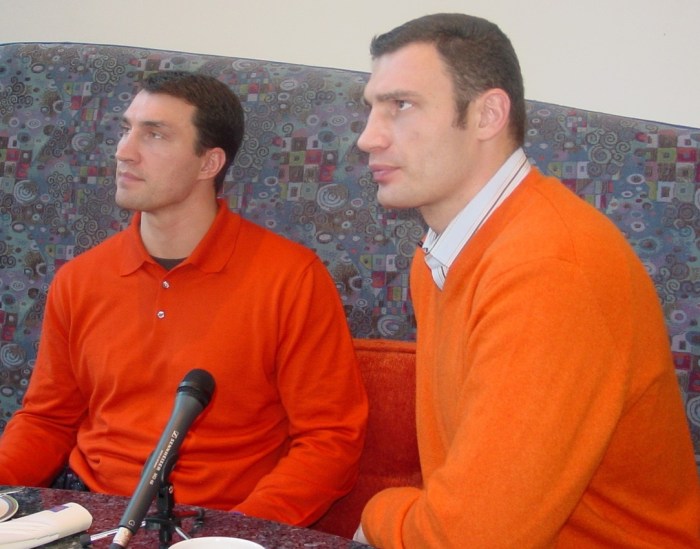
Observers noted he was a Klitschko in decline but there was no way to quantify the drop-off, until we witnessed Chisora labour for ten rounds against Fury. It either meant Klitschko had been months past his best before date or Fury had come on by leaps and bounds. The truth was somewhere in the middle.

These two bouts (Klitschko/Chisora; Tyson/Chisora) did provide a handy snapshot heading into Fury’s world title bout with Wladimir. It showed us that a Klitschko doesn’t decline slowly, once they hit that wall the towel should be thrown in immediately. Dereck Chisora was the lucky man able to exploit this Achilles heel.

It gave Tyson Fury a tune-up fight against a boxer that had been savvy enough to go the distance with a Klitschko who was no longer at the top of his game. Their November clash was a chance for Fury to leave the theatrics at ringside and stick to a point-by-point plan. Having succeeded, he had a mental blueprint for how to conduct himself when in the ring with Wladimir.

Hindsight, often described as 20/20, in this case is still somewhat blurred. Nothing can be taken away from Fury’s performance against the champion. He went into his backyard and left with all the gold. What isn’t clear is if it was just a bad day at the office for Wladimir, a sign the Klitschko drop-off that afflicted his brother has found him, or if the Klitschkos have been feared for no reason for too long.

The answer to these propositions will only become apparent after their May rematch.
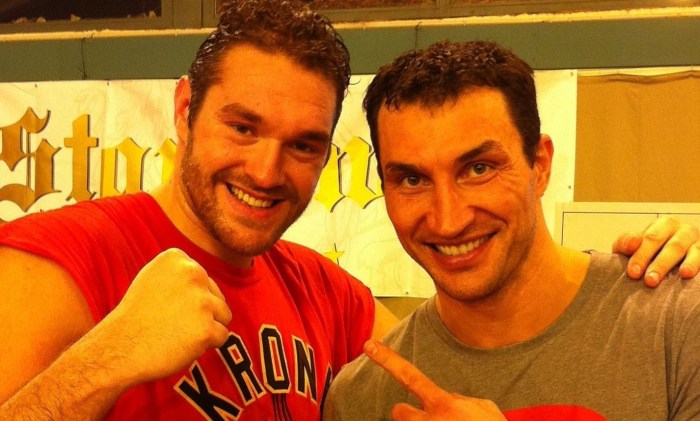
Regardless of the outcome, whether Fury was a one-fight wonder or a genuine world champion, the boxing landscape has now shifted. The Klitschko dominance – even if Wladimir regains the two belts that Fury still holds – is a thing of the past.

There are a number of reasons for this. Firstly, Fury’s refusal to fight the IBF’s mandatory challenger meant he relinquished the belt. This was a pathetic piece of politicking from the IBF. It’s common for a big bout to have a rematch clause inserted. To expect Fury to skip this for a fight against Vyacheslav Glazkov is ludicrous.

It could be seen as the IBF’s way to ensure their world heavyweight title is free to circulate away from the Klitschkos once again. They set up a fight between the aforementioned Glazkov (who was the favorite) and Charles Martin. A bizarre knee injury meant the former mandatory challenger had to retire from the bout in round three, handing Martin the title.

This makes the IBF crown the main target for all fighters on the fringes of the world title scene. If those at the top close shop, those in the chase will use the backdoor.

The idea that it could be hard to secure a fight for gold comes from Fury’s recent comments. He said he’d drop the belts before giving David Haye a payday. This isn’t to say he’s running scared; he was willing to fight The Hayemaker twice (detractors say it was opportunistic) and was always overly confident. After reaching the summit he has every right to have unwavering belief now. It’s a matter of principle that makes him deny Haye.
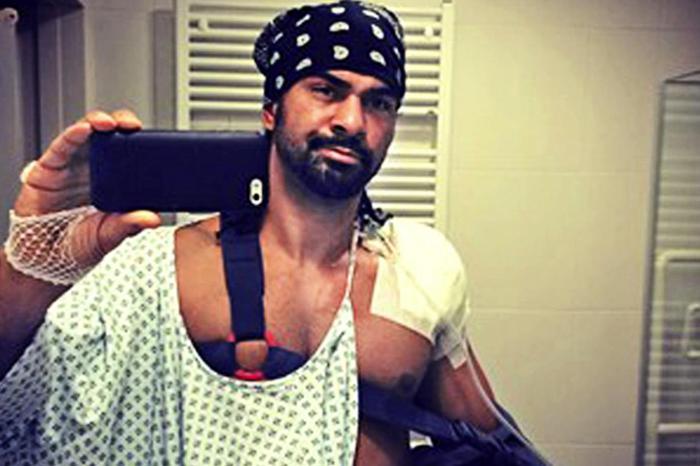
Which brings us to the former two-weight world champion. Just as Fury has every right to feel aggrieved that Haye dropped out of two matches, Haye is justified to have done so. His injuries were clearly legitimate; doctors even advised he should retire. After working hard and undergoing a long rehabilitation, he deserves his place at the table.

Nothing should be read into his recent first round stoppage of Mark de Mori. It had the feel of the Monte Barrett affair, with less danger (and that was relatively danger free). But it was a smart choice. Had Ricky Hatton made a measured return to the ring rather than facing off against Vyacheslav Senchenko, his legacy would read much different now.

Like Hatton in his doomed comeback, Haye showed – in the few punches that were thrown – that the exact timing still needs some calibration. What he also showed, which was something Hatton failed to do, was a killer finish that is as lethal now as it was in his supposed prime.

It naturally leads to the question: Why did he fail against Wladimir when Fury walked it?

Toe injuries aside, it was clear that the night in question was a bad day at the office for David Haye. Only he knows if the occasion got to him or if the long shadow of the Klitschko legacy meant he afforded his opponent too much respect. Also, he faced a Wladimir still at something like his best, the jury’s still out on whether or not Fury did.

The other man holding gold – WBC World Heavyweight Champion, Deontay Wilder – is another unknown quantity in the grand scheme of things. Flashes of brilliance have failed to hide a flawed boxer. The irony is, this new phase of the heavyweight which is bringing much needed excitement, is centered around two champions that are perceived to be lacking boxing attributes.

A potential Fury/Wilder meeting is a script that writes itself, in spite of their individual in-ring failings. Both are prone to get caught; the advantage Wilder holds is how he has demonstrated his knock-out power. After his latest defense to Artur Szpilka, where he was far from convincing but gave a KO so devastating it left the Pole motionless for minutes after the fight, the comic book antics with Fury commenced.
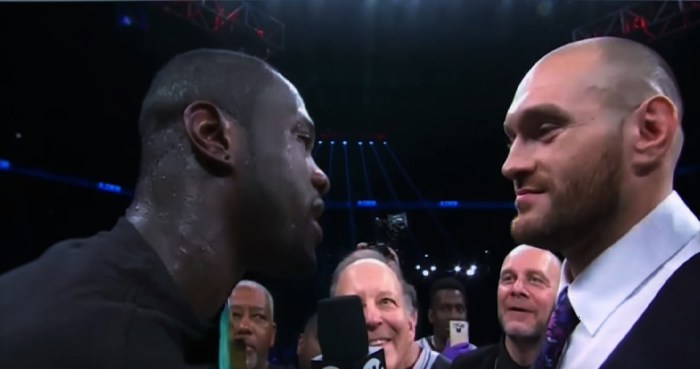
In a scene reminiscent from a Rocky film, Fury stormed the ring, ripped off his jacket and began trash talking. Deontay Wilder signed off with the line: “You can run around like you’re a preacher all you want but when you step in the ring, I promise you, I will baptise you.” Eat your heart out, Clubber Lang.

On the periphery of all these shenanigans is the next great hope: Anthony Joshua. If potential was a tangible commodity, he would need a landmass the size of Texas to hold it all. But mere promise alone doesn’t guarantee success – ask Audley Harrison.

Just as it’s impossible to say now whether or not Wladimir has declined, no one knows for sure if Joshua is the real deal. After examining his fights side-by-side with Lennox Lewis’s early contests, he does appear to have more natural ability. The test will be converting that talent into wins against better opponents. More importantly – credible opponents.

AJ is the promising wonder-kid, the elephant in the room other names tried to forget. Haye was the first player that properly acknowledged his presence and he was right to do so. At this moment in time, while Joshua is undergoing development, the slick Haye could prove too much. Against Whyte we saw how open AJ really is. Haye would expose this and proved against Nikolai Valuev that avoidance is his specialty.

After Haye made his statement about wishing to face Joshua, Fury said something similar. Presumably it helps keep talk of ducking fights at bay. The truth is, he’s involved in a Klitschko rematch, that should he win, leads into a showdown with Wilder.

If AJ has the talent, then the IBF world title eliminator that’s he’s expected to be involved in against Carlos Takam will be the big reveal. If he comes through that unscathed then championship gold will be within sight. Perversely his rivals must be secretly hoping he’s on a collision course with someone like Haye before he faces Charles Martin and relives the paper champ of his title.

Whatever happens in the next eighteen months, one thing’s for sure: heavyweight boxing just got unpredictable and entertaining once again, and whoever is champion a few years from now will have no doubts surrounding their legitimacy.
Adidas: The Brand with the two sides

Adidas: The Brand with the two sides

The BBC have reported that sports manufacturer Adidas are to end their commercial agreement with the world governing body of athletics, the IAAF. It appears that the recent doping scandals, highlighted best by the allegations of Russian state sponsored cheating, has brought them to the decision. It seems strange they have found moral ground after refusing to condemn FIFA and Sepp Blatter amidst corruption charges.

In big business making public displays like this from large corporations is more about image than moral fibre. People sat in an Adidas boardroom will have decreed that being associated with drug cheats is detrimental to the sporting brand.

This sounds fair enough. When a company is paying in excess of $8m a year, they deserve to be linked with an honest product. There’s no doubt the doping claims and lack of trust surrounding athletics is a turnoff for spectators and commercial partners.

But the IAAF have been more than willing to root out the wrongdoers and have welcomed – albeit with red faces – the findings from World Anti-Doping Agency (WADA). They reported that corruption was rife within athletics but their condemnation was aimed at former IAAF President Lamine Diack.

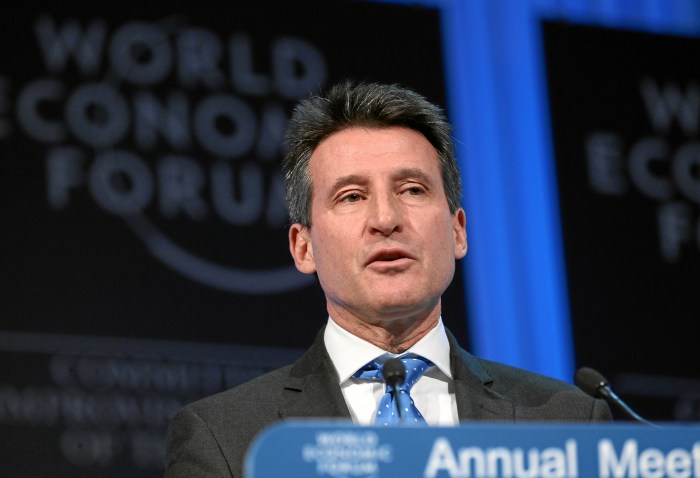
However, the report, presented by respected former president of WADA, Dick Pound, concluded with the statement: “There’s an enormous amount of reputational recovery that needs to occur here and I can’t think of anyone better than Lord Coe to lead that.”

Lord Coe

So we have a large sporting institute in turmoil that has taken steps to correct itself by inviting independent bodies to air their secrets in public. Furthermore, they have installed a new president, in the guise of Lord Coe, who has universal backing and is beyond reproach.

But Adidas want to jump ship.

This is the same Adidas that refused to criticise Sepp Blatter when he was coming under increasing scrutiny towards the end of his FIFA reign. The same Adidas that has been the longest serving sponsor of football’s governing body but didn’t flinch when FBI investigators started to detail a web of corruption far more widespread and complex than the one affecting the IAAF.

The same Adidas that seems to have put money before morals.

Leaving the IAAF now isn’t making a statement against drug cheats in sport; it’s taking money away from an organisation trying its best to fight corruption.

The IAAF want to clean up athletics and isn’t running for cover or acting self-servingly like Blatter and Platini did. They shouldn’t be punished for the actions of some within the sports they represent. If a footballer takes drugs he is accountable for his actions, the authorities he plays under should punish him. Adidas should punish the athletes and nations that sought to gain an advantage, not an IAAF trying to reform.

To put it into context, Coca-Cola, Visa, McDonald’s and Budweiser all made statements in October 2015 stating that Blatter’s continued presence at FIFA was holding back reform. However, at the same time Adidas stood by the now disgraced president.

There’s too much to be gained financially by staying in bed with FIFA.

Adidas weren’t interested in making an ethical choice when the FIFA scandal came to light, don’t be fooled into thinking they care about sporting interests now. To this day, FIFA are still resistant to impartial third parties assisting in reshaping the organisation to help wipe-out corruption. There’s no WADA-type invite being issued by them.

The IAAF will survive and under Lord Coe will overcome the many difficulties facing athletics. When they do triumph they’ll be better off without hypocrites like Adidas in their party.

Formula None

Formula None

Formula One is a sport that thrives in controversy. Thankfully, the element that could have undermined an entire Drivers’ Championship – Double Points – played no part in the end. That was a small rest bite during a time when F1 is under the microscope for different reasons.

With two teams in administration, and others close to the wall, its finances and wealth distribution require a review. Bernie and the large teams need to realise the product as a whole is only worth something if there is diversity across the grid. The current model almost ensures the big teams will remain near the top of the field but if this continues there’ll be no one else left to compete against. Three car teams would eventually become a three team championship.

Love or hate Bernie Ecclestone, the improvements made to the sport under his leadership can be clearly seen. It still is the pinnacle of motorsport and rather than keeping up with the times, it has defined them. New circuits, however bland some may be, come with state of the art facilities. The product generates more money than ever. Luxury companies pay a premium to be associated with each event. All this should bode well for the sport. But it somehow hasn’t helped abate the current situation.

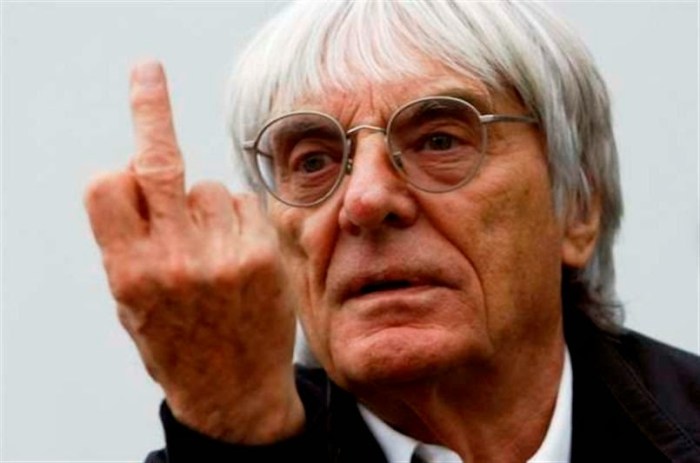
It’s easy to see Bernie as a cantankerous old man. He’s holding all the cards, the ultimate power broker. He dismisses the pleas from the smaller teams out of hand. His remarks appear ill-informed and uneducated. With Caterham and Marussia heading to collapse he made numerous remarks, none of support, just disdain. Bernie doesn’t want to see begging jars in the paddock and claims the teams are mismanaged and haven’t ran their businesses correctly.

Berne F1

By doing this Bernie has quickly washed his hands of a problem he helped facilitate. These teams didn’t throw caution to the wind and spend big bucks to buy a title. They were scraping together the budget each season just to survive. When the now defunct HRT, Caterham and Marussia (badged as Virgin) came into the sport as the three fresh teams, they did so under the impression F1 would implement cost-cutting measures. Of course teams like Ferrari, with their seemingly bottomless pot of cash, felt uneasy levelling the playing field like this. A compromise of sorts was reached: the teams would slowly reduce running costs without a hard cap being installed. To this day it has never happened.

So the new teams haven’t been mismanaged as such, they’ve just been the victim of being told one thing then living another. To make matters worse the gulf in affluence is exacerbated by the distribution of wealth. Ferrari receives an extra cut of the cash, before any prize money is distributed, for just being in the sport. This is similar to the way Real Madrid and Barcelona negotiate their own TV deals in Spain. A fairer system is the English Premier League that splits its deal twenty ways. Obviously prize money will, and should, go to the most successful teams. But all teams need the same starting point. It’s ludicrous to give handouts to those that need them less.

It’s also clear that the teams can’t be trusted to introduce fair cost-cutting measures. The time has come for a fixed budget cap which excludes driver wages. When I have discussed Financial Fair Play in football, my tone has always been against the system. In that sport it handcuffs safe wealthy owners, maintaining a status quo for the elite teams across Europe. In any business a company should be able to make a loss in order to catch its competitors. However, the current system in F1 has created and facilitates a continuing status quo of its own. Smaller teams are losing money, but not to catch-up, just to stay in business.

USA F1 Empty Grid

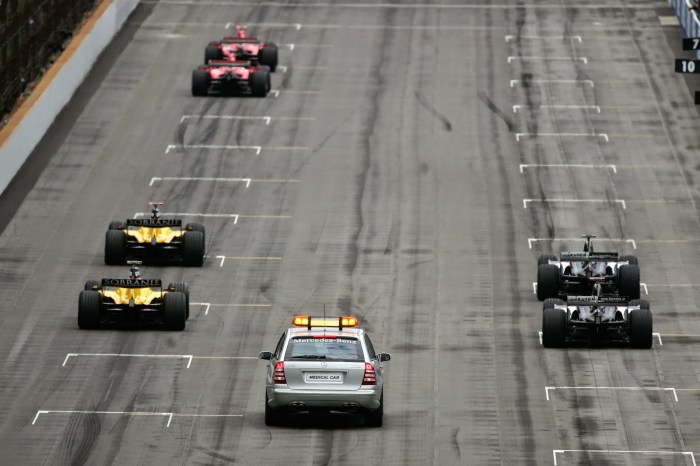
The largest spenders, like Red Bull, McLaren and Ferrari, may resist a cap because it removes their advantage. But long term they may be racing amongst themselves, at which point, they’d also be at the back of the grid . . . and the middle and the front. Fans need variety. Imagine a future where every F1 race resembled the grid from the infamous 2005 United States Grand Prix. That’s where we’re heading. And Bernie doesn’t mind because the cash cow still has plenty of milk. Some circuits are paying around $70M just to host an event, and all the race revenues combined only equate to 30% of F1’s income.

Another 30% is from the television deals. This would be the first victim of a decline in the sport. If the ratings fell so would the sale price. It’s this fear that gives us the ever changing rules to make the sport more competitive. Tighter regulations to create a narrower band of creative manoeuvre. The best designer in the modern era, Adrian Newey, decided he’d had enough of these restrictions so took on a different role within the Red Bull group. It’s a shame that the pinnacle of motorsport is hindered by its own self-inflicted parameters. Rules to increase excitement that will never work as long as a gulf in spending exists.

All the teams need to realise they need one another. An independent body needs to be set up to implement the cost-cutting measures and to clarify what goes on in the murky waters of F1 management. At the moment Bernie and the big teams feels more corrupt than a FIFA World Cup bidding process.

It’s ironic F1 spends so much time and energy tweaking itself to make racing closer without making the money in the sport fairer. A much better model would be one that has a hard budget cap, and at the same time has wider design windows. Cars would be cheaper to run, so the small teams wouldn’t be facing extinction, but a relaxation of the rules would add greater variety across the design process. The more creative or forward thinking would have the ability to flourish. They could even return to multiple tyre manufacturers with a set price for the season support. The entire onus would then be on those tyre providers to produce the best rubber at an affordable price. The difference in compounds would create exciting races as different teams on different rubber face unique race strategies. There’d be less tyre management and more non-stop pushing.

Whether you agree with the idea of a fixed budget or not, Bernie’s ignorance is something that is fact not opinion. He recently remarked he doesn’t care for social media or the younger generation of F1 fans. That his product is aimed at wealthy men in old age. That no young man on Twitter is going to buy a Rolex, a product his sport is paid to advertise. This is sheer arrogance and short-sightedness. Sponsorship accounts for 15% of F1 income, another 15% from merchandise and corporate hospitality, but that 30% from TV deals should have greater importance to Bernie.

To ignore the poorer young fans is to care little for the viewing figures that account for a third of his income. The same people whom the regulations are forever tweaked to create closer racing. The people that could be watching the sport for decades to come. But Bernie isn’t a man of the people. He isn’t even a man that cares for teams within his own sport. Unless you’re a big red Italian car company, or a 70 year old man wearing a Rolex sat in a corporate box, he won’t give you a second thought.