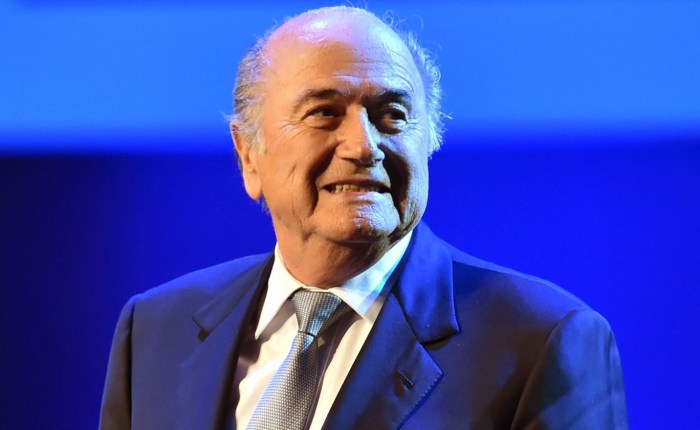
I feel quite the misery guts writing this article at the start of what should be football’s fun season. For the next month fans of the beautiful game can wake up to that Christmas Day morning feeling every day. Savouring every kick from the sixty-four matches on offer. We won’t be able to watch them all, but we’ll try our damndest. But just like Christmas, it seems there has to be a time when the gloss and mystique falls away, where we remember it with nostalgia but see it for what it really is. In football we never had a moment where we realised Santa wasn’t real (he is, if there’s any children reading this) but we do have our own version of The Grinch. Joseph Blatter or Sepp. Quite fitting a nickname for a man that has become a septic shock to the world of football. Allowing greed and corruption to infect the once healthy body. The only time he isn’t lying is when he’s being absurd. He’s The Grinch that stole our game.
When I try to recall the first World Cup I can clearly remember, Italia 90 wins. There are moments of Mexico 86 that I have recollections of but they are hazy and contain only fleeting glimpses of games. The big picture, sense of tournament, the prestige, all came four years later. It was the World Cup in Italy I first lapped up. Each new record or minor pinnacle felt momentous. Watching Cameroon emerge, for example, was like a Hollywood movie. The whole tournament had that sense of grandeur, like I was watching the best – and ultimately for us England fans, painful – script ever. “Nessun Dorma” provided a great soundtrack and we even had a breakout star, a former unknown, with a cute name: Toto Schillaci. Okay, the final wasn’t great but we’d been served a classic tournament.
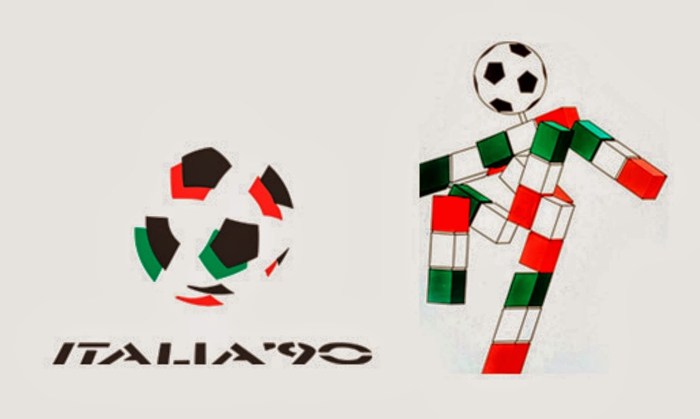
Italia 90 will be remembered as a great World Cup because it was all about the football. Fast forward to Brazil 2014, or FIFA World Cup 2014 in Brazil as the governing body would like to have it, and all that sense of something special I felt back in 1990 has gone. Even just using “Italia” instead of Italy, as it would be packaged now, added to a one-off spectacle. Back then it wasn’t about FIFA, it was for football. You could argue I viewed my first “proper” World Cup with rose tinted glasses. Maybe? But I’m not so sure children today are watching events in South America with that same sense of excitement. Leading into the tournament the talk has all been about unfinished stadiums, riots, corruption, Sepp Blatter.
The opening ceremony was a chance to put the negatives behind us and – with no rose tinted glasses available – take off the reality specs for a short while. I really tried. There was nothing more I wanted when I settled down to watch the opening of the cup last night than to be absorbed by Brazil. I wanted them to surprise and shock me. Deliver a taste of their culture. Make my already high levels of anticipation burst. Instead I was given what looked like a failed school project mess around for twenty minutes before J-Lo and a man named “Pitbull” (whom could well be Right Said Fred trying to escape extradition like “Buster” Phil Collins before him) sing into microphones that hadn’t been correctly connected to speakers.
I hate to mention money because it’s the root of the problems within the game but it’s hard to see where $9 million dollars went for that ceremony. London 2012 showed us that it is possible to do a ceremony on a budget (£27 million spread across all four ceremonies associated with both Olympic and Paralympic games, each longer than the thirty minutes Brazil managed). In Qatar! What About Brazil? I discussed that money has disappeared and been wasted during World Cup preparation. Last night you saw with your own eyes how $9 million could disappear on a yellow ground sheet, a swirly ball from nineties Ibiza, and a few school art classes. It’s easy to see how $11.4 billion – yes, billion – has been seen as a waste to the Brazilian public.
For the youthful eye we did have a decent first match but even that has been the topic of controversy this morning. The ref awarded Brazil a weak penalty and many believe Croatia denied a fair goal. The last thing the organisers needed was any black marks against the first match. They need Brazil to perform well to win over a disgruntled public. They have a long way to go. Clashes and riots continued after the game. The ITV studio even got pelted, although to place that in some sort of context, they had subjected the airwaves to ninety minutes of Andy Townsend and Clive Tyldesley – so probably deserved. The ITV coverage sandwiched the match between clips of riots followed by reports of more riots. Nostalgia or not for Italia 90, times have changed. The game has changed.
Where did it all go wrong then? It’s when FIFA stopped acting as a benevolent protector of the sport and became interested in greed, power and money. If one thinks of the Olympics they’ll recognise how they try to put sport front and centre. After that they express a real desire to carry the momentum of the games forward to the next generation in the form of its legacy. Unity and respect binds these ideals. I’m not saying the International Olympic Committee (IOC) is perfect but the biggest scandal to emerge from an Olympic games is an athlete failing a drugs test. In the build-up they do have the pressures and negative reports about areas struggling to be completed in time, but on the ground, in the countries where it happens, they are all pulling in the same direction to get the job done. The long list of Summer Olympic controversies is invariably made up of sporting disputes. Rarely – if ever – do you consider the IOC as an evil big business.
For football it’s a different story. Commercialism, capitalism, cash – they’re FIFA motifs. And dictatorships. The on-field errors teams accept, the game moves on. The main controversies surrounding the sport come from the exterior. Corruption claims that grow, appearing more substantial by the day, are dealt with nonchalantly by Sepp Blatter. His latest remark, met with many groans, was saying the British press were racist for calling the Qatar bid into question. I can only assume Ali G is one of his advisors. To make such an unsubstantiated statement shows how far removed from reality he is.
He is fair and gives everyone a chance to see his senility. In another moment of magic he spoke about how the World Cup would one day be played on other planets. That it’d become an Intergalactic Cup. You’d have to fear coming up against the Klingons in this scenario, a big, tough, industrious team. But they’d all bear a resemblance to Joleon Lescott so would leak the odd silly goal. Remember this is the same obtuse man that remarked women’s football should be played in tighter clothes to attract male viewers. So a jump to Galaxy Football isn’t that far a stretch in his head.
Maybe one day there will be calls for a unified World Cup but it’ll have nothing to do with little green men on Mars. It could well be after nations and confederations divide, creating multiple world champions playing in separate tournaments. Boxing is in my holy trinity of sports (I must be attracted to ones embroiled in corruption claims) and in the 1960s saw multiple Heavyweight Champions when the separate WBA and WBC belts came into operation. Since then the situation has snowballed, there are now handfuls of belts and several different bodies seen as legitimate. But the fan always knows who the true champion is. Mayweather could sell PPVs as the best in the world without a title and no one would argue. At the end of his career Lennox Lewis could have fought for chocolate buttons and every heavyweight in the world would have dreamt of having them over gold.
We wouldn’t ever want the World Cup to be undervalued this way. It should always remain an undisputed focal point. It is okay to have the debate that the Champions League has a better standard than international football nowadays, maybe in that sense the World Cup isn’t the hardest to win. But it remains the most prestigious. To see it undermined by having multiple international World Trophies would be a great shame. But people have breaking points. Sponsors are calling for corruption claims to be taken seriously and the man on the street doesn’t trust FIFA anymore. Sepp currently has the backing from the majority of confederations. But these poorer areas have been directly served by his wealth. He has bought their voice. He has no support within UEFA, though. An area of the world that demands transparency and doesn’t require handouts to operate.
We’re being sold a product that’s no longer legit. The man selling it publically lies – even on the issue about standing down after his current term. FIFA are supposed to be non-profit, like the IOC. Instead they swallow up dirty money faster than they lose creditability. Someone needs to take a stand. There is a sign that within the seemingly tight stranglehold of FIFA’s overbearing rules flex and manoeuvre exists. Take for example straight red cards. Under Blatter’s Law they – regardless of TV replays – should be adhered to with immediate suspension by the governing FA, without a chance of recourse. He wants his little SS officers on the pitch to be the first and final say. The English Premier League ignores this order from the Fuehrer. Allowing straight reds (but not two yellows) to receive an appeal. FIFA have never intervened.
Perhaps the threat of an additional tournament played outside of FIFA’s jurisdiction would be enough to bring sense back to the table. Or even a breakaway club cup in the summer. The unfairly treated, FFP-punished oil-rich teams could let Qatar have a warm up competition. Played under the guise of a friendly but offering a healthy boost to club coffers. It may take this sort of action to show Sepp Blatter and his cronies they can’t keep playing with our sport for political gain. The fear is we end up with Michel Platini as a direct replacement. But if enough people collectively stop dancing to the beat of FIFA’s drum there’s a chance a healthy alternative will appear.
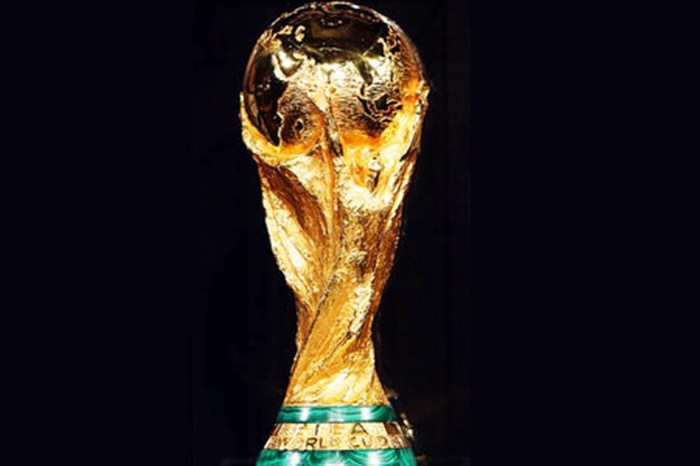
Until then I’m going to enjoy the sixty-four games, focusing my attention to just the matches. The Grinch may have stolen the innocence of game. FIFA may have lost credibility. But he’ll never take away twenty-two men on the pitch.
Enjoy the World Cup.
 The Reflective Page