Summer Transfer Market and FFP

Summer Transfer Market and FFP

The summer transfer window has come to a close and with it an end to months of speculation. This year it wasn’t just the destination of our favourite stars that was widely discussed, it was if Financial Fair Play (FFP) would alter spending habits. Now that the dust has settled we can see if FFP had any effect on the window.

On the face of it one would be forgiven for believing that FFP has had little effect on clubs. Before we jump to that conclusion we need to look at factors that affect the net spend of individual leagues. The English Premier League managed to spend a combined total of £630M on new players. To offset this outlay clubs are dipping into their newly topped-up television deal fund, believed to be worth around £500M for the clubs this year. In the past I have been critical of FFP and believe the rewards on offer in the game negate sensible business approaches from clubs. This has been highlighted once again at the close of the transfer window.

Manchester City spent £102M in the transfer window in the hope to regain the Premier League title and have a decent Champions League campaign. They have the wealthy owner to bankroll such an outlay but it is optimistic to assume they will comply with FFP at their current rate of losses. Their sponsorship deal with Etihad is still under review, if that is deemed unfit they would find themselves in a difficult position. It must be said that despite the seemingly high spend they do have an eye on FFP. Clever deals to sell Tevez – a high wage earner, close to the end of his contract – and loaning out Gareth Barry to reduce the wage bill further, along with ten other players leaving, displays an awareness they must comply. More on compliance later.

Staying with England for now, Tottenham Hotspur top the spending charts with a sizable spend of £107M. This is covered by the world record fee received for Gareth Bale, so when you consider they have approximately £25M extra with the new TV money, they’ve refreshed their squad free-of-charge. Newcomers Southampton and Cardiff both spent £34M, placing them sixth place in the spending table. This is an example that clubs will spend – perhaps more than they should be comfortable with when you consider their previous season income – in order to stay in the rich land of the Premier League. Avoiding relegation brings riches comparable to a top four finish for the “big” clubs.

A club hoping to rejoin the top four is Liverpool. They have outlaid a not-to-be-sniffed-at £49M. However, this has been a club spreading their money wisely. Whilst they lack the traditional marquee signing, they have successfully strengthened their squad and kept FFP in mind. Where needed faces have been released or loaned but they’re taking a prudent approach that is showing signs it will improve them. Arsenal did make a marquee signing, a whooping £42.4M for Mesut Ozil. All summer they threatened to spend big and did so in style. They have managed the repayments of their new stadium in recent years to the detriment of their transfer policy. It seems those lean days are over. Expect them to go hunting for a striker again in January, knowing they can spend and comply with FFP.

Manchester United have been the focus of much ridicule and criticism following a transfer window that saw them fail to capture their major targets and ending up with Marouane Fellaini at a price higher than his former buy-out clause. David Moyes would have had insider knowledge of this clause, having just come from Everton himself, but Manchester United’s slow manoeuvres in the market meant their first choice targets weren’t acquired and Fellaini was signed out of desperation to do some business. Had they really wanted him it stands to reason they’d have met his buy-out clause earlier in the summer.

What is most shocking about Manchester United’s activity is how they appear most aware of FFP and thus most reluctant to spend. This is shocking because out of all the clubs in the Premier League we’re led to believe they most easily meet the requirements. But they refused to increase their offer for Ander Herrera by a mere €6M to trigger his release clause. They twice submitted the same bid for Leighton Baines, believed to be £12M. It’s quite ironic that a concern people have with FFP is that it’ll create a status quo, that the big clubs remain big as others can’t compete financially, yet at the end of the summer window the team believed to be biggest of them all spent so little in comparison to its rivals.

Earlier I mentioned FFP compliance and when considering the spending involved with Paris St Germain and Monaco it seems they have, and will, be taking a different approach to the new rules. PSG have a tie-in with the Qatari Tourist Board. Whilst not described as an outright sponsorship, but partnership, that earns the club €125M a year. It’s difficult to see UEFA approving such a deal as income when they’ve spent so much time investigating legitimate sponsorship deals. But PSG must be confident as they spent €84.4M in the last window alone. If that sounds high, and based on dodgy ground, then spare a thought for AS Monaco. Last season they were in the second tier with an average attendance over just over 4,000. This year they have a net transfer spend of €160M. They must be banking on FFP being successfully challenged on the basis it restricts competition. It’d be a sweet moment if Platini’s initiative to haul in English Premier League spending is undone by the two French clubs.

The English Premier League and the aforementioned French clubs aside, there is evidence that FFP is starting to dictate the transfer market. The top flight in both Spain and Italy saw revenue from transfers exceed expenditure. The same is true for their second tiers, along with the English Championship, and a host of other European leagues like the Dutch and Portuguese. In fact, it’s only the French top tier (thanks to PSG and Monaco) and the German Bundesliga that finished the transfer window in the red. And considering that the essence of FFP is based around the German model it’s safe to assume they are spending within their means. Everyone else across Europe is spending with greater caution.

Everyone except the English Premier League, but it goes to show that if there’s money available clubs will spend it. They have to if their rivals do. The transfer system as we know it won’t be dramatically altered in light of FFP, the big transfers will still occur. But overall a more level-headed business approach is coming into play. And even with the EPL’s massive expenditure this summer it could be argued that the major signings took place elsewhere. The English Premier League is becoming the most expensive league without having the highest level of talent. But it is still the most exciting, so it seems fitting it’s the one that has the most summer transfer activity, because watching clubs throw cash around can be fun.
 

Christopher William Kinsey’s essay Financial Fair Prejudice is still available via the Kindle Store from Amazon.


The Dark Knight Relapses

The Dark Knight Relapses
 
1997 was a bad year for fans of Batman. The Caped Crusader, with a few side-kicks in-tow, finally met his match on the big screen. Mr Freeze, Poison Ivy and Bane (a less daunting enemy than the Bane we knew from the comics and later would meet in The Dark Knight Rises) were toppled fairly easily. What Batman couldn’t overcome in 1997 was a poor script, bad casting, and a movie that resembled an advert for toys more than a vehicle for the darkest of comic book characters. Joel Schumacher, the director, wanted another chance. A chance to return Gotham’s finest to a more gothic setting but the heads at Warner Bros. had seen enough of this child-friendly incarnation and laid him to rest. They flirted with Darren Aronofsky for a short time before a further hiatus occurred.
 
We all know where they eventually went – with Christopher Nolan and his Dark Knight Trilogy. The character restored to status, box office sales surpassing previous Bat adventures, all looking well. Even with Nolan standing firm on his decision to leave his trilogy alone, keeping it separate from the proposed Justice League movie canon, the character of Batman once again had credit on the big screen. It afforded Warner Bros. the chance to slip a person into the cape and cowl and let them enter the “DC cinematic universe” without the need for fan-fare and drawn out back story. Once more the Dark Knight was iconic. Infallible, even.
 
Not quite.
 
Nolan’s trilogy wasn’t perfect, I’d be the first to admit this. But as a body of films they do tell a story – with a few gaping plot holes – from start to finish. The Batman character wasn’t the ideal one we know from the comics. His views and choices contradict what the standardised Batman would do. However, overall they were credible movies. The Dark Knight in particular showed us that comic book stories could be played out like real world crime films. Like Heat with capes and make-up.
 
A trilogy of successful films doesn’t make a franchise invulnerable. If you need an example of this then I give you the original Star Wars trilogy then ask you to watch The Phantom Menace again. In Batman terms I’d suggest making Ben Affleck the new Dark Knight is this new film series’ Jar Jar Binks.
 
Had I been told he was to direct the newly proposed Batman/Superman movie I’d have been pleased. Argo was one of the best movies in 2012, proving his talent behind the camera. What I question is his ability in front of it. He’s not a complete dud, I loved Jersey Girl, but does he have the ability to handle Bruce Wayne? A flawed, complex character, that is somehow rounded as well as ruined.
 
The answer is: he may be more than adequate for next version of the role. I fear that this next incarnation of Batman will avoid the gothic overtones, won’t be too scarred by the death of his parents, won’t be the aging crime fighter we saw in the graphic novel The Dark Knight Returns. He’ll be played safe, and any depth there is in the character won’t be portrayed correctly by Affleck.
 
I was a fan of Zack Snyder’s Watchmenso I had high hopes for Man of Steel. If I’m honest it didn’t quite hit the spot for me. Some of the mythology was played around with too much. I can’t accept a Clark Kent that in his formative years wasn’t aware of his Kryptonian heritage; that Lois Lane knows from the start of their relationship who he really is, depriving us of a great reveal storyline; that this Superman doesn’t mind destroying buildings – that presumably contain lots of people – just to give us some action scenes.
 
Snyder understood his source material with Watchmen and his tinkering there was only for the good of the picture. In this new cinematic universe it seems that Nolan and David S. Goyer used Snyder to reinvent the wheel. I’m all for positive updates to longstanding creations but they should retain core values. I’m also up for superhero films with a darker tone (Batman Returns is a desert island movie for me) but Man of Steel wasn’t so much dark as bleak. And the title character wasn’t developed or even formed.
 
It seems that Warner Bros. have looked at Marvel’s The Avengers and decided they want some of that cross-character-superhero-franchise action. And who can blame them? Their problem is that Marvel used their B-team to create that runaway success. With the exception of the Hulk – who on singular outings has struggled to carry his own film, no matter how angry he got – Iron Man, Thor and the rest weren’t over familiar in the general public’s mind. That’s hard to believe now, but before Robert Downey Jr. breathed life into the 2008 version of Iron Man, the characters from The Avengers couldn’t have been seen as a billion dollar movie.
 
Marvel had no choice but do go down the path they did. Their A-team, Spider-Man and all the X-Men, are tied up in movie contracts to Sony and Fox respectively. So they had to – over a series of several origin movies – develop the best of what was left. Working with what they had they successfully created good family action movies.
 
Warner Bros. do not have this problem. If they wish to create a Justice League movie any character in the DC comics stable can be utilised. Therein lies the problem. They wish to compete with The Avengers so it seems they want to use the formula with different ingredients. Superman and Batman can be billion dollar franchises as separate entities. If Warner Bros. mix them this way and attempt to appeal to a wider audience – like they did with Batman & Robin – what gives these characters such iconic status is watered down. They’ll be diluting the back story and character arcs in favour of cash. The two most famous orphans will be little more than window dressing for excessive CGI sequences.
 
Perhaps I am being cynical and the producers fully expect an exploration of the characters, something that tows the line between family action and The Dark Knight. If this is the case then it brings me back to my first concern: Ben Affleck can’t be the Batman or a good Bruce Wayne. It’d be like a Disney version of the Gotham’s finest and last time I checked they took care of Marvel’s Avengers. There must be some daredevils at Warner Bros. to take such a gamble, and last time I checked Affleck had ruined the comic book version of that on the big screen.
 
1997 showed us that the legacy of characters like Superman and Batman should be preserved above attempts to cash-in. That Batman, by his dark nature, is already reaching his largest audience when left to a more mature age group. If Batman is to remain true to this essence then Ben Affleck is the incorrect choice. I hope I’m wrong, that by the time Affleck swoops onto the screen as the Caped Crusader he fully encompasses the part, and the movie itself is a box-office hit and critically applauded.
 
Fingers crossed 2015 isn’t another 1997 experience for Batman. If it is he’ll be sending his friend Superman to an early franchise grave too.

Manchester International Festival

Manchester International Festival
The Manchester International Festival, or MIF, has already started to fade in our memories just like the sun is slowly starting to be obscured by clouds. Before it’s no more than a light drizzle in the mind’s eye I shall recall my highlights.

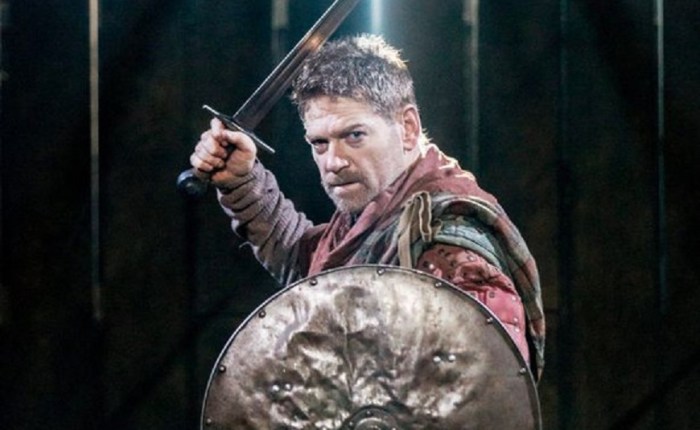
I felt as privileged witnessing the great actor undertaking a Shakespearean role as I did being party to the unique setting. The deconsecrated church in Ancoats provided an absorbing atmosphere that allowed the play to feel large when required but was intimate enough to engage during the delicate nuances each top performer provided. Two tall wooden viewing platforms faced one another with a mud filled aisle separating them. An aisle that was to become the stage throughout, along with the former alter area that gave way to candles beneath the stain-glassed windows.

From the Wicked sisters starting us off with a haunting interpretation that had me squeezing my partner’s hand, to the initial battle scene played out with rain and mud, the experience never let up. Branagh was particularly engaging earlier on as he wrestled with his guilt. As he became the ruthless leader his Lady Macbeth, played by Alex Kingston, demonstrated the plunge to madness with chilling effect. There wasn’t a weak performance during a play that delivers some of Shakespeare’s best lines.

Much has been made of how close the action was in relation to the public – to the extent we were warned not to wear clothes that needed dry cleaning – and how it made the opening sequence all the more breathtaking. Whilst all that talk has been valid a special mention should go to the sequence when Macbeth is shown the prophecy that concludes with the procession of Kings. The alter area had a line of flames that cast a hellish look over a contorting image below. If I say it was multiple actors squirming beneath a patterned sheet I wouldn’t be lying but it would be a great discredit. Periodically a face would appear as it pressed upward through a now seemingly thin cover. What the prophecy foretells is scary enough for Macbeth; the literal vision was a pure art of horror.

Will I see such a strong cast again in an iconic play? Maybe. Will it be in such a great venue? Probably not.

If a viewing of the Scottish play has people discussing the obsession of power then Massive Attack v Adam Curtis took a string of that theme and expanded upon it. After waiting for the curtains to open I found myself in a horseshoe of big screens, meaning the documentary is played all around the public, with the band behind the apex section. Adam Curtis’s film starts with the East and West in the 1960s. He quickly, and without debate, tells us how the two opposing sides want to control and change the world. Through a series of national events and interweaving personal stories we move onwards through history. As we go we’re told the governments realised they couldn’t control the world so they stopped making us worry about that “other side” and to panic over ourselves instead. When computer technology came along they tried to construct models to predict the future. Of course, they failed.

Curtis gets you on his train of thought early on and takes you along his predetermined viewpoints without room for consideration. There are no alternative interpretations, only what he sees as fact. And it works. At least for the purposes here. The soundtrack – because that’s what it was, it was no gig – was played out as a perfect accompaniment. When Nirvana’s version of “Where did you sleep last night?” started to play I couldn’t help but join in. In doing so I reinforced Curtis’s view of the two-dimensional world we now live.

Curtis himself has been quoted as saying the documentary is about the illusion of power and power of illusion. In a world that runs this way it’s us – the normal, everyday majority – that appear to suffer. It seems that Curtis is from The Matrix opening our eyes with a red pill but feeding our minds a blue one of his own creation.

Festival square saw its fair share of the majority each day. It provided a relaxed meeting place with food and drink. The Pavilion also gave us Rob da Bank for a Friday night mix of music and a slideshow of Mancunian music history on the cinema-esque screen. It could have easily slipped into the Land of Cheese but the DJ chose his soundtrack with excellence.

The following night I witnessed New Century Hall and Despacio. Tickets were in high demand for what promised to have all the ingredients of a good boogie. James Murphy of LCD Soundsystem fame joined David and Stephen Dewaele (Soulwax, 2Manydjs). Had you previously seen the latter at a festival you may have been underwhelmed but they played a way befitting the venue. Seven large speaker sets that appeared to have been robbed from a retro-future bar lit up whilst a disco ball glittered across the high walls. It was more disco than dance. Those in search of a Sankeys (RIP) replacement should have been mindful this was still MIF, and as such, a different audience.

A personal highlight of the festival was Tino Sehgal’s This Variation. Beforehand all I knew was it was sensory overload due to a darker setting. I’ll be honest, I was expecting a light show that perhaps distorted images on a projector in a dark room, or something like that. It’s fair to say I was going in blind. Quite apt then that what I found it to be was a room in pitch-blackness thus making me completely blind. If you recall, the Weird Sisters in Macbeth managed to put the heebie-jeebies up me, so being a dark room, bumping into strangers, hearing shuffles and whispers and chanting had me wishing I was in a diaper. After what seemed like an hour (it was thirty seconds) those chants became a full-on dance song. I quickly turned for the exit.

Not proud of feeling like a chicken and getting a strange look from the volunteer outside when I remarked: “That was pretty scary,” I took a few minutes to have a word with myself. I reasoned that a blind-person in a dance club had more noise, more strangers around them, more cause for confusion. I reached the conclusion I should try again. This decision was accelerated by the fact I was also watching the mise-en-scène by Mårten Spångberg entitled Epic. My mind is open to varied interpretations but I couldn’t escape the idea later that evening people wouldn’t have understood it but would be spouting pretentious statements about its true meaning. When it got to the point a guy in a see-through top was waving his out stretched arm slowly to a David Bowie song whilst doing a belly dance that started in his shoulders I knew it was darkness or bust. Although it’s only fair I come clean and admit I stole this particular dance move and used it at the aforementioned Despacio night.

Second time in the pitch black setting of Tino Sehgal I found my inner force. Okay, not exact bravery but the intimidation was more comfortable than the idea of facing more Epic. Slowly my eyes, thanks to a dim purple light above, started to make out shapes. The slap of white paint across the walls gave the room a dimension. A little while longer (about fifteen minutes) I could make out the performers. They were moving around, moving up to guests that had acquired night vision. Together they produced all the required beats, hums, special effects and vocals. They danced at times like a dance troop, at others formed segregated areas. In the dim light it struck me I was in an alternative reality’s idea of a nightclub. It had music, people, an underground feel like a twisted Turnmills (RIP). Moody acid.

Familiar songs sometimes appeared with a unique twist as the talented performers made their way through each variation like one organism. For a person that started out so scared I amazingly didn’t want to leave. So I didn’t until they formed a single wall and sang “it was time for us to go now” with cheeky smiles. It hadn’t all been music, Sehgal likes debate, too. There were periods when the show stopped and the performers would raise and discuss various points. Like the income you earn is of great consequence but the job you do could be of little consequence. Even these staged chats had an ad-libbed feel that complemented the experience. It wasn’t just the music that faced time-outs, very briefly the purple light above shone full beam giving the blackness a rest. By now the light was the unwelcome stranger to the rapture given by the dark.

An experience so good I went back the next day and went through it all again, this time even receiving a hug from a performer as we danced in close proximity. Much closer to the action than even those on the front row at Macbeth.

This year’s MIF was a resounding success. It succeeded in opening up the city and its people in every possible way.